


The digital world is changing fast, and API integrations are at the heart of it all. In 2026, businesses that master these connections will unlock new levels of speed and innovation.
Why does this matter? API integrations let your systems talk to each other, automate manual work, and keep your data flowing smoothly. Ignore them, and you risk falling behind your competitors.
This guide gives you the tools and strategies to plan, build, and optimise robust API integrations. We’ll cover the essentials, business value, technical foundations, step-by-step integration, security, and what’s next.
Let’s get started and future-proof your business.
The Fundamentals of API Integrations
API integrations have become the secret sauce powering digital business in 2026. They let different software systems talk to each other, share data, and automate tasks that once took hours. If you want your business to move fast and stay competitive, mastering api integrations is absolutely crucial.
What is an API Integration?
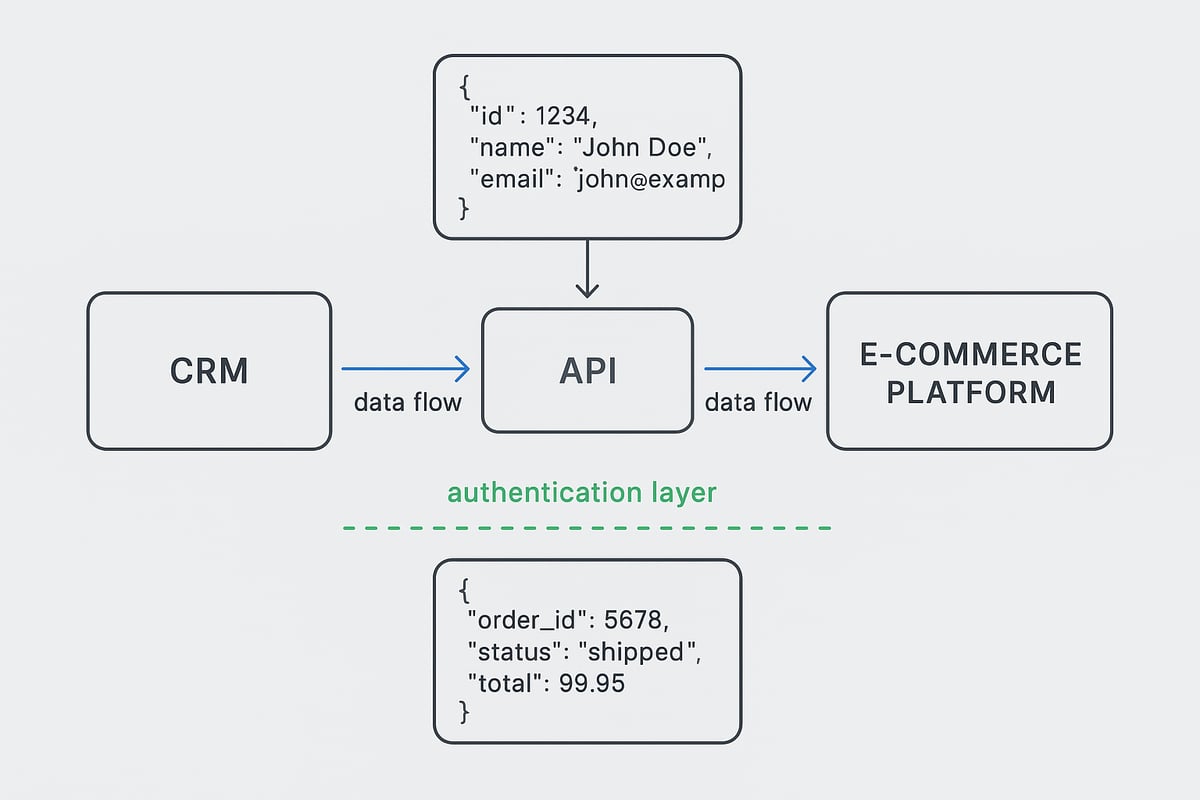
At its core, an API integration is a way for two or more software applications to exchange data using a set of rules, known as an API (Application Programming Interface). Think of APIs as doorways that let information flow securely between different digital systems.
For example, when your CRM automatically updates your email platform with new leads, that's api integrations at work. Or, in retail, syncing your online shop's orders with your inventory system relies on these connections. In 2026, over 90% of SaaS platforms offer public APIs, making these integrations the backbone of modern business operations.
Let’s break down some key terms:
- Endpoints: Specific URLs where data is sent or received.
- Authentication: Methods like API keys or OAuth 2.0 to control access.
- Data mapping: Translating data fields between systems.
- Webhooks: Real-time notifications sent from one app to another.
API integrations are different from old-school file-based or manual approaches. Instead of emailing spreadsheets or uploading CSVs, APIs allow instant, secure, and automated data sharing.
For instance, a REST API could connect your Shopify store to your accounting software, automating invoice generation. Here’s a simple example:
POST /invoices
{
  "order_id": "12345",
  "amount": 199.99,
  "customer": "Jane Doe"
}
If you’re exploring ways to link your CRM with other business tools, check out these CRM integration strategies for practical insights.
Core Components of an API Integration
Not all api integrations are created equal. The core building blocks vary depending on your needs and the systems involved.
API Types and Use Cases:
| API Type | Strengths | Common Use Cases |
|---|---|---|
| REST | Simple, flexible | Web apps, SaaS, mobile |
| SOAP | Strong standards | Legacy finance, enterprise |
| GraphQL | Precise data queries | Complex, modern apps |
| Webhooks | Real-time notifications | Instant updates, alerts |
APIs often connect directly to databases, ensuring up-to-date information flows between apps. The most common transfer protocols are HTTP and HTTPS, but you might still see FTP or SFTP in legacy systems.
Authentication is essential for security. Options include API keys for simplicity, OAuth 2.0 for delegated access, and older methods for legacy systems.
Endpoints can be single (one function per URL) or multiple (grouped by resource). Media types like JSON and XML define how data is formatted, while some systems use binary for files or images.
Data can move one-way (from system A to B) or two-way (syncing updates both ways). Modern api integrations increasingly use two-way flows to keep everything in sync.
A frequent challenge is data mismatches. Did you know that 70% of integration issues come from differences in data schema? Careful planning and testing are vital for reliable connections.
Understanding these fundamentals sets the stage for planning, building, and optimising robust api integrations that drive real business value.
Business Value & Use Cases of API Integrations
API integrations are transforming how organisations operate and compete. Businesses in every sector are realising that connecting their systems is no longer a luxury but a necessity. With data flowing smoothly between applications, teams can eliminate bottlenecks, boost efficiency, and unlock new growth opportunities.
Solving Real Business Problems
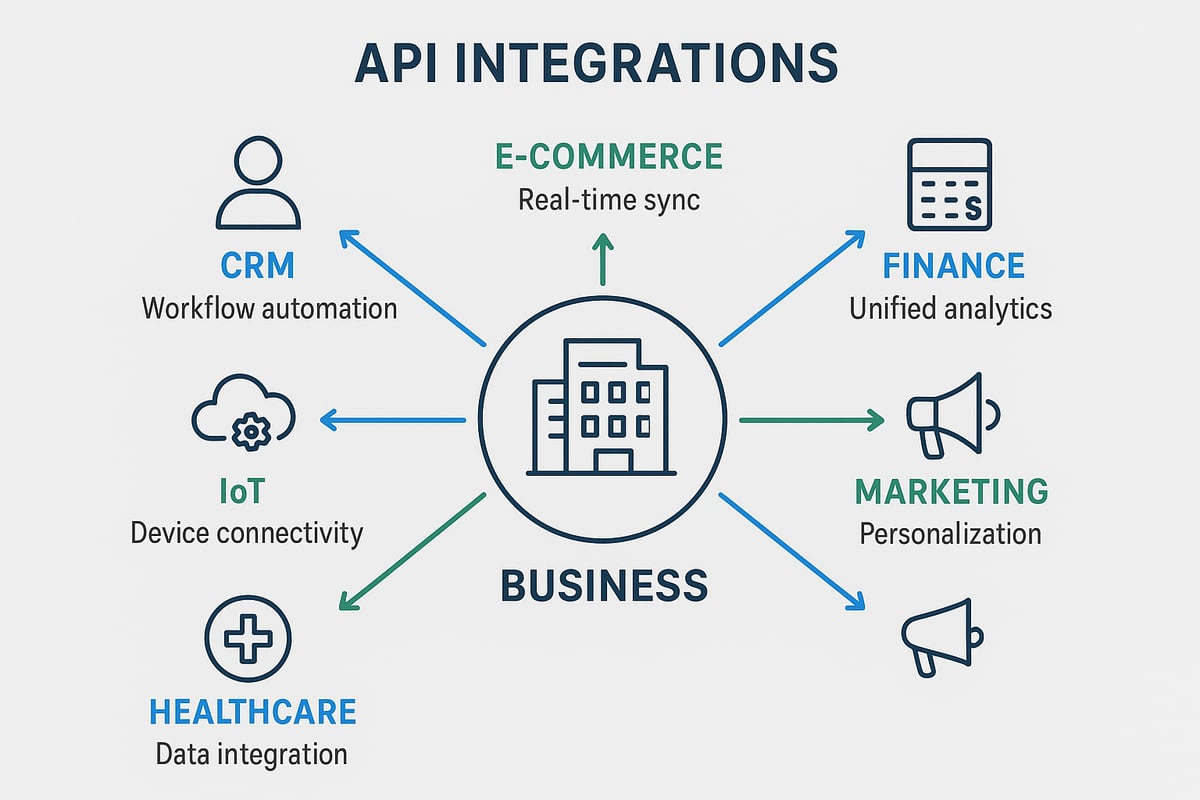
API integrations solve the age-old problem of disconnected data. Imagine a sales team updating customer details in a CRM, but the finance team never sees those changes. Manual data entry leads to errors, wasted time, and unhappy customers. API integrations bridge these gaps, ensuring all systems “speak” to each other in real time.
For instance, when an order is placed on an e-commerce site, API integrations can instantly update stock levels in inventory software, trigger order fulfilment, and notify the finance system for invoicing. This seamless automation slashes manual tasks, reduces errors, and speeds up business processes.
In 2026, businesses depend on API integrations for digital transformation. Whether adopting a new SaaS tool or connecting IoT devices, APIs enable agility and rapid innovation. They also prevent data silos, allowing leaders to build unified dashboards and analytics.
A recent industry benchmark reveals that companies using API integrations are 40% more likely to achieve operational efficiency than those relying on manual methods. This is true for both SMEs and large enterprises, though the complexity of integrations often differs:
| Feature | SMEs | Enterprises |
|---|---|---|
| Integration Scale | Fewer, simpler connections | Many, complex, cross-department |
| Customisation | Out-of-the-box, limited tweaks | Highly customised, tailored flows |
| IT Resources | Limited, often outsourced | Dedicated in-house teams |
A compelling case is Karbon, a SaaS provider that scaled its API integrations to meet customer demand. By automating onboarding and syncing data across platforms, Karbon enabled clients to work faster and smarter.
Key Use Cases in 2026
API integrations are the backbone of innovation across industries. Let’s look at some of the most impactful use cases emerging in 2026:
- E-commerce: Linking online shops with ERP, shipping, and payment gateways for real-time order and stock updates.
- Marketing automation: Connecting CRMs, email platforms, and ad networks to streamline campaigns and personalise customer journeys. AI is now supercharging these connections, as seen in AI-powered marketing automation.
- Healthcare: Securely exchanging patient data between EHR systems and mobile apps, improving care and compliance.
- Finance: Real-time reconciliation between banking, invoicing, and payroll systems for faster, more accurate reporting.
- IoT: APIs connect smart devices to cloud platforms, enabling predictive maintenance and new service models.
A standout example is omnichannel retail. API integrations make it possible for retailers to sync inventory, sales, and customer data across online, mobile, and in-store channels. This results in a seamless experience, where customers can buy online and pick up in-store, or get personalised offers based on real-time behaviour.
No matter the industry, API integrations empower organisations to automate, innovate, and keep pace with change. The right approach can turn fragmented systems into a single, high-performing engine for business growth.
Technical Architecture of Modern API Integrations
Understanding the technical architecture behind api integrations is essential for any business aiming to scale and innovate in 2026. The right architecture determines how effectively your systems communicate, how resilient your integrations are, and how quickly you can adapt to new requirements.
High-Level Integration Patterns
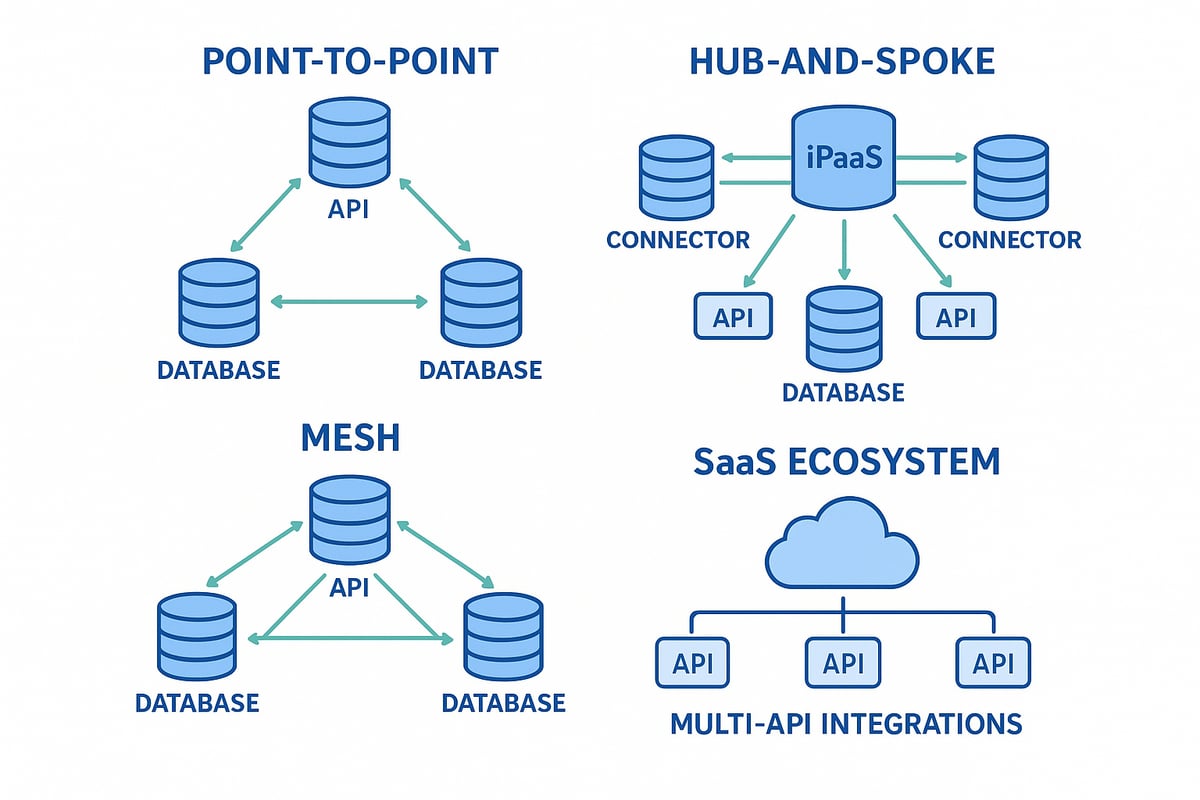
There are several architectural patterns used in api integrations, each with its strengths and challenges. The three main patterns are:
- Point-to-point: Direct connections between two systems. Simple, but can become unmanageable as the number of connections grows.
- Hub-and-spoke: All systems connect through a central hub, often an iPaaS platform. This approach simplifies management and improves scalability.
- Mesh architecture: Systems are interconnected, allowing for flexible, decentralised communication. This is common in complex SaaS ecosystems.
A typical integration flow starts with a source system (like a CRM), passes data through an API, and uses a connector to deliver it to the target application. The diagram above illustrates these patterns.
Embedded iPaaS vs enterprise iPaaS:
| Feature | Embedded iPaaS | Enterprise iPaaS |
|---|---|---|
| Best for | SaaS vendors | Large organisations |
| Customisation | Limited | Extensive |
| Control | Vendor-managed | IT-controlled |
| Scalability | Suits smaller scale | Handles complex needs |
Choosing the right pattern depends on your business size, integration needs, and future growth plans. For more on emerging strategies shaping these decisions, see the API Strategy Trends in 2025.
Multi-API integrations are now standard in SaaS, enabling apps to pull data from various sources and offer richer functionality. This flexibility is why modern api integrations are at the heart of digital transformation.
API Constraints and Design Considerations
Every integration is shaped by the constraints and design choices of the APIs involved. These constraints define how your systems interact, what data can be accessed, and how securely information is exchanged.
Authentication: Most api integrations today use OAuth 2.0 or API keys, though some legacy systems may require older methods. Proper authentication protects your data and ensures only authorised users and systems have access.
Endpoints: APIs expose endpoints to structure data access. A single endpoint might provide all data, while multiple endpoints allow for more granular control. Consider your data needs when designing integrations.
Rate limits and errors: APIs often limit how many requests you can make in a set period. Exceeding these limits can lead to failed integrations. Always handle error responses gracefully and build retry logic into your integration flow.
Versioning and compatibility: As APIs evolve, versioning ensures older integrations continue to function. Backward compatibility is vital for long-term stability. For example, a growing SaaS platform may need to support multiple API versions at once.
By understanding these constraints, you can design robust api integrations that adapt to change without breaking critical business processes.
Integration Components in Detail
Successful api integrations rely on several key components working together.
Triggers: These start the integration process. Event-based triggers react instantly to changes, such as a new order in an e-commerce platform. Scheduled triggers, like cron jobs, run at set intervals.
API connectors: Prebuilt connectors save development time and reduce errors. However, custom connectors may be necessary for niche or legacy systems.
Data operations: Data mapping, transformation, and validation ensure that information flows correctly between systems. For example, mapping account_number in one system to acctno in another is common.
# Example of simple data mapping
source_data = {"account_number": "12345"}
target_data = {"acctno": source_data["account_number"]}
Messaging and notifications: Real-time alerts keep stakeholders informed of integration status, helping teams respond quickly to issues.
It is worth noting that 70 percent of integration issues stem from data mismatches and schema conflicts. Careful planning and testing are essential to minimise these problems and keep your api integrations running smoothly.
Step-by-Step Guide: Planning and Building API Integrations in 2026
Building robust api integrations in 2026 takes more than plugging systems together. You need a clear plan, an understanding of your business needs, and a keen eye for detail. Let’s break the process into five practical steps, each designed to help you avoid the common pitfalls and ensure your integrations deliver real value.
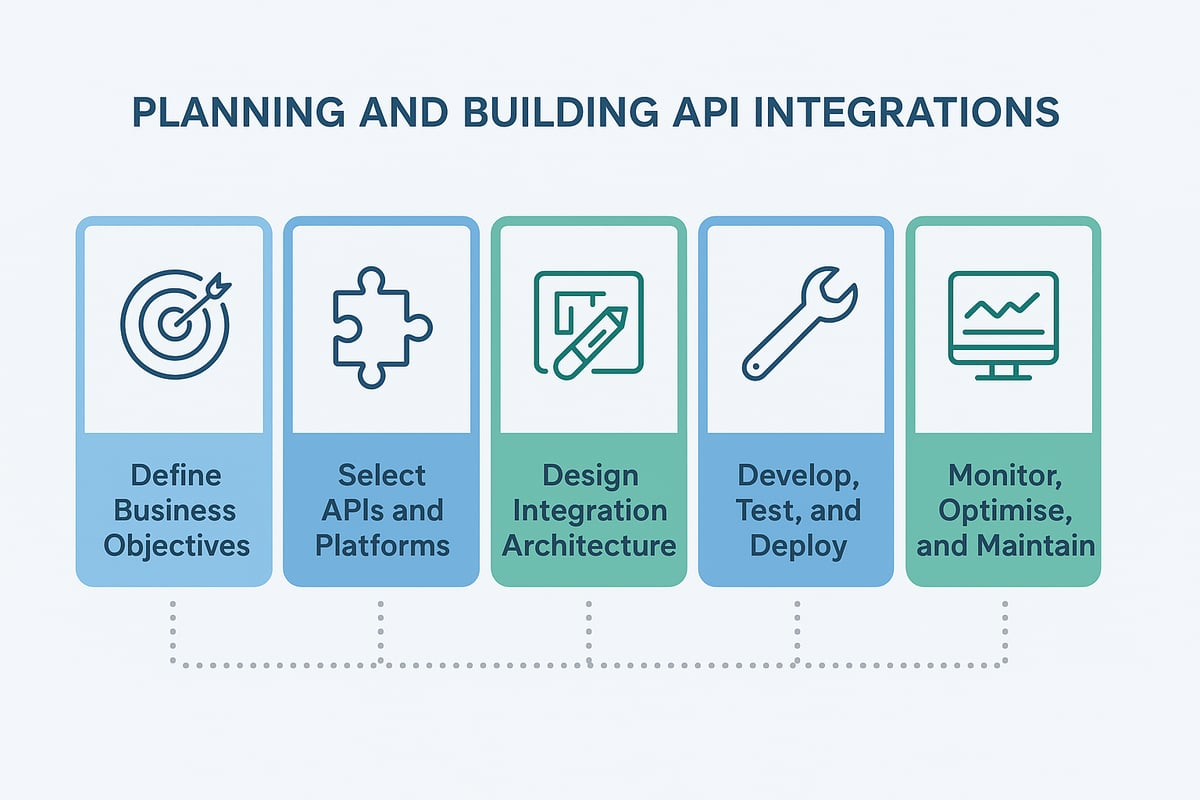
Step 1: Define Business Objectives and Requirements
Before you touch a line of code, clarify what your business wants to achieve with api integrations. Are you aiming for real-time data sync, process automation, improved reporting, or something else? Align IT, business leaders, and end users early on to avoid mismatched expectations later.
Typical objectives include:
- Automating data entry between platforms.
- Delivering unified dashboards for analytics.
- Enabling seamless customer experiences.
For example, if you want to connect Shopify with Xero, list every touchpoint: orders, inventory, payments, and customer details. Consider scalability—will your integration support growth or new channels? It’s also worth factoring in flexibility, so you’re not boxed in by rigid systems as your needs evolve.
In the context of digital strategy and transformation, api integrations play a crucial role in breaking down data silos and accelerating innovation. Getting this alignment right early on sets the stage for success.
Step 2: Select the Right APIs and Platforms
Next, evaluate your available APIs and platforms. Read the documentation carefully. Are the endpoints well-documented? Do they support modern protocols like REST or GraphQL? What authentication methods are required—API keys, OAuth 2.0, or something legacy?
Key factors to compare:
| Criteria | REST | GraphQL | Webhooks |
|---|---|---|---|
| Data Structure | Fixed | Flexible | Push-based |
| Use Case | CRUD, general | Complex queries | Event-driven |
| Learning Curve | Low | Medium | Low |
You’ll also need to consider transfer protocols (HTTP/HTTPS for most, FTP/SFTP for legacy) and rate limits. Decide if you’ll build custom code, use an integration platform as a service (iPaaS), or embed prebuilt connectors. For example, marketing teams might compare REST, GraphQL, and webhook APIs when integrating their stack—each has strengths for different scenarios.
Step 3: Design Integration Architecture
Now, map out your integration’s architecture. Diagram how data should flow between systems, identifying every endpoint and trigger. Will the integration be one-way or two-way? Plan for error handling, retries, and logging from the outset.
Security is non-negotiable. Use the principle of least privilege for API access, and ensure data moves through encrypted channels. Think about how you’ll handle failures: What happens if a sync fails? Who gets notified?
Example: To design a two-way sync between a CRM and email marketing tool, define which fields sync (e.g., email, subscription status), when syncs run (real-time or scheduled), and how conflicts are resolved. Document every assumption to keep your project on track.
Step 4: Develop, Test, and Deploy
With your blueprint in hand, start building. Set up authentication and connect to each API. Use code snippets or prebuilt connectors to move data. Implement mapping and transformation logic to ensure that fields match up, even if they’re named differently.
Testing is critical. Simulate real-world scenarios—what if an endpoint is down or returns unexpected data? Build automated tests for endpoints, triggers, and error paths. Use a CI/CD pipeline for deployments to catch issues early and roll out updates smoothly.
Example code for handling API responses:
import requests

response = requests.get('https://api.example.com/data')
if response.status_code == 200:
    process_data(response.json())
else:
    log_error(response.status_code, response.text)
Automated testing ensures your api integrations are reliable and resilient under pressure.
Step 5: Monitor, Optimise, and Maintain
Once live, your api integrations need ongoing care. Set up real-time monitoring to catch failures and performance issues fast. Configure notifications so your team knows about problems before users do.
Handle API changes proactively—track version updates and deprecations to avoid sudden breakages. Optimise integrations by analysing logs and usage patterns, then refine data mappings or add new endpoints as your needs evolve.
Continuous improvement is key. Industry data shows that proactive monitoring can cut integration downtime by up to 60 percent, keeping your operations running smoothly and customers happy.
Security, Compliance, and Best Practices
Strong security, airtight compliance, and reliable performance are the backbone of successful api integrations. As data moves between systems, the risks grow, but so do the rewards. Mastering these best practices will keep your api integrations resilient and trusted in 2026.
Securing API Integrations
Security is non-negotiable in modern api integrations. Start with robust authentication and authorisation. Use OAuth 2.0 for delegated access, and never expose sensitive API keys or credentials in code repositories. Always encrypt data both in transit and at rest, using HTTPS with TLS for all endpoints.
Protecting endpoints is vital. Restrict access using IP whitelisting, implement rate limiting, and regularly audit permissions. For high-risk sectors like healthcare, ensure integrations comply with GDPR and HIPAA requirements. Monitor for unusual activity and set up alerts for suspicious behaviour.
Keep pace with the latest API Security Trends for 2026, including zero-trust access models and adaptive authentication. These strategies help safeguard your api integrations against evolving threats.
Compliance and Data Privacy
Compliance is more than a checkbox for api integrations. Regulations like GDPR and CCPA demand strict control over personal data. Apply data minimisation principles: only sync what is necessary, and ensure purpose limitation for every data flow.
Maintain clear audit trails and detailed logging. This is essential for proving compliance during audits and for investigating any incidents. In financial api integrations, for example, tracking every access and change to customer data is mandatory.
Limit data exposure by segmenting integrations and using pseudonymisation where feasible. Regularly review your data sharing agreements and update them as regulations evolve. By embedding compliance into your api integrations, you build trust with customers and partners.
Integration Reliability and Resilience
Reliability is the difference between smooth operations and costly downtime in api integrations. Implement robust error handling: retries for temporary failures, circuit breakers for downstream outages, and fallback mechanisms for critical paths.
Design integrations for idempotency. This prevents duplicate transactions if a request is retried. Use transactional integrity controls, especially when syncing financial or sensitive records. Load balancing distributes traffic and keeps integrations responsive under heavy demand.
Scalability and proactive monitoring matter. Set up real-time dashboards to track integration health and receive instant alerts for failures. Remember, 80% of integration failures stem from poor error handling. Building resilience into your api integrations means you can adapt quickly and maintain business continuity.
The Future of API Integrations: Trends to Watch in 2026
API integrations are evolving fast, and if you want to stay ahead in 2026, you need to know what’s coming next. Let’s break down the trends shaping the future, from AI-driven automation to new security standards and skills your team must master.
Hyperautomation and AI-Driven Integrations
AI is transforming how we build and manage api integrations. Expect platforms that automate data mapping, spot anomalies, and even generate connectors without manual coding. Low-code and no-code tools will empower business users to set up api integrations on their own, reducing dependency on specialist developers.
Already, frameworks like the Automated API Creation Framework are paving the way for smarter, quicker integration rollouts. By 2026, you’ll see AI suggesting optimal workflows and resolving schema conflicts in real time.
- AI auto-generates connectors for new SaaS tools.
- Anomaly detection flags data mismatches instantly.
- Low-code platforms let teams build api integrations visually.
This shift means faster delivery and fewer errors, giving your business a serious edge.
Event-Driven and Real-Time Integrations
The days of waiting for overnight data syncs are over. Event-driven architectures, powered by webhooks and streaming APIs, now allow api integrations to deliver real-time updates. Imagine a retailer adjusting prices instantly based on live inventory or a marketing dashboard updating the moment a customer interacts with your brand.
- Webhooks trigger automations as soon as events happen.
- Streaming APIs deliver continuous data flows.
- Real-time analytics power smarter, faster decisions.
This approach keeps your systems connected and your customers happy, making api integrations a must-have for agile businesses.
API Security Innovations
With more api integrations, security risks grow. In 2026, expect adaptive security measures that use behavioural analytics and automated threat detection to protect your data. API gateways and zero-trust architectures are now standard, especially in sectors like finance where breaches can be catastrophic.
- Behavioural analytics spot unusual API activity.
- Automated threat detection cuts response times.
- Zero-trust models limit access to only what’s needed.
Financial services are leading the way, adopting advanced security to safeguard every transaction and integration point.
Evolving Standards and Ecosystems
Open API specifications such as OpenAPI and AsyncAPI are driving interoperability across SaaS and IoT platforms. API marketplaces are becoming central hubs for discovering, connecting, and managing api integrations. According to analyst predictions, by 2026, 95 percent of enterprises will use these marketplaces to streamline their integration strategies.
For a deeper dive into governance and structured management, check out API Governance in 2026. This trend ensures that as ecosystems grow, your api integrations remain manageable, secure, and future-proof.
Preparing for the Next Generation of Integrations
Staying competitive with api integrations means building the right team and skills. Upskilling in AI-driven tools, event-based architectures, and security best practices is essential. Continuous learning is non-negotiable, with new standards and platforms emerging every year.
- Invest in training for low-code integration tools.
- Encourage cross-functional collaboration between IT and business.
- Stay informed on the latest security and compliance updates.
By preparing now, you’ll be ready to tackle whatever the future of api integrations throws your way.
If you’ve made it this far, you’re clearly serious about mastering API integrations and future proofing your business for 2026. I know it can feel overwhelming connecting all your platforms and making sure data flows the way you want—especially when you’re wearing a hundred hats. That’s where a bit of honest, tailored advice can make all the difference. If you want to chat through your integration goals, spot quick wins, or get a practical plan for your next steps, I’m here to help. Let’s make your systems work smarter, not harder—Get free 45 min consultation
The digital world is changing fast, and API integrations are at the heart of it all. In 2026, businesses that master these connections will unlock new levels of speed and innovation.
Why does this matter? API integrations let your systems talk to each other, automate manual work, and keep your data flowing smoothly. Ignore them, and you risk falling behind your competitors.
This guide gives you the tools and strategies to plan, build, and optimise robust API integrations. We’ll cover the essentials, business value, technical foundations, step-by-step integration, security, and what’s next.
Let’s get started and future-proof your business.
The Fundamentals of API Integrations
API integrations have become the secret sauce powering digital business in 2026. They let different software systems talk to each other, share data, and automate tasks that once took hours. If you want your business to move fast and stay competitive, mastering api integrations is absolutely crucial.
What is an API Integration?
At its core, an API integration is a way for two or more software applications to exchange data using a set of rules, known as an API (Application Programming Interface). Think of APIs as doorways that let information flow securely between different digital systems.
For example, when your CRM automatically updates your email platform with new leads, that's api integrations at work. Or, in retail, syncing your online shop's orders with your inventory system relies on these connections. In 2026, over 90% of SaaS platforms offer public APIs, making these integrations the backbone of modern business operations.
Let’s break down some key terms:
- Endpoints: Specific URLs where data is sent or received.
- Authentication: Methods like API keys or OAuth 2.0 to control access.
- Data mapping: Translating data fields between systems.
- Webhooks: Real-time notifications sent from one app to another.
API integrations are different from old-school file-based or manual approaches. Instead of emailing spreadsheets or uploading CSVs, APIs allow instant, secure, and automated data sharing.
For instance, a REST API could connect your Shopify store to your accounting software, automating invoice generation. Here’s a simple example:
POST /invoices
{
  "order_id": "12345",
  "amount": 199.99,
  "customer": "Jane Doe"
}
If you’re exploring ways to link your CRM with other business tools, check out these CRM integration strategies for practical insights.
Core Components of an API Integration
Not all api integrations are created equal. The core building blocks vary depending on your needs and the systems involved.
API Types and Use Cases:
| API Type | Strengths | Common Use Cases |
|---|---|---|
| REST | Simple, flexible | Web apps, SaaS, mobile |
| SOAP | Strong standards | Legacy finance, enterprise |
| GraphQL | Precise data queries | Complex, modern apps |
| Webhooks | Real-time notifications | Instant updates, alerts |
APIs often connect directly to databases, ensuring up-to-date information flows between apps. The most common transfer protocols are HTTP and HTTPS, but you might still see FTP or SFTP in legacy systems.
Authentication is essential for security. Options include API keys for simplicity, OAuth 2.0 for delegated access, and older methods for legacy systems.
Endpoints can be single (one function per URL) or multiple (grouped by resource). Media types like JSON and XML define how data is formatted, while some systems use binary for files or images.
Data can move one-way (from system A to B) or two-way (syncing updates both ways). Modern api integrations increasingly use two-way flows to keep everything in sync.
A frequent challenge is data mismatches. Did you know that 70% of integration issues come from differences in data schema? Careful planning and testing are vital for reliable connections.
Understanding these fundamentals sets the stage for planning, building, and optimising robust api integrations that drive real business value.
Business Value & Use Cases of API Integrations
API integrations are transforming how organisations operate and compete. Businesses in every sector are realising that connecting their systems is no longer a luxury but a necessity. With data flowing smoothly between applications, teams can eliminate bottlenecks, boost efficiency, and unlock new growth opportunities.
Solving Real Business Problems
API integrations solve the age-old problem of disconnected data. Imagine a sales team updating customer details in a CRM, but the finance team never sees those changes. Manual data entry leads to errors, wasted time, and unhappy customers. API integrations bridge these gaps, ensuring all systems “speak” to each other in real time.
For instance, when an order is placed on an e-commerce site, API integrations can instantly update stock levels in inventory software, trigger order fulfilment, and notify the finance system for invoicing. This seamless automation slashes manual tasks, reduces errors, and speeds up business processes.
In 2026, businesses depend on API integrations for digital transformation. Whether adopting a new SaaS tool or connecting IoT devices, APIs enable agility and rapid innovation. They also prevent data silos, allowing leaders to build unified dashboards and analytics.
A recent industry benchmark reveals that companies using API integrations are 40% more likely to achieve operational efficiency than those relying on manual methods. This is true for both SMEs and large enterprises, though the complexity of integrations often differs:
| Feature | SMEs | Enterprises |
|---|---|---|
| Integration Scale | Fewer, simpler connections | Many, complex, cross-department |
| Customisation | Out-of-the-box, limited tweaks | Highly customised, tailored flows |
| IT Resources | Limited, often outsourced | Dedicated in-house teams |
A compelling case is Karbon, a SaaS provider that scaled its API integrations to meet customer demand. By automating onboarding and syncing data across platforms, Karbon enabled clients to work faster and smarter.
Key Use Cases in 2026
API integrations are the backbone of innovation across industries. Let’s look at some of the most impactful use cases emerging in 2026:
- E-commerce: Linking online shops with ERP, shipping, and payment gateways for real-time order and stock updates.
- Marketing automation: Connecting CRMs, email platforms, and ad networks to streamline campaigns and personalise customer journeys. AI is now supercharging these connections, as seen in AI-powered marketing automation.
- Healthcare: Securely exchanging patient data between EHR systems and mobile apps, improving care and compliance.
- Finance: Real-time reconciliation between banking, invoicing, and payroll systems for faster, more accurate reporting.
- IoT: APIs connect smart devices to cloud platforms, enabling predictive maintenance and new service models.
A standout example is omnichannel retail. API integrations make it possible for retailers to sync inventory, sales, and customer data across online, mobile, and in-store channels. This results in a seamless experience, where customers can buy online and pick up in-store, or get personalised offers based on real-time behaviour.
No matter the industry, API integrations empower organisations to automate, innovate, and keep pace with change. The right approach can turn fragmented systems into a single, high-performing engine for business growth.
Technical Architecture of Modern API Integrations
Understanding the technical architecture behind api integrations is essential for any business aiming to scale and innovate in 2026. The right architecture determines how effectively your systems communicate, how resilient your integrations are, and how quickly you can adapt to new requirements.
High-Level Integration Patterns
There are several architectural patterns used in api integrations, each with its strengths and challenges. The three main patterns are:
- Point-to-point: Direct connections between two systems. Simple, but can become unmanageable as the number of connections grows.
- Hub-and-spoke: All systems connect through a central hub, often an iPaaS platform. This approach simplifies management and improves scalability.
- Mesh architecture: Systems are interconnected, allowing for flexible, decentralised communication. This is common in complex SaaS ecosystems.
A typical integration flow starts with a source system (like a CRM), passes data through an API, and uses a connector to deliver it to the target application. The diagram above illustrates these patterns.
Embedded iPaaS vs enterprise iPaaS:
| Feature | Embedded iPaaS | Enterprise iPaaS |
|---|---|---|
| Best for | SaaS vendors | Large organisations |
| Customisation | Limited | Extensive |
| Control | Vendor-managed | IT-controlled |
| Scalability | Suits smaller scale | Handles complex needs |
Choosing the right pattern depends on your business size, integration needs, and future growth plans. For more on emerging strategies shaping these decisions, see the API Strategy Trends in 2025.
Multi-API integrations are now standard in SaaS, enabling apps to pull data from various sources and offer richer functionality. This flexibility is why modern api integrations are at the heart of digital transformation.
API Constraints and Design Considerations
Every integration is shaped by the constraints and design choices of the APIs involved. These constraints define how your systems interact, what data can be accessed, and how securely information is exchanged.
Authentication: Most api integrations today use OAuth 2.0 or API keys, though some legacy systems may require older methods. Proper authentication protects your data and ensures only authorised users and systems have access.
Endpoints: APIs expose endpoints to structure data access. A single endpoint might provide all data, while multiple endpoints allow for more granular control. Consider your data needs when designing integrations.
Rate limits and errors: APIs often limit how many requests you can make in a set period. Exceeding these limits can lead to failed integrations. Always handle error responses gracefully and build retry logic into your integration flow.
Versioning and compatibility: As APIs evolve, versioning ensures older integrations continue to function. Backward compatibility is vital for long-term stability. For example, a growing SaaS platform may need to support multiple API versions at once.
By understanding these constraints, you can design robust api integrations that adapt to change without breaking critical business processes.
Integration Components in Detail
Successful api integrations rely on several key components working together.
Triggers: These start the integration process. Event-based triggers react instantly to changes, such as a new order in an e-commerce platform. Scheduled triggers, like cron jobs, run at set intervals.
API connectors: Prebuilt connectors save development time and reduce errors. However, custom connectors may be necessary for niche or legacy systems.
Data operations: Data mapping, transformation, and validation ensure that information flows correctly between systems. For example, mapping account_number in one system to acctno in another is common.
# Example of simple data mapping
source_data = {"account_number": "12345"}
target_data = {"acctno": source_data["account_number"]}
Messaging and notifications: Real-time alerts keep stakeholders informed of integration status, helping teams respond quickly to issues.
It is worth noting that 70 percent of integration issues stem from data mismatches and schema conflicts. Careful planning and testing are essential to minimise these problems and keep your api integrations running smoothly.
Step-by-Step Guide: Planning and Building API Integrations in 2026
Building robust api integrations in 2026 takes more than plugging systems together. You need a clear plan, an understanding of your business needs, and a keen eye for detail. Let’s break the process into five practical steps, each designed to help you avoid the common pitfalls and ensure your integrations deliver real value.
Step 1: Define Business Objectives and Requirements
Before you touch a line of code, clarify what your business wants to achieve with api integrations. Are you aiming for real-time data sync, process automation, improved reporting, or something else? Align IT, business leaders, and end users early on to avoid mismatched expectations later.
Typical objectives include:
- Automating data entry between platforms.
- Delivering unified dashboards for analytics.
- Enabling seamless customer experiences.
For example, if you want to connect Shopify with Xero, list every touchpoint: orders, inventory, payments, and customer details. Consider scalability—will your integration support growth or new channels? It’s also worth factoring in flexibility, so you’re not boxed in by rigid systems as your needs evolve.
In the context of digital strategy and transformation, api integrations play a crucial role in breaking down data silos and accelerating innovation. Getting this alignment right early on sets the stage for success.
Step 2: Select the Right APIs and Platforms
Next, evaluate your available APIs and platforms. Read the documentation carefully. Are the endpoints well-documented? Do they support modern protocols like REST or GraphQL? What authentication methods are required—API keys, OAuth 2.0, or something legacy?
Key factors to compare:
| Criteria | REST | GraphQL | Webhooks |
|---|---|---|---|
| Data Structure | Fixed | Flexible | Push-based |
| Use Case | CRUD, general | Complex queries | Event-driven |
| Learning Curve | Low | Medium | Low |
You’ll also need to consider transfer protocols (HTTP/HTTPS for most, FTP/SFTP for legacy) and rate limits. Decide if you’ll build custom code, use an integration platform as a service (iPaaS), or embed prebuilt connectors. For example, marketing teams might compare REST, GraphQL, and webhook APIs when integrating their stack—each has strengths for different scenarios.
Step 3: Design Integration Architecture
Now, map out your integration’s architecture. Diagram how data should flow between systems, identifying every endpoint and trigger. Will the integration be one-way or two-way? Plan for error handling, retries, and logging from the outset.
Security is non-negotiable. Use the principle of least privilege for API access, and ensure data moves through encrypted channels. Think about how you’ll handle failures: What happens if a sync fails? Who gets notified?
Example: To design a two-way sync between a CRM and email marketing tool, define which fields sync (e.g., email, subscription status), when syncs run (real-time or scheduled), and how conflicts are resolved. Document every assumption to keep your project on track.
Step 4: Develop, Test, and Deploy
With your blueprint in hand, start building. Set up authentication and connect to each API. Use code snippets or prebuilt connectors to move data. Implement mapping and transformation logic to ensure that fields match up, even if they’re named differently.
Testing is critical. Simulate real-world scenarios—what if an endpoint is down or returns unexpected data? Build automated tests for endpoints, triggers, and error paths. Use a CI/CD pipeline for deployments to catch issues early and roll out updates smoothly.
Example code for handling API responses:
import requests

response = requests.get('https://api.example.com/data')
if response.status_code == 200:
    process_data(response.json())
else:
    log_error(response.status_code, response.text)
Automated testing ensures your api integrations are reliable and resilient under pressure.
Step 5: Monitor, Optimise, and Maintain
Once live, your api integrations need ongoing care. Set up real-time monitoring to catch failures and performance issues fast. Configure notifications so your team knows about problems before users do.
Handle API changes proactively—track version updates and deprecations to avoid sudden breakages. Optimise integrations by analysing logs and usage patterns, then refine data mappings or add new endpoints as your needs evolve.
Continuous improvement is key. Industry data shows that proactive monitoring can cut integration downtime by up to 60 percent, keeping your operations running smoothly and customers happy.
Security, Compliance, and Best Practices
Strong security, airtight compliance, and reliable performance are the backbone of successful api integrations. As data moves between systems, the risks grow, but so do the rewards. Mastering these best practices will keep your api integrations resilient and trusted in 2026.
Securing API Integrations
Security is non-negotiable in modern api integrations. Start with robust authentication and authorisation. Use OAuth 2.0 for delegated access, and never expose sensitive API keys or credentials in code repositories. Always encrypt data both in transit and at rest, using HTTPS with TLS for all endpoints.
Protecting endpoints is vital. Restrict access using IP whitelisting, implement rate limiting, and regularly audit permissions. For high-risk sectors like healthcare, ensure integrations comply with GDPR and HIPAA requirements. Monitor for unusual activity and set up alerts for suspicious behaviour.
Keep pace with the latest API Security Trends for 2026, including zero-trust access models and adaptive authentication. These strategies help safeguard your api integrations against evolving threats.
Compliance and Data Privacy
Compliance is more than a checkbox for api integrations. Regulations like GDPR and CCPA demand strict control over personal data. Apply data minimisation principles: only sync what is necessary, and ensure purpose limitation for every data flow.
Maintain clear audit trails and detailed logging. This is essential for proving compliance during audits and for investigating any incidents. In financial api integrations, for example, tracking every access and change to customer data is mandatory.
Limit data exposure by segmenting integrations and using pseudonymisation where feasible. Regularly review your data sharing agreements and update them as regulations evolve. By embedding compliance into your api integrations, you build trust with customers and partners.
Integration Reliability and Resilience
Reliability is the difference between smooth operations and costly downtime in api integrations. Implement robust error handling: retries for temporary failures, circuit breakers for downstream outages, and fallback mechanisms for critical paths.
Design integrations for idempotency. This prevents duplicate transactions if a request is retried. Use transactional integrity controls, especially when syncing financial or sensitive records. Load balancing distributes traffic and keeps integrations responsive under heavy demand.
Scalability and proactive monitoring matter. Set up real-time dashboards to track integration health and receive instant alerts for failures. Remember, 80% of integration failures stem from poor error handling. Building resilience into your api integrations means you can adapt quickly and maintain business continuity.
The Future of API Integrations: Trends to Watch in 2026
API integrations are evolving fast, and if you want to stay ahead in 2026, you need to know what’s coming next. Let’s break down the trends shaping the future, from AI-driven automation to new security standards and skills your team must master.
Hyperautomation and AI-Driven Integrations
AI is transforming how we build and manage api integrations. Expect platforms that automate data mapping, spot anomalies, and even generate connectors without manual coding. Low-code and no-code tools will empower business users to set up api integrations on their own, reducing dependency on specialist developers.
Already, frameworks like the Automated API Creation Framework are paving the way for smarter, quicker integration rollouts. By 2026, you’ll see AI suggesting optimal workflows and resolving schema conflicts in real time.
- AI auto-generates connectors for new SaaS tools.
- Anomaly detection flags data mismatches instantly.
- Low-code platforms let teams build api integrations visually.
This shift means faster delivery and fewer errors, giving your business a serious edge.
Event-Driven and Real-Time Integrations
The days of waiting for overnight data syncs are over. Event-driven architectures, powered by webhooks and streaming APIs, now allow api integrations to deliver real-time updates. Imagine a retailer adjusting prices instantly based on live inventory or a marketing dashboard updating the moment a customer interacts with your brand.
- Webhooks trigger automations as soon as events happen.
- Streaming APIs deliver continuous data flows.
- Real-time analytics power smarter, faster decisions.
This approach keeps your systems connected and your customers happy, making api integrations a must-have for agile businesses.
API Security Innovations
With more api integrations, security risks grow. In 2026, expect adaptive security measures that use behavioural analytics and automated threat detection to protect your data. API gateways and zero-trust architectures are now standard, especially in sectors like finance where breaches can be catastrophic.
- Behavioural analytics spot unusual API activity.
- Automated threat detection cuts response times.
- Zero-trust models limit access to only what’s needed.
Financial services are leading the way, adopting advanced security to safeguard every transaction and integration point.
Evolving Standards and Ecosystems
Open API specifications such as OpenAPI and AsyncAPI are driving interoperability across SaaS and IoT platforms. API marketplaces are becoming central hubs for discovering, connecting, and managing api integrations. According to analyst predictions, by 2026, 95 percent of enterprises will use these marketplaces to streamline their integration strategies.
For a deeper dive into governance and structured management, check out API Governance in 2026. This trend ensures that as ecosystems grow, your api integrations remain manageable, secure, and future-proof.
Preparing for the Next Generation of Integrations
Staying competitive with api integrations means building the right team and skills. Upskilling in AI-driven tools, event-based architectures, and security best practices is essential. Continuous learning is non-negotiable, with new standards and platforms emerging every year.
- Invest in training for low-code integration tools.
- Encourage cross-functional collaboration between IT and business.
- Stay informed on the latest security and compliance updates.
By preparing now, you’ll be ready to tackle whatever the future of api integrations throws your way.
If you’ve made it this far, you’re clearly serious about mastering API integrations and future proofing your business for 2026. I know it can feel overwhelming connecting all your platforms and making sure data flows the way you want—especially when you’re wearing a hundred hats. That’s where a bit of honest, tailored advice can make all the difference. If you want to chat through your integration goals, spot quick wins, or get a practical plan for your next steps, I’m here to help. Let’s make your systems work smarter, not harder—Get free 45 min consultation


