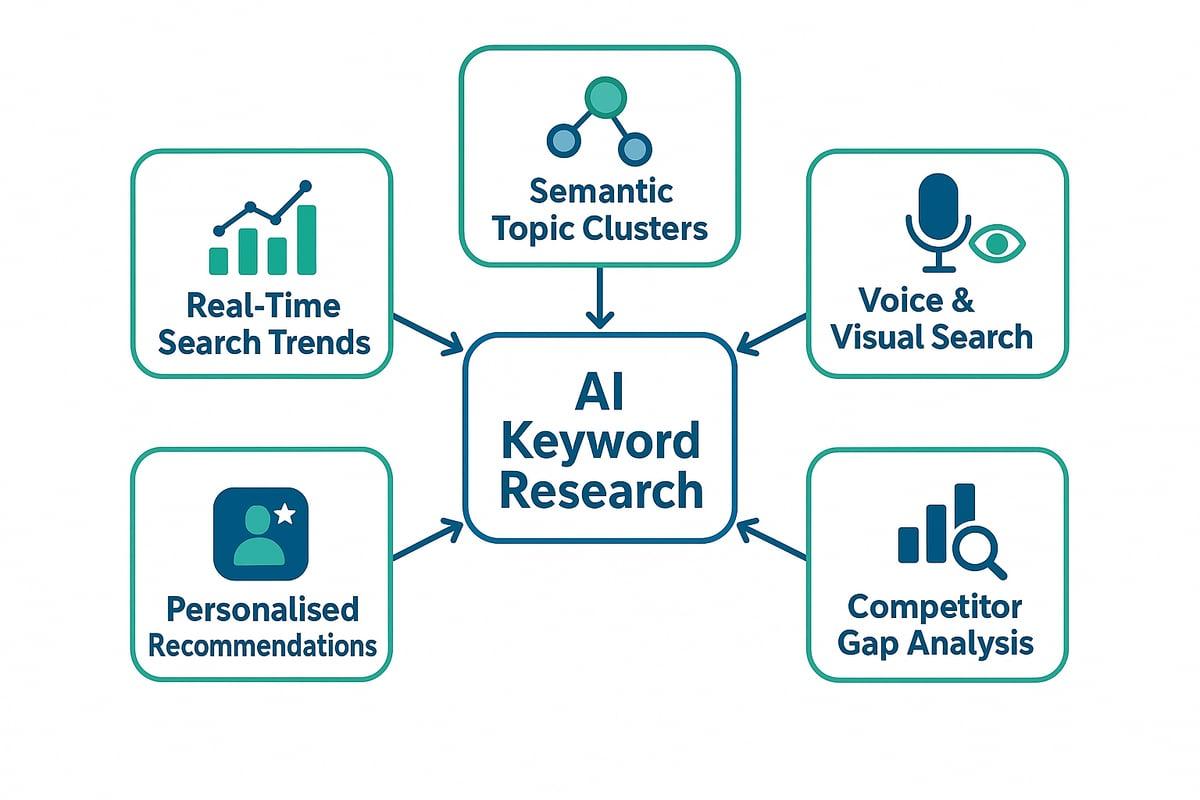
AI is shaking up how we approach keyword research, and 2026 is set to be a game-changer. Forget the old days of endless spreadsheets and guesswork. The next wave of ai keyword research tools is smarter, faster, and more precise than ever.
In this article, you will discover seven powerful ways to harness AI for keyword research. Whether you are a marketer, SEO, or business owner, these actionable strategies and future-proof techniques will help you outpace the competition and dominate organic search.
Get ready to unlock next-generation SEO insights, streamline your workflow, and boost your results with step-by-step guidance.
The Evolution of AI Keyword Research: 2026 and Beyond
The world of ai keyword research has changed dramatically in recent years. In 2026, rapid advancements in artificial intelligence are reshaping every aspect of how we discover, select, and target keywords. Marketers, SEOs, and business owners who understand these changes are gaining a real edge. Let’s break down what’s driving this evolution and how you can stay ahead.

The Rise of AI in SEO
AI adoption within SEO has accelerated at an unprecedented pace. Today’s ai keyword research tools harness machine learning, natural language processing, and real-time data to uncover insights that were once out of reach.
For instance, platforms like Semrush and Ahrefs now use AI not just to suggest keywords, but to build entire content strategies by analysing competitor gaps and user intent. These tools understand context, semantics, and the relationships between topics, making traditional manual research look outdated.
Key Benefits of AI-Powered Keyword Research
The main advantage of ai keyword research is speed. AI rapidly processes vast datasets, slashing the hours spent on manual analysis.
- Surfaces hidden opportunities through predictive analytics and clustering
- Personalises recommendations for your website, industry, and audience
- Offers domain-specific suggestions that align with your site’s ranking potential
For example, AI tools now tailor keyword lists to your domain, giving you a bespoke roadmap for growth.
Shifting Search Behaviours and AI’s Role
Search behaviour is changing fast. Voice, visual, and conversational queries are now mainstream, demanding broader and more adaptable strategies.
AI tracks these shifts in real time, allowing ai keyword research to keep pace with new trends. By 2026, over 60 percent of searches are projected to be influenced by AI-driven engines like ChatGPT and Perplexity, according to AI’s Impact on SEO in 2026.
This means marketers need to think beyond traditional keywords and adapt content for these emerging channels.
Competitive Edge: Why Mastery Matters
With more businesses investing in ai keyword research, only those who truly master these tools will stand out. Early adopters are already seeing first-mover advantages in new keyword spaces.
- Brands using AI topic clustering report 20 to 30 percent faster content ranking times
- AI-driven analysis closes competitor gaps before others even spot them
If you want to outperform your rivals, you need to get comfortable with the nuances and opportunities these platforms unlock.
Challenges and Considerations
Despite its power, ai keyword research isn’t perfect. Human oversight remains essential to ensure accuracy and context.
Over-reliance on AI can lead to generic, uninspired content if you’re not careful. The most successful marketers combine AI insights with creativity and expertise. Continuous learning is vital as these tools evolve. Stay curious, keep your skills sharp, and you’ll be ready for whatever the future brings.
7 Powerful Ways to Master AI Keyword Research in 2026
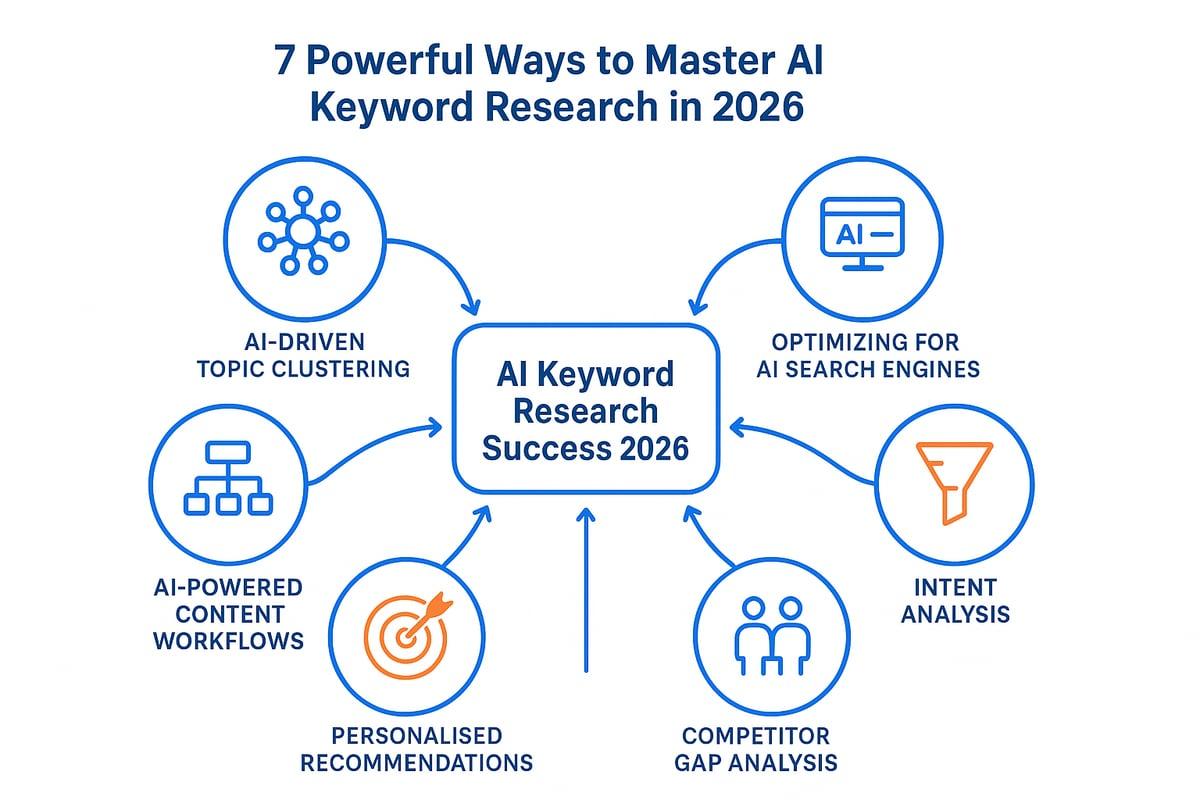
Ready to future-proof your SEO game? The ai keyword research landscape is rapidly evolving, and 2026 is shaping up to be the year of next-level mastery. Below, you’ll find seven powerful, practical strategies to help you stay ahead. Let’s dive into the actionable steps that will transform how you discover, analyse, and use keywords with AI.

1. Embrace AI-Driven Topic Clustering
The days of chasing individual keywords are fading. With ai keyword research, topic clustering is now a must-have for building authority and relevance. AI tools group keywords by meaning and intent, not just by search volume or difficulty. This shift allows you to cover topics holistically, making your site a go-to resource.
Let’s look at how this works. Platforms like WriterZen and Surfer SEO use advanced clustering algorithms. They analyse your niche, your competitors, and trending topics to build clusters around main pillars. For example, instead of targeting “best laptops 2026” alone, you’d create a cluster with related queries like “laptop buying guide,” “laptop trends 2026,” and “top laptops for students.”
Why does this matter? Topic clusters help both users and search engines understand your expertise. AI-driven clusters also reveal gaps in your competitors’ content, giving you an edge. Data shows marketers using these techniques see up to 40% more traffic to their cluster pages.
Here’s how to get started:
- Use clustering tools to analyse your site and competitors.
- Map out pillar and cluster content based on AI suggestions.
- Regularly update clusters as new trends emerge.
A table for quick comparison:
| Traditional Keyword Targeting | AI Topic Clustering |
|---|---|
| Focuses on single keywords | Focuses on groups of intent |
| Manual, time-consuming | Automated, scalable |
| Limited topical authority | Builds strong authority |
By adopting ai keyword research with clustering, you’ll future-proof your site’s structure and unlock higher rankings across related terms.
2. Leverage Real-Time Search Data and Trends
In 2026, reacting to trends is not enough. Ai keyword research lets you predict and act on them as they happen. Modern AI tools ingest live search data, monitor social signals, and track trending queries across Google, YouTube, Amazon, and even AI-powered engines.
Imagine this: You spot a surge in “eco-friendly tech gadgets” on social media. AI tools like Semrush and Ahrefs can alert you in real time, so you target those keywords before your competitors catch on. This first-mover advantage is crucial, with real-time keyword monitoring boosting your ranking chances by up to 25%.
Why is this a game-changer? You’re not guessing what people want; you’re responding to what they’re searching for right now. This approach keeps your content relevant and visible.
Get started with these steps:
- Set up AI alerts for trending topics in your sector.
- Monitor cross-channel data for new keyword opportunities.
- Update your content quickly to capture fresh search interest.
Consider this workflow:
- AI scans live search and social data.
- Alerts you to emerging trends.
- You adapt your content, fast.
With ai keyword research, you’ll always be a step ahead, turning fleeting trends into lasting traffic.
3. Optimise for AI Search Engines and Generative Results
Search is changing. In 2026, people are asking questions not just to Google, but to AI search engines like ChatGPT, Perplexity, and Gemini. Ai keyword research must now include optimisation for these platforms, not just traditional engines.
How do you adapt? Focus on conversational, long-tail, and question-based keywords. Generative Engine Optimisation (GEO) strategies help your content surface in AI-powered answers and summaries. For example, instead of only targeting “digital marketing tips,” you’d include phrases like “How can I improve my digital marketing in 2026?” or “What are the latest AI SEO strategies?”
It’s not just about keywords, though. Analysing AI search outputs reveals gaps—areas where your competitors haven’t optimised. By tailoring your content to fill these gaps, you increase your chances of being featured in AI-generated results.
By 2026, up to 30% of informational queries will be answered directly by AI engines. If you’re not visible here, you’re missing a huge share of traffic.
For deeper insights on adapting your strategy, check out Generative AI in SEO, which explores how generative models are transforming keyword research and content optimisation.
Action steps:
- Research how AI engines phrase and answer questions in your niche.
- Optimise content for natural language queries.
- Track your visibility in AI-generated summaries and tweak accordingly.
With ai keyword research tuned for generative results, you’ll capture audiences where they’re searching next.
4. Integrate Search Intent Analysis Using AI
Understanding why people search is just as important as what they search for. Ai keyword research now leverages AI to classify keywords by intent: informational, transactional, navigational, or commercial. This allows you to map keywords to each stage of your funnel, ensuring your content meets users’ needs.
For example, Moz Pro’s AI-powered intent analysis can help you prioritise keywords that are more likely to convert, not just drive traffic. Say you’re selling software—targeting “best project management tools for small teams” (commercial intent) will get you further than simply ranking for “project management.”
Why does this matter? Campaigns that use AI for intent mapping see up to 35% higher conversion rates. You’re not just attracting visitors; you’re attracting the right visitors.
How to use this approach:
- Segment your keyword list by intent using AI tools.
- Create content that matches each intent type, from blog posts (informational) to product pages (transactional).
- Link related content to guide users through the buyer’s journey.
Here’s a quick code snippet to illustrate intent tagging:
# Example: Tagging keywords by intent
keywords = ["buy running shoes", "running shoe reviews", "nearest running shop"]
intents = ["transactional", "informational", "navigational"]
keyword_intent = dict(zip(keywords, intents))
print(keyword_intent)
By harnessing ai keyword research for intent, you’ll boost ROI and create content that truly resonates.
5. Automate Competitor Gap Analysis with AI
Manual competitor analysis is tedious and slow. Ai keyword research tools now automate the process, scanning rival sites to uncover keyword gaps and opportunities unique to your domain.
With platforms like Semrush, Ahrefs, and Surfer SEO, you can instantly see which keywords your competitors rank for but you don’t. AI prioritises these gaps by ranking difficulty and potential impact, so you know where to focus first.
Why is this powerful? Marketers using AI-driven gap analysis report discovering keywords twice as fast. You’re not just playing catch-up; you’re leapfrogging ahead by targeting overlooked or weakly defended terms.
Here’s how to put this into action:
- Run regular AI-powered competitor audits.
- Review suggested keyword gaps and their ranking potential.
- Prioritise and create content that targets these opportunities.
A sample table for tracking gaps:
| Competitor Keyword | Your Ranking | Difficulty | Opportunity Score |
|---|---|---|---|
| "cloud security trends 2026" | Not ranked | Medium | High |
| "AI compliance tools" | Not ranked | Low | Medium |
By automating competitor analysis with ai keyword research, you’ll keep your strategy fresh and always a step ahead.
6. Personalise Keyword Recommendations with Domain-Level AI Analysis
Generic keyword lists are out. Ai keyword research tools now use AI to analyse your site’s authority, ranking history, and content strengths, providing personalised keyword suggestions that play to your unique advantages.
Take Semrush’s Keyword Magic Tool, for instance. Input your domain, and the AI evaluates your performance, competitors, and niche. The result? Tailored recommendations that focus your efforts where you’re most likely to win.
Why does this matter? Personalised keyword recommendations can improve your ranking efficiency by 20%. Instead of spreading yourself thin, you concentrate on terms with the highest potential for your site.
How to get started:
- Enter your site and main competitors into an AI-powered tool.
- Review the suggested keywords, prioritised by your domain’s strengths.
- Build content and link strategies around these personalised opportunities.
A few benefits of this approach:
- Saves time by eliminating irrelevant keywords.
- Increases the likelihood of ranking quickly.
- Adapts as your site grows or shifts focus.
With ai keyword research at the domain level, you turn your site’s unique qualities into a strategic advantage.
7. Streamline Content Creation and Optimisation with AI Workflows
The final piece of the puzzle? Connecting research to action. Ai keyword research is most powerful when integrated into a seamless, AI-powered workflow that covers everything from keyword discovery to content briefs and on-page optimisation.
Tools like Surfer SEO and RightBlogger bring keyword suggestions, SEO scoring, and content outlines together in one place. You can generate briefs, optimise headers, and check keyword density—all while writing.
Why is this important? AI-driven workflows can cut your content production time in half. The less time you spend switching between tools, the faster you publish, and the sooner you see results.
Steps to streamline your process:
- Use all-in-one AI platforms for research, writing, and optimisation.
- Set up templates and checklists for each step.
- Continuously review AI recommendations as you create and update content.
A simple workflow might look like this:
- Research keywords and topics with AI.
- Generate a content brief.
- Write and optimise in an AI-powered editor.
- Publish and monitor results.
By embracing ai keyword research in your workflow, you’ll transform your SEO process from slow and manual to fast, data-driven, and highly effective.
Essential AI Keyword Research Tools for 2026
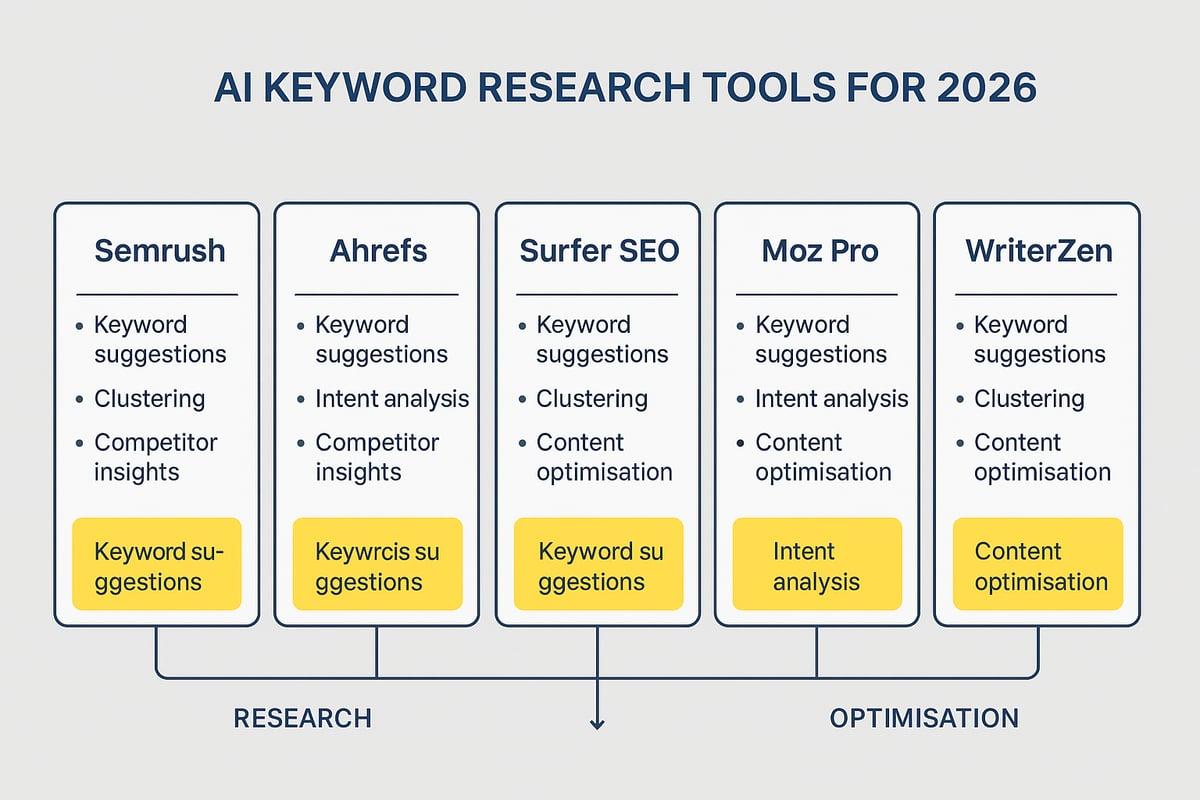
Choosing the right tools is the backbone of effective ai keyword research in 2026. With dozens of platforms now harnessing AI for smarter, faster insights, finding the perfect fit can feel overwhelming. The good news? Today’s leading solutions offer powerful features to help you uncover opportunities, outpace competitors, and future-proof your strategy. If you want a deeper dive into how these tools fit into broader AI-powered SEO strategies, check out our dedicated insights guide.

Semrush (From $129.95/mo)
Semrush remains a powerhouse for ai keyword research, combining keyword discovery, content planning, and deep analytics in one toolkit. Its AI-driven modules suggest high-potential keywords, analyse competitor gaps, and personalise recommendations based on your domain’s strengths.
- Features: AI keyword suggestions, competitor tracking, content optimisation, traffic analytics.
- Benefits: Comprehensive strategy, real-time updates, domain-level insights.
- Ideal for: Agencies, SEOs, and businesses needing robust, all-in-one ai keyword research.
- Pros: Wide feature set, reliable data, customisable reports.
- Cons: Premium pricing, some advanced ai keyword research features require higher tiers.
Semrush’s clustering tools also help structure your site for topical authority, making it a smart choice for scaling ai keyword research efforts.
Ahrefs (From $99/mo)
Ahrefs is a top contender in ai keyword research, especially for those targeting multiple platforms like Google, YouTube, and Amazon. Its AI modules scan billions of data points to surface keyword ideas, track intent, and spot technical issues.
- Features: Multi-channel ai keyword research, intent analysis, technical SEO audits.
- Benefits: Cross-platform insights, real-time data, competitor benchmarking.
- Ideal for: Marketers who need broad keyword coverage and powerful analytics.
- Pros: Large database, actionable alerts, advanced competitor analysis.
- Cons: Higher cost for small teams, limited free trial.
If your ai keyword research spans several search engines, Ahrefs offers the flexibility and depth you need.
Surfer SEO (From $79/mo)
Surfer SEO streamlines ai keyword research by integrating keyword optimisation directly into your writing workflow. Its AI content editor scores your content in real time, offering keyword suggestions and topical clusters as you write.
- Features: In-editor ai keyword research, content scoring, topical mapping.
- Benefits: Fast feedback, improved workflow, helps build topical authority.
- Ideal for: Content creators and SEOs wanting instant, actionable ai keyword research insights.
- Pros: User-friendly, seamless integration, clear suggestions.
- Cons: Not as deep for core ai keyword research compared to larger platforms.
Surfer SEO’s strength lies in turning keyword research into immediate action, helping you optimise content as you go.
Moz Pro (From $49/mo)
Moz Pro delivers ai keyword research with a focus on simplicity and intent-driven insights. Its AI-powered keyword explorer and domain analysis make it accessible for small businesses and agencies seeking ethical, user-friendly solutions.
- Features: Keyword explorer, domain snapshots, AI intent classification.
- Benefits: Easy navigation, granular insights, intent mapping.
- Ideal for: SMEs and agencies starting out with ai keyword research.
- Pros: Affordable, intuitive interface, strong focus on search intent.
- Cons: Smaller database, fewer advanced ai keyword research features.
Moz Pro is an excellent entry point for those prioritising clarity, intent, and ease of use in their ai keyword research.
WriterZen (From $19/mo)
WriterZen offers an affordable gateway to ai keyword research, specialising in keyword clustering and topic discovery. Its visual approach to cluster mapping helps you identify content gaps and new opportunities quickly.
- Features: AI keyword clusters, content planning, topic suggestions.
- Benefits: Budget-friendly, rapid setup, easy for beginners.
- Ideal for: Startups, bloggers, and marketers looking to start ai keyword research without breaking the bank.
- Pros: Fast onboarding, clear cluster visualisation, good for ideation.
- Cons: Limited integrations, fewer advanced analytics.
WriterZen is perfect for small teams or solo creators who want powerful ai keyword research tools with minimal complexity.
| Tool | Starting Price | Key AI Features | Best For |
|---|---|---|---|
| Semrush | $129.95/mo | AI suggestions, clustering, analytics | Agencies, large businesses |
| Ahrefs | $99/mo | Multi-channel, intent, competitor | Broad market, cross-platform |
| Surfer SEO | $79/mo | In-editor, topical mapping | Writers, content teams |
| Moz Pro | $49/mo | Intent analysis, easy interface | SMEs, beginners |
| WriterZen | $19/mo | Clustering, topic discovery | Startups, bloggers |
With the right ai keyword research tool, you can unlock hidden traffic, streamline your workflow, and make smarter SEO decisions in 2026.
Advanced AI Keyword Research Best Practices for 2026
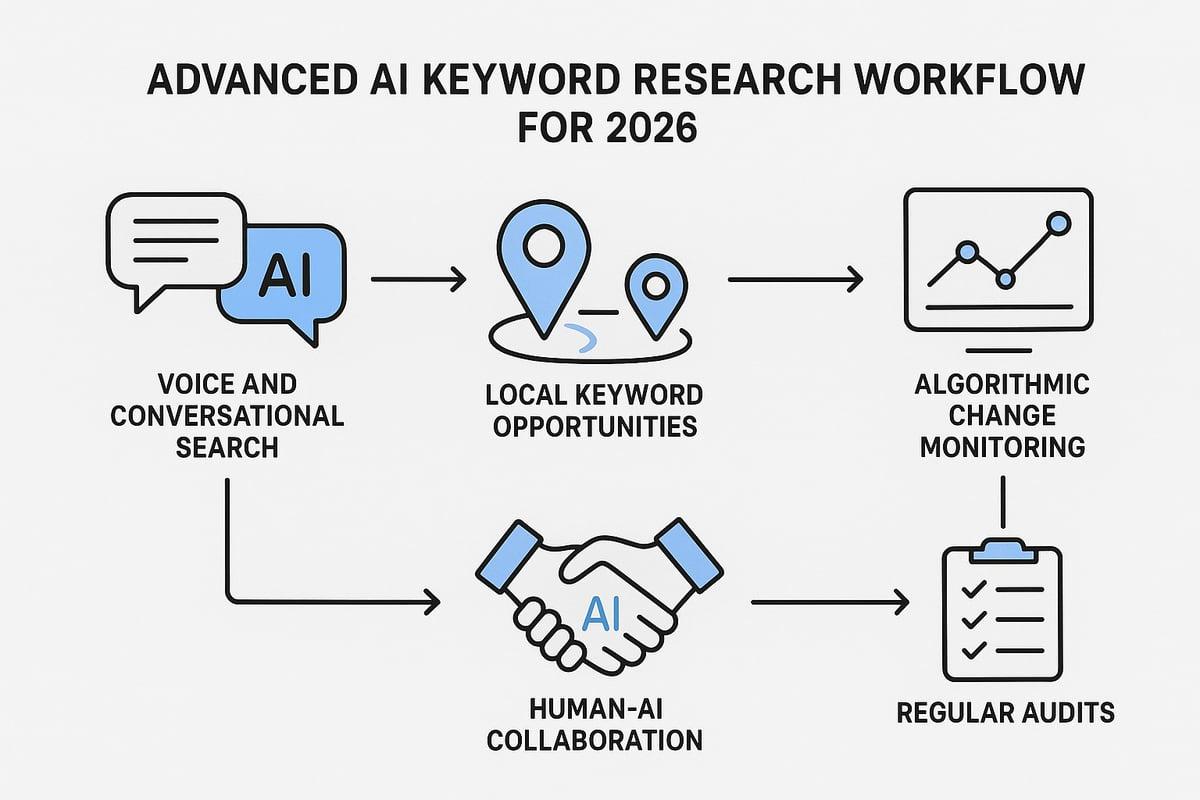
Staying ahead in ai keyword research requires more than just tools. It is about mastering forward-thinking strategies that keep your SEO game sharp as AI evolves. Let us explore five essential best practices every marketer needs to future-proof their approach to ai keyword research.

Build for Voice and Conversational Search
Optimising for voice and conversational queries is now non-negotiable in ai keyword research. People are searching as they speak, using natural language and full questions.
- Target long-tail, question-based phrases like "how do I…?" or "what is the best way to…?"
- Focus on featured snippets and conversational answers.
- Use AI tools to spot trending question formats.
By incorporating these strategies into ai keyword research, you position your content for smart speakers and voice assistants, capturing this fast-growing search segment.
Prioritise Local and Hyper-Local Keyword Opportunities
Local SEO is evolving rapidly, and ai keyword research is at the heart of this shift. AI now delivers granular, location-specific keyword data.
- Use AI to track "near me" and hyper-local trends.
- Analyse competitor rankings by city, neighbourhood, or even street.
- Tailor content to reflect local intent and colloquial language.
This approach ensures your business stands out in local searches, especially for mobile and on-the-go users.
Monitor and Adapt to Algorithmic Changes
Search engine algorithms are in constant flux, and ai keyword research must adapt just as quickly. Modern AI tools track shifts in SERPs, identify new ranking factors, and flag changes in keyword performance.
- Monitor AI-generated search results and answer boxes.
- Adjust strategies in real time as algorithms evolve.
- Leverage analytics for proactive decision-making.
For a deeper dive into how AI-driven analytics are transforming this process, see AI marketing analytics explained.
Combine Human Expertise with AI Insights
While AI can process data at scale, human intuition remains vital in ai keyword research. Blend the two for the best results.
- Use AI for data gathering, clustering, and trend spotting.
- Apply human judgement to review keyword relevance, context, and brand fit.
- Integrate customer feedback and market research for richer insights.
This synergy leads to more effective, nuanced keyword strategies that machines alone cannot deliver.
Regularly Audit and Refresh Keyword Strategies
Ongoing optimisation is essential for ai keyword research to deliver consistent results. AI can automate audits, but it is up to you to act on the findings.
- Schedule quarterly keyword reviews to spot declining trends.
- Update topic clusters and intent mapping using AI insights.
- Identify underperforming pages and optimise content accordingly.
By making audits routine, you keep your strategy aligned with the latest trends and opportunities in ai keyword research.
Future-Proofing Your AI Keyword Research Strategy
Staying ahead in ai keyword research means committing to lifelong learning. AI technology is moving at lightning speed, so your skills and strategies must keep pace.
Make time to upskill regularly. This could mean joining webinars, experimenting with beta tools, or getting involved in AI SEO communities. For hands-on, practical advice, the AI SEO in 2026: The New Rules video is a brilliant place to start.
Work closely with your team, sharing new insights and adapting together. Businesses that invest in ongoing AI SEO training consistently see stronger organic growth and lasting results.
If you’re serious about staying ahead in 2026, now’s the time to put these AI keyword research strategies to work. I know it can be a lot to take in—navigating new tools, shifting search behaviours, and keeping your site converting at its best. But you don’t have to muddle through it alone. Let’s chat about what AI can do for your business and map out a plan that actually gets you more leads and sales. Book your Get free 45 min consultation and let’s get your SEO working smarter, not harder.
AI is shaking up how we approach keyword research, and 2026 is set to be a game-changer. Forget the old days of endless spreadsheets and guesswork. The next wave of ai keyword research tools is smarter, faster, and more precise than ever.
In this article, you will discover seven powerful ways to harness AI for keyword research. Whether you are a marketer, SEO, or business owner, these actionable strategies and future-proof techniques will help you outpace the competition and dominate organic search.
Get ready to unlock next-generation SEO insights, streamline your workflow, and boost your results with step-by-step guidance.
The Evolution of AI Keyword Research: 2026 and Beyond
The world of ai keyword research has changed dramatically in recent years. In 2026, rapid advancements in artificial intelligence are reshaping every aspect of how we discover, select, and target keywords. Marketers, SEOs, and business owners who understand these changes are gaining a real edge. Let’s break down what’s driving this evolution and how you can stay ahead.

The Rise of AI in SEO
AI adoption within SEO has accelerated at an unprecedented pace. Today’s ai keyword research tools harness machine learning, natural language processing, and real-time data to uncover insights that were once out of reach.
For instance, platforms like Semrush and Ahrefs now use AI not just to suggest keywords, but to build entire content strategies by analysing competitor gaps and user intent. These tools understand context, semantics, and the relationships between topics, making traditional manual research look outdated.
Key Benefits of AI-Powered Keyword Research
The main advantage of ai keyword research is speed. AI rapidly processes vast datasets, slashing the hours spent on manual analysis.
- Surfaces hidden opportunities through predictive analytics and clustering
- Personalises recommendations for your website, industry, and audience
- Offers domain-specific suggestions that align with your site’s ranking potential
For example, AI tools now tailor keyword lists to your domain, giving you a bespoke roadmap for growth.
Shifting Search Behaviours and AI’s Role
Search behaviour is changing fast. Voice, visual, and conversational queries are now mainstream, demanding broader and more adaptable strategies.
AI tracks these shifts in real time, allowing ai keyword research to keep pace with new trends. By 2026, over 60 percent of searches are projected to be influenced by AI-driven engines like ChatGPT and Perplexity, according to AI’s Impact on SEO in 2026.
This means marketers need to think beyond traditional keywords and adapt content for these emerging channels.
Competitive Edge: Why Mastery Matters
With more businesses investing in ai keyword research, only those who truly master these tools will stand out. Early adopters are already seeing first-mover advantages in new keyword spaces.
- Brands using AI topic clustering report 20 to 30 percent faster content ranking times
- AI-driven analysis closes competitor gaps before others even spot them
If you want to outperform your rivals, you need to get comfortable with the nuances and opportunities these platforms unlock.
Challenges and Considerations
Despite its power, ai keyword research isn’t perfect. Human oversight remains essential to ensure accuracy and context.
Over-reliance on AI can lead to generic, uninspired content if you’re not careful. The most successful marketers combine AI insights with creativity and expertise. Continuous learning is vital as these tools evolve. Stay curious, keep your skills sharp, and you’ll be ready for whatever the future brings.
7 Powerful Ways to Master AI Keyword Research in 2026
Ready to future-proof your SEO game? The ai keyword research landscape is rapidly evolving, and 2026 is shaping up to be the year of next-level mastery. Below, you’ll find seven powerful, practical strategies to help you stay ahead. Let’s dive into the actionable steps that will transform how you discover, analyse, and use keywords with AI.

1. Embrace AI-Driven Topic Clustering
The days of chasing individual keywords are fading. With ai keyword research, topic clustering is now a must-have for building authority and relevance. AI tools group keywords by meaning and intent, not just by search volume or difficulty. This shift allows you to cover topics holistically, making your site a go-to resource.
Let’s look at how this works. Platforms like WriterZen and Surfer SEO use advanced clustering algorithms. They analyse your niche, your competitors, and trending topics to build clusters around main pillars. For example, instead of targeting “best laptops 2026” alone, you’d create a cluster with related queries like “laptop buying guide,” “laptop trends 2026,” and “top laptops for students.”
Why does this matter? Topic clusters help both users and search engines understand your expertise. AI-driven clusters also reveal gaps in your competitors’ content, giving you an edge. Data shows marketers using these techniques see up to 40% more traffic to their cluster pages.
Here’s how to get started:
- Use clustering tools to analyse your site and competitors.
- Map out pillar and cluster content based on AI suggestions.
- Regularly update clusters as new trends emerge.
A table for quick comparison:
| Traditional Keyword Targeting | AI Topic Clustering |
|---|---|
| Focuses on single keywords | Focuses on groups of intent |
| Manual, time-consuming | Automated, scalable |
| Limited topical authority | Builds strong authority |
By adopting ai keyword research with clustering, you’ll future-proof your site’s structure and unlock higher rankings across related terms.
2. Leverage Real-Time Search Data and Trends
In 2026, reacting to trends is not enough. Ai keyword research lets you predict and act on them as they happen. Modern AI tools ingest live search data, monitor social signals, and track trending queries across Google, YouTube, Amazon, and even AI-powered engines.
Imagine this: You spot a surge in “eco-friendly tech gadgets” on social media. AI tools like Semrush and Ahrefs can alert you in real time, so you target those keywords before your competitors catch on. This first-mover advantage is crucial, with real-time keyword monitoring boosting your ranking chances by up to 25%.
Why is this a game-changer? You’re not guessing what people want; you’re responding to what they’re searching for right now. This approach keeps your content relevant and visible.
Get started with these steps:
- Set up AI alerts for trending topics in your sector.
- Monitor cross-channel data for new keyword opportunities.
- Update your content quickly to capture fresh search interest.
Consider this workflow:
- AI scans live search and social data.
- Alerts you to emerging trends.
- You adapt your content, fast.
With ai keyword research, you’ll always be a step ahead, turning fleeting trends into lasting traffic.
3. Optimise for AI Search Engines and Generative Results
Search is changing. In 2026, people are asking questions not just to Google, but to AI search engines like ChatGPT, Perplexity, and Gemini. Ai keyword research must now include optimisation for these platforms, not just traditional engines.
How do you adapt? Focus on conversational, long-tail, and question-based keywords. Generative Engine Optimisation (GEO) strategies help your content surface in AI-powered answers and summaries. For example, instead of only targeting “digital marketing tips,” you’d include phrases like “How can I improve my digital marketing in 2026?” or “What are the latest AI SEO strategies?”
It’s not just about keywords, though. Analysing AI search outputs reveals gaps—areas where your competitors haven’t optimised. By tailoring your content to fill these gaps, you increase your chances of being featured in AI-generated results.
By 2026, up to 30% of informational queries will be answered directly by AI engines. If you’re not visible here, you’re missing a huge share of traffic.
For deeper insights on adapting your strategy, check out Generative AI in SEO, which explores how generative models are transforming keyword research and content optimisation.
Action steps:
- Research how AI engines phrase and answer questions in your niche.
- Optimise content for natural language queries.
- Track your visibility in AI-generated summaries and tweak accordingly.
With ai keyword research tuned for generative results, you’ll capture audiences where they’re searching next.
4. Integrate Search Intent Analysis Using AI
Understanding why people search is just as important as what they search for. Ai keyword research now leverages AI to classify keywords by intent: informational, transactional, navigational, or commercial. This allows you to map keywords to each stage of your funnel, ensuring your content meets users’ needs.
For example, Moz Pro’s AI-powered intent analysis can help you prioritise keywords that are more likely to convert, not just drive traffic. Say you’re selling software—targeting “best project management tools for small teams” (commercial intent) will get you further than simply ranking for “project management.”
Why does this matter? Campaigns that use AI for intent mapping see up to 35% higher conversion rates. You’re not just attracting visitors; you’re attracting the right visitors.
How to use this approach:
- Segment your keyword list by intent using AI tools.
- Create content that matches each intent type, from blog posts (informational) to product pages (transactional).
- Link related content to guide users through the buyer’s journey.
Here’s a quick code snippet to illustrate intent tagging:
# Example: Tagging keywords by intent
keywords = ["buy running shoes", "running shoe reviews", "nearest running shop"]
intents = ["transactional", "informational", "navigational"]
keyword_intent = dict(zip(keywords, intents))
print(keyword_intent)
By harnessing ai keyword research for intent, you’ll boost ROI and create content that truly resonates.
5. Automate Competitor Gap Analysis with AI
Manual competitor analysis is tedious and slow. Ai keyword research tools now automate the process, scanning rival sites to uncover keyword gaps and opportunities unique to your domain.
With platforms like Semrush, Ahrefs, and Surfer SEO, you can instantly see which keywords your competitors rank for but you don’t. AI prioritises these gaps by ranking difficulty and potential impact, so you know where to focus first.
Why is this powerful? Marketers using AI-driven gap analysis report discovering keywords twice as fast. You’re not just playing catch-up; you’re leapfrogging ahead by targeting overlooked or weakly defended terms.
Here’s how to put this into action:
- Run regular AI-powered competitor audits.
- Review suggested keyword gaps and their ranking potential.
- Prioritise and create content that targets these opportunities.
A sample table for tracking gaps:
| Competitor Keyword | Your Ranking | Difficulty | Opportunity Score |
|---|---|---|---|
| "cloud security trends 2026" | Not ranked | Medium | High |
| "AI compliance tools" | Not ranked | Low | Medium |
By automating competitor analysis with ai keyword research, you’ll keep your strategy fresh and always a step ahead.
6. Personalise Keyword Recommendations with Domain-Level AI Analysis
Generic keyword lists are out. Ai keyword research tools now use AI to analyse your site’s authority, ranking history, and content strengths, providing personalised keyword suggestions that play to your unique advantages.
Take Semrush’s Keyword Magic Tool, for instance. Input your domain, and the AI evaluates your performance, competitors, and niche. The result? Tailored recommendations that focus your efforts where you’re most likely to win.
Why does this matter? Personalised keyword recommendations can improve your ranking efficiency by 20%. Instead of spreading yourself thin, you concentrate on terms with the highest potential for your site.
How to get started:
- Enter your site and main competitors into an AI-powered tool.
- Review the suggested keywords, prioritised by your domain’s strengths.
- Build content and link strategies around these personalised opportunities.
A few benefits of this approach:
- Saves time by eliminating irrelevant keywords.
- Increases the likelihood of ranking quickly.
- Adapts as your site grows or shifts focus.
With ai keyword research at the domain level, you turn your site’s unique qualities into a strategic advantage.
7. Streamline Content Creation and Optimisation with AI Workflows
The final piece of the puzzle? Connecting research to action. Ai keyword research is most powerful when integrated into a seamless, AI-powered workflow that covers everything from keyword discovery to content briefs and on-page optimisation.
Tools like Surfer SEO and RightBlogger bring keyword suggestions, SEO scoring, and content outlines together in one place. You can generate briefs, optimise headers, and check keyword density—all while writing.
Why is this important? AI-driven workflows can cut your content production time in half. The less time you spend switching between tools, the faster you publish, and the sooner you see results.
Steps to streamline your process:
- Use all-in-one AI platforms for research, writing, and optimisation.
- Set up templates and checklists for each step.
- Continuously review AI recommendations as you create and update content.
A simple workflow might look like this:
- Research keywords and topics with AI.
- Generate a content brief.
- Write and optimise in an AI-powered editor.
- Publish and monitor results.
By embracing ai keyword research in your workflow, you’ll transform your SEO process from slow and manual to fast, data-driven, and highly effective.
Essential AI Keyword Research Tools for 2026
Choosing the right tools is the backbone of effective ai keyword research in 2026. With dozens of platforms now harnessing AI for smarter, faster insights, finding the perfect fit can feel overwhelming. The good news? Today’s leading solutions offer powerful features to help you uncover opportunities, outpace competitors, and future-proof your strategy. If you want a deeper dive into how these tools fit into broader AI-powered SEO strategies, check out our dedicated insights guide.

Semrush (From $129.95/mo)
Semrush remains a powerhouse for ai keyword research, combining keyword discovery, content planning, and deep analytics in one toolkit. Its AI-driven modules suggest high-potential keywords, analyse competitor gaps, and personalise recommendations based on your domain’s strengths.
- Features: AI keyword suggestions, competitor tracking, content optimisation, traffic analytics.
- Benefits: Comprehensive strategy, real-time updates, domain-level insights.
- Ideal for: Agencies, SEOs, and businesses needing robust, all-in-one ai keyword research.
- Pros: Wide feature set, reliable data, customisable reports.
- Cons: Premium pricing, some advanced ai keyword research features require higher tiers.
Semrush’s clustering tools also help structure your site for topical authority, making it a smart choice for scaling ai keyword research efforts.
Ahrefs (From $99/mo)
Ahrefs is a top contender in ai keyword research, especially for those targeting multiple platforms like Google, YouTube, and Amazon. Its AI modules scan billions of data points to surface keyword ideas, track intent, and spot technical issues.
- Features: Multi-channel ai keyword research, intent analysis, technical SEO audits.
- Benefits: Cross-platform insights, real-time data, competitor benchmarking.
- Ideal for: Marketers who need broad keyword coverage and powerful analytics.
- Pros: Large database, actionable alerts, advanced competitor analysis.
- Cons: Higher cost for small teams, limited free trial.
If your ai keyword research spans several search engines, Ahrefs offers the flexibility and depth you need.
Surfer SEO (From $79/mo)
Surfer SEO streamlines ai keyword research by integrating keyword optimisation directly into your writing workflow. Its AI content editor scores your content in real time, offering keyword suggestions and topical clusters as you write.
- Features: In-editor ai keyword research, content scoring, topical mapping.
- Benefits: Fast feedback, improved workflow, helps build topical authority.
- Ideal for: Content creators and SEOs wanting instant, actionable ai keyword research insights.
- Pros: User-friendly, seamless integration, clear suggestions.
- Cons: Not as deep for core ai keyword research compared to larger platforms.
Surfer SEO’s strength lies in turning keyword research into immediate action, helping you optimise content as you go.
Moz Pro (From $49/mo)
Moz Pro delivers ai keyword research with a focus on simplicity and intent-driven insights. Its AI-powered keyword explorer and domain analysis make it accessible for small businesses and agencies seeking ethical, user-friendly solutions.
- Features: Keyword explorer, domain snapshots, AI intent classification.
- Benefits: Easy navigation, granular insights, intent mapping.
- Ideal for: SMEs and agencies starting out with ai keyword research.
- Pros: Affordable, intuitive interface, strong focus on search intent.
- Cons: Smaller database, fewer advanced ai keyword research features.
Moz Pro is an excellent entry point for those prioritising clarity, intent, and ease of use in their ai keyword research.
WriterZen (From $19/mo)
WriterZen offers an affordable gateway to ai keyword research, specialising in keyword clustering and topic discovery. Its visual approach to cluster mapping helps you identify content gaps and new opportunities quickly.
- Features: AI keyword clusters, content planning, topic suggestions.
- Benefits: Budget-friendly, rapid setup, easy for beginners.
- Ideal for: Startups, bloggers, and marketers looking to start ai keyword research without breaking the bank.
- Pros: Fast onboarding, clear cluster visualisation, good for ideation.
- Cons: Limited integrations, fewer advanced analytics.
WriterZen is perfect for small teams or solo creators who want powerful ai keyword research tools with minimal complexity.
| Tool | Starting Price | Key AI Features | Best For |
|---|---|---|---|
| Semrush | $129.95/mo | AI suggestions, clustering, analytics | Agencies, large businesses |
| Ahrefs | $99/mo | Multi-channel, intent, competitor | Broad market, cross-platform |
| Surfer SEO | $79/mo | In-editor, topical mapping | Writers, content teams |
| Moz Pro | $49/mo | Intent analysis, easy interface | SMEs, beginners |
| WriterZen | $19/mo | Clustering, topic discovery | Startups, bloggers |
With the right ai keyword research tool, you can unlock hidden traffic, streamline your workflow, and make smarter SEO decisions in 2026.
Advanced AI Keyword Research Best Practices for 2026
Staying ahead in ai keyword research requires more than just tools. It is about mastering forward-thinking strategies that keep your SEO game sharp as AI evolves. Let us explore five essential best practices every marketer needs to future-proof their approach to ai keyword research.

Build for Voice and Conversational Search
Optimising for voice and conversational queries is now non-negotiable in ai keyword research. People are searching as they speak, using natural language and full questions.
- Target long-tail, question-based phrases like "how do I…?" or "what is the best way to…?"
- Focus on featured snippets and conversational answers.
- Use AI tools to spot trending question formats.
By incorporating these strategies into ai keyword research, you position your content for smart speakers and voice assistants, capturing this fast-growing search segment.
Prioritise Local and Hyper-Local Keyword Opportunities
Local SEO is evolving rapidly, and ai keyword research is at the heart of this shift. AI now delivers granular, location-specific keyword data.
- Use AI to track "near me" and hyper-local trends.
- Analyse competitor rankings by city, neighbourhood, or even street.
- Tailor content to reflect local intent and colloquial language.
This approach ensures your business stands out in local searches, especially for mobile and on-the-go users.
Monitor and Adapt to Algorithmic Changes
Search engine algorithms are in constant flux, and ai keyword research must adapt just as quickly. Modern AI tools track shifts in SERPs, identify new ranking factors, and flag changes in keyword performance.
- Monitor AI-generated search results and answer boxes.
- Adjust strategies in real time as algorithms evolve.
- Leverage analytics for proactive decision-making.
For a deeper dive into how AI-driven analytics are transforming this process, see AI marketing analytics explained.
Combine Human Expertise with AI Insights
While AI can process data at scale, human intuition remains vital in ai keyword research. Blend the two for the best results.
- Use AI for data gathering, clustering, and trend spotting.
- Apply human judgement to review keyword relevance, context, and brand fit.
- Integrate customer feedback and market research for richer insights.
This synergy leads to more effective, nuanced keyword strategies that machines alone cannot deliver.
Regularly Audit and Refresh Keyword Strategies
Ongoing optimisation is essential for ai keyword research to deliver consistent results. AI can automate audits, but it is up to you to act on the findings.
- Schedule quarterly keyword reviews to spot declining trends.
- Update topic clusters and intent mapping using AI insights.
- Identify underperforming pages and optimise content accordingly.
By making audits routine, you keep your strategy aligned with the latest trends and opportunities in ai keyword research.
Future-Proofing Your AI Keyword Research Strategy
Staying ahead in ai keyword research means committing to lifelong learning. AI technology is moving at lightning speed, so your skills and strategies must keep pace.
Make time to upskill regularly. This could mean joining webinars, experimenting with beta tools, or getting involved in AI SEO communities. For hands-on, practical advice, the AI SEO in 2026: The New Rules video is a brilliant place to start.
Work closely with your team, sharing new insights and adapting together. Businesses that invest in ongoing AI SEO training consistently see stronger organic growth and lasting results.
If you’re serious about staying ahead in 2026, now’s the time to put these AI keyword research strategies to work. I know it can be a lot to take in—navigating new tools, shifting search behaviours, and keeping your site converting at its best. But you don’t have to muddle through it alone. Let’s chat about what AI can do for your business and map out a plan that actually gets you more leads and sales. Book your Get free 45 min consultation and let’s get your SEO working smarter, not harder.