
AI · 17 min read
AI Search SEO
AI is revolutionising search, and the question is, are your strategies ready for 2026? Search engines are evolving at breakneck speed, and those clinging to old tactics face being left behind.
By Matt Harrison · Published · Updated · Part of the guides behind SEO & Google Ads
AI is revolutionising search, and the question is, are your strategies ready for 2026? Search engines are evolving at breakneck speed, and those clinging to old tactics face being left behind.
Traditional SEO is being shaken up by generative AI, SGE, and conversational search. If you want your business to stay visible and grow, mastering ai search seo is now essential.
This guide is packed with actionable strategies, real-world examples, and expert insights. You’ll learn how to master the latest trends, optimise your site, create content for AI, and future-proof your results. Let’s get you ahead of the curve.
Understanding the AI Search Landscape in 2026
Artificial intelligence is reshaping the way we find information online. As we move towards 2026, the search landscape is changing at breakneck speed. For businesses focused on ai search seo, understanding these shifts is crucial to staying visible and competitive.
The Evolution of AI in Search Engines
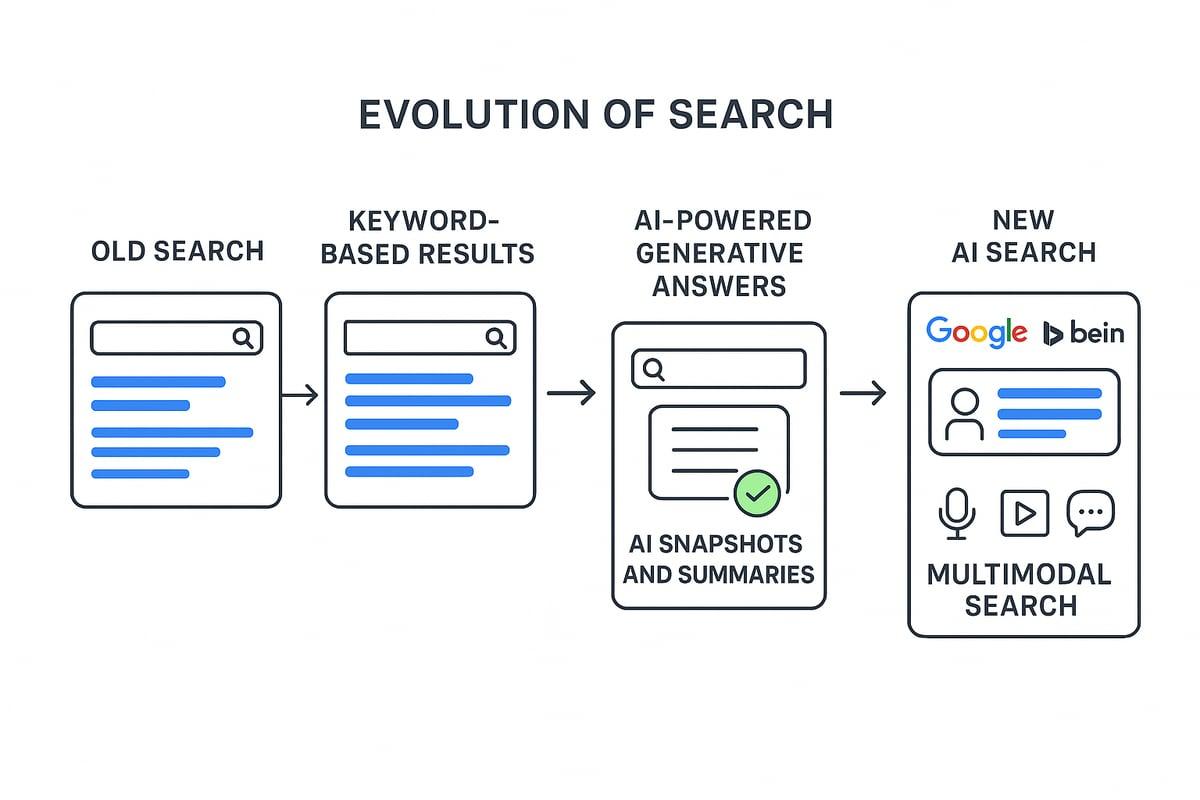
Over the past few years, AI has fundamentally changed how search engines operate. The old days of simple keyword matching are gone. Today, search is driven by intent, context, and machine learning. Google's SGE (Search Generative Experience) and Bing Copilot now use generative AI to provide users with direct answers, summaries, and even interactive snapshots.
Search is no longer just about text. Voice, visual, and multimodal searches are growing in popularity, allowing users to speak, upload images, or mix media when seeking answers. The classic blue links are being replaced by AI-generated answers that appear at the top of results pages.
According to industry forecasts, 70% of all search queries will interact with AI-generated results by 2026. Google's AI Overviews, for example, have already started impacting click-through rates, as users get what they need without scrolling further.
Large language models (LLMs), like those powering SGE, are central to this shift. They interpret context, understand nuance, and deliver results tailored to real user intent. If you want to keep up with ai search seo, you need to grasp these changes and adapt your strategy accordingly.
For a deeper dive into how these innovations are transforming search, check out AI in search innovations.
How AI Changes User Search Behaviour
AI-driven search engines are changing not only how results are delivered, but also how people search. Instead of typing short, fragmented keywords, users now ask conversational questions. They expect instant, context-rich answers, often without clicking through to a website.
This shift is driving the rise of "zero-click" results, where users get everything they need from the search page. With SGE, AI-generated answers often appear above all organic listings, reducing the visibility of traditional rankings.
For brands, this means website traffic could decline if they are not featured in these new AI snapshots. However, it is also a huge opportunity. If your content is authoritative and relevant, your brand can become a trusted source, cited directly in AI answers. Ai search seo is about positioning your site and expertise where AI is most likely to pull information.
The key is to understand what questions your audience is asking, provide clear and direct answers, and structure your content so AI can find and use it. Adapting to these changes is essential for ongoing visibility and growth.
Key AI Search Platforms and Their Differences
The ai search seo landscape is now shaped by a growing number of AI-powered search platforms. Google SGE, Bing Copilot, and emerging tools like Perplexity each have their own approach to sourcing and attributing content.
Let us compare their key differences:
| Platform | Content Sourcing | Attribution | Result Display |
|---|---|---|---|
| Google SGE | Web, knowledge graphs | Direct citations | AI Overviews, Snapshots |
| Bing Copilot | Web, Microsoft Graph | Source links | AI answers, summaries |
| Perplexity | Multiple AI sources | Inline references | Conversational, visual |
Each platform values structured data and authority differently. Google and Bing prioritise sites with robust schema markup, making them more likely to be featured in AI snapshots or summaries. For effective ai search seo, focus on structured data, clear author signals, and topical authority. This ensures your content is eligible for prominent placement, regardless of the platform.
Understanding these platform differences and their requirements will help you tailor your SEO strategy for maximum AI visibility.
Core AI Search Ranking Factors for 2026
What does it take to rank in the new world of AI search seo? Understanding the core ranking factors is essential if you want your business to thrive. Let’s break down the most important elements that drive visibility and trust in AI-powered search engines.
E-E-A-T in the Age of Generative Search
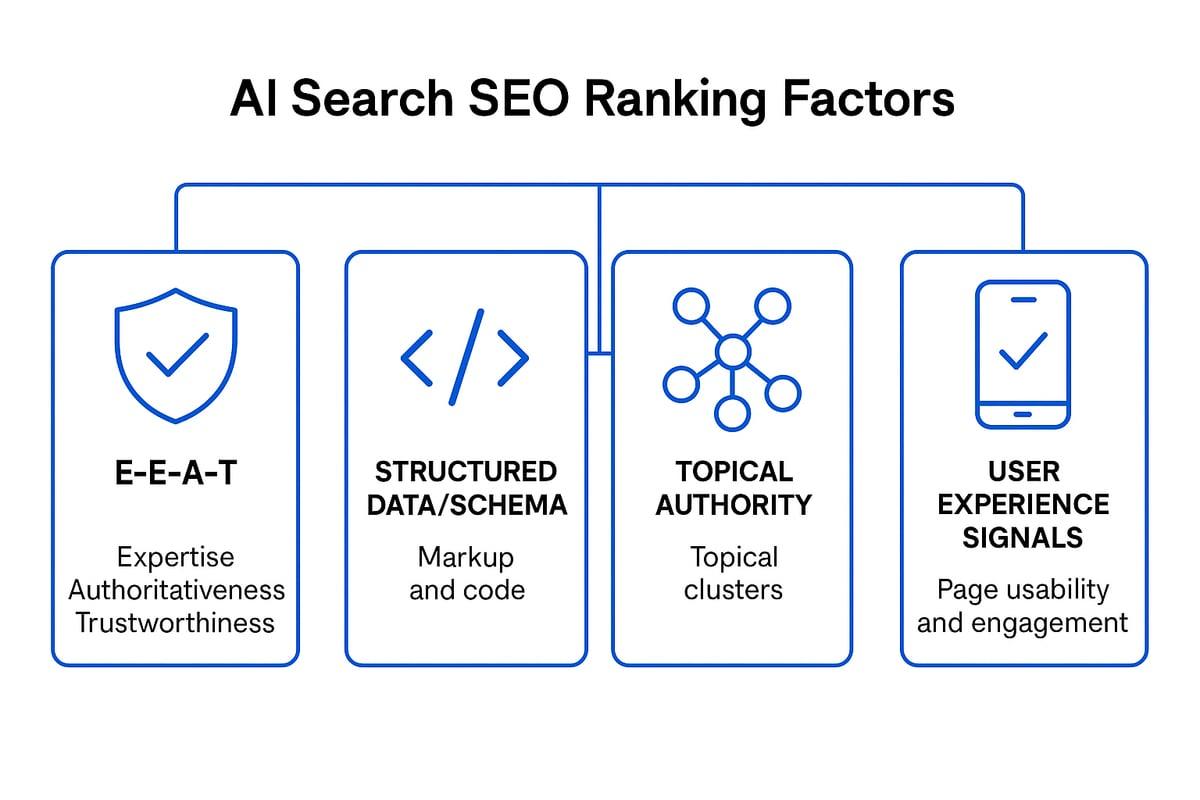
AI search seo has pushed E-E-A-T—Experience, Expertise, Authoritativeness, and Trustworthiness—into the spotlight. Search engines now use AI to evaluate not just what you say, but who says it and how credible it is.
A table summarising how E-E-A-T factors are assessed by AI:
| E-E-A-T Factor | AI Evaluation Signals |
|---|---|
| Experience | Author bylines, personal stories, case studies |
| Expertise | Credentials, citations, in-depth analysis |
| Authoritativeness | Brand mentions, backlinks, topical coverage |
| Trustworthiness | Transparency, privacy policies, accurate information |
AI looks for author profiles, transparent sourcing, and clear signals of authority. For example, Google’s algorithms now favour content with visible authorship and robust citations. According to recent AI SEO statistics for 2026, authoritative and well-cited content is far more likely to be surfaced in AI-generated results.
What does this mean for your ai search seo strategy? Misinformation is quickly penalised, and AI is biased towards trusted brands. Building strong author and brand signals is now non-negotiable.
Structured Data, Schema, and Content Markup
Structured data is the backbone of ai search seo. AI-powered search engines rely on schema markup to understand and surface your content accurately. The right schema types can make your pages eligible for rich results and AI snapshots.
Most relevant schema types for 2026 include:
FAQPageandHowTofor direct answersProductandReviewfor ecommerceArticleandAuthorfor expertise and attributionVideoObjectandImageObjectfor multimedia
By using schema, you help AI parse your content and connect it to relevant queries. For example, a site with comprehensive FAQ schema is more likely to be quoted in AI-generated answers. Implementing structured data is a fundamental part of any successful ai search seo campaign.
Topical Authority and Semantic Content Clusters
Building topical authority is how you become a “go-to” source for ai search seo. AI systems prefer sites that demonstrate in-depth knowledge across a subject, not just isolated keywords.
How do you achieve this? By creating semantic content clusters:
- Develop a pillar page covering the core topic in detail
- Link cluster pages that address subtopics, FAQs, and related questions
- Use internal linking to reinforce context and expertise
Sites in health, finance, and technology that invest in interconnected content consistently dominate AI-driven results. Semantic clusters signal depth, helping AI trust your site as an authority in your space.
User Experience and Engagement Signals
AI search seo is also shaped by user engagement data. AI tracks how users interact with your site—dwell time, bounce rate, and satisfaction all play a role in rankings. If users stay, click, and interact, AI takes notice.
Key engagement signals include:
- Fast load times and mobile-first design
- Interactive elements like quizzes or calculators
- Multimedia content, such as videos and infographics
- Accessibility features for inclusive browsing
Sites that are slow or hard to use struggle to appear in AI-generated results. Prioritising user experience is now a ranking factor you cannot afford to ignore.
AI-Driven Content Creation & Optimisation Strategies
AI is turning content creation on its head. To truly master ai search seo, you need to focus on both people and algorithms. The rules are changing rapidly, and what worked yesterday may not work tomorrow. Let’s break down how you can future-proof your content, captivate human audiences, and become the go-to source for AI-powered search engines.
Crafting Content for AI and Human Audiences
The days of stuffing pages with keywords are over. Now, ai search seo is about matching the way people actually search. AI-powered engines want content that answers questions directly and feels natural in conversation.
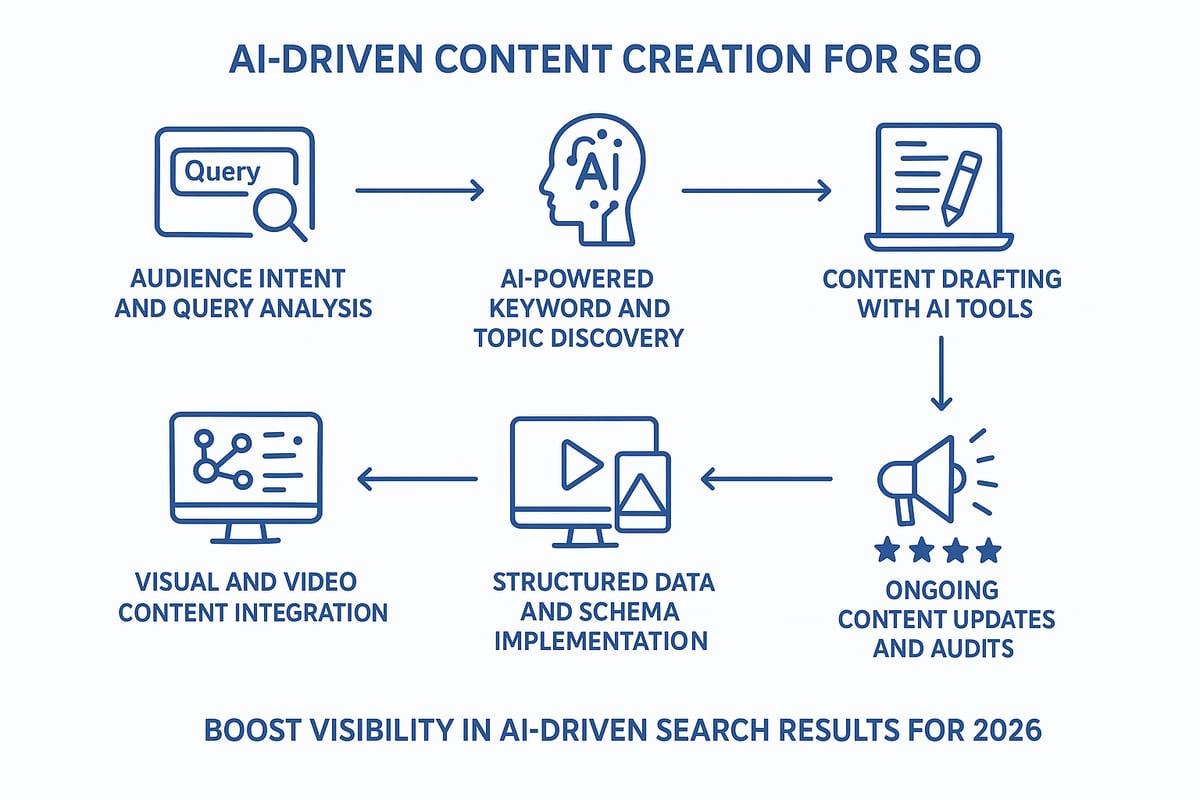
Start by identifying the intent behind queries. Users are asking longer, more specific questions. Write in a tone that feels like a helpful expert, using FAQs, answer-first paragraphs, and natural language. For example, structure your content to address “how,” “why,” and “best” queries—these often get pulled into AI snapshots.
Don’t forget about voice and visual search. Make your content easy to scan, with clear headings, bullet points, and concise explanations. This approach not only helps users but also makes it easier for AI to parse and present your information.
Leveraging AI Tools for Content Ideation and Production
AI can supercharge every stage of your content workflow. For effective ai search seo, start with AI-powered keyword research and topic discovery using tools like ChatGPT, Gemini, or Perplexity. These platforms reveal what your real audience cares about and how they phrase their questions.
Next, use AI tools to draft content briefs and outlines. These can suggest structure, must-have sections, and even identify content gaps. Automate initial drafts, but always keep human oversight for accuracy, tone, and compliance. AI will boost your content velocity, but your expertise ensures it’s trustworthy and unique.
Many small businesses are already using AI to produce at scale without sacrificing quality. The secret? Blend automation with review, so your content meets both user needs and AI’s appetite for clarity and relevance.
Optimising for Featured Snippets, SGE, and AI Snapshots
To win in ai search seo, your content must be structured for quick answers. AI search platforms love direct, succinct responses. Start each section with a clear answer, then elaborate with details, lists, or step-by-step guides.
Use schema markup and HTML tags like <FAQPage>, <HowTo>, and <ListItem> to make your content eligible for featured snippets and SGE. Well-marked content stands a better chance of being cited in AI-generated answers.
Lists, tables, and concise guides often rank higher in SGE and “People Also Ask” boxes. Anticipate follow-up questions and address them in your content. This increases the odds of being surfaced multiple times in a single search journey.
Visual, Video, and Multimodal Content for AI Search
AI search engines now value more than just text. To strengthen your ai search seo strategy, embrace visual, video, and multimodal content. Infographics, product photos, and explainer videos can help you stand out in rich results.
Optimise images with descriptive alt text, and provide detailed video transcripts. Use metadata to reinforce the context of your visuals. Platforms like YouTube and TikTok are increasingly cited in AI-generated answers, so don’t overlook them.
AI wants to serve up the most useful format for each query. By diversifying your content types, you cater to different user preferences and give AI more reasons to feature your brand.
Continuous Content Refresh and Topical Updates
AI-powered search engines prioritise up-to-date, accurate information. For ongoing success with ai search seo, set up regular content audits and refresh schedules. Outdated facts and broken links will push your pages down in AI rankings.
Monitor your competitors and industry news using AI tools. Identify gaps or new angles, then update your content clusters to stay relevant. This approach is essential for evergreen topics and news-driven niches.
For more on maintaining a future-ready content strategy, see these AI SEO best practices. Keeping your content fresh signals to AI that your brand is a reliable source worth surfacing.
Technical SEO for AI Search Engines
Search engines powered by AI are rewriting the SEO rulebook. If you want your site to thrive in the world of ai search seo, technical optimisation is non-negotiable. With AI evolving how content is crawled, understood, and ranked, the foundations of your website must support both traditional crawlers and advanced AI systems.
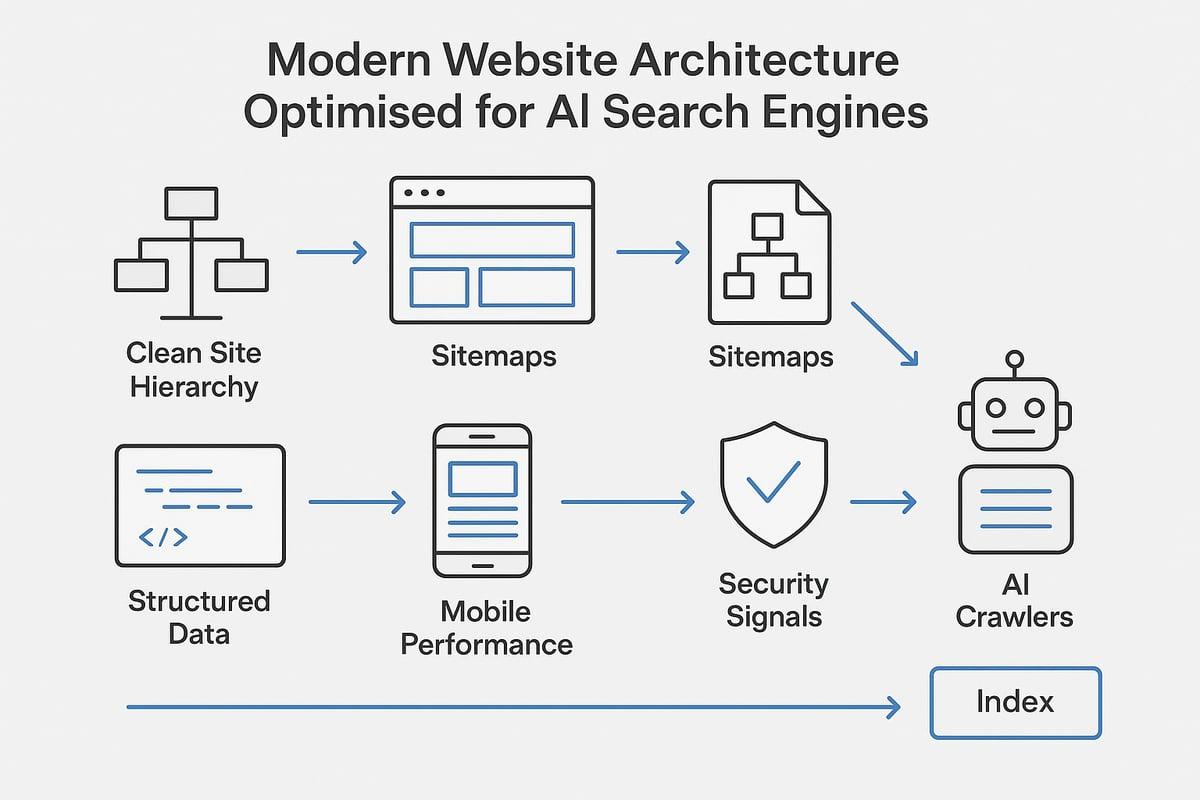
Site Architecture and Crawlability in the AI Era
AI-driven search engines crave clarity. A logical, well-structured site makes it easier for AI to parse and index your content. Start with a clean hierarchy: group related pages, keep navigation simple, and ensure every important page is reachable within three clicks.
Sitemaps and robots.txt files are now critical, not just for Googlebot but for AI scrapers that power SGE and similar platforms. Use canonical tags to prevent duplicate content confusion. Sites that nail this structure consistently outperform in ai search seo, as AI models reward clarity and accessibility.
If you want to dive deeper into technical best practices, check out this guide on Technical SEO for AI search for actionable advice.
Speed, Core Web Vitals, and Mobile-First Design
Performance is more important than ever for ai search seo. AI algorithms use speed metrics like Largest Contentful Paint (LCP), Cumulative Layout Shift (CLS), and First Input Delay (FID) to assess user experience. The majority of top SGE results load in under two seconds, so optimising your site speed is essential.
Mobile-first design is the baseline. Make sure your site is responsive and easily navigable on all devices. Tools like PageSpeed Insights and Lighthouse can help you spot bottlenecks. Fast, frictionless experiences keep both users and AI happy, directly impacting your rankings in ai search seo.
Advanced Structured Data and Entity Optimisation
AI needs context, and structured data is the key. Go beyond basic schema by marking up entities, relationships, and attributes that matter in your industry. Use schema types like FAQ, HowTo, Product, Author, and even custom structures where relevant.
By mapping out entities, you help AI connect your content to broader topics, boosting your authority in ai search seo. For example, linking your brand to Wikidata or the Knowledge Graph increases your chances of being surfaced in AI results. Internal linking between related content further reinforces your expertise.
Here's a quick schema comparison table:
| Schema Type | Use Case | AI Benefit |
|---|---|---|
| FAQ | Answer queries | Direct inclusion in AI answers |
| Product | Ecommerce | Rich product listings |
| Author | Expertise signal | Trust and authority |
Security, Privacy, and Compliance Signals
Trust is everything in ai search seo. AI models prioritise sites that demonstrate security and transparency. Use HTTPS across your entire site. Display clear privacy policies and cookie consent banners.
Compliance is not optional. Meet accessibility standards (WCAG), and ensure GDPR or relevant data regulations are followed. Sites that lack these signals are less likely to appear in AI-generated snapshots. Regular audits, secure data handling, and transparent practices ensure your brand is seen as trustworthy by both users and AI.
Measuring & Adapting SEO Performance in the AI Search Age
Adapting your measurement strategy is crucial as ai search seo transforms the digital landscape. Traditional analytics tools are no longer enough, with AI-driven search experiences reshaping how users find and interact with your brand. To stay visible and competitive, you need to rethink how you track, analyse, and improve your performance in this new era.
Tracking AI Search Visibility and Traffic
Visibility in ai search seo is no longer just about ranking in the top position. AI-powered search engines are changing the rules, surfacing answers, snippets, and citations above traditional listings. This shift means you must monitor where and how your content appears within AI-generated results.
Many businesses now rely on third-party tools to track their presence in SGE (Search Generative Experience), zero-click results, and AI snapshots. These tools help identify when your site is cited or featured in answer boxes, giving you a clearer view of your true reach.
Attribution is a growing challenge. Users might get what they need from an AI-generated summary and never click through to your site. According to Consumer reliance on AI search results, about 80% of search users now rely on AI summaries for at least 40% of their queries, and 60% of searches end without a click. This makes it vital to measure visibility, not just traffic.
To summarise:
- Use dedicated tools to monitor SGE and AI snapshot appearances
- Track how often your brand is cited in AI answers
- Review changes in impressions, not just clicks
Staying ahead in ai search seo means understanding these new visibility metrics.
Analysing Engagement and Conversion Beyond Clicks
Success in ai search seo is no longer measured by clicks alone. Instead, you must look at brand mentions, visibility within AI answers, and how users engage after seeing your content in a summary.
Google Analytics 4, server-side tracking, and custom dashboards can help you map user journeys from AI answers to site actions. Measure mentions, citations, and engagement in AI results to get a fuller picture of your brand’s impact.
Consider these KPIs:
- Frequency of brand citations in AI-generated content
- Dwell time and actions after users land on your site from AI answers
- Paths users take after engaging with your content in AI search
By broadening your focus, you can see how ai search seo drives awareness and conversions, even when clicks are down.
Iterative Testing and Continuous Improvement
With ai search seo evolving rapidly, testing and adaptation are your best tools for sustained success. Set up regular experiments to see what works, from content types to schema markup and technical tweaks.
A/B testing different schema types or content formats can reveal what boosts your AI visibility. Use both AI-driven analysis and hands-on review to identify new opportunities.
Build agile workflows:
- Schedule frequent content audits and updates
- Experiment with structured data and internal linking
- Track results and refine strategies quickly
By making continuous improvement part of your ai search seo process, you’ll stay agile and ready to respond as algorithms and user behaviour shift.
Future-Proofing Your SEO: Actionable Steps for 2026 and Beyond
The world of ai search seo will only get more complex as we approach 2026. Future-proofing your strategy is not about ticking boxes, it is about building adaptable systems, acting ethically, and staying ahead of emerging trends. Let us look at how you can keep your business visible, trusted, and competitive in the years ahead.
Building a Sustainable AI Search Strategy
Sustainability in ai search seo is about more than rankings. It is about creating processes that adapt to new algorithms, user behaviours, and technologies. Start by investing in ongoing learning for your team. SEO is not static, so regular training and upskilling are vital.
Diversifying your digital presence matters. Do not rely only on organic search. Build your audience through email marketing, social media, and direct engagement. Brands that do this are more resilient to search platform changes.
Collaboration is another key. Work with AI experts, data analysts, and marketers to keep your strategy sharp. According to Winning in the age of AI search, businesses that adapt quickly to AI-powered search changes outperform their peers. Make agility your superpower.
Ethical Considerations and Responsible AI SEO
Ethics are at the heart of long-term ai search seo success. Avoid shortcuts and manipulative tactics. AI systems are getting better at spotting misleading, spun, or low-quality content. Google and other platforms are penalising sites that lack transparency or spread misinformation.
Prioritise accuracy and user trust in everything you publish. Use clear author bylines, cite trustworthy sources, and make sure your content is regularly reviewed by humans. Human oversight is essential, especially as AI-generated content becomes more common.
Transparency also means clear privacy policies and responsible data handling. If you want to build trust with users and search engines, ethical practices must be woven into your workflow from start to finish. Responsible ai search seo is not just about compliance, it is about reputation and lasting growth.
Adapting to Emerging Trends and Technologies
Change is the only constant in ai search seo. The platforms, ranking factors, and user behaviours you optimise for today will look different by 2026. To stay ahead, keep a close eye on new AI search platforms, formats, and user trends.
Embrace voice search, visual search, and multimodal content. Early adopters of new formats often gain first-mover advantages. Regularly review your analytics and competitor landscape to spot shifts before they become mainstream.
Make continuous improvement a habit. Use tools, industry news, and resources like Generative AI and SEO trends to stay informed. Agility and curiosity are your best defences against disruption. The future of ai search seo belongs to those who adapt, experiment, and never stop learning.
If you’ve made it this far, you already know AI search is shaking up the SEO game—and by 2026, staying visible online will mean rethinking how you attract leads and win sales. I’ve seen firsthand how the right blend of clever content, technical know-how, and AI smarts can put small businesses miles ahead. If you want to talk through your own site, get practical advice, or just figure out what to tackle next, let’s chat. No faff, just an honest look at what’ll actually move the needle for you.
Get free 45 min consultation
Keep reading
More on ai

AI Based SEO
Picture this: your website transforms itself in real time, guided by the power of ai based seo, responding instantly to every search trend and user need. That is not a distant dream—it is how top marketers will win in 2025.
Keyword AI Tools
Struggling to find the right keywords in a sea of AI-powered SEO tools? With so many options, it’s easy to feel overwhelmed and unsure where to start. The rapid growth of keyword ai tools has left digital marketers and business owners searching for clarity.

AI SEO Analyzer
Imagine having the power to run a complete SEO audit in seconds, not days. AI is changing the rules, making it possible to spot hidden issues and opportunities with pinpoint accuracy.
Want this done rather than read?
Tell me what you sell and what isn't working. The audit that starts every engagement is free, and you keep the roadmap either way.