
AI · 11 min read
AI SEO Company
The search landscape has shifted dramatically. Google's algorithms now rely heavily on machine learning, AI-generated content floods search results, and platforms like ChatGPT are changing how people find information. This creates both opportunity and chaos for small businesses trying to rank online. An ai seo company promises to navigate this complexity using artificial intelligence to improve your search rankings, drive traffic, and generate leads. But what does that actually mean, and how do you separate genuine capability from marketing hype?
By Matt Harrison · Published · Updated · Part of the guides behind SEO & Google Ads
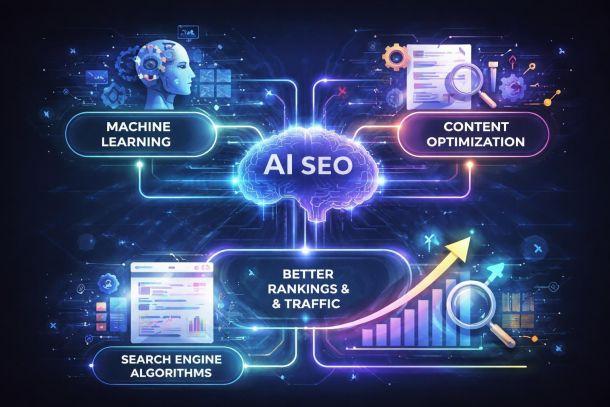
The search landscape has shifted dramatically. Google's algorithms now rely heavily on machine learning, AI-generated content floods search results, and platforms like ChatGPT are changing how people find information. This creates both opportunity and chaos for small businesses trying to rank online. An ai seo company promises to navigate this complexity using artificial intelligence to improve your search rankings, drive traffic, and generate leads. But what does that actually mean, and how do you separate genuine capability from marketing hype?
What an AI SEO Company Actually Does
Traditional SEO agencies focus on keyword research, link building, and content creation using manual processes and basic tools. An ai seo company layers artificial intelligence into every stage of the workflow, from identifying opportunities to creating content and monitoring performance.
The core difference sits in how they process data and make decisions. AI tools can analyse thousands of competing pages in minutes, identify patterns in top-ranking content, and suggest optimisations that would take humans days to spot manually.
Key Services You Should Expect
- AI-powered keyword research that identifies search intent and semantic clusters rather than just high-volume terms
- Content generation and optimisation using large language models to produce first drafts, meta descriptions, and product copy
- Technical SEO audits that use machine learning to prioritise fixes based on likely impact
- Competitor analysis that tracks ranking changes, content updates, and backlink strategies automatically
- Performance forecasting using predictive models to estimate traffic gains from specific optimisations
Most legitimate providers combine AI tools with human oversight. The technology accelerates research and execution, but understanding how AI transforms SEO strategies requires human judgement to align with business goals.
Why Search Engines Changed and What It Means for Your Rankings
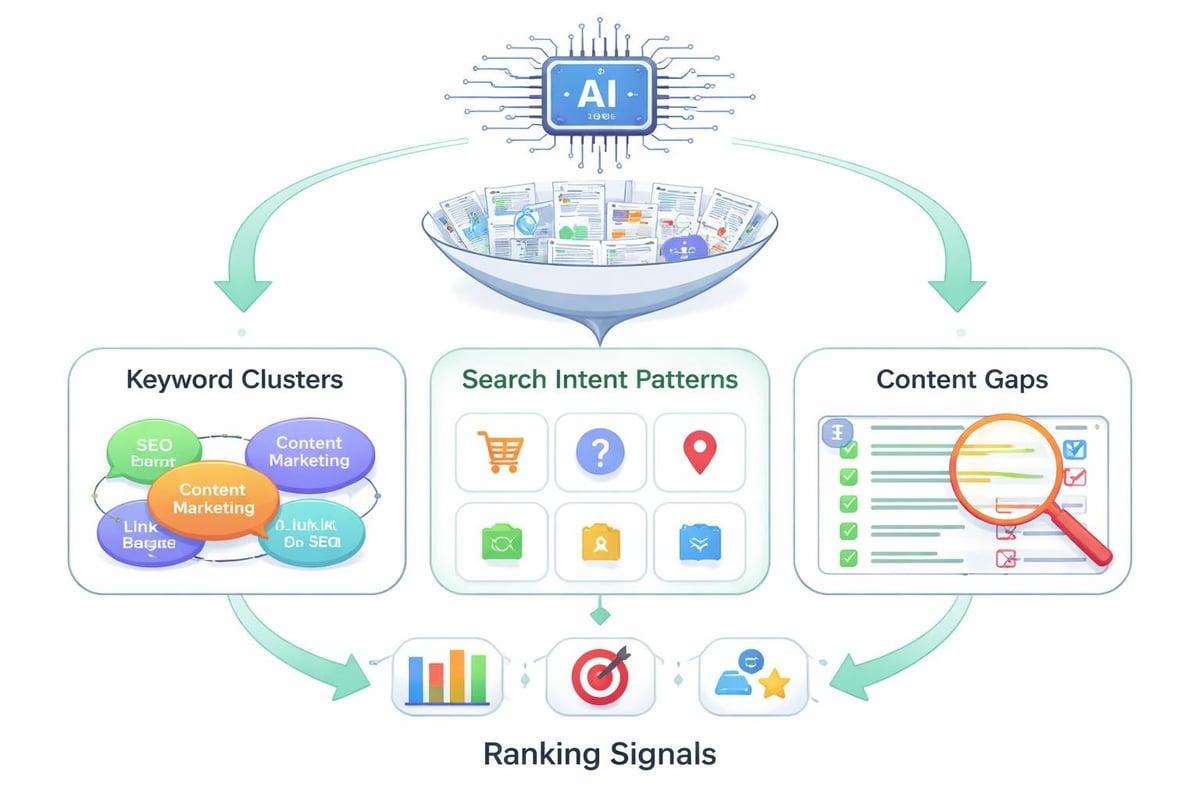
Google's RankBrain, BERT, and MUM updates fundamentally altered how search engines interpret queries. They no longer just match keywords. They understand context, intent, and semantic relationships.
This matters because your content needs to satisfy what the user actually wants, not just include the right phrases. An ai seo company uses natural language processing to analyse top-ranking pages and identify the topics, questions, and depth required to compete.
The AI-Generated Content Problem
Since late 2024, AI-written articles have saturated search results. Some rank well because they're comprehensive and useful. Most are thin, repetitive, and offer nothing new.
Search engines are getting better at detecting low-quality AI content, but the volume keeps increasing. Website publishers now face challenges in maintaining visibility when competing against automated content farms.
| Content Type | Ranking Potential | Main Risk |
|---|---|---|
| Pure AI output with no editing | Low and declining | Detected as low-quality, thin content |
| AI-assisted with human editing | Moderate to high | Still needs expertise and unique insights |
| Human-written with AI research tools | High | Time-intensive but most effective |
The best approach combines AI efficiency with human expertise. Use AI to speed up research, generate outlines, and create first drafts. Then edit ruthlessly, add original insights, and ensure the content actually helps your audience solve problems.
How to Evaluate Whether You Need an AI SEO Company
Not every business benefits from hiring outside help. You might handle SEO internally if you have time, technical knowledge, and access to the right tools. But most small and medium-sized businesses struggle with consistency and expertise.
An ai seo company makes sense when you need to scale content production, improve rankings faster, or lack in-house resources. The technology allows smaller teams to compete against larger competitors by working more efficiently.
Questions to Ask Before Hiring
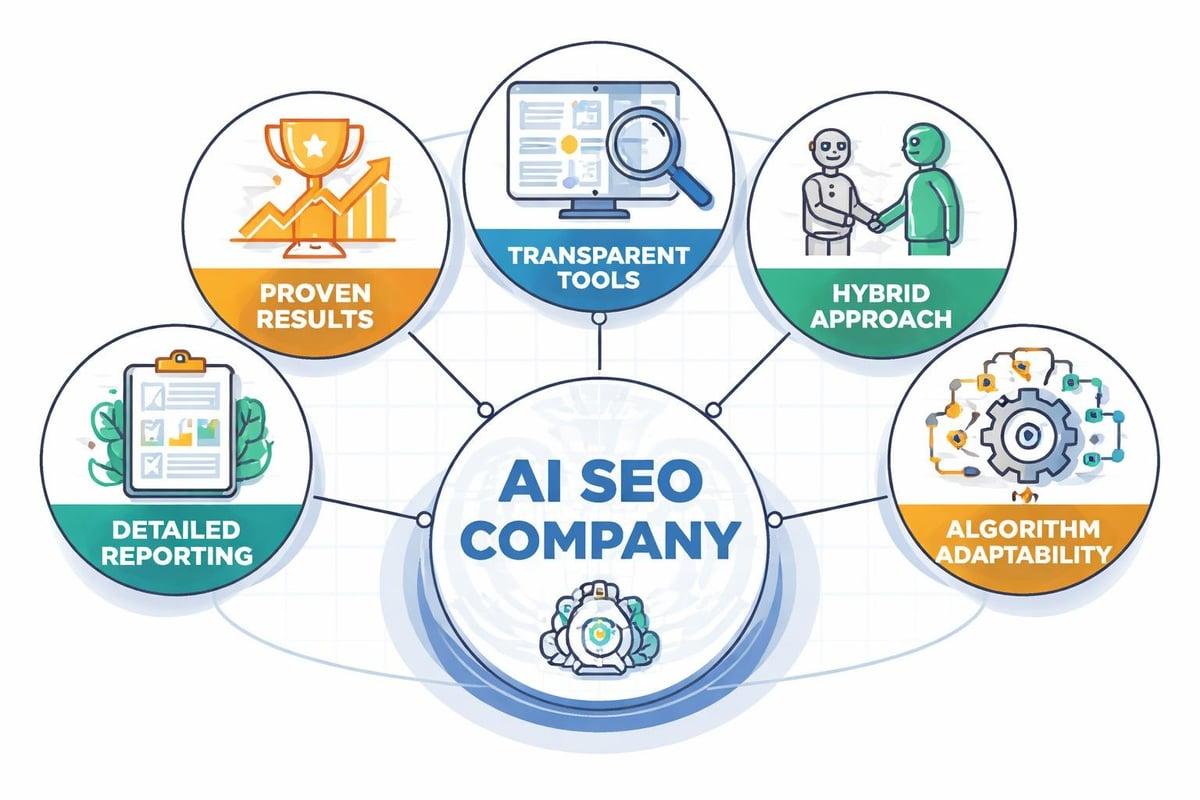
Can you show measurable results from previous clients? Request case studies with traffic growth, ranking improvements, and conversion data. Avoid agencies that only talk about "increased visibility" without numbers.
Which AI tools do you use and how? A credible provider explains their tech stack. Whether they use ChatGPT for content outlines, Claude for editing, or proprietary models for analysis, they should articulate the workflow clearly.
How do you combine AI with human oversight? The best results come from hybrid approaches. AI accelerates research and drafting, but humans add strategy, creativity, and quality control.
What does your reporting include? Monthly reports should track keyword rankings, organic traffic, conversion rates, and specific wins. Generic dashboards with vanity metrics won't help you understand ROI.
How do you adapt to algorithm updates? Google releases multiple updates annually. Your provider should monitor changes, adjust strategies quickly, and communicate impacts to your campaigns.
The Tools That Power Modern AI SEO
Technology matters less than how it's used, but understanding the landscape helps you evaluate capabilities. Most ai seo company teams use a combination of established platforms and newer AI-native tools.
Research and Analysis Platforms
Ahrefs remains essential for backlink analysis, keyword research, and competitor tracking. Recent AI-driven features enhance content optimisation and brand monitoring, making it more powerful for identifying ranking opportunities.
Semrush offers comprehensive site audits, position tracking, and content analysis. Their new AI visibility tools help businesses adapt to AI-generated search results and maintain online presence.
SpyFu specialises in competitor intelligence, revealing the exact keywords and ads your rivals use. AI features now include enhanced content recommendations and brand monitoring capabilities.
Content Creation and Optimisation
- ChatGPT and Claude for generating outlines, expanding bullet points, and creating first drafts
- Jasper and Copy.ai for marketing copy specifically optimised for conversion
- Surfer SEO and Clearscope for on-page optimisation using AI to analyse top-ranking content
- MarketMuse for content planning and identifying gaps in your topical coverage
Emerging AI-Specific Monitoring
Platforms like Otterly.ai monitor how your brand appears in large language model outputs, which matters as more searches happen through AI assistants rather than traditional search engines.
Adapting Your Website for AI-Powered Search
Search behaviour is fragmenting. People still use Google, but they're also asking ChatGPT, Claude, and Perplexity for recommendations. Your website needs to perform well in both traditional search results and AI-generated responses.
This requires structured data, clear information architecture, and content that answers questions directly. Platforms like Wix now offer tools specifically designed to optimise sites for AI-generated search content.
Practical Steps for AI Search Optimisation
- Implement comprehensive schema markup so AI systems understand your content structure, products, services, and business details
- Create FAQ sections that directly answer common questions in natural language
- Structure content with clear headings that make it easy for AI to extract relevant information
- Include product specifications and features in structured formats like tables
- Build topical authority by covering subjects thoroughly rather than surface-level keyword targeting
The goal is making your information easily extractable. AI systems pull from sources that present data clearly and authoritatively.
Cost Structures and What You Should Pay
Pricing for an ai seo company varies wildly based on scope, competition, and business size. Understanding typical models helps you budget appropriately and avoid overpaying for basic services.
| Service Model | Typical Monthly Cost | Best For |
|---|---|---|
| DIY with AI tools | £50-200 | Solo businesses with time and basic SEO knowledge |
| Freelance specialist | £500-2,000 | Small businesses needing specific expertise |
| Small agency (1-5 people) | £1,500-5,000 | Growing businesses requiring consistent support |
| Mid-size agency | £5,000-15,000 | Established companies with competitive markets |
| Enterprise agency | £15,000+ | Large organisations with complex requirements |
The cheapest option isn't always the worst value, and the most expensive isn't guaranteed to deliver results. Focus on expertise, communication, and proven outcomes rather than price alone.
Red Flags in Pricing
Guaranteed rankings for specific positions are impossible to deliver consistently. Algorithm changes, competitor actions, and market dynamics make guarantees meaningless.
Extremely low prices (£200-300 monthly) typically mean outsourced work with minimal customisation or oversight. You get template strategies that rarely work.
Opaque pricing where the agency won't explain what activities your investment funds should raise concerns about accountability and value.
Combining AI SEO with Conversion-Focused Web Development
Traffic without conversions wastes money. The most effective approach combines SEO with website optimisation, particularly for ecommerce businesses.
A Shopify store ranking on page one still fails if product pages confuse visitors, checkout flows create friction, or trust signals are missing. Conversion rate optimisation should work hand-in-hand with SEO strategy.
Consider this: doubling your traffic from 1,000 to 2,000 monthly visitors at a 1% conversion rate gives you 20 sales instead of 10. But improving conversion rate from 1% to 2% on your existing 1,000 visitors also gives you 20 sales, often with less effort and cost.
The smartest approach tackles both. Use AI-powered SEO to increase qualified traffic whilst simultaneously improving user experience, product presentation, and checkout processes.
Integration Points That Matter
- Landing page alignment where paid ads and organic traffic land on pages optimised for conversion
- Content that sells by addressing objections, building trust, and guiding visitors toward purchase decisions
- Technical performance ensuring fast page loads, mobile responsiveness, and smooth interactions
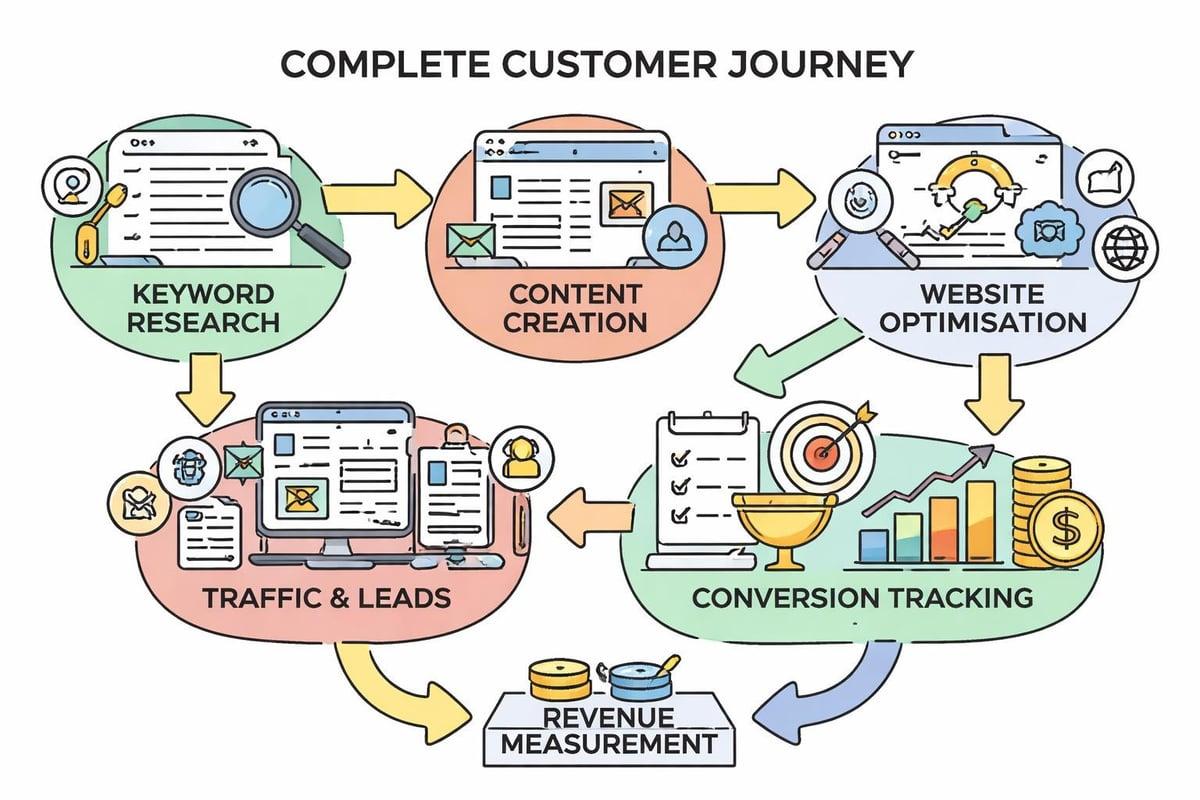
- User journey mapping to identify where visitors drop off and optimise those specific touchpoints
Training Your Team to Work Alongside AI Tools
Hiring an ai seo company shouldn't mean completely outsourcing your marketing knowledge. The best outcomes happen when your internal team understands AI capabilities and can provide strategic input.
This becomes especially important for content creation. AI can generate outlines, expand ideas, and speed up writing, but your team knows your customers, products, and unique value proposition better than any algorithm.
Core Skills Your Team Should Develop
Prompt engineering to get better outputs from ChatGPT, Claude, and other language models. The difference between a vague prompt and a specific, well-structured one is often the difference between unusable content and something genuinely helpful.
AI content editing to spot generic phrasing, factual errors, and sections that need human expertise. AI-generated content typically lacks specific examples, original insights, and brand voice without editing.
Performance analysis to interpret data from Google Analytics, Search Console, and ranking tools. Understanding what's working helps you provide better direction to your ai seo company.
Strategic thinking about which keywords to target, what content to create, and how SEO fits into broader marketing goals. Technology handles execution, but strategy remains fundamentally human.
Many businesses benefit from training sessions on using AI for everyday marketing tasks. Understanding how AI transforms content creation and search strategies helps teams work more efficiently and make better decisions.
Measuring Real Business Impact
Vanity metrics feel good but don't pay bills. Track measurements that connect directly to revenue and business growth rather than abstract rankings.
Organic traffic matters only if it brings the right visitors. A local plumber doesn't benefit from thousands of visitors searching "how to fix a tap" if they're DIY enthusiasts rather than people ready to hire a professional.
Conversion rate from organic search shows whether your content attracts qualified prospects. Compare this to other channels like paid ads or email to understand relative quality.
Revenue attribution links specific pages, keywords, and content pieces to actual sales or leads. Most small businesses can track this through CRM systems or ecommerce platforms.
Customer acquisition cost from SEO helps you compare efficiency against paid advertising. SEO typically has higher upfront costs but lower ongoing costs than paid channels.
| Metric | What It Tells You | How Often to Check |
|---|---|---|
| Keyword rankings | Position changes and visibility trends | Weekly |
| Organic sessions | Traffic volume and growth patterns | Daily/weekly |
| Conversion rate | Quality of traffic and page effectiveness | Weekly |
| Revenue from organic | Actual business impact and ROI | Monthly |
| Page load speed | Technical performance affecting rankings | Monthly |
The most useful reports connect SEO activity to business outcomes. "We published 8 articles and built 12 links" means nothing without "which increased qualified traffic by 40% and generated 15 new enquiries."
When to Bring SEO In-House vs Outsource
Businesses often start with an agency, build knowledge and systems, then move some activities in-house. This hybrid approach combines external expertise with internal ownership.
Consider handling basic tasks internally once you understand the fundamentals. Writing blog posts, updating product descriptions, and monitoring rankings don't require specialist agencies if your team develops the skills.
Keep complex activities outsourced when they require specialised tools, technical knowledge, or significant time investment. Link building, technical audits, and advanced competitor analysis often remain with an ai seo company even when you handle day-to-day content.
The decision depends on your business size, growth stage, and internal capabilities. A solo entrepreneur benefits more from delegating SEO entirely. A business with a small marketing team might handle execution but outsource strategy and technical work.
Whatever model you choose, maintain clear communication between internal and external teams. Siloed efforts waste budget and create conflicting strategies that confuse both search engines and customers.
AI has fundamentally changed how SEO works, making it both more complex and more accessible depending on how you approach it. Choosing the right ai seo company means finding a partner who combines technology with strategic thinking, transparency with results, and efficiency with quality. Whether you work with an agency, build internal capabilities, or take a hybrid approach, the goal remains the same: attracting more qualified visitors who turn into paying customers. If you need help navigating AI-powered SEO, improving your website's conversion performance, or training your team on using AI tools effectively, Marketing XP combines technical expertise with practical, results-focused execution tailored to small and medium-sized businesses.
Keep reading
More on ai

AI SEO Analyzer
Imagine having the power to run a complete SEO audit in seconds, not days. AI is changing the rules, making it possible to spot hidden issues and opportunities with pinpoint accuracy.

Why you shouldn't Optimise for Google's AI Mode
The digital marketing world is buzzing with talk about Google's AI Mode. Everyone wants to know how to get their content featured in AI-powered search results. But here's the thing: optimising directly for AI Mode might be the worst strategy you could choose.

AI Competitor Analysis
AI is rewriting the rules of competitor analysis, making it a must-have skill for any business aiming for market leadership in 2025. The pace of change is dizzying, and old-school competitor analysis often leaves you reacting too late.
Want this done rather than read?
Tell me what you sell and what isn't working. The audit that starts every engagement is free, and you keep the roadmap either way.