
AI · 19 min read
AI Website Optimization
The way users find websites has changed dramatically with the rise of AI-powered search and recommendation engines. Traditional search engines are no longer the only gateway, making ai website optimization essential for anyone who wants to stay visible and trusted online.
By Matt Harrison · Published · Updated · Part of the guides behind SEO & Google Ads

The way users find websites has changed dramatically with the rise of AI-powered search and recommendation engines. Traditional search engines are no longer the only gateway, making ai website optimization essential for anyone who wants to stay visible and trusted online.
If your business wants to keep growing, you must adapt. Optimising for AI is now the standard for staying ahead, building authority, and converting more visitors. Those who move quickly will secure a lasting advantage.
This guide will walk you through practical steps for ai website optimization in 2025. We’ll cover LLM SEO, technical upgrades, content strategies, performance tools, and actionable ideas to help your business thrive.
Understanding AI Website Optimisation and LLM SEO
AI website optimization is a new discipline that goes beyond traditional SEO tactics. Instead of just targeting keywords for search engines, this approach ensures your site is discoverable, citable, and trusted by AI-powered tools like ChatGPT, Perplexity, Claude, and Gemini.
These platforms use large language models (LLMs) to answer user questions directly, often pulling information from across the web. In this environment, machine-readability, clear citations, and AI-friendly recommendations are essential. For example, when ChatGPT cites your site as a source, you gain instant, high-intent traffic that is ready to convert.
What is AI Website Optimisation?
AI website optimization means preparing your site for direct interaction with AI-driven search and recommendation engines. Unlike classic SEO, which focuses on ranking in search results, this method ensures your content is easily parsed, cited, and recommended by AI models.
The rise of tools like ChatGPT and Gemini has shifted the goalposts. Now, your site needs to supply clear, structured information that AI can understand and trust. This is where LLM SEO, also known as Generative Engine Optimisation (GEO), comes in. It prioritises accurate facts, machine-readable formats, and proper citations.
Imagine a user asks ChatGPT for advice, and your website is referenced in its answer. That citation can bring you visitors who are already primed to take action, making ai website optimization a crucial part of your digital strategy.
The Shift from Traditional SEO to LLM SEO
Traditional SEO focused on keywords and backlinks to climb search engine rankings. LLM SEO, however, is all about creating structured, citable content that AI models can easily reference in their answers.
User behaviour is changing rapidly. People are now asking full questions to AI assistants, expecting direct and comprehensive responses, not just a list of links. In this new landscape, being cited by an AI model is the modern equivalent of a page one ranking.
Recent data shows a significant rise in product research starting within AI platforms. For example, users might ask, "What is the best tool to audit a website for AI search?" in ChatGPT or Gemini. If your content is structured and authoritative, it is more likely to be cited. For more insights on how AI is reshaping discovery and the importance of GEO, see AI's Influence on Search Behavior and Content Discovery.
Why AI Website Optimisation Matters for Businesses in 2025
Failing to adopt ai website optimization puts your business at risk of becoming invisible in the AI-driven world. Authority now comes from being cited in AI-generated answers, similar to how backlinks once determined trust in traditional SEO.
AI models can accelerate purchase decisions. If your brand is recommended by an AI, users may skip time-consuming comparisons and choose you directly. Early adopters of these strategies are already seeing compounding gains in visibility and trust.
Brands referenced by AI assistants often report higher conversion rates, as visitors arrive with greater intent and confidence. This makes ai website optimization essential for any business looking to grow in 2025.
Key Principles of LLM SEO
Successful ai website optimization relies on a few core principles:
- Ensure content is factual, concise, and easy for AI to parse.
- Use schema markup and metadata to provide context.
- Answer real user questions using natural language.
- Build authority through mentions, citations, and expert contributions.
A practical example is using FAQ and Q&A formats. When your answers are well-structured, AI models can quote them directly, increasing your chances of being cited and trusted by users.
The New Discovery Battleground: AI-Powered Search
AI-powered search tools are now the first stop for millions of users. LLMs scan the web, forums, and reputable sites, pulling together the best information for their responses.
To win in this new battleground, your site must be optimised for both humans and machines. This means combining technical precision with clear, helpful content. Recent trends show a shift in traffic sources, as AI-generated answers become a primary way users discover and engage with brands.
In the next sections, we will break down exactly how to approach ai website optimization for maximum impact.
Step-by-Step Guide to Optimising Your Website for AI and LLMs
Ready to start transforming your site for the AI era? Use this step-by-step approach to ai website optimization. Each action below builds a foundation for long-term visibility, authority, and conversions in a world where AI search and large language models (LLMs) are the new gatekeepers.
Step 1: Structure Content for AI Readability
AI models love clarity. Break your content into concise, digestible sections. Use headings and subheadings so both users and AI can quickly navigate topics.
Q&A or FAQ formats are gold for ai website optimization. Each answer should stand alone, directly addressing a user query. This makes it easier for AI to pull and cite your content.
For example, a section like:
### What is AI website optimization?
AI website optimization means structuring your site for discovery and citation by AI models and search assistants.
Short, clear, and instantly citable. This approach boosts your chances of being featured in AI-generated answers.
Step 2: Implement Comprehensive Schema Markup and Metadata
Schema markup is your site’s secret handshake with AI. Use JSON-LD to tag products, reviews, blogs, and FAQs. Accurate metadata—titles, descriptions, alt text, canonical tags—reinforces context.
A table can help prioritise markup types:
| Page Type | Schema Needed | Key Metadata |
|---|---|---|
| Product | Product, Review | Title, Desc |
| Blog | Article, FAQ | Author, Date |
| FAQ | FAQPage | Question, Answer |
Run your structured data through Google’s Rich Results Test to catch errors. Sites with robust schema see more AI citations, making schema a pillar of ai website optimization. For a deeper dive into why this shift matters, check out Is SEO Really Dead in 2025.
Step 3: Create Authoritative and Citable Resources
To stand out in ai website optimization, publish original research, benchmarks, or case studies. AI models prefer content that is well-sourced and authored by experts.
- Reference reputable sources in your articles.
- Use clear frameworks: “How to audit a website for AI search.”
- Highlight authorship and date for transparency.
Data-backed guides and unique statistics are more likely to be cited by LLMs. The more citable your resources, the more AI models will surface your brand.
Step 4: Target Discovery Queries and Intent
Understand what users are asking AI tools. Build content around real queries like, “How do I optimise for ChatGPT?” or “Best AI SEO audit tools in 2025?”
Use natural language and semantic variations to cover how people genuinely search. Intent-focused content does double duty: it attracts both traditional search traffic and increases your AI citation chances.
A list of discovery queries can guide your editorial calendar for ai website optimization:
- How does schema help AI search?
- What is LLM SEO?
- Tools for monitoring AI citations
Step 5: Optimise Technical Foundations for AI Discovery
AI models rely heavily on technical signals. Ensure your site is crawlable with a clean architecture, updated sitemaps, and a friendly robots.txt. If available, add AI-specific files like llm.txt or ai-dataset.json to signal relevance.
Test your site for mobile-friendliness and speed. Fast-loading, accessible sites are favoured in ai website optimization. Technical readiness not only helps humans but gives AI the green light to trust and cite your content.
Example robots.txt snippet:
User-agent: *
Allow: /
Sitemap: https://yourdomain.com/sitemap.xml
Step 6: Build Authority and Visibility Across the Web
Get active beyond your site. Participate in forums like Reddit, Quora, and niche communities. Provide expert answers and link back to your own resources.
Guest posting and securing expert quotes on industry blogs increases your digital footprint. These mentions feed into LLM training datasets, making your brand more likely to be cited by AI.
Community engagement is a powerful lever in ai website optimization. The more your brand is mentioned, the more AI models see you as an authority.
Step 7: Monitor and Iterate Optimisation Efforts
Optimisation isn’t a one-time job. Use AI SEO audit tools to identify structural gaps and content weaknesses. Track AI citations and mentions with dedicated monitoring platforms.
Regularly update content based on analytics and AI-generated feedback. Continuous improvement ensures your ai website optimization stays effective as models and algorithms evolve.
A simple review checklist:
- Is schema up to date?
- Are FAQs matching current AI queries?
- Any new AI citations or mentions?
Stay agile and proactive to maintain a winning edge.
Technical Enhancements for AI Website Optimisation
Technical excellence is now the backbone of ai website optimization. If your site is not machine-readable, fast, and structured for AI, you will fall behind. Let’s break down exactly what you need to do to get your site ready for the AI-first web.
Essential Technical Elements for AI Readiness
Start your ai website optimization journey with the basics. Clean, machine-readable code is a must. Use well-structured HTML and CSS so AI crawlers can easily parse your pages. Schema markup and metadata are non-negotiable for context and authority.
Accessibility matters too. Sites that follow web standards, including alt text and ARIA labels, provide better signals to AI models. Always validate your schema and metadata to avoid errors.
Sites with valid schema and fast load times consistently score higher during AI audits, making them more likely to be cited and recommended.
Advanced AI-Specific Optimisation Techniques
Take ai website optimization further with AI-focused files. Consider adding llm.txt or ai-dataset.json at your site root. These files help AI crawlers understand your content structure and relevance.
Organise your data for easy ingestion by large language models. Use clear headings, logical hierarchies, and structured data throughout your site. For dynamic content, leverage APIs or feeds that update in real time.
Example AI-focused file:
{
  "dataset": "product_reviews",
  "last_updated": "2025-04-01"
}
This approach ensures your latest content is always accessible to AI engines.
Performance Optimisation: Speed, Security, and Mobile
Page speed is a top ranking factor for ai website optimization. AI models, just like search engines, favour sites that load quickly. Compress images, use a content delivery network (CDN), and minimise code bloat.
Security matters. Always implement HTTPS and keep your software up to date. Mobile optimisation is critical, as AI bots and users alike expect seamless mobile experiences.
According to AI's Impact on SEO Performance & Traffic, optimised sites see significant gains in organic traffic and click-through rates, proving the ROI of investing in these areas.
Ongoing Technical Audits and Maintenance
Regular technical audits are vital for ongoing ai website optimization. Use AI SEO tools to scan for broken links, outdated schema, and crawl errors. Address issues as soon as they appear to maintain your site’s AI visibility.
Schedule periodic reviews of your robots.txt, sitemaps, and structured data. Monitor your indexing status and fix any accessibility or performance problems promptly.
Proactive maintenance is the secret to preventing loss of rankings and staying ahead of competitors in the AI era. Never let technical debt pile up.
Example: AI Website Audit Checklist
A robust ai website optimization checklist should include:
- Schema markup validation
- Accurate metadata (titles, descriptions, alt text)
- Mobile-friendliness
- Fast load times
- AI-specific files (e.g., llm.txt)
- Crawlability (working robots.txt and sitemaps)
Use this as your baseline for regular audits. Staying disciplined with these checks keeps your site ready for both AI and human visitors.
Content Strategies for AI-Driven Discovery and Engagement
Unlocking the true potential of ai website optimization means thinking beyond old-school SEO tricks. Today, you need content that speaks both to humans and to AI models, designed to be discovered, quoted, and trusted. Let’s break down the most effective strategies to make your website a top contender in AI-powered discovery and engagement.
Writing for AI: Q&A and Natural Language Formats
To win at ai website optimization, frame your content around real, high-intent questions users actually type into AI tools. Instead of rambling essays, opt for direct, conversational answers in a Q&A or FAQ format.
When you write in a way that AI models like ChatGPT can easily parse and quote, you increase your chances of being cited in their responses. For more on how ChatGPT is changing website strategies, check out What is ChatGPT for Businesses.
- Use clear headings for each question
- Keep each answer self-contained
- Include relevant context and facts
By making your responses snippet-friendly, you make it easy for AI to pull and recommend your expertise.
Building Trust and Authority in Content
Establishing trust is the foundation of ai website optimization. AI models are more likely to cite content that’s credible, well-researched, and clearly sourced. Always back up your statements with reputable sources and transparent references.
Highlight your expertise—showcase author bios, credentials, and original research. Share benchmarks, case studies, or unique insights that set your content apart.
- Link to primary research or industry data
- Use consistent, error-free information
- Attribute quotes and statistics clearly
Strong authority signals help AI models recognise your content as a reliable source, boosting your brand’s visibility in AI-driven answers.
Enhancing Content with Structured Data and Rich Snippets
Structured data is a secret weapon in ai website optimization. By adding schema markup, you improve machine readability and help AI models understand your content’s context and relevance.
Here’s a quick look at key schema types:
| Content Type | Recommended Schema |
|---|---|
| Products | Product, Offer |
| Reviews | Review, AggregateRating |
| FAQs | FAQPage |
| Blogs | Article, BlogPosting |
Example schema for an FAQ:
{
  "@context": "https://schema.org",
  "@type": "FAQPage",
  "mainEntity": [{
    "@type": "Question",
    "name": "How does structured data help with ai website optimization?",
    "acceptedAnswer": {
      "@type": "Answer",
      "text": "Structured data allows AI to easily understand and cite your content, improving visibility."
    }
  }]
}
Adding rich snippets also increases click-through rates and makes your content stand out in AI-generated results.
Leveraging Community and Third-Party Mentions
For ai website optimization, authority isn’t built in a vacuum. Engaging with industry communities, forums, and Q&A sites amplifies your reach and feeds valuable signals to AI models.
Get involved on platforms like:
- Reddit (industry subreddits)
- Quora (answer relevant questions)
- Niche forums (your vertical)
- Guest posting (trusted blogs)
Share expert answers, link to your citable resources, and encourage discussions. Community mentions and third-party citations make your brand more visible to LLMs, which often scan these sites for reputable sources.
Updating and Refreshing Content for AI Relevance
Staying relevant is essential for ongoing ai website optimization. AI models favour fresh, accurate information. Regularly review your pages, update stats, and expand answers to reflect current trends.
Monitor how your site is cited in AI-generated answers. If you see gaps or outdated info, refine your content to align with new queries and insights.
- Set a content review schedule
- Track emerging questions in AI tools
- Refresh FAQs and data points
Constant updates ensure your website remains a trusted, go-to resource for both users and AI, keeping your authority strong in an ever-changing landscape.
Tools and Platforms for AI Website Optimisation
Choosing the right tools is crucial for effective ai website optimization. With AI search and LLMs reshaping discovery, you need solutions that audit, grade, and monitor your site’s AI readiness. Let’s break down the essential platforms that keep your website ahead in 2025.
Essential AI SEO Audit and Optimisation Tools
Every ai website optimization strategy starts with a robust audit. Tools like AI website optimisers, schema validators, and crawl analysers help you identify structural gaps and technical issues. These platforms check for proper schema implementation, crawlability, and snippet quality.
- AI website optimisers: Scan for LLM-ready structure and content.
- Schema validators: Ensure all structured data is valid and error-free.
- Crawl analysers: Highlight issues that block AI bots or search engines.
According to AI SEO Statistics 2025, sites with comprehensive schema and clean technical setup see a significant boost in AI-generated citations. Use these tools as your foundation for ongoing ai website optimization.
Content Graders and AEO (Answer Engine Optimisation) Tools
Content graders are essential for ai website optimization because they analyse your pages for direct answer suitability. These tools break down your content structure, check for Q&A formats, and highlight gaps that could prevent AI models from quoting your site.
Features to look for:
- Heading and snippet extraction analysis
- Q&A and conversational prompt checks
- Suggestions for better AI-friendly formatting
AEO graders also help you align content with the way users phrase questions in AI search. By using these tools, you increase your chances of being cited in LLM-generated answers, boosting visibility and authority in the new search landscape.
AI Citation and Mention Trackers
Once your ai website optimization efforts are underway, you need to know where and how your site is being referenced. AI citation and mention trackers monitor when ChatGPT, Gemini, or Claude mention your brand or content.
These platforms provide:
- Alerts when your site is cited in AI-generated responses
- Contextual insights into how your content is used
- Frequency and sentiment analysis of mentions
Tracking AI citations lets you measure the real impact of your optimisation and spot new opportunities for content or outreach. If your brand is recommended by AI, you’re far more likely to convert high-intent visitors.
Technical Monitoring and Automation Platforms
The backbone of ai website optimization is continuous technical health monitoring. Automated platforms track schema errors, crawl issues, and performance metrics in real time. They integrate with analytics and send you instant alerts if something goes wrong.
Key benefits include:
- Automated schema validation checks
- Real-time crawl and indexing status monitoring
- Performance and mobile usability alerts
Set up these platforms as part of your regular workflow. They help you maintain technical excellence and adapt quickly as AI search requirements evolve.
How AI Enhances Website Performance Beyond SEO
AI is not just transforming how your website gets found. It is also changing how well your site performs, engages visitors, and converts leads. With smart ai website optimization, you can unlock more value across every part of your digital presence.
Personalisation and Dynamic Content Delivery
AI enables you to tailor every visitor’s experience, making your website feel like it was designed just for them. Through ai website optimization, you can:
- Show product recommendations based on browsing history
- Personalise resources, guides, and CTAs for each user segment
- Adjust messaging by location, device, or time of day
For example, an ecommerce shop using ai website optimization can display trending items to users in Manchester, while showing different offers to those in London. This level of personalisation increases engagement and time on site.
AI-Powered Customer Engagement and Support
AI chatbots and virtual agents are now essential for modern websites. By integrating them as part of your ai website optimization strategy, you can:
- Provide instant answers to FAQs and product queries
- Offer 24/7 support without extra staffing costs
- Guide visitors to relevant content or offers
Using AI-driven chatbots like Intercom or Drift, businesses reduce wait times and boost customer satisfaction. These tools learn from user behaviour, constantly improving the support experience.
Conversion Rate Optimisation with AI Insights
AI tools analyse how users interact with your website, revealing what works and what does not. With ai website optimization, you can:
- Track scroll depth, click patterns, and CTA performance
- Get data-driven suggestions for copy, layout, and navigation tweaks
- Test and refine landing pages automatically
A/B testing powered by AI identifies the best-performing designs in real time. This means more signups and smoother checkouts for your users.
Real-World Case Studies and Industry Benchmarks
Brands that invest in ai website optimization consistently see measurable gains. Consider these benchmarks:
| Metric | AI-Optimised Sites | Traditional Sites |
|---|---|---|
| Conversion Rate | 5.2% | 2.8% |
| Bounce Rate | 34% | 51% |
| AI Citation Frequency | High | Low |
As detailed in AI's Role in SEO Performance and Strategies, companies cited by AI models often report higher traffic and revenue. These real-world results show the tangible benefits of optimising for AI.
Future-Proofing Website Performance in an AI-First World
AI is evolving fast, so your website must keep up. Ongoing ai website optimization ensures you stay competitive as AI search and recommendations change. Regularly audit your content, update technical elements, and track new AI trends.
For more practical advice and the latest strategies, explore AI Insights and Strategies to keep your site ahead of the curve.
Staying proactive with ai website optimization is the best way to secure long-term results and outperform your competitors.
FAQ: AI Website Optimisation in 2025
Navigating ai website optimization in 2025 can feel overwhelming, especially with the pace of change. Here are answers to the most common questions businesses have as they adapt to the AI-driven landscape.
What is AI SEO optimisation?
AI SEO optimisation is the process of making your website visible to AI-powered tools and large language models. Unlike traditional SEO, ai website optimization focuses on getting your content cited and recommended in AI-generated answers, not just search engine results. This means your site needs to be machine-readable, structured, and ready for direct citation.
How do I optimise my website for AI search?
To improve ai website optimization, start by adding structured data and schema to your site. Write Q&A style content and ensure your technical foundation is solid. Use AI SEO audit tools to check if your content is easy for AI to parse and cite. Regularly update your pages to match evolving AI search trends.
What is generative engine optimisation (GEO)?
Generative engine optimisation, or GEO, is another term for optimising content for AI platforms like ChatGPT or Gemini. GEO is a core part of ai website optimization, focusing on creating content that AI engines can easily understand, reference, and recommend to users.
Is my website already optimised for AI?
You can check your ai website optimization progress with AI website audit tools. Look for proper schema, clear Q&A content, and evidence that AI models are already citing your site. If you find gaps, address them promptly to boost your visibility in AI-driven results.
Do I really need structured data?
Yes, structured data is essential for ai website optimization. Schema helps AI models accurately interpret your content and increases the chance of being cited or recommended. For more on common pitfalls and best practices, see Why You Shouldn't Optimise for Google's AI Mode.
If you’ve made it this far, you know AI isn’t just a buzzword—it’s changing how people find and trust businesses online. The steps we’ve covered can give you a serious edge, but every website (and business) is different. If you’re wondering where your site stands, or how to actually put these ideas into action for real results, let’s talk it through. I offer a no-strings-attached Get free 45 min consultation where we can look at your site together, spot quick wins, and map out a plan to boost your leads and sales with AI.
Keep reading
More on ai

Why you shouldn't Optimise for Google's AI Mode
The digital marketing world is buzzing with talk about Google's AI Mode. Everyone wants to know how to get their content featured in AI-powered search results. But here's the thing: optimising directly for AI Mode might be the worst strategy you could choose.

AI Competitor Analysis
AI is rewriting the rules of competitor analysis, making it a must-have skill for any business aiming for market leadership in 2025. The pace of change is dizzying, and old-school competitor analysis often leaves you reacting too late.
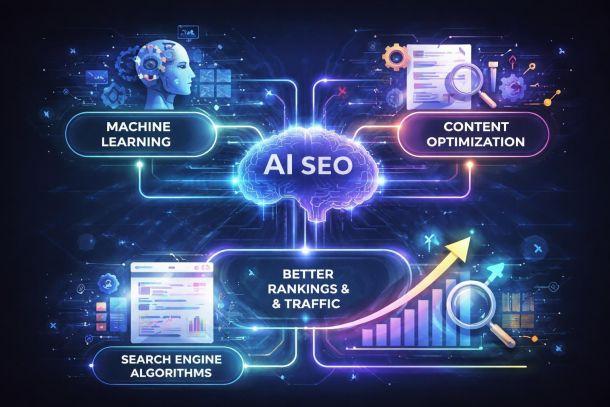
AI SEO Company
The search landscape has shifted dramatically. Google's algorithms now rely heavily on machine learning, AI-generated content floods search results, and platforms like ChatGPT are changing how people find information. This creates both opportunity and chaos for small businesses trying to rank online. An ai seo company promises to navigate this complexity using artificial intelligence to improve your search rankings, drive traffic, and generate leads. But what does that actually mean, and how do you separate genuine capability from marketing hype?
Want this done rather than read?
Tell me what you sell and what isn't working. The audit that starts every engagement is free, and you keep the roadmap either way.