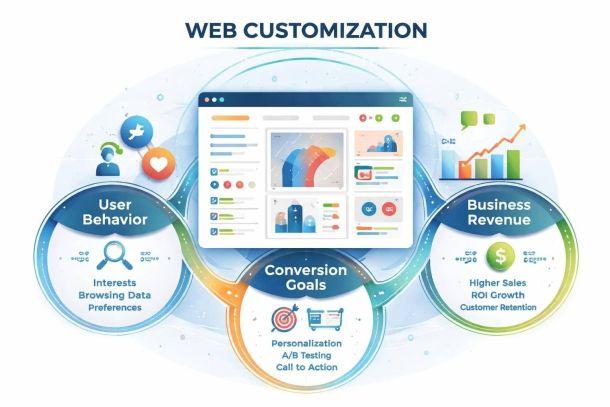
Most businesses treat their websites like static brochures. They launch, cross their fingers, and wonder why visitor numbers don't translate into sales. The truth is simpler than you think: if your website doesn't reflect how your specific customers actually behave and buy, you're leaving money on the table. When you customize web platforms properly, you're not just changing colors and fonts. You're redesigning the entire customer journey to match real-world behavior, removing friction points that kill conversions, and building trust through personalized experiences that actually speak to your audience.
Why Generic Templates Cost You Sales Every Day
Out-of-the-box templates look professional enough. They're clean, modern, and you can launch in a weekend. But here's what they don't tell you: those templates were designed for everyone, which means they're optimized for no one.
Your checkout flow matters more than your logo. Product page layout directly impacts add-to-cart rates. Navigation structure determines whether visitors find what they need or bounce in frustration. When you customize web experiences based on your actual customer data, conversion rates climb because you've removed the guesswork.
The Real Cost of One-Size-Fits-All Design
Consider what happens when a Shopify store uses default product pages:
- Image galleries that don't showcase your specific product benefits
- Missing trust signals your customers actually care about
- Generic CTAs that don't match your brand voice
- Checkout fields that ask for irrelevant information
- Mobile experiences that frustrate tablet users
Customization isn't vanity. It's performance optimization. Every element you tailor to your audience's needs compounds into measurable revenue growth.
Platform-Specific Customization Strategies That Actually Work
Different platforms require different approaches. WordPress gives you unlimited flexibility but demands technical know-how. Shopify balances customization with conversion-focused structure. Squarespace trades some flexibility for speed and simplicity.
Shopify: Where Customization Meets Conversion
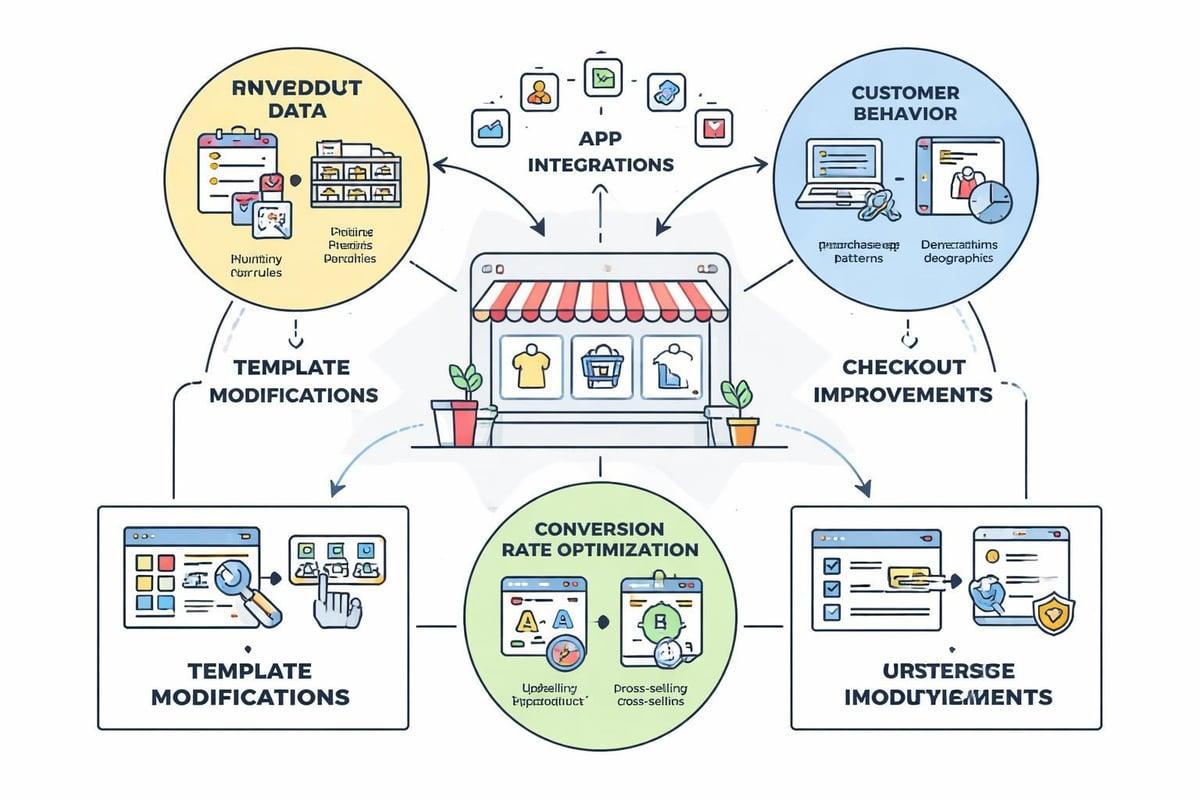
Shopify's Liquid templating language lets you customize web storefronts without breaking core functionality. That's powerful for small businesses who need results, not complexity.
Priority customization areas for Shopify stores:
- Product page structure based on your category (physical goods need different layouts than digital downloads)
- Collection filtering that matches how customers actually search your catalogue
- Checkout flow optimization to reduce cart abandonment at each step
- Mobile-first navigation because 60-70% of e-commerce traffic is mobile in 2026
- Trust elements positioned where purchase anxiety peaks
The advantage of responsive web design approaches on Shopify is that changes cascade properly across devices. Customize once, convert everywhere.
WordPress: Maximum Flexibility, Maximum Responsibility
WordPress powers 43% of the web in 2026, and for good reason. When you customize web experiences on WordPress, you control everything from database queries to front-end animations.
| Customization Layer | Tools & Methods | Conversion Impact |
|---|---|---|
| Page builders | Elementor, Oxygen, Bricks | Speed to market, consistent branding |
| Custom post types | Code or plugins | Better content organization, improved UX |
| WooCommerce checkout | Hooks, custom fields | Reduced friction, higher completion |
| Performance optimization | Caching, CDN, image optimization | Lower bounce rates, better SEO |
The trap: over-customization. Adding seventeen plugins to customize web functionality creates a slow, fragile site that converts worse than a simple template. Focus on changes that directly impact user decisions.
WordPress excels when you need complex content structures. Membership sites, content libraries, and service businesses benefit from custom taxonomies and post relationships that guide visitors through education to conversion.
Squarespace: Strategic Constraints
Squarespace limits how much you can customize web templates, which frustrates developers but protects business owners. You can't break your site with bad code, and updates don't destroy your customizations.
Effective Squarespace customization focuses on:
- Custom CSS for brand-specific styling without template hacks
- Code injection for tracking, chat widgets, and conversion tools
- Strategic block placement that guides attention to CTAs
- Form customization that collects the right lead data
- Gallery and product layouts that showcase your specific offerings
The platform's adaptive website capabilities mean customizations automatically adjust to different contexts and devices. Less flexibility often means better mobile performance and faster launch timelines.
Customization Tactics That Increase Enquiries and Bookings
Theory doesn't pay invoices. Here's what actually moves the needle when you customize web platforms for lead generation and sales.
Behavior-Triggered Personalization
Generic "subscribe to our newsletter" popups convert at 2-3%. Behavior-triggered customization converts at 8-12%. The difference is context.
Practical implementations:
- Exit-intent offers based on which product category they browsed
- Returning visitor recognition with personalized recommendations
- Cart abandonment messaging specific to items left behind
- Time-on-site triggers that offer help when engagement signals buying intent
- Geographic customization for local offers, currencies, and shipping information
Modern augmented browsing techniques let you layer personalization onto existing pages without rebuilding everything. You're enhancing what works, not starting from scratch.
Form Optimization Through Intelligent Customization
Standard contact forms ask for: name, email, phone, message. Conversion rate: 12-15% on a good day.
Customize web forms to match customer readiness and you'll see 25-35% conversion rates. Here's how:
- Multi-step forms that reduce perceived effort (one question at a time)
- Conditional logic that only shows relevant fields based on previous answers
- Progress indicators that encourage completion
- Smart defaults pre-filled from available data
- Strategic field reduction because every field costs you conversions
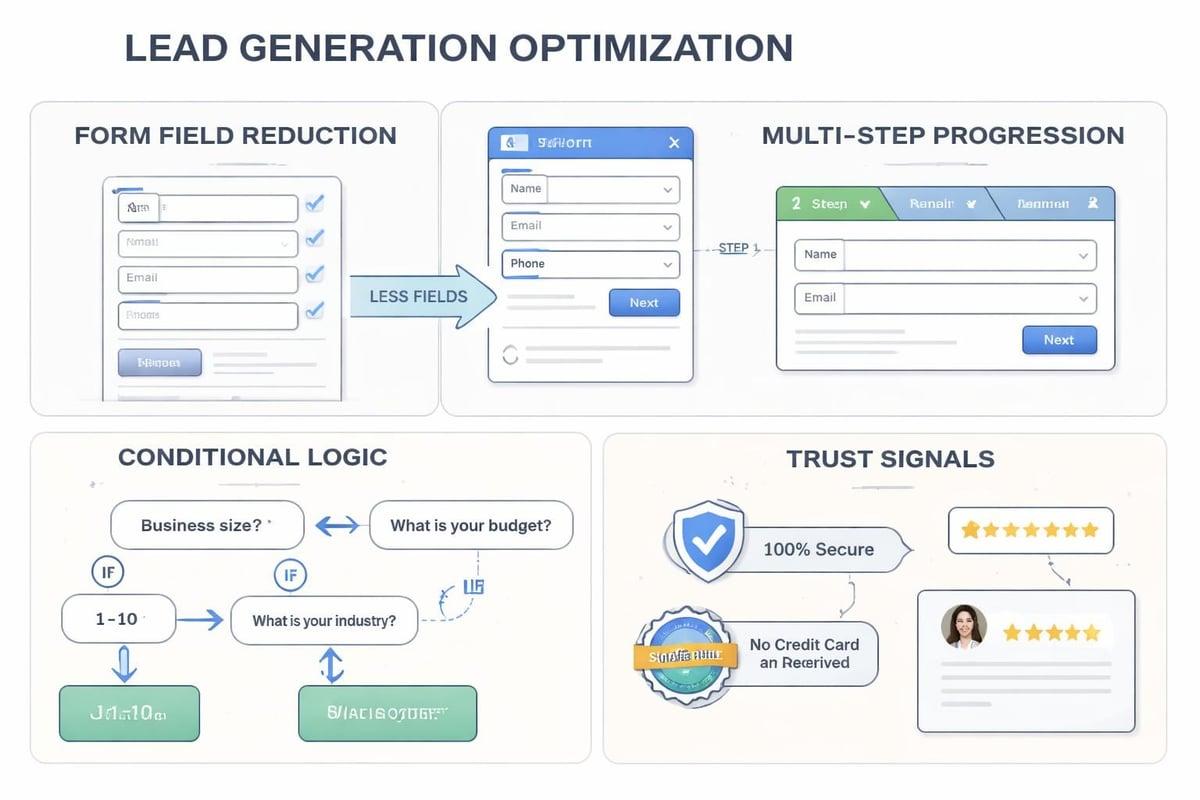
A Shopify checkout asking for a fax number is leaving money on the table. WordPress sites requesting job titles from B2C customers create unnecessary friction. Customize web forms for your actual audience, not a theoretical one.

Advanced Customization for Performance and Search Visibility
Aesthetic customization attracts attention. Performance customization makes money.
Speed Optimization Through Strategic Customization
Generic template: loads everything, everywhere, always.
Customized template: loads what's needed, when it's needed, where it matters.
When you customize web platforms for performance, you're making strategic decisions:
| Customization Type | Performance Gain | Implementation Effort |
|---|---|---|
| Lazy loading images | 30-50% faster initial load | Low |
| Conditional script loading | 20-40% faster interaction | Medium |
| Custom font loading strategy | 15-25% faster text rendering | Low |
| Database query optimization | 40-60% faster dynamic pages | High |
| Critical CSS extraction | 25-35% faster perceived load | Medium |
Google's Core Web Vitals directly impact search rankings in 2026. Sites that customize web performance rank higher, which means more organic traffic before you spend a pound on ads.
SEO-Focused Structural Customization
Templates make assumptions about your content structure. Those assumptions often hurt search visibility.
Custom schema markup tells search engines exactly what your content means. Product schemas increase click-through rates from search results by 20-30%. Local business schemas improve map pack visibility. FAQ schemas generate rich snippets that dominate mobile results.
Custom URL structures match how people actually search. Default WordPress permalinks ("yoursite.co.uk/?p=123") tell search engines nothing. Customized structures ("yoursite.co.uk/services/conversion-rate-optimization") rank for relevant terms and build topical authority.
Custom internal linking guides PageRank flow to pages that drive revenue, not just pages that exist. When you customize web architecture with conversion goals in mind, search traffic lands on pages designed to convert, not just inform.
The web design principles of progressive enhancement mean customizations should add value without breaking core functionality. If JavaScript fails, your forms still work. If custom fonts don't load, content remains readable. This resilience improves both user experience and search engine accessibility.
Customization for Specific Business Models and Industries
E-commerce needs different customization than lead generation sites. Service businesses have different requirements than content platforms. Generic advice fails because context matters.
E-Commerce: Customization That Increases Average Order Value
Product recommendations engines that actually work require customization. Generic "you might also like" widgets convert at 3-5%. Customized recommendations based on browsing history, cart contents, and purchase patterns convert at 12-18%.
Customize web product pages with:
- Size guides specific to your products and return data
- Review displays that highlight decision-relevant feedback
- Shipping calculators that reduce checkout surprises
- Bundle builders that increase basket size naturally
- Stock level indicators that create appropriate urgency
Checkout customization focuses on reducing decision points. Every choice is an opportunity to abandon. Guest checkout options, saved payment methods, and one-click upsells all require platform customization but dramatically improve completion rates.
Service and B2B: Customization for Longer Sales Cycles
Lead generation sites need customization that nurtures over time:
- Resource libraries with gated content at strategic points
- Personalized case studies displayed based on industry or challenge
- Calendar integration that books consultations without email tennis
- Progress tracking for multi-page quote requests
- Account dashboards for returning clients to check project status
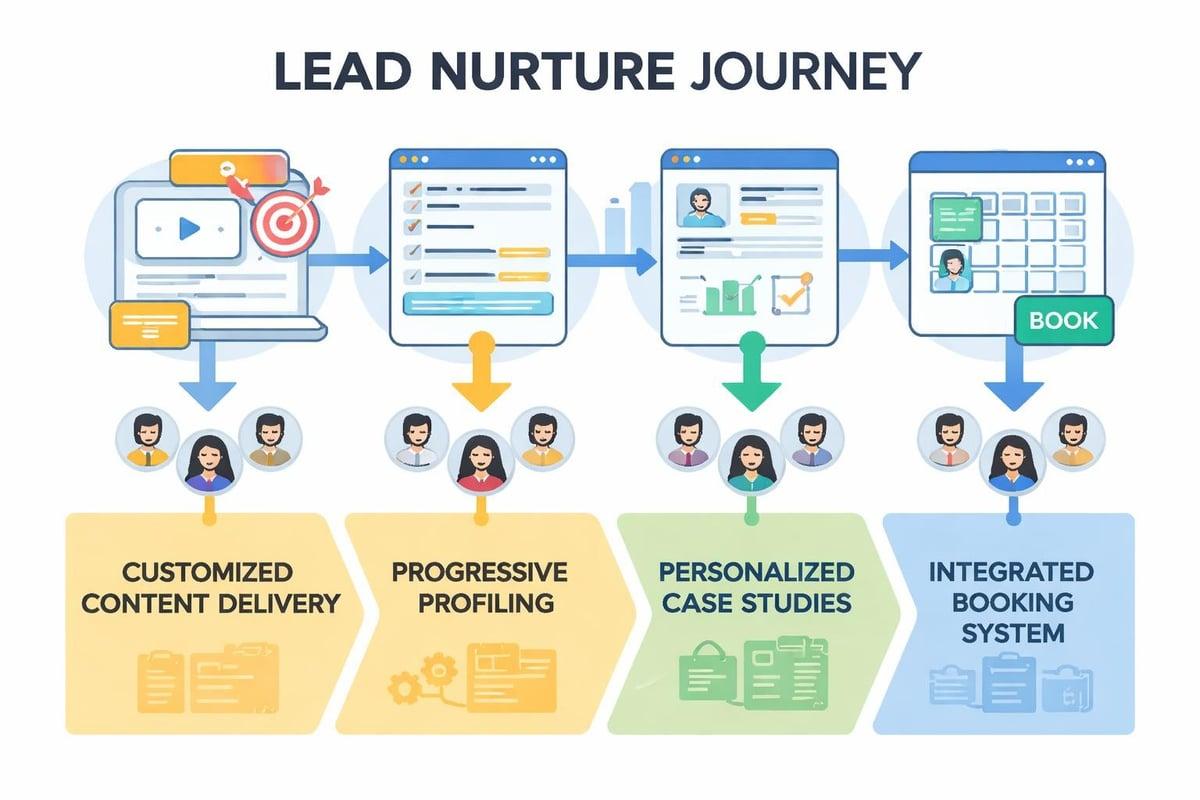
When you customize web experiences for considered purchases, you're building trust through every interaction. Transparency, progress indication, and relevant information at decision points all require intentional customization.

Content and Membership Platforms
Subscription and content businesses need customization that maximizes engagement and reduces churn:
Content discovery customization ensures visitors find valuable material quickly. Related posts, topic clustering, and search functionality all improve time on site, which correlates with conversion and retention.
Member experience customization creates communities, not just customer lists. User dashboards, progress tracking, achievement systems, and exclusive content access all require platform customization but dramatically improve lifetime value.
No-Code and Low-Code Customization Tools for 2026
You don't always need a developer to customize web platforms effectively. Modern tools democratize customization, though understanding when to use them versus when to hire expertise matters.
Visual page builders (Elementor, Divi, Beaver Builder for WordPress; Shogun, PageFly for Shopify) let you customize web layouts without code. The limitation: they add page weight, which can hurt performance if used carelessly.
Workflow automation platforms (Zapier, Make, n8n) customize web functionality by connecting your site to other tools. Form submissions trigger CRM updates, new orders create fulfillment tasks, abandoned carts send recovery emails. Customization through integration often delivers better ROI than custom code.
AI-assisted customization tools are emerging in 2026, though many overpromise. The best practices for developing custom web applications still apply: understand your users, measure everything, iterate based on data.
Recent research into natural language web editing suggests future tools will let business owners customize web elements by describing desired changes conversationally. We're not quite there yet, but the direction is clear: customization becomes more accessible while maintaining performance and security standards.
Measuring Customization Success: Metrics That Matter
Customization without measurement is guesswork. Track these metrics to know what's actually working:
Conversion rate is obvious but segment it properly. Overall site conversion tells you little. Product page to cart, cart to checkout, checkout to completion, and landing page to lead all need separate tracking. Customize web elements, measure specific impacts, iterate.
Engagement metrics reveal whether customization improves experience:
- Time on page for content that should educate
- Scroll depth for long-form sales pages
- Click-through rates on customized CTAs
- Form field completion rates
- Video engagement for product demonstrations
Revenue per visitor matters more than traffic. Customizations that increase basket size, reduce returns, or improve repeat purchase rates drive profit even if conversion rate stays flat.
A/B testing protocols prevent customization mistakes. Don't assume your ideas work. Test button colors, form lengths, navigation structures, and page layouts with controlled experiments. Statistical significance matters, which means you need enough traffic to validate changes.
Effective ways to personalize your website always connect back to measurable business outcomes. Pretty is subjective. Revenue is objective.
Implementation Strategy: Rolling Out Customizations Without Breaking Everything
Big-bang website redesigns fail more often than they succeed. Smart businesses customize web platforms incrementally, measuring impact at each stage.
The Crawl-Walk-Run Approach
Crawl phase customizations (weeks 1-4):
- Fix mobile usability issues
- Optimize page load speed
- Improve form conversion with field reduction
- Add essential trust signals
- Implement basic schema markup
Walk phase customizations (months 2-3):
- Personalize homepage for returning visitors
- Customize product pages by category
- Implement abandoned cart recovery
- Build conversion-focused landing pages
- Create custom thank-you page experiences
Run phase customizations (months 4-6):
- Advanced personalization based on behavior
- Customized checkout flows by customer segment
- AI-driven product recommendations
- Dynamic pricing for strategic segments
- Integrated marketing automation
This staged approach lets you learn what works for your specific audience before committing to complex customizations. Small wins compound into significant performance improvements.
Research into customized built-in elements demonstrates how component-based approaches make customization more maintainable. Build once, reuse everywhere, update centrally. This matters when you're running a growing business without a development team on staff.
When to Hire Expertise Versus DIY
Customize web elements yourself when:
- Changes are purely content or styling
- Platform documentation clearly explains the process
- Mistakes won't break core functionality
- You have time to learn and iterate
- Stakes are low (testing a new CTA button)
Hire a specialist when:
- Customization affects checkout or payment processing
- Changes impact site security or data handling
- Performance optimization requires technical expertise
- Integration with other systems creates complexity
- Revenue impact justifies professional implementation
The Marketing XP approach combines both: training business owners on what they can manage independently while handling complex customizations that require development, conversion rate optimization, or strategic expertise. You want confidence, not dependence.
Customization separates websites that generate enquiries from digital brochures gathering dust. The platforms exist, the tools are accessible, and the impact on conversion rates and revenue is measurable. If you're running a small or medium-sized business and your website isn't pulling its weight, customization focused on user behavior and conversion optimization will change your results. Marketing XP specializes in exactly this: practical web development on Shopify, WordPress and Squarespace that turns visitors into customers, combined with the training to help you maintain momentum yourself.
Most businesses treat their websites like static brochures. They launch, cross their fingers, and wonder why visitor numbers don't translate into sales. The truth is simpler than you think: if your website doesn't reflect how your specific customers actually behave and buy, you're leaving money on the table. When you customize web platforms properly, you're not just changing colors and fonts. You're redesigning the entire customer journey to match real-world behavior, removing friction points that kill conversions, and building trust through personalized experiences that actually speak to your audience.
Why Generic Templates Cost You Sales Every Day
Out-of-the-box templates look professional enough. They're clean, modern, and you can launch in a weekend. But here's what they don't tell you: those templates were designed for everyone, which means they're optimized for no one.
Your checkout flow matters more than your logo. Product page layout directly impacts add-to-cart rates. Navigation structure determines whether visitors find what they need or bounce in frustration. When you customize web experiences based on your actual customer data, conversion rates climb because you've removed the guesswork.
The Real Cost of One-Size-Fits-All Design
Consider what happens when a Shopify store uses default product pages:
- Image galleries that don't showcase your specific product benefits
- Missing trust signals your customers actually care about
- Generic CTAs that don't match your brand voice
- Checkout fields that ask for irrelevant information
- Mobile experiences that frustrate tablet users
Customization isn't vanity. It's performance optimization. Every element you tailor to your audience's needs compounds into measurable revenue growth.
Platform-Specific Customization Strategies That Actually Work
Different platforms require different approaches. WordPress gives you unlimited flexibility but demands technical know-how. Shopify balances customization with conversion-focused structure. Squarespace trades some flexibility for speed and simplicity.
Shopify: Where Customization Meets Conversion
Shopify's Liquid templating language lets you customize web storefronts without breaking core functionality. That's powerful for small businesses who need results, not complexity.
Priority customization areas for Shopify stores:
- Product page structure based on your category (physical goods need different layouts than digital downloads)
- Collection filtering that matches how customers actually search your catalogue
- Checkout flow optimization to reduce cart abandonment at each step
- Mobile-first navigation because 60-70% of e-commerce traffic is mobile in 2026
- Trust elements positioned where purchase anxiety peaks
The advantage of responsive web design approaches on Shopify is that changes cascade properly across devices. Customize once, convert everywhere.

WordPress: Maximum Flexibility, Maximum Responsibility
WordPress powers 43% of the web in 2026, and for good reason. When you customize web experiences on WordPress, you control everything from database queries to front-end animations.
| Customization Layer | Tools & Methods | Conversion Impact |
|---|---|---|
| Page builders | Elementor, Oxygen, Bricks | Speed to market, consistent branding |
| Custom post types | Code or plugins | Better content organization, improved UX |
| WooCommerce checkout | Hooks, custom fields | Reduced friction, higher completion |
| Performance optimization | Caching, CDN, image optimization | Lower bounce rates, better SEO |
The trap: over-customization. Adding seventeen plugins to customize web functionality creates a slow, fragile site that converts worse than a simple template. Focus on changes that directly impact user decisions.
WordPress excels when you need complex content structures. Membership sites, content libraries, and service businesses benefit from custom taxonomies and post relationships that guide visitors through education to conversion.
Squarespace: Strategic Constraints
Squarespace limits how much you can customize web templates, which frustrates developers but protects business owners. You can't break your site with bad code, and updates don't destroy your customizations.
Effective Squarespace customization focuses on:
- Custom CSS for brand-specific styling without template hacks
- Code injection for tracking, chat widgets, and conversion tools
- Strategic block placement that guides attention to CTAs
- Form customization that collects the right lead data
- Gallery and product layouts that showcase your specific offerings
The platform's adaptive website capabilities mean customizations automatically adjust to different contexts and devices. Less flexibility often means better mobile performance and faster launch timelines.
Customization Tactics That Increase Enquiries and Bookings
Theory doesn't pay invoices. Here's what actually moves the needle when you customize web platforms for lead generation and sales.
Behavior-Triggered Personalization
Generic "subscribe to our newsletter" popups convert at 2-3%. Behavior-triggered customization converts at 8-12%. The difference is context.
Practical implementations:
- Exit-intent offers based on which product category they browsed
- Returning visitor recognition with personalized recommendations
- Cart abandonment messaging specific to items left behind
- Time-on-site triggers that offer help when engagement signals buying intent
- Geographic customization for local offers, currencies, and shipping information
Modern augmented browsing techniques let you layer personalization onto existing pages without rebuilding everything. You're enhancing what works, not starting from scratch.
Form Optimization Through Intelligent Customization
Standard contact forms ask for: name, email, phone, message. Conversion rate: 12-15% on a good day.
Customize web forms to match customer readiness and you'll see 25-35% conversion rates. Here's how:
- Multi-step forms that reduce perceived effort (one question at a time)
- Conditional logic that only shows relevant fields based on previous answers
- Progress indicators that encourage completion
- Smart defaults pre-filled from available data
- Strategic field reduction because every field costs you conversions
A Shopify checkout asking for a fax number is leaving money on the table. WordPress sites requesting job titles from B2C customers create unnecessary friction. Customize web forms for your actual audience, not a theoretical one.

Advanced Customization for Performance and Search Visibility
Aesthetic customization attracts attention. Performance customization makes money.
Speed Optimization Through Strategic Customization
Generic template: loads everything, everywhere, always.
Customized template: loads what's needed, when it's needed, where it matters.
When you customize web platforms for performance, you're making strategic decisions:
| Customization Type | Performance Gain | Implementation Effort |
|---|---|---|
| Lazy loading images | 30-50% faster initial load | Low |
| Conditional script loading | 20-40% faster interaction | Medium |
| Custom font loading strategy | 15-25% faster text rendering | Low |
| Database query optimization | 40-60% faster dynamic pages | High |
| Critical CSS extraction | 25-35% faster perceived load | Medium |
Google's Core Web Vitals directly impact search rankings in 2026. Sites that customize web performance rank higher, which means more organic traffic before you spend a pound on ads.
SEO-Focused Structural Customization
Templates make assumptions about your content structure. Those assumptions often hurt search visibility.
Custom schema markup tells search engines exactly what your content means. Product schemas increase click-through rates from search results by 20-30%. Local business schemas improve map pack visibility. FAQ schemas generate rich snippets that dominate mobile results.
Custom URL structures match how people actually search. Default WordPress permalinks ("yoursite.co.uk/?p=123") tell search engines nothing. Customized structures ("yoursite.co.uk/services/conversion-rate-optimization") rank for relevant terms and build topical authority.
Custom internal linking guides PageRank flow to pages that drive revenue, not just pages that exist. When you customize web architecture with conversion goals in mind, search traffic lands on pages designed to convert, not just inform.
The web design principles of progressive enhancement mean customizations should add value without breaking core functionality. If JavaScript fails, your forms still work. If custom fonts don't load, content remains readable. This resilience improves both user experience and search engine accessibility.
Customization for Specific Business Models and Industries
E-commerce needs different customization than lead generation sites. Service businesses have different requirements than content platforms. Generic advice fails because context matters.
E-Commerce: Customization That Increases Average Order Value
Product recommendations engines that actually work require customization. Generic "you might also like" widgets convert at 3-5%. Customized recommendations based on browsing history, cart contents, and purchase patterns convert at 12-18%.
Customize web product pages with:
- Size guides specific to your products and return data
- Review displays that highlight decision-relevant feedback
- Shipping calculators that reduce checkout surprises
- Bundle builders that increase basket size naturally
- Stock level indicators that create appropriate urgency
Checkout customization focuses on reducing decision points. Every choice is an opportunity to abandon. Guest checkout options, saved payment methods, and one-click upsells all require platform customization but dramatically improve completion rates.
Service and B2B: Customization for Longer Sales Cycles
Lead generation sites need customization that nurtures over time:
- Resource libraries with gated content at strategic points
- Personalized case studies displayed based on industry or challenge
- Calendar integration that books consultations without email tennis
- Progress tracking for multi-page quote requests
- Account dashboards for returning clients to check project status
When you customize web experiences for considered purchases, you're building trust through every interaction. Transparency, progress indication, and relevant information at decision points all require intentional customization.

Content and Membership Platforms
Subscription and content businesses need customization that maximizes engagement and reduces churn:
Content discovery customization ensures visitors find valuable material quickly. Related posts, topic clustering, and search functionality all improve time on site, which correlates with conversion and retention.
Member experience customization creates communities, not just customer lists. User dashboards, progress tracking, achievement systems, and exclusive content access all require platform customization but dramatically improve lifetime value.
No-Code and Low-Code Customization Tools for 2026
You don't always need a developer to customize web platforms effectively. Modern tools democratize customization, though understanding when to use them versus when to hire expertise matters.
Visual page builders (Elementor, Divi, Beaver Builder for WordPress; Shogun, PageFly for Shopify) let you customize web layouts without code. The limitation: they add page weight, which can hurt performance if used carelessly.
Workflow automation platforms (Zapier, Make, n8n) customize web functionality by connecting your site to other tools. Form submissions trigger CRM updates, new orders create fulfillment tasks, abandoned carts send recovery emails. Customization through integration often delivers better ROI than custom code.
AI-assisted customization tools are emerging in 2026, though many overpromise. The best practices for developing custom web applications still apply: understand your users, measure everything, iterate based on data.
Recent research into natural language web editing suggests future tools will let business owners customize web elements by describing desired changes conversationally. We're not quite there yet, but the direction is clear: customization becomes more accessible while maintaining performance and security standards.
Measuring Customization Success: Metrics That Matter
Customization without measurement is guesswork. Track these metrics to know what's actually working:
Conversion rate is obvious but segment it properly. Overall site conversion tells you little. Product page to cart, cart to checkout, checkout to completion, and landing page to lead all need separate tracking. Customize web elements, measure specific impacts, iterate.
Engagement metrics reveal whether customization improves experience:
- Time on page for content that should educate
- Scroll depth for long-form sales pages
- Click-through rates on customized CTAs
- Form field completion rates
- Video engagement for product demonstrations
Revenue per visitor matters more than traffic. Customizations that increase basket size, reduce returns, or improve repeat purchase rates drive profit even if conversion rate stays flat.
A/B testing protocols prevent customization mistakes. Don't assume your ideas work. Test button colors, form lengths, navigation structures, and page layouts with controlled experiments. Statistical significance matters, which means you need enough traffic to validate changes.
Effective ways to personalize your website always connect back to measurable business outcomes. Pretty is subjective. Revenue is objective.
Implementation Strategy: Rolling Out Customizations Without Breaking Everything
Big-bang website redesigns fail more often than they succeed. Smart businesses customize web platforms incrementally, measuring impact at each stage.
The Crawl-Walk-Run Approach
Crawl phase customizations (weeks 1-4):
- Fix mobile usability issues
- Optimize page load speed
- Improve form conversion with field reduction
- Add essential trust signals
- Implement basic schema markup
Walk phase customizations (months 2-3):
- Personalize homepage for returning visitors
- Customize product pages by category
- Implement abandoned cart recovery
- Build conversion-focused landing pages
- Create custom thank-you page experiences
Run phase customizations (months 4-6):
- Advanced personalization based on behavior
- Customized checkout flows by customer segment
- AI-driven product recommendations
- Dynamic pricing for strategic segments
- Integrated marketing automation
This staged approach lets you learn what works for your specific audience before committing to complex customizations. Small wins compound into significant performance improvements.
Research into customized built-in elements demonstrates how component-based approaches make customization more maintainable. Build once, reuse everywhere, update centrally. This matters when you're running a growing business without a development team on staff.
When to Hire Expertise Versus DIY
Customize web elements yourself when:
- Changes are purely content or styling
- Platform documentation clearly explains the process
- Mistakes won't break core functionality
- You have time to learn and iterate
- Stakes are low (testing a new CTA button)
Hire a specialist when:
- Customization affects checkout or payment processing
- Changes impact site security or data handling
- Performance optimization requires technical expertise
- Integration with other systems creates complexity
- Revenue impact justifies professional implementation
The Marketing XP approach combines both: training business owners on what they can manage independently while handling complex customizations that require development, conversion rate optimization, or strategic expertise. You want confidence, not dependence.
Customization separates websites that generate enquiries from digital brochures gathering dust. The platforms exist, the tools are accessible, and the impact on conversion rates and revenue is measurable. If you're running a small or medium-sized business and your website isn't pulling its weight, customization focused on user behavior and conversion optimization will change your results. Marketing XP specializes in exactly this: practical web development on Shopify, WordPress and Squarespace that turns visitors into customers, combined with the training to help you maintain momentum yourself.