Company Address
The Mercian
218 Broad Street
Birmingham, B15 1FF

Essential Guide to Becoming a Digital Marketeer in 2026

  • Date Published
    10 February 2026
Date Published
10 February 2026
# Topics
Follow Us

Digital marketing is booming in 2026, with every industry scrambling to hire a skilled digital marketeer. The playing field has changed—AI, data, and cutting-edge platforms now drive growth, making this one of the most exciting and future-proof career choices.

If you want high earning potential, flexible remote work, and a creative outlet, digital marketing delivers. This guide gives you a clear, actionable roadmap to becoming a successful digital marketeer.

You’ll discover the core skills, essential qualifications, career pathways, the latest industry trends, and practical steps needed. We’ll cover the digital landscape, must-have skills, learning routes, building experience, leveraging AI, career progression, and future trends—so you’re fully prepared for your digital marketing journey.

Understanding the Digital Marketing Landscape in 2026

The world of the digital marketeer in 2026 is almost unrecognisable compared to just a few years ago. No longer confined to managing social media or basic PPC, today's digital marketeer is a data-driven strategist, a creative thinker, and an AI-savvy problem solver.

Understanding the Digital Marketing Landscape in 2026

What is a Digital Marketeer in 2026?

A digital marketeer in 2026 is someone who combines creativity, technical skills, and business acumen to deliver measurable results in a digital-first world. The role is more strategic than ever, with a focus on customer journeys, data analytics, and ROI.

Over the past few years, the digital marketeer has evolved from a channel specialist to an orchestrator of complex, multi-platform campaigns. This shift is driven by the explosion of data, the rise of AI, and the need for personalisation at scale.

You'll find digital marketeers leading integrated campaigns, advising on brand voice for new platforms, and using automation to improve efficiency. Their toolkit is broader, and their influence within organisations has grown.

AI, Automation, and Deep Learning Take Centre Stage

AI is now at the heart of digital marketing. From predictive analytics to automated content creation, the digital marketeer is expected to leverage these tools daily. AI-driven campaign management means tasks like audience segmentation, bid optimisation, and personalisation are faster and more accurate.

Recent insights reveal that over 80 percent of marketers actively use AI tools, and a staggering 93 percent of CMOs see clear ROI from these investments. You can read more about AI’s impact on digital marketing campaigns and how it is transforming the landscape.

Deep learning is reshaping analytics, helping digital marketeers understand user intent and predict trends. Spotify podcast episodes often discuss how incrementality testing, powered by machine learning, allows for smarter budgeting and more agile decision-making.

The Omnichannel Approach and Emerging Platforms

Omnichannel marketing is now essential for any digital marketeer. Integrating social, search, email, content, and paid ads is the norm, not the exception. The customer journey is fragmented across devices and platforms, so consistency and personalisation are key.

New platforms are emerging rapidly. AI-powered search engines are changing the way people discover brands. Social media continues to evolve, with video-first and voice platforms gaining traction. Digital marketeers are also experimenting with interactive content, AR/VR, and chatbots to engage audiences in novel ways.

Here's a quick list of key channels for 2026:

  • AI-enhanced search (think voice and visual)
  • Short-form and live video
  • Niche social networks
  • Interactive and immersive experiences

Industry Statistics: Spend, Salaries, and Job Growth

The digital marketing sector in the UK is booming. By 2026, digital ad spend is projected to hit £45 billion, making up 82 percent of total advertising spend. Job opportunities are growing at a healthy pace, with a 10 percent year-on-year increase in digital marketing roles.

A typical digital marketeer can expect competitive salaries, with averages ranging from £30,000 for entry-level roles to over £70,000 for senior positions.

Metric 2026 Projection
UK Digital Ad Spend £45 billion
% of Total Ad Spend 82%
Job Growth (YoY) 10%
Average Salary (Entry/Senior) £30,000 / £70,000+

These trends highlight the growing demand for skilled digital marketeers and the sector's resilience, even in a changing economic climate.

Data Privacy, First-Party Strategies, and Real-World Campaigns

With data privacy topping the agenda, the digital marketeer must adapt quickly. The shift to first-party data, prompted by cookie deprecation and tools like Google Analytics 4, is rewriting the rules of engagement. Brands now invest in building deeper customer relationships and collecting consented data.

Successful digital marketeer campaigns in 2026 rely on AI and automation to drive measurable results. For example, brands use AI-powered tools to personalise email content, automate bidding in ad platforms, and analyse campaign performance in real-time. These approaches are not just efficient, they deliver better outcomes and boost ROI.

In summary, the digital marketeer's landscape in 2026 is defined by rapid innovation, cross-channel integration, and the smart use of technology. If you want to thrive, staying ahead of these trends is essential.

Core Skills Every Digital Marketeer Needs

A digital marketeer in 2026 needs a toolkit that blends technical know-how, creative flair, and a strong grasp of data. The landscape has evolved, and brands now expect professionals who can master both the art and science of digital campaigns. Let’s break down what separates a standout digital marketeer from the crowd.

Core Skills Every Digital Marketeer Needs

Foundational Skills for a Digital Marketeer

To succeed as a digital marketeer, you need to nail the fundamentals. Here are the must-have skills:

  • SEO: Understanding search intent, on-page optimisation, and technical SEO is vital. If you want to go deeper, check out these essential SEO skills for marketers.
  • PPC (Pay Per Click): Running paid campaigns across Google Ads, Meta, and emerging platforms.
  • Content Creation: Crafting engaging blog posts, videos, podcasts, and visuals that resonate with your audience.
  • Email Marketing: Segmenting lists, personalising campaigns, and automating workflows for conversions.
  • Social Media Management: Building communities, managing platforms, and creating thumb-stopping content.
  • Analytics: Interpreting data using tools like GA4 and Looker Studio to measure and optimise performance.

Technical skills are non-negotiable for a modern digital marketeer. You’ll need to get comfortable with marketing automation platforms, CRM systems, and data dashboards.

On top of that, soft skills matter just as much. Great communication, creativity, problem-solving, project management, and teamwork can make or break your campaigns.

The digital marketeer of 2026 is also expected to be AI-literate. From prompt engineering to using AI for content generation and campaign optimisation, these are now core parts of the job.

Adaptability and Continuous Learning

The only constant in digital marketing is change. Algorithms shift, platforms rise and fall, and new tools appear overnight. For a digital marketeer, adaptability is a superpower.

Continuous learning keeps you sharp. Subscribe to industry newsletters, attend webinars, and join online communities. Make it a habit to test new platforms, experiment with AI tools, and refine your strategies.

Here’s a simple table to help you track your learning focus:

Skill Area Priority Learning Resource
SEO High Online courses, blogs
AI Content Generation High Webinars, YouTube
Analytics Medium Official tool tutorials
Social Media Trends Medium Podcasts, newsletters
Email Automation Low Vendor documentation

By staying curious and proactive, you’ll always have an edge as a digital marketeer.

Real-World Examples and Skill Development Tips

Small, agile teams are outperforming larger ones by using AI to automate repetitive tasks, freeing up time for strategy and creativity. For example, a digital marketeer at a boutique agency used AI-driven tools to handle keyword research and reporting, allowing them to focus on campaign innovation and client relationships.

Want to develop your skills fast? Try these approaches:

  • Run your own test campaigns to learn what works.
  • Volunteer to manage social profiles for a charity or local business.
  • Use free analytics tools to track performance and spot trends.
  • Take advantage of MOOCs and short online courses.
  • Set specific goals, like mastering a new platform each quarter.

Self-assessment is key. Regularly review your strengths and weaknesses as a digital marketeer, then adapt your learning plan. There’s no finish line in this industry—just new opportunities to level up.

Education, Certifications, and Learning Pathways

The journey to becoming a digital marketeer in 2026 is more flexible than ever. No single route fits all, and the best path often combines formal education, industry certifications, and hands-on experience. Let’s break down what matters most for today’s digital marketeer.

Education, Certifications, and Learning Pathways

Education Routes: What Are Your Options?

Whether you’re just starting or switching careers, there are several ways to get the qualifications you need as a digital marketeer:

Pathway Duration Cost Range Best For Typical Outcome
University Degree 3 years £9k–£27k School leavers, career starters Broad foundation, networking
Digital Marketing Diploma 6–12 months £1k–£4k Upskillers, those seeking structure Practical skills, portfolio projects
Online Courses/MOOCs Flexible Free–£1k Career changers, budget-conscious learners Targeted skills, rapid entry
Self-Directed Learning Ongoing Minimal–£500 Self-motivated, time-poor professionals Niche expertise, continuous updating

Each route offers something unique. University degrees provide a solid foundation, but digital marketing diplomas and online courses get you job-ready faster. Self-directed learning lets you focus on in-demand areas, ideal for a digital marketeer looking to specialise.

Certifications: The Industry Stamp of Approval

Certifications are vital currency for a digital marketeer in 2026. Employers value credentials from Google, Meta, HubSpot, and the Chartered Institute of Marketing (CIM). These prove you’re up to date with the latest platforms, tools, and strategies.

  • Google Certifications: Analytics, Ads, Tag Manager
  • Meta Blueprint: Facebook & Instagram advertising
  • HubSpot Academy: Inbound marketing, CRM, automation
  • CIM: Strategic marketing, digital strategy

These badges can make your CV stand out, especially when combined with real project experience.

What Do Employers Really Want?

UK employers are now prioritising practical skills and certifications over degrees alone. According to Essential digital marketing skills for 2026, core abilities like data analytics, SEO, and AI literacy are in high demand. So, a digital marketeer with up-to-date certifications and a strong portfolio will often outshine those with just academic credentials.

Self-Directed Learning and Upskilling

The best digital marketeer never stops learning. Massive Open Online Courses (MOOCs) from platforms like Coursera, LinkedIn Learning, and Google Digital Garage allow you to learn at your own pace. Webinars, podcasts, and industry events keep you current with emerging trends.

Recommended Resources:

  • Top Platforms: Google Digital Garage, HubSpot Academy, LinkedIn Learning
  • Must-Read Books: “Digital Marketing Strategy” by Simon Kingsnorth, “Jab, Jab, Jab, Right Hook” by Gary Vaynerchuk
  • Certifications: Google Analytics, Meta Blueprint, CIM Level 4

Real-World Success: From Unrelated Fields to Digital Marketeer

Many successful digital marketeers started in unrelated jobs. By combining online courses, practical projects, and certifications, they built portfolios that got them hired. The key is to mix theory with hands-on work—run your own campaigns, volunteer, or freelance to prove your skills.

Don’t Forget Practical Experience

No matter how many certificates you have, employers want to see what you can do. Build a portfolio that shows campaign results, analytics, and creativity. Combine education, certifications, and real-world work, and you’ll be a digital marketeer ready for the future.

Gaining Practical Experience and Building Your Portfolio
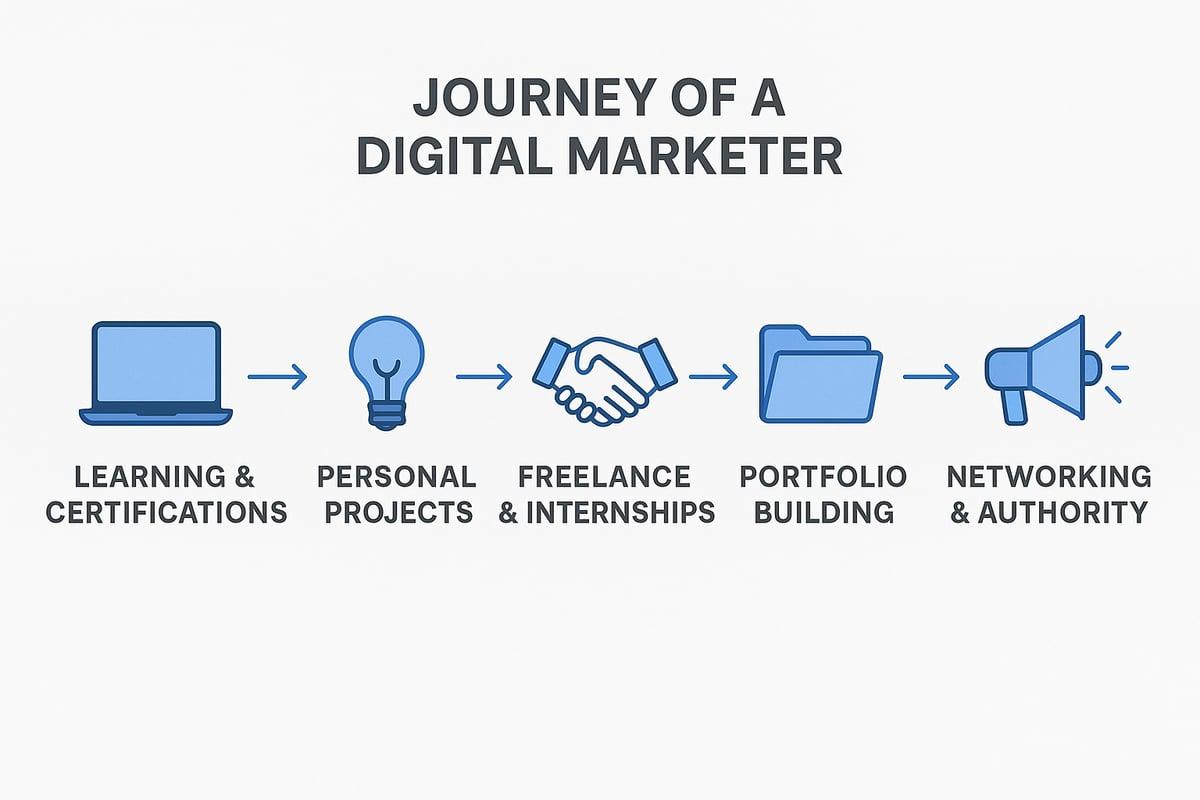
Stepping into digital marketing in 2026 is all about showing what you can do, not just what you know. Employers and clients want proof that you can drive real results. That's why practical experience is the secret weapon for any digital marketeer aiming to stand out from the crowd.

Whether you’re fresh out of school or shifting careers, hands-on work is your launchpad. It turns theory into action and helps you build confidence with the latest tools and strategies.

Gaining Practical Experience and Building Your Portfolio

Why Experience Matters

Every digital marketeer needs to prove their skills in the real world. Campaigns you’ve run, content you’ve created, and results you’ve driven matter far more than a long list of courses.

Employers want to see evidence of your ability to work with budgets, optimise campaigns, and adapt to changing trends. It’s this hands-on experience that helps you move up the ladder, negotiate better pay, and win trust from clients.

Strategies to Gain Practical Experience

Getting started doesn’t mean waiting for a job offer. There are plenty of ways to gain practical experience as a digital marketeer:

  • Take on personal projects, like launching your own blog or social channel.
  • Volunteer your skills for charities or local businesses.
  • Offer pro bono work to friends, family, or startups.
  • Join simulated marketing challenges and competitions online.
  • Freelance on platforms like Upwork, LinkedIn, or niche job boards.

Each project you complete sharpens your skills and adds to your story as a digital marketeer. Don’t underestimate the power of small wins—they quickly add up.

Building a Standout Portfolio

A strong portfolio is your passport to bigger opportunities. It should showcase your best campaigns, creative assets, and the results you’ve achieved. Include screenshots, analytics, and a short summary for each project.

You can learn more about how to find freelance work and build your portfolio by checking out Building a digital marketing portfolio.

Consider these elements for your portfolio:

Portfolio Element What to Show
Campaign Results Screenshots, KPIs, before/after data
Creative Work Ads, blogs, videos, social posts
Analytics & Reporting Dashboards, insights, recommendations
Testimonials Short quotes from clients/employers

Regularly update your portfolio, keeping it fresh and focused on the kind of work you want to attract.

Networking and Showcasing Your Work

A digital marketeer’s network is crucial for career growth. Connect with industry peers at events like POSSIBLE, join online communities, and find mentors who can provide feedback and open doors for you.

Build authority by sharing your insights through blogging, podcasts, or social media. Case studies and testimonials add credibility and help you win your first paid roles as a digital marketeer.

When applying for roles, always ask for references and permission to use campaign results in your portfolio. Remember, every contact and project can lead to your next big opportunity as a digital marketeer.

Career Progression and Earning Potential in Digital Marketing

The digital marketeer career path in 2026 offers more routes and flexibility than ever before. Whether you start as a junior assistant or jump in as a specialist, the opportunities to climb the ladder are expanding rapidly. The demand for skilled digital marketeers is rising across every sector, with job openings predicted to increase by 10% year-on-year in the UK, according to UK digital marketing job growth statistics.

Here’s how the main digital marketeer roles stack up in terms of salary and progression:

Role Typical Salary (UK, 2026) Common Titles
Entry-Level £26,000 – £32,000 Assistant, Coordinator
Mid-Level £35,000 – £48,000 Executive, Manager
Senior £52,000 – £75,000+ Director, Head of Digital
Freelance/Consultant £200 – £600/day Consultant, Specialist

Climbing the ladder isn’t the only way to grow as a digital marketeer. Portfolio careers are booming, with many professionals blending freelance gigs, consulting, and in-house work. The rise of remote and flexible roles means you can build a career that fits your lifestyle. Entrepreneurship is also thriving, with more digital marketeers launching agencies, consultancies, or even their own digital products.

Want to accelerate your progression? Focus on building in-demand skills like AI-powered campaign management, data analytics, and conversion optimisation. Digital marketeers who master AI-powered marketing strategies are moving up faster, often outpacing traditional teams thanks to automation and smart tech adoption. Specialising in high-growth areas like paid media or SEO can also boost your earning potential. Personal branding, blogging, and speaking at industry events have helped many digital marketeers stand out and land senior roles.

When it comes to negotiating salary and benefits, don’t just look at the base pay. Ask about remote work, learning budgets, and performance bonuses. Prove your impact by showcasing campaign results, portfolio wins, and testimonials. The digital marketeer who adapts, learns fast, and leverages new tech will always be in demand. In 2026, your career path is what you make it—so aim high and keep levelling up.

The Future of Digital Marketing: Trends and Predictions for 2026 and Beyond

The digital marketeer in 2026 faces a world of rapid evolution. The pace of change in digital marketing is faster than ever, with AI and automation reshaping how campaigns are run, measured, and optimised. If you want to stay ahead, you must keep your finger on the pulse of the latest trends and technologies.

AI-Driven Marketing and Automation

AI is now the backbone of every successful digital marketeer’s toolkit. Deep learning models power campaign targeting, bidding, and creative optimisation. AI agents handle media buying, making decisions in real time to maximise ROI. Generative AI tools create content, adapt messaging on the fly, and analyse huge datasets to uncover trends faster than any human team could.

New Platforms and Consumer Behaviour Shifts

The rise of voice and visual search means a digital marketeer must master content that’s discoverable in new ways. AR and VR platforms are opening up immersive brand experiences, while emerging social channels attract younger, niche audiences. The ecosystem is more fragmented, so omnichannel strategies are vital to create a seamless customer journey.

Sustainability, Privacy, and Ethics

Sustainability is no longer a buzzword. Brands are expected to prove their commitment to ethical marketing, from using green ad tech to supporting responsible data practices. Data privacy is front and centre, with first-party data strategies becoming essential as cookies disappear and regulations tighten.

Market Growth and Programmatic Evolution

The UK’s digital ad market is booming, with UK digital advertising spend projections forecasting a record £45 billion by 2026, accounting for 82% of all advertising spend. Programmatic advertising is evolving, driven by AI agents that optimise campaigns for real business outcomes, not just clicks or impressions.

Generative AI and Customer Experience

Generative AI is transforming content creation, allowing digital marketeers to scale video, audio, and written assets while maintaining brand voice and creativity. Customer experience is now hyper-personalised, with AI tailoring every touchpoint based on real-time behaviour and preferences.

Summary Table: Top Trends and Their Impact

Trend Impact on Digital Marketeer
AI-driven marketing Smarter targeting, automation, better ROI
Voice & visual search New SEO strategies, discoverability
AR/VR platforms Immersive campaigns, new engagement
Sustainability focus Ethical, responsible marketing
Data privacy First-party data, transparent practices
Programmatic evolution Outcome-based, AI-optimised buying

How to Future-Proof Your Digital Marketing Career

  • Embrace continuous learning and experiment with new tools.
  • Build AI literacy and stay informed about emerging platforms.
  • Develop a strong ethical foundation and prioritise sustainability.
  • Network with other digital marketeers to share insights and strategies.
  • Focus on adaptability and creative problem-solving.

The future belongs to the digital marketeer who is agile, curious, and ready to lead with both data and empathy. By anticipating these trends and investing in the right skills, you’ll stay ahead of the curve and build a resilient, rewarding career.

If you’re serious about kickstarting your digital marketing career in 2026, there’s no need to figure it all out alone. You’ve just read how the right skills, hands-on experience and a smart use of AI can make all the difference. I’ve helped loads of people like you turn ambition into results, whether it’s building your portfolio, nailing Shopify conversions or getting found on Google. Fancy a quick, no-pressure chat about your next steps? Book your Get free 45 min consultation and let’s make your digital marketing journey pay off.

Digital marketing is booming in 2026, with every industry scrambling to hire a skilled digital marketeer. The playing field has changed—AI, data, and cutting-edge platforms now drive growth, making this one of the most exciting and future-proof career choices.

If you want high earning potential, flexible remote work, and a creative outlet, digital marketing delivers. This guide gives you a clear, actionable roadmap to becoming a successful digital marketeer.

You’ll discover the core skills, essential qualifications, career pathways, the latest industry trends, and practical steps needed. We’ll cover the digital landscape, must-have skills, learning routes, building experience, leveraging AI, career progression, and future trends—so you’re fully prepared for your digital marketing journey.

Understanding the Digital Marketing Landscape in 2026

The world of the digital marketeer in 2026 is almost unrecognisable compared to just a few years ago. No longer confined to managing social media or basic PPC, today's digital marketeer is a data-driven strategist, a creative thinker, and an AI-savvy problem solver.

Understanding the Digital Marketing Landscape in 2026

What is a Digital Marketeer in 2026?

A digital marketeer in 2026 is someone who combines creativity, technical skills, and business acumen to deliver measurable results in a digital-first world. The role is more strategic than ever, with a focus on customer journeys, data analytics, and ROI.

Over the past few years, the digital marketeer has evolved from a channel specialist to an orchestrator of complex, multi-platform campaigns. This shift is driven by the explosion of data, the rise of AI, and the need for personalisation at scale.

You'll find digital marketeers leading integrated campaigns, advising on brand voice for new platforms, and using automation to improve efficiency. Their toolkit is broader, and their influence within organisations has grown.

AI, Automation, and Deep Learning Take Centre Stage

AI is now at the heart of digital marketing. From predictive analytics to automated content creation, the digital marketeer is expected to leverage these tools daily. AI-driven campaign management means tasks like audience segmentation, bid optimisation, and personalisation are faster and more accurate.

Recent insights reveal that over 80 percent of marketers actively use AI tools, and a staggering 93 percent of CMOs see clear ROI from these investments. You can read more about AI’s impact on digital marketing campaigns and how it is transforming the landscape.

Deep learning is reshaping analytics, helping digital marketeers understand user intent and predict trends. Spotify podcast episodes often discuss how incrementality testing, powered by machine learning, allows for smarter budgeting and more agile decision-making.

The Omnichannel Approach and Emerging Platforms

Omnichannel marketing is now essential for any digital marketeer. Integrating social, search, email, content, and paid ads is the norm, not the exception. The customer journey is fragmented across devices and platforms, so consistency and personalisation are key.

New platforms are emerging rapidly. AI-powered search engines are changing the way people discover brands. Social media continues to evolve, with video-first and voice platforms gaining traction. Digital marketeers are also experimenting with interactive content, AR/VR, and chatbots to engage audiences in novel ways.

Here's a quick list of key channels for 2026:

  • AI-enhanced search (think voice and visual)
  • Short-form and live video
  • Niche social networks
  • Interactive and immersive experiences

Industry Statistics: Spend, Salaries, and Job Growth

The digital marketing sector in the UK is booming. By 2026, digital ad spend is projected to hit £45 billion, making up 82 percent of total advertising spend. Job opportunities are growing at a healthy pace, with a 10 percent year-on-year increase in digital marketing roles.

A typical digital marketeer can expect competitive salaries, with averages ranging from £30,000 for entry-level roles to over £70,000 for senior positions.

Metric 2026 Projection
UK Digital Ad Spend £45 billion
% of Total Ad Spend 82%
Job Growth (YoY) 10%
Average Salary (Entry/Senior) £30,000 / £70,000+

These trends highlight the growing demand for skilled digital marketeers and the sector's resilience, even in a changing economic climate.

Data Privacy, First-Party Strategies, and Real-World Campaigns

With data privacy topping the agenda, the digital marketeer must adapt quickly. The shift to first-party data, prompted by cookie deprecation and tools like Google Analytics 4, is rewriting the rules of engagement. Brands now invest in building deeper customer relationships and collecting consented data.

Successful digital marketeer campaigns in 2026 rely on AI and automation to drive measurable results. For example, brands use AI-powered tools to personalise email content, automate bidding in ad platforms, and analyse campaign performance in real-time. These approaches are not just efficient, they deliver better outcomes and boost ROI.

In summary, the digital marketeer's landscape in 2026 is defined by rapid innovation, cross-channel integration, and the smart use of technology. If you want to thrive, staying ahead of these trends is essential.

Core Skills Every Digital Marketeer Needs

A digital marketeer in 2026 needs a toolkit that blends technical know-how, creative flair, and a strong grasp of data. The landscape has evolved, and brands now expect professionals who can master both the art and science of digital campaigns. Let’s break down what separates a standout digital marketeer from the crowd.

Core Skills Every Digital Marketeer Needs

Foundational Skills for a Digital Marketeer

To succeed as a digital marketeer, you need to nail the fundamentals. Here are the must-have skills:

  • SEO: Understanding search intent, on-page optimisation, and technical SEO is vital. If you want to go deeper, check out these essential SEO skills for marketers.
  • PPC (Pay Per Click): Running paid campaigns across Google Ads, Meta, and emerging platforms.
  • Content Creation: Crafting engaging blog posts, videos, podcasts, and visuals that resonate with your audience.
  • Email Marketing: Segmenting lists, personalising campaigns, and automating workflows for conversions.
  • Social Media Management: Building communities, managing platforms, and creating thumb-stopping content.
  • Analytics: Interpreting data using tools like GA4 and Looker Studio to measure and optimise performance.

Technical skills are non-negotiable for a modern digital marketeer. You’ll need to get comfortable with marketing automation platforms, CRM systems, and data dashboards.

On top of that, soft skills matter just as much. Great communication, creativity, problem-solving, project management, and teamwork can make or break your campaigns.

The digital marketeer of 2026 is also expected to be AI-literate. From prompt engineering to using AI for content generation and campaign optimisation, these are now core parts of the job.

Adaptability and Continuous Learning

The only constant in digital marketing is change. Algorithms shift, platforms rise and fall, and new tools appear overnight. For a digital marketeer, adaptability is a superpower.

Continuous learning keeps you sharp. Subscribe to industry newsletters, attend webinars, and join online communities. Make it a habit to test new platforms, experiment with AI tools, and refine your strategies.

Here’s a simple table to help you track your learning focus:

Skill Area Priority Learning Resource
SEO High Online courses, blogs
AI Content Generation High Webinars, YouTube
Analytics Medium Official tool tutorials
Social Media Trends Medium Podcasts, newsletters
Email Automation Low Vendor documentation

By staying curious and proactive, you’ll always have an edge as a digital marketeer.

Real-World Examples and Skill Development Tips

Small, agile teams are outperforming larger ones by using AI to automate repetitive tasks, freeing up time for strategy and creativity. For example, a digital marketeer at a boutique agency used AI-driven tools to handle keyword research and reporting, allowing them to focus on campaign innovation and client relationships.

Want to develop your skills fast? Try these approaches:

  • Run your own test campaigns to learn what works.
  • Volunteer to manage social profiles for a charity or local business.
  • Use free analytics tools to track performance and spot trends.
  • Take advantage of MOOCs and short online courses.
  • Set specific goals, like mastering a new platform each quarter.

Self-assessment is key. Regularly review your strengths and weaknesses as a digital marketeer, then adapt your learning plan. There’s no finish line in this industry—just new opportunities to level up.

Education, Certifications, and Learning Pathways

The journey to becoming a digital marketeer in 2026 is more flexible than ever. No single route fits all, and the best path often combines formal education, industry certifications, and hands-on experience. Let’s break down what matters most for today’s digital marketeer.

Education, Certifications, and Learning Pathways

Education Routes: What Are Your Options?

Whether you’re just starting or switching careers, there are several ways to get the qualifications you need as a digital marketeer:

Pathway Duration Cost Range Best For Typical Outcome
University Degree 3 years £9k–£27k School leavers, career starters Broad foundation, networking
Digital Marketing Diploma 6–12 months £1k–£4k Upskillers, those seeking structure Practical skills, portfolio projects
Online Courses/MOOCs Flexible Free–£1k Career changers, budget-conscious learners Targeted skills, rapid entry
Self-Directed Learning Ongoing Minimal–£500 Self-motivated, time-poor professionals Niche expertise, continuous updating

Each route offers something unique. University degrees provide a solid foundation, but digital marketing diplomas and online courses get you job-ready faster. Self-directed learning lets you focus on in-demand areas, ideal for a digital marketeer looking to specialise.

Certifications: The Industry Stamp of Approval

Certifications are vital currency for a digital marketeer in 2026. Employers value credentials from Google, Meta, HubSpot, and the Chartered Institute of Marketing (CIM). These prove you’re up to date with the latest platforms, tools, and strategies.

  • Google Certifications: Analytics, Ads, Tag Manager
  • Meta Blueprint: Facebook & Instagram advertising
  • HubSpot Academy: Inbound marketing, CRM, automation
  • CIM: Strategic marketing, digital strategy

These badges can make your CV stand out, especially when combined with real project experience.

What Do Employers Really Want?

UK employers are now prioritising practical skills and certifications over degrees alone. According to Essential digital marketing skills for 2026, core abilities like data analytics, SEO, and AI literacy are in high demand. So, a digital marketeer with up-to-date certifications and a strong portfolio will often outshine those with just academic credentials.

Self-Directed Learning and Upskilling

The best digital marketeer never stops learning. Massive Open Online Courses (MOOCs) from platforms like Coursera, LinkedIn Learning, and Google Digital Garage allow you to learn at your own pace. Webinars, podcasts, and industry events keep you current with emerging trends.

Recommended Resources:

  • Top Platforms: Google Digital Garage, HubSpot Academy, LinkedIn Learning
  • Must-Read Books: “Digital Marketing Strategy” by Simon Kingsnorth, “Jab, Jab, Jab, Right Hook” by Gary Vaynerchuk
  • Certifications: Google Analytics, Meta Blueprint, CIM Level 4

Real-World Success: From Unrelated Fields to Digital Marketeer

Many successful digital marketeers started in unrelated jobs. By combining online courses, practical projects, and certifications, they built portfolios that got them hired. The key is to mix theory with hands-on work—run your own campaigns, volunteer, or freelance to prove your skills.

Don’t Forget Practical Experience

No matter how many certificates you have, employers want to see what you can do. Build a portfolio that shows campaign results, analytics, and creativity. Combine education, certifications, and real-world work, and you’ll be a digital marketeer ready for the future.

Gaining Practical Experience and Building Your Portfolio

Stepping into digital marketing in 2026 is all about showing what you can do, not just what you know. Employers and clients want proof that you can drive real results. That's why practical experience is the secret weapon for any digital marketeer aiming to stand out from the crowd.

Whether you’re fresh out of school or shifting careers, hands-on work is your launchpad. It turns theory into action and helps you build confidence with the latest tools and strategies.

Gaining Practical Experience and Building Your Portfolio

Why Experience Matters

Every digital marketeer needs to prove their skills in the real world. Campaigns you’ve run, content you’ve created, and results you’ve driven matter far more than a long list of courses.

Employers want to see evidence of your ability to work with budgets, optimise campaigns, and adapt to changing trends. It’s this hands-on experience that helps you move up the ladder, negotiate better pay, and win trust from clients.

Strategies to Gain Practical Experience

Getting started doesn’t mean waiting for a job offer. There are plenty of ways to gain practical experience as a digital marketeer:

  • Take on personal projects, like launching your own blog or social channel.
  • Volunteer your skills for charities or local businesses.
  • Offer pro bono work to friends, family, or startups.
  • Join simulated marketing challenges and competitions online.
  • Freelance on platforms like Upwork, LinkedIn, or niche job boards.

Each project you complete sharpens your skills and adds to your story as a digital marketeer. Don’t underestimate the power of small wins—they quickly add up.

Building a Standout Portfolio

A strong portfolio is your passport to bigger opportunities. It should showcase your best campaigns, creative assets, and the results you’ve achieved. Include screenshots, analytics, and a short summary for each project.

You can learn more about how to find freelance work and build your portfolio by checking out Building a digital marketing portfolio.

Consider these elements for your portfolio:

Portfolio Element What to Show
Campaign Results Screenshots, KPIs, before/after data
Creative Work Ads, blogs, videos, social posts
Analytics & Reporting Dashboards, insights, recommendations
Testimonials Short quotes from clients/employers

Regularly update your portfolio, keeping it fresh and focused on the kind of work you want to attract.

Networking and Showcasing Your Work

A digital marketeer’s network is crucial for career growth. Connect with industry peers at events like POSSIBLE, join online communities, and find mentors who can provide feedback and open doors for you.

Build authority by sharing your insights through blogging, podcasts, or social media. Case studies and testimonials add credibility and help you win your first paid roles as a digital marketeer.

When applying for roles, always ask for references and permission to use campaign results in your portfolio. Remember, every contact and project can lead to your next big opportunity as a digital marketeer.

Career Progression and Earning Potential in Digital Marketing

The digital marketeer career path in 2026 offers more routes and flexibility than ever before. Whether you start as a junior assistant or jump in as a specialist, the opportunities to climb the ladder are expanding rapidly. The demand for skilled digital marketeers is rising across every sector, with job openings predicted to increase by 10% year-on-year in the UK, according to UK digital marketing job growth statistics.

Here’s how the main digital marketeer roles stack up in terms of salary and progression:

Role Typical Salary (UK, 2026) Common Titles
Entry-Level £26,000 – £32,000 Assistant, Coordinator
Mid-Level £35,000 – £48,000 Executive, Manager
Senior £52,000 – £75,000+ Director, Head of Digital
Freelance/Consultant £200 – £600/day Consultant, Specialist

Climbing the ladder isn’t the only way to grow as a digital marketeer. Portfolio careers are booming, with many professionals blending freelance gigs, consulting, and in-house work. The rise of remote and flexible roles means you can build a career that fits your lifestyle. Entrepreneurship is also thriving, with more digital marketeers launching agencies, consultancies, or even their own digital products.

Want to accelerate your progression? Focus on building in-demand skills like AI-powered campaign management, data analytics, and conversion optimisation. Digital marketeers who master AI-powered marketing strategies are moving up faster, often outpacing traditional teams thanks to automation and smart tech adoption. Specialising in high-growth areas like paid media or SEO can also boost your earning potential. Personal branding, blogging, and speaking at industry events have helped many digital marketeers stand out and land senior roles.

When it comes to negotiating salary and benefits, don’t just look at the base pay. Ask about remote work, learning budgets, and performance bonuses. Prove your impact by showcasing campaign results, portfolio wins, and testimonials. The digital marketeer who adapts, learns fast, and leverages new tech will always be in demand. In 2026, your career path is what you make it—so aim high and keep levelling up.

The Future of Digital Marketing: Trends and Predictions for 2026 and Beyond

The digital marketeer in 2026 faces a world of rapid evolution. The pace of change in digital marketing is faster than ever, with AI and automation reshaping how campaigns are run, measured, and optimised. If you want to stay ahead, you must keep your finger on the pulse of the latest trends and technologies.

AI-Driven Marketing and Automation

AI is now the backbone of every successful digital marketeer’s toolkit. Deep learning models power campaign targeting, bidding, and creative optimisation. AI agents handle media buying, making decisions in real time to maximise ROI. Generative AI tools create content, adapt messaging on the fly, and analyse huge datasets to uncover trends faster than any human team could.

New Platforms and Consumer Behaviour Shifts

The rise of voice and visual search means a digital marketeer must master content that’s discoverable in new ways. AR and VR platforms are opening up immersive brand experiences, while emerging social channels attract younger, niche audiences. The ecosystem is more fragmented, so omnichannel strategies are vital to create a seamless customer journey.

Sustainability, Privacy, and Ethics

Sustainability is no longer a buzzword. Brands are expected to prove their commitment to ethical marketing, from using green ad tech to supporting responsible data practices. Data privacy is front and centre, with first-party data strategies becoming essential as cookies disappear and regulations tighten.

Market Growth and Programmatic Evolution

The UK’s digital ad market is booming, with UK digital advertising spend projections forecasting a record £45 billion by 2026, accounting for 82% of all advertising spend. Programmatic advertising is evolving, driven by AI agents that optimise campaigns for real business outcomes, not just clicks or impressions.

Generative AI and Customer Experience

Generative AI is transforming content creation, allowing digital marketeers to scale video, audio, and written assets while maintaining brand voice and creativity. Customer experience is now hyper-personalised, with AI tailoring every touchpoint based on real-time behaviour and preferences.

Summary Table: Top Trends and Their Impact

Trend Impact on Digital Marketeer
AI-driven marketing Smarter targeting, automation, better ROI
Voice & visual search New SEO strategies, discoverability
AR/VR platforms Immersive campaigns, new engagement
Sustainability focus Ethical, responsible marketing
Data privacy First-party data, transparent practices
Programmatic evolution Outcome-based, AI-optimised buying

How to Future-Proof Your Digital Marketing Career

  • Embrace continuous learning and experiment with new tools.
  • Build AI literacy and stay informed about emerging platforms.
  • Develop a strong ethical foundation and prioritise sustainability.
  • Network with other digital marketeers to share insights and strategies.
  • Focus on adaptability and creative problem-solving.

The future belongs to the digital marketeer who is agile, curious, and ready to lead with both data and empathy. By anticipating these trends and investing in the right skills, you’ll stay ahead of the curve and build a resilient, rewarding career.

If you’re serious about kickstarting your digital marketing career in 2026, there’s no need to figure it all out alone. You’ve just read how the right skills, hands-on experience and a smart use of AI can make all the difference. I’ve helped loads of people like you turn ambition into results, whether it’s building your portfolio, nailing Shopify conversions or getting found on Google. Fancy a quick, no-pressure chat about your next steps? Book your Get free 45 min consultation and let’s make your digital marketing journey pay off.

Need more help? Ask Your Question Below