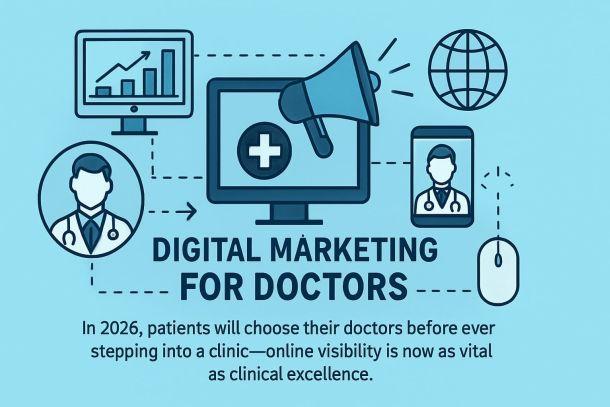
In 2026, patients will choose their doctors before they ever set foot in a clinic. With 75% of patients starting their healthcare journey online, your digital presence is as crucial as your bedside manner.
The landscape is fiercely competitive, with more than 2.8 million healthcare facilities all aiming to stand out. So, how can you ensure your practice rises above the noise?
This guide on digital marketing for doctors is designed to give you a clear, step-by-step blueprint. You'll find proven strategies covering SEO, content, patient reviews, social media, and smart automation—each one tailored to help you attract more patients and build lasting trust.
Ready to future-proof your practice? Dive in and discover how website optimisation, search visibility, content marketing, social media, reputation management, patient engagement, and data-driven decisions will set you apart in the digital age.
Understanding the Digital Shift in Patient Behaviour
Patients no longer choose a doctor based on location or word of mouth alone. The digital marketing for doctors landscape has transformed how individuals find, evaluate, and trust healthcare providers. Today, your online presence is often your first and most important handshake with a new patient.

The New Patient Journey: From Search to Selection
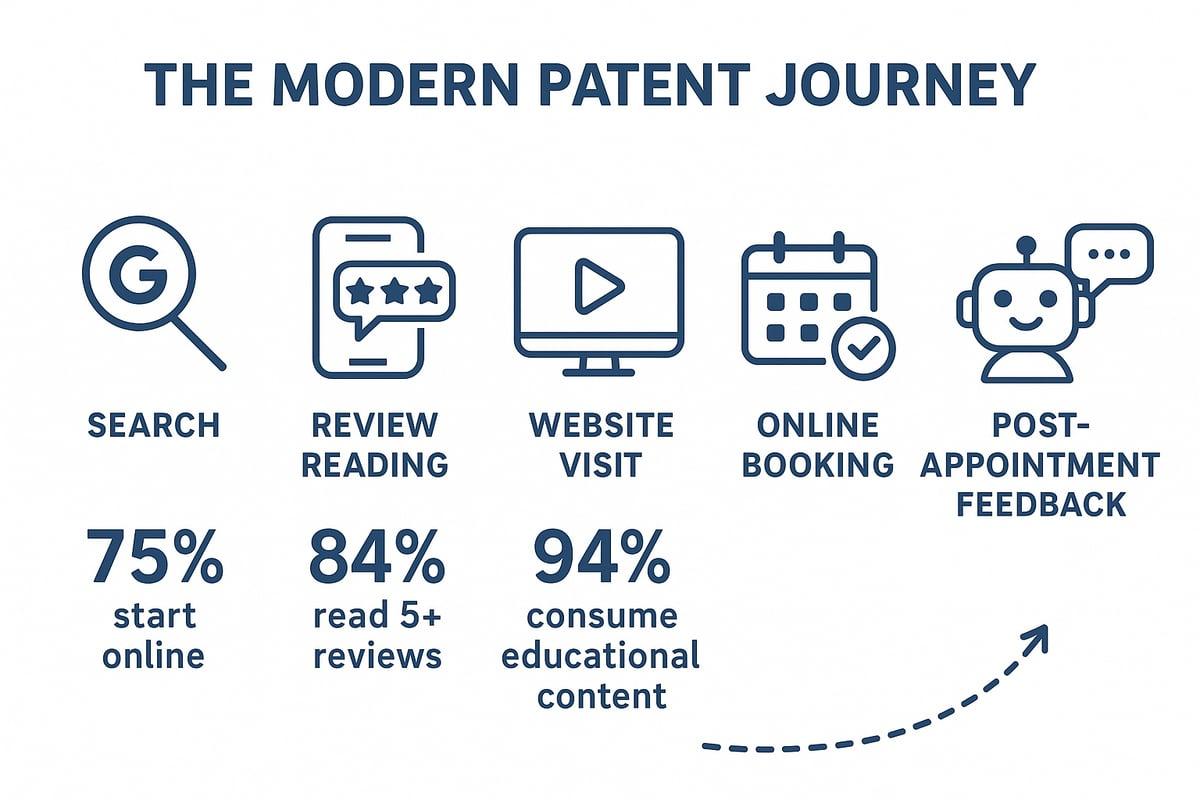
Digital marketing for doctors starts with understanding how patients behave online. Today, the patient journey is rarely linear. It begins with a search—often on Google—where potential patients type symptoms, service needs, or "GP near me."
A staggering 75% of patients start by reading online reviews. In fact, 84% look at five or more reviews before they trust a healthcare provider. Local intent is clear, as "near me" healthcare searches have doubled since 2015.
Let's break it down:
| Step | Patient Action | Impact |
|---|---|---|
| Search | Google for doctors or clinics | First impression |
| Compare | Read reviews and ratings | Builds or breaks trust |
| Website Visit | Check bios, services, FAQs | Assess credibility |
| Decision | Book appointment online | Conversion |
For example, a new patient looking for a GP in Manchester will scan Google, read reviews, compare websites, and only then book. Data shows 94% of patients consume educational content online before making a decision.
This means every digital touchpoint is an opportunity—or a risk. Doctors must actively manage all aspects of digital marketing for doctors to shape patient choices.
Trust, Transparency, and Convenience: What Modern Patients Expect
Modern patients have high standards, and digital marketing for doctors must rise to meet them. Transparency is non negotiable—patients want clear information on pricing, credentials, and offered services before they even pick up the phone.
Convenience is king. Patients expect mobile friendly websites, instant online booking, and rapid responses. Social proof, such as testimonials and ratings, is a major trust factor. Clinics that deliver seamless scheduling and showcase strong reviews see a measurable jump in conversion rates.
Consider this:
- 46% of Google searches have local intent, so local SEO is vital.
- Mobile responsiveness is expected, not optional.
- Patients favour practices that answer questions online, reducing the need for calls.
Meeting these expectations through digital marketing for doctors has a direct impact on bookings and patient loyalty. In today’s world, digital convenience is as crucial as bedside manner.
Key Trends Driving Change in 2026
As we look to 2026, digital marketing for doctors is evolving quickly. AI powered search and voice assistants are changing how patients discover providers. Video content and interactive tools, like FAQs and explainer videos, are now essential for patient education.
Practices are also adopting online forms, chatbots, and telemedicine as part of the digital journey. For instance, clinics that add video FAQs or use AI chat see higher user engagement and satisfaction.
To stay ahead, doctors must continually adapt to new tech and patient behaviours. For more on AI driven strategies and interactive content, see the Digital Marketing for Doctors: 2026 Patient Acquisition Playbook.
Building a High-Performing Medical Website
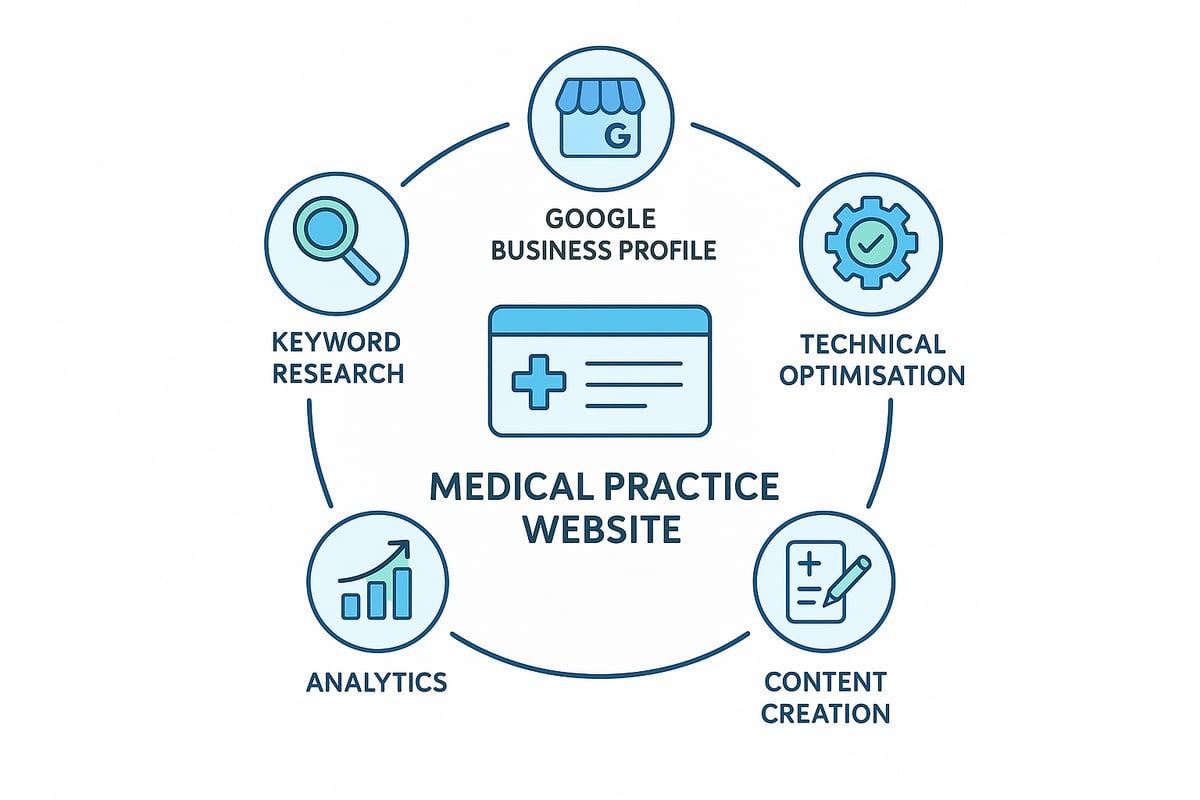
A high-performing website is the digital front door for any clinic. In the world of digital marketing for doctors, your website is often the first interaction a patient has with your practice. It needs to be fast, secure, and designed with patient experience in mind.
Essential Features for Trust and Conversion
Patients today are quick to judge a website. If it is slow, confusing, or not mobile-friendly, they will move on. With over 83.5% of Google visitors on mobile, mobile responsiveness is non-negotiable for digital marketing for doctors. Secure your site with SSL to protect patient data and boost your Google rankings.
Clear navigation is key. Make it easy for patients to find what they need, whether that is booking an appointment, learning about services, or reading FAQs. Add prominent calls-to-action like "Book Appointment" or "Contact Us" at every step.
A Birmingham clinic revamped its site for speed and mobile use and saw bookings soar by 40%. Google rewards sites that are fast, secure, and optimised for mobile. Your website is more than a brochure. It is a conversion tool that works for you 24/7.
| Feature | Why It Matters |
|---|---|
| Mobile responsive | 83.5%+ browse on mobile |
| SSL Security | Protects data, boosts trust |
| Fast load times | Higher rankings, less bounce |
| Clear navigation | Easier for patients to take action |
Content That Connects: Humanising Your Practice
Trust is built through genuine connection. Digital marketing for doctors is most effective when patients see the people behind the practice. Include team bios, friendly photos, and “meet the doctor” videos. Let patients know who will care for them.
Share real testimonials and patient stories. This social proof reassures new patients. Educational blog posts and detailed FAQs answer common questions, reducing the need for calls and emails.
For example, adding a simple FAQ page about treatment options can cut down repetitive phone queries and help patients feel informed. With 94% of patients reading online educational content before booking, authentic content is not just a bonus, it is essential for building trust and driving bookings.
Online Booking and Workflow Automation
Convenience is king for today’s patients. Digital marketing for doctors must include seamless online booking. Integrate a scheduling tool that lets patients book instantly, day or night. Choose HIPAA-compliant forms to keep patient data safe.
Automate appointment confirmations and reminders by email or SMS. This reduces no-shows and frees up staff time. Practices that offer online booking consistently see higher patient satisfaction and fewer missed appointments.
For example, clinics using automated reminders have reduced missed appointments by up to 30%. Patients expect this level of service, and it shows you value their time. Automation is not just efficient, it meets modern expectations.
Why Conversion-Focused Web Design Matters
The best digital marketing for doctors starts with a website built to convert visitors into patients. High-converting medical websites are optimised for SEO, mobile use, and effortless patient booking.

Marketing XP specialises in designing healthcare websites that deliver measurable results. Their expertise with WordPress, Shopify, and AI-powered content ensures your clinic stands out. The focus is always on generating more enquiries, more bookings, and more revenue for your practice. If your website is not converting, it is time for an upgrade that pays for itself.
Mastering Healthcare SEO: Getting Found by the Right Patients
The future of digital marketing for doctors is all about being visible where patients are searching. If you want to attract the right patients in 2026, mastering healthcare SEO is non-negotiable. Every patient journey starts with a search, and your practice needs to show up first, not last.

Keyword Research and Content Optimisation
Effective digital marketing for doctors begins with understanding the language your patients use. Patients rarely search for clinical terms. Instead, they type symptoms, treatments, and "near me" phrases into Google. For example, a patient might search for "private GP Birmingham" or "family doctor near me".
You need to build your website content around these keywords. Create pages that answer common questions, use FAQ sections, and make your services easy to find. According to research, SEO drives 1,000 percent more traffic than organic social media. The key is to focus on patient-centric language. For a deeper dive into effective strategies, see these Healthcare SEO strategies.
Regularly updating your site with fresh, relevant content keeps you visible and builds trust with potential patients.
Local SEO: Dominating Google Maps and Local Searches
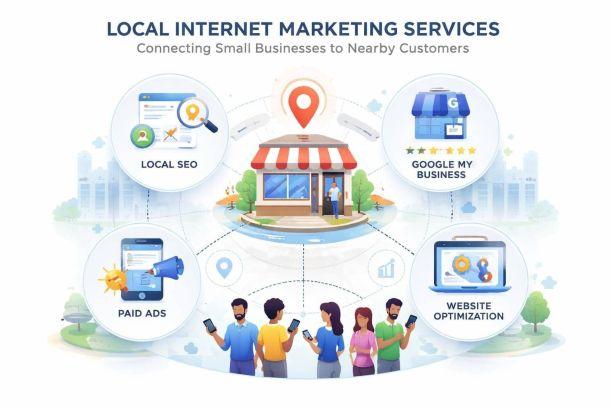
For digital marketing for doctors, local SEO is the secret weapon. Most patients want care close to home, and "near me" searches have doubled in recent years. Claim your Google Business Profile and ensure your name, address, and phone number are accurate everywhere online.
Upload photos of your clinic, list your services, and post regular updates. Ask happy patients to leave reviews on Google. This boosts your chances of appearing in the local "3-pack" at the top of search results.
Data shows that 46 percent of Google searches are for local businesses. If you want your clinic to stand out, local SEO is essential for attracting nearby patients.
Technical SEO: The Foundation for Search Visibility
Technical SEO is the backbone of digital marketing for doctors. If your website loads slowly or isn't mobile-friendly, Google will push you down the rankings. Start by running site speed tests, fixing broken links, and compressing images.
Make sure your site is secure with HTTPS and has a clean, logical structure. Use schema markup specifically for healthcare so search engines understand your services and credentials. Submit an XML sitemap to help Google crawl your site efficiently.
A clinic that fixed technical issues saw a significant jump in rankings and patient enquiries. Remember, technical health is just as important as clinical health when it comes to online visibility.
Content Marketing for Authority and Education
Content is your chance to show expertise and build trust. Digital marketing for doctors is more than just being found; it’s about becoming the go-to authority. Publish regular blog posts, treatment guides, and FAQs that address patient concerns in plain language.
Video content and infographics boost engagement and help explain complex topics simply. For example, an orthopaedic surgeon’s blog on knee pain can attract five times more organic traffic than a static service page.
Ninety-five percent of healthcare organisations now use content marketing, so staying consistent sets you apart from the competition.
Measuring and Improving SEO Performance
If you want digital marketing for doctors to deliver real results, you need to measure everything. Set up Google Analytics and Search Console to track your rankings, organic traffic, and conversions.
Review your keyword performance monthly and adjust your content based on what’s working. Use the data to identify which pages attract the most patients and which need improvement.
A clinic that reviewed its SEO strategy monthly doubled its organic bookings in six months. Remember, SEO is never a one-off job. Continuous monitoring and tweaks are what keep you ahead.
Leveraging Content Marketing for Patient Engagement
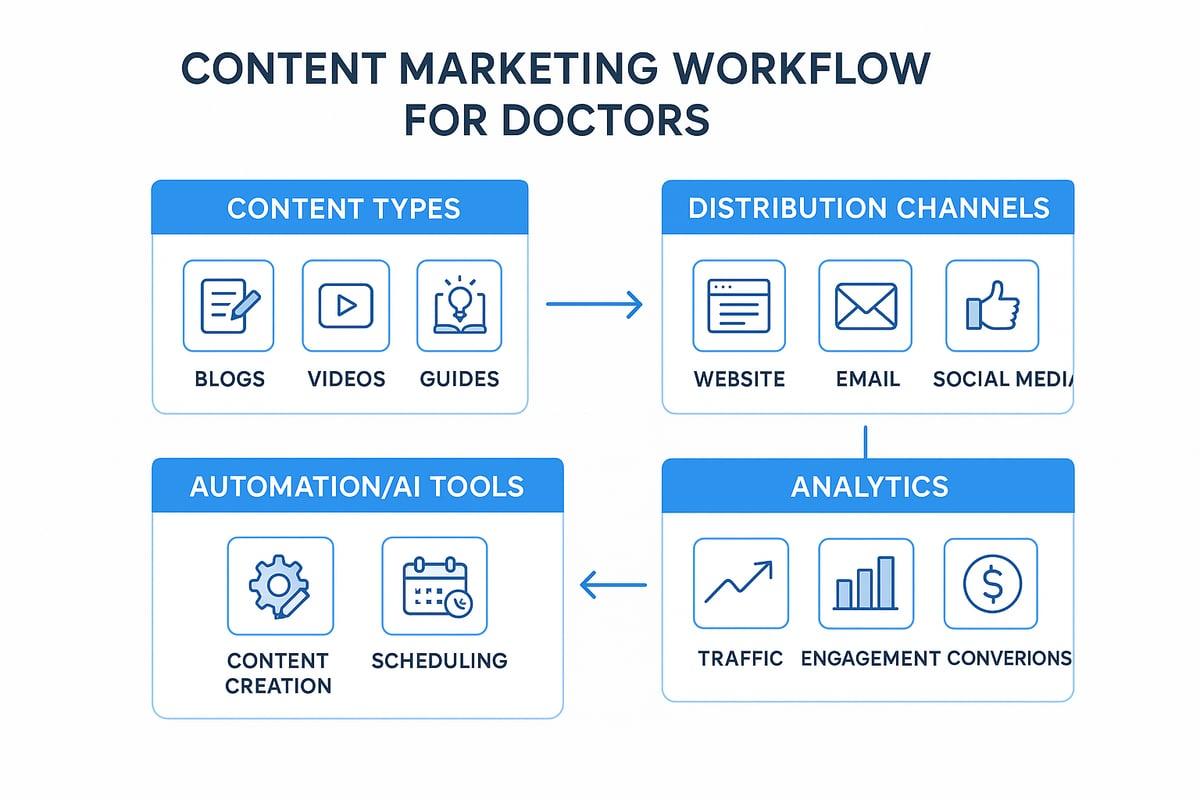
Content marketing is the engine that drives trust, authority, and patient bookings in digital marketing for doctors. By delivering helpful, relevant content at every stage of the patient journey, you position your practice as the go-to choice when someone is ready to book.

Types of Content That Drive Results
The best digital marketing for doctors starts with creating content that answers real patient questions and builds genuine trust. Educational blogs, explainer videos, downloadable guides, and webinars help patients understand conditions and treatments.
Relational content, such as testimonials, case studies, and doctor Q&As, humanises your brand and reassures new patients. SEO-focused articles targeting local and specialty keywords improve your search visibility.
For inspiration and practical tips, explore content marketing for medical practices to see how leading clinics use these formats. Quality content addresses patient concerns and positions your practice as a credible authority.
Content Distribution Channels
Creating great content is only half the job in digital marketing for doctors. You need to get it in front of the right people. Start with your website’s blog and resources section, making sure everything is easy to find.
Email newsletters keep your patient base engaged and informed about health updates, events, or new services. Social media platforms like Facebook, Instagram, LinkedIn, and YouTube amplify your reach and bring more traffic back to your site.
Share snippets, infographics, or short videos on each platform to drive engagement. By distributing content across multiple channels, you maximise reach and ensure your message lands where patients are most active.
AI & Automation in Content Creation
Efficiency and consistency are key in digital marketing for doctors, and that’s where AI and automation shine. Use AI tools for keyword research, blog drafting, and generating patient FAQs, saving hours each month.
Automate email newsletters and schedule social media posts in advance, ensuring your content pipeline never runs dry. Clinics using AI-powered content creation can publish more frequently, which boosts their SEO and keeps them top of mind for patients.
By freeing up your time with automation, you can focus more on patient care while maintaining a strong digital presence.
Measuring Content Effectiveness
To get the most out of digital marketing for doctors, you need to track what works. Use tools like Google Analytics and Hotjar to monitor website traffic, engagement metrics, and conversion rates.
Look for patterns in top-performing topics or formats, and adjust your future content strategy accordingly. For example, if a particular blog post drives more appointment bookings, consider creating more on similar topics.
Data-driven decisions ensure your content marketing efforts translate into real patient acquisition and practice growth.
Social Media Strategies for Healthcare Practices
Social media is a pillar of digital marketing for doctors in 2026. With patients scrolling, searching, and comparing on multiple platforms, a strong and strategic presence can set your practice apart. The right approach helps you build trust, engage your community, and fill your appointment book.
Choosing the Right Platforms for Your Audience
Not every platform is created equal for digital marketing for doctors. The key is to focus where your patients spend time and tailor your content to each channel. Here’s a quick comparison:
| Platform | Best For | Content Type |
|---|---|---|
| Community updates, health tips | Posts, live Q&A, groups | |
| Visual storytelling | Reels, stories, testimonials | |
| Networking, referrals | Articles, thought leadership | |
| YouTube | Education, virtual tours | Videos, webinars, FAQs |
For example, a paediatrician might use Instagram reels to share tips for parents, while a specialist could host webinars on YouTube. Digital marketing for doctors thrives when you meet patients where they already are.
Building Trust and Community Engagement
Trust is the currency of healthcare. Successful digital marketing for doctors relies on authentic connections. Share patient testimonials, behind-the-scenes glimpses, and regular team introductions to humanise your practice.
Host live Q&A sessions and answer common questions promptly. Encourage patients to comment and share their experiences. Did you know 41% of patients use social media to choose providers? By inviting dialogue, you nurture loyalty and stand out among competitors.
Paid Social Media Campaigns for Growth
Organic reach has limits, but paid campaigns can supercharge your digital marketing for doctors. Use targeted ads on Facebook and Instagram to reach local patients searching for your services. Promote seasonal offers, new treatments, or health checks.
An example: a clinic’s flu jab ad campaign doubled bookings in just one month. Monitor your campaign analytics to refine your strategy. Paid social can fill last-minute slots and attract new demographics, making it a smart investment for growth.
Managing Social Media Responsibly and Ethically
Ethics and reputation are non-negotiable in digital marketing for doctors. Always follow GMC and NHS guidelines, protect patient confidentiality, and get explicit consent for any stories or images you share.
When it comes to building trust and protecting your online reputation, practical steps make all the difference. Explore these Online reputation management tips to ensure your social media presence remains professional and compliant. Responsible management safeguards both your practice and your patients’ trust.
Online Reputation Management and Patient Reviews
Building trust online is a non-negotiable part of digital marketing for doctors. Your reputation is shaped by what patients say about you across review platforms, social media, and your website. Let’s break down how you can actively manage and enhance your online reputation for measurable growth.
The Impact of Reviews on Patient Choice
Online reviews are the modern word-of-mouth. When it comes to digital marketing for doctors, 75% of patients start their journey by checking reviews. Most people read at least five reviews before deciding to trust a provider. Platforms like Google, Healthgrades, and Yelp play a huge role in shaping first impressions.
Here’s a quick comparison:
| Platform | Influence on Choice | Trust Level |
|---|---|---|
| Very High | High | |
| Healthgrades | High | Medium |
| Yelp | Medium | Medium |
Consider the case of Doctor Aishah, who saw a surge in patient bookings after a focused reputation strategy. Practices with ratings above 4.5 stars attract significantly more enquiries. According to Customer Experience In The Health Industry Statistics, positive reviews are directly linked to higher patient acquisition. If you neglect your online reputation, you risk losing patients to competitors who take theirs seriously.
Collecting and Showcasing Patient Feedback
The next step in digital marketing for doctors is ensuring you actually collect feedback. Automate review requests after appointments using SMS or email. This hands-off approach increases the volume of reviews and ensures a steady stream of fresh feedback.
Showcase your best reviews on your website and social media. Patients trust real stories and testimonials far more than marketing claims. For example, clinics that automate review requests see a 50% increase in feedback volume. This not only boosts your credibility, it also improves your visibility in search results. Remember, proactive review management builds trust and helps convert browsers into bookings.
Responding to Reviews: Best Practices
How you respond to reviews is just as important as collecting them. Digital marketing for doctors is about building relationships. Always reply promptly and thank patients for their feedback, whether it’s positive or negative. Address concerns with empathy and invite unhappy patients to continue the conversation privately.
Here are some quick tips:
- Acknowledge the feedback
- Stay professional and polite
- Never share personal details
- Offer to resolve issues offline
A thoughtful response shows you care, which can turn a negative into a positive and strengthen your reputation.
Reputation Recovery and Crisis Management
Even with the best digital marketing for doctors, negative reviews or misinformation can appear. Have a plan for monitoring all reviews and set up alerts for new feedback. When a crisis hits, respond quickly and transparently. Acknowledge the problem, clarify facts, and show your commitment to resolving issues.
For example, if your clinic receives a negative review about wait times, respond publicly to apologise and explain any changes you’re making. This active approach can mitigate damage and even win back trust. Remember, ongoing reputation management keeps your digital presence strong and resilient.
Data-Driven Decisions: Analytics and Optimisation for Growth
The most successful clinics use data to drive every decision. If you want to see real progress with digital marketing for doctors, analytics is your best friend. Numbers never lie, and with the right tools, you can see what’s working and what needs fixing—fast.
Setting Up and Using Analytics Tools
Getting started with analytics is the foundation of digital marketing for doctors. Begin by installing Google Analytics and Search Console on your website. These tools show you where your visitors come from, what pages they view, and how they interact with your site.
Don’t forget call tracking—many patients still pick up the phone, and tracking these calls reveals which channels bring results. Set up conversion tracking for appointment forms and calls, so you can measure what matters.
With these systems in place, you’ll quickly spot which services attract the most attention. Regularly review dashboards and set up custom reports to focus on your practice’s priorities.
Tracking Patient Acquisition and ROI
Success in digital marketing for doctors is all about understanding where your patients come from and how much it costs to acquire them. Attribute each booking to its source—SEO, ads, social, or email—using your analytics tools.
Calculate your cost per acquisition by dividing your marketing spend by the number of new patients. This helps you decide where to invest more and where to cut back. If you want to get more granular, track the lifetime value of a patient for long-term planning.
For example, you might discover that Google Ads generate more bookings than Facebook, or that certain blog posts attract high-value patients. Use these insights to double down on what works.
Continuous Improvement: A/B Testing and Experimentation
Digital marketing for doctors is never a set-and-forget exercise. To keep growing, test everything. A/B testing lets you compare different website CTAs, landing pages, or even ad creatives to see what converts best.
Use heatmaps and user recordings to identify where patients drop off or get confused. Small tweaks—like changing the colour of a button or simplifying an appointment form—can lead to big wins. For example, a clinic that tested two versions of its booking form saw completions jump by 20 percent.
Regular experimentation ensures your marketing stays sharp. Review results monthly and implement what you learn for steady improvement.
Staying Ahead: Adapting to Digital Trends in Healthcare
The digital landscape for doctors is always evolving. Stay informed about emerging trends like AI-powered search, telemedicine, and new social platforms. For instance, by 2026, telehealth may represent up to 30% of US medical visits, making it vital to track and optimise these channels.
Attend webinars, read industry blogs, and join professional groups to keep your skills sharp. Early adoption of tools like AI chatbots or video consultations can give you a competitive edge.
Remember, digital marketing for doctors is a marathon, not a sprint. Stay curious, measure everything, and adapt quickly to keep your practice ahead of the curve.
So if you’ve made it this far, you’re clearly serious about growing your practice in 2026 and making your digital presence work as hard as you do. We’ve covered everything from building a patient friendly website to mastering SEO and getting real results from social media. But sometimes, it helps to talk things through with someone who’s done it all before. If you’d like a bit of expert, no nonsense advice tailored to your clinic, why not Get free 45 min consultation with me Let’s look at what’s working, what’s not, and how we can turn more clicks into bookings.
In 2026, patients will choose their doctors before they ever set foot in a clinic. With 75% of patients starting their healthcare journey online, your digital presence is as crucial as your bedside manner.
The landscape is fiercely competitive, with more than 2.8 million healthcare facilities all aiming to stand out. So, how can you ensure your practice rises above the noise?
This guide on digital marketing for doctors is designed to give you a clear, step-by-step blueprint. You'll find proven strategies covering SEO, content, patient reviews, social media, and smart automation—each one tailored to help you attract more patients and build lasting trust.
Ready to future-proof your practice? Dive in and discover how website optimisation, search visibility, content marketing, social media, reputation management, patient engagement, and data-driven decisions will set you apart in the digital age.
Understanding the Digital Shift in Patient Behaviour
Patients no longer choose a doctor based on location or word of mouth alone. The digital marketing for doctors landscape has transformed how individuals find, evaluate, and trust healthcare providers. Today, your online presence is often your first and most important handshake with a new patient.

The New Patient Journey: From Search to Selection
Digital marketing for doctors starts with understanding how patients behave online. Today, the patient journey is rarely linear. It begins with a search—often on Google—where potential patients type symptoms, service needs, or "GP near me."
A staggering 75% of patients start by reading online reviews. In fact, 84% look at five or more reviews before they trust a healthcare provider. Local intent is clear, as "near me" healthcare searches have doubled since 2015.
Let's break it down:
| Step | Patient Action | Impact |
|---|---|---|
| Search | Google for doctors or clinics | First impression |
| Compare | Read reviews and ratings | Builds or breaks trust |
| Website Visit | Check bios, services, FAQs | Assess credibility |
| Decision | Book appointment online | Conversion |
For example, a new patient looking for a GP in Manchester will scan Google, read reviews, compare websites, and only then book. Data shows 94% of patients consume educational content online before making a decision.
This means every digital touchpoint is an opportunity—or a risk. Doctors must actively manage all aspects of digital marketing for doctors to shape patient choices.
Trust, Transparency, and Convenience: What Modern Patients Expect
Modern patients have high standards, and digital marketing for doctors must rise to meet them. Transparency is non negotiable—patients want clear information on pricing, credentials, and offered services before they even pick up the phone.
Convenience is king. Patients expect mobile friendly websites, instant online booking, and rapid responses. Social proof, such as testimonials and ratings, is a major trust factor. Clinics that deliver seamless scheduling and showcase strong reviews see a measurable jump in conversion rates.
Consider this:
- 46% of Google searches have local intent, so local SEO is vital.
- Mobile responsiveness is expected, not optional.
- Patients favour practices that answer questions online, reducing the need for calls.
Meeting these expectations through digital marketing for doctors has a direct impact on bookings and patient loyalty. In today’s world, digital convenience is as crucial as bedside manner.
Key Trends Driving Change in 2026
As we look to 2026, digital marketing for doctors is evolving quickly. AI powered search and voice assistants are changing how patients discover providers. Video content and interactive tools, like FAQs and explainer videos, are now essential for patient education.
Practices are also adopting online forms, chatbots, and telemedicine as part of the digital journey. For instance, clinics that add video FAQs or use AI chat see higher user engagement and satisfaction.
To stay ahead, doctors must continually adapt to new tech and patient behaviours. For more on AI driven strategies and interactive content, see the Digital Marketing for Doctors: 2026 Patient Acquisition Playbook.
Building a High-Performing Medical Website
A high-performing website is the digital front door for any clinic. In the world of digital marketing for doctors, your website is often the first interaction a patient has with your practice. It needs to be fast, secure, and designed with patient experience in mind.
Essential Features for Trust and Conversion
Patients today are quick to judge a website. If it is slow, confusing, or not mobile-friendly, they will move on. With over 83.5% of Google visitors on mobile, mobile responsiveness is non-negotiable for digital marketing for doctors. Secure your site with SSL to protect patient data and boost your Google rankings.
Clear navigation is key. Make it easy for patients to find what they need, whether that is booking an appointment, learning about services, or reading FAQs. Add prominent calls-to-action like "Book Appointment" or "Contact Us" at every step.
A Birmingham clinic revamped its site for speed and mobile use and saw bookings soar by 40%. Google rewards sites that are fast, secure, and optimised for mobile. Your website is more than a brochure. It is a conversion tool that works for you 24/7.
| Feature | Why It Matters |
|---|---|
| Mobile responsive | 83.5%+ browse on mobile |
| SSL Security | Protects data, boosts trust |
| Fast load times | Higher rankings, less bounce |
| Clear navigation | Easier for patients to take action |
Content That Connects: Humanising Your Practice
Trust is built through genuine connection. Digital marketing for doctors is most effective when patients see the people behind the practice. Include team bios, friendly photos, and “meet the doctor” videos. Let patients know who will care for them.
Share real testimonials and patient stories. This social proof reassures new patients. Educational blog posts and detailed FAQs answer common questions, reducing the need for calls and emails.
For example, adding a simple FAQ page about treatment options can cut down repetitive phone queries and help patients feel informed. With 94% of patients reading online educational content before booking, authentic content is not just a bonus, it is essential for building trust and driving bookings.
Online Booking and Workflow Automation
Convenience is king for today’s patients. Digital marketing for doctors must include seamless online booking. Integrate a scheduling tool that lets patients book instantly, day or night. Choose HIPAA-compliant forms to keep patient data safe.
Automate appointment confirmations and reminders by email or SMS. This reduces no-shows and frees up staff time. Practices that offer online booking consistently see higher patient satisfaction and fewer missed appointments.
For example, clinics using automated reminders have reduced missed appointments by up to 30%. Patients expect this level of service, and it shows you value their time. Automation is not just efficient, it meets modern expectations.
Why Conversion-Focused Web Design Matters
The best digital marketing for doctors starts with a website built to convert visitors into patients. High-converting medical websites are optimised for SEO, mobile use, and effortless patient booking.

Marketing XP specialises in designing healthcare websites that deliver measurable results. Their expertise with WordPress, Shopify, and AI-powered content ensures your clinic stands out. The focus is always on generating more enquiries, more bookings, and more revenue for your practice. If your website is not converting, it is time for an upgrade that pays for itself.
Mastering Healthcare SEO: Getting Found by the Right Patients
The future of digital marketing for doctors is all about being visible where patients are searching. If you want to attract the right patients in 2026, mastering healthcare SEO is non-negotiable. Every patient journey starts with a search, and your practice needs to show up first, not last.

Keyword Research and Content Optimisation
Effective digital marketing for doctors begins with understanding the language your patients use. Patients rarely search for clinical terms. Instead, they type symptoms, treatments, and "near me" phrases into Google. For example, a patient might search for "private GP Birmingham" or "family doctor near me".
You need to build your website content around these keywords. Create pages that answer common questions, use FAQ sections, and make your services easy to find. According to research, SEO drives 1,000 percent more traffic than organic social media. The key is to focus on patient-centric language. For a deeper dive into effective strategies, see these Healthcare SEO strategies.
Regularly updating your site with fresh, relevant content keeps you visible and builds trust with potential patients.
Local SEO: Dominating Google Maps and Local Searches
For digital marketing for doctors, local SEO is the secret weapon. Most patients want care close to home, and "near me" searches have doubled in recent years. Claim your Google Business Profile and ensure your name, address, and phone number are accurate everywhere online.
Upload photos of your clinic, list your services, and post regular updates. Ask happy patients to leave reviews on Google. This boosts your chances of appearing in the local "3-pack" at the top of search results.
Data shows that 46 percent of Google searches are for local businesses. If you want your clinic to stand out, local SEO is essential for attracting nearby patients.
Technical SEO: The Foundation for Search Visibility
Technical SEO is the backbone of digital marketing for doctors. If your website loads slowly or isn't mobile-friendly, Google will push you down the rankings. Start by running site speed tests, fixing broken links, and compressing images.
Make sure your site is secure with HTTPS and has a clean, logical structure. Use schema markup specifically for healthcare so search engines understand your services and credentials. Submit an XML sitemap to help Google crawl your site efficiently.
A clinic that fixed technical issues saw a significant jump in rankings and patient enquiries. Remember, technical health is just as important as clinical health when it comes to online visibility.
Content Marketing for Authority and Education
Content is your chance to show expertise and build trust. Digital marketing for doctors is more than just being found; it’s about becoming the go-to authority. Publish regular blog posts, treatment guides, and FAQs that address patient concerns in plain language.
Video content and infographics boost engagement and help explain complex topics simply. For example, an orthopaedic surgeon’s blog on knee pain can attract five times more organic traffic than a static service page.
Ninety-five percent of healthcare organisations now use content marketing, so staying consistent sets you apart from the competition.
Measuring and Improving SEO Performance
If you want digital marketing for doctors to deliver real results, you need to measure everything. Set up Google Analytics and Search Console to track your rankings, organic traffic, and conversions.
Review your keyword performance monthly and adjust your content based on what’s working. Use the data to identify which pages attract the most patients and which need improvement.
A clinic that reviewed its SEO strategy monthly doubled its organic bookings in six months. Remember, SEO is never a one-off job. Continuous monitoring and tweaks are what keep you ahead.
Leveraging Content Marketing for Patient Engagement
Content marketing is the engine that drives trust, authority, and patient bookings in digital marketing for doctors. By delivering helpful, relevant content at every stage of the patient journey, you position your practice as the go-to choice when someone is ready to book.

Types of Content That Drive Results
The best digital marketing for doctors starts with creating content that answers real patient questions and builds genuine trust. Educational blogs, explainer videos, downloadable guides, and webinars help patients understand conditions and treatments.
Relational content, such as testimonials, case studies, and doctor Q&As, humanises your brand and reassures new patients. SEO-focused articles targeting local and specialty keywords improve your search visibility.
For inspiration and practical tips, explore content marketing for medical practices to see how leading clinics use these formats. Quality content addresses patient concerns and positions your practice as a credible authority.
Content Distribution Channels
Creating great content is only half the job in digital marketing for doctors. You need to get it in front of the right people. Start with your website’s blog and resources section, making sure everything is easy to find.
Email newsletters keep your patient base engaged and informed about health updates, events, or new services. Social media platforms like Facebook, Instagram, LinkedIn, and YouTube amplify your reach and bring more traffic back to your site.
Share snippets, infographics, or short videos on each platform to drive engagement. By distributing content across multiple channels, you maximise reach and ensure your message lands where patients are most active.
AI & Automation in Content Creation
Efficiency and consistency are key in digital marketing for doctors, and that’s where AI and automation shine. Use AI tools for keyword research, blog drafting, and generating patient FAQs, saving hours each month.
Automate email newsletters and schedule social media posts in advance, ensuring your content pipeline never runs dry. Clinics using AI-powered content creation can publish more frequently, which boosts their SEO and keeps them top of mind for patients.
By freeing up your time with automation, you can focus more on patient care while maintaining a strong digital presence.
Measuring Content Effectiveness
To get the most out of digital marketing for doctors, you need to track what works. Use tools like Google Analytics and Hotjar to monitor website traffic, engagement metrics, and conversion rates.
Look for patterns in top-performing topics or formats, and adjust your future content strategy accordingly. For example, if a particular blog post drives more appointment bookings, consider creating more on similar topics.
Data-driven decisions ensure your content marketing efforts translate into real patient acquisition and practice growth.
Social Media Strategies for Healthcare Practices
Social media is a pillar of digital marketing for doctors in 2026. With patients scrolling, searching, and comparing on multiple platforms, a strong and strategic presence can set your practice apart. The right approach helps you build trust, engage your community, and fill your appointment book.
Choosing the Right Platforms for Your Audience
Not every platform is created equal for digital marketing for doctors. The key is to focus where your patients spend time and tailor your content to each channel. Here’s a quick comparison:
| Platform | Best For | Content Type |
|---|---|---|
| Community updates, health tips | Posts, live Q&A, groups | |
| Visual storytelling | Reels, stories, testimonials | |
| Networking, referrals | Articles, thought leadership | |
| YouTube | Education, virtual tours | Videos, webinars, FAQs |
For example, a paediatrician might use Instagram reels to share tips for parents, while a specialist could host webinars on YouTube. Digital marketing for doctors thrives when you meet patients where they already are.
Building Trust and Community Engagement
Trust is the currency of healthcare. Successful digital marketing for doctors relies on authentic connections. Share patient testimonials, behind-the-scenes glimpses, and regular team introductions to humanise your practice.
Host live Q&A sessions and answer common questions promptly. Encourage patients to comment and share their experiences. Did you know 41% of patients use social media to choose providers? By inviting dialogue, you nurture loyalty and stand out among competitors.
Paid Social Media Campaigns for Growth
Organic reach has limits, but paid campaigns can supercharge your digital marketing for doctors. Use targeted ads on Facebook and Instagram to reach local patients searching for your services. Promote seasonal offers, new treatments, or health checks.
An example: a clinic’s flu jab ad campaign doubled bookings in just one month. Monitor your campaign analytics to refine your strategy. Paid social can fill last-minute slots and attract new demographics, making it a smart investment for growth.
Managing Social Media Responsibly and Ethically
Ethics and reputation are non-negotiable in digital marketing for doctors. Always follow GMC and NHS guidelines, protect patient confidentiality, and get explicit consent for any stories or images you share.
When it comes to building trust and protecting your online reputation, practical steps make all the difference. Explore these Online reputation management tips to ensure your social media presence remains professional and compliant. Responsible management safeguards both your practice and your patients’ trust.
Online Reputation Management and Patient Reviews
Building trust online is a non-negotiable part of digital marketing for doctors. Your reputation is shaped by what patients say about you across review platforms, social media, and your website. Let’s break down how you can actively manage and enhance your online reputation for measurable growth.
The Impact of Reviews on Patient Choice
Online reviews are the modern word-of-mouth. When it comes to digital marketing for doctors, 75% of patients start their journey by checking reviews. Most people read at least five reviews before deciding to trust a provider. Platforms like Google, Healthgrades, and Yelp play a huge role in shaping first impressions.
Here’s a quick comparison:
| Platform | Influence on Choice | Trust Level |
|---|---|---|
| Very High | High | |
| Healthgrades | High | Medium |
| Yelp | Medium | Medium |
Consider the case of Doctor Aishah, who saw a surge in patient bookings after a focused reputation strategy. Practices with ratings above 4.5 stars attract significantly more enquiries. According to Customer Experience In The Health Industry Statistics, positive reviews are directly linked to higher patient acquisition. If you neglect your online reputation, you risk losing patients to competitors who take theirs seriously.
Collecting and Showcasing Patient Feedback
The next step in digital marketing for doctors is ensuring you actually collect feedback. Automate review requests after appointments using SMS or email. This hands-off approach increases the volume of reviews and ensures a steady stream of fresh feedback.
Showcase your best reviews on your website and social media. Patients trust real stories and testimonials far more than marketing claims. For example, clinics that automate review requests see a 50% increase in feedback volume. This not only boosts your credibility, it also improves your visibility in search results. Remember, proactive review management builds trust and helps convert browsers into bookings.
Responding to Reviews: Best Practices
How you respond to reviews is just as important as collecting them. Digital marketing for doctors is about building relationships. Always reply promptly and thank patients for their feedback, whether it’s positive or negative. Address concerns with empathy and invite unhappy patients to continue the conversation privately.
Here are some quick tips:
- Acknowledge the feedback
- Stay professional and polite
- Never share personal details
- Offer to resolve issues offline
A thoughtful response shows you care, which can turn a negative into a positive and strengthen your reputation.
Reputation Recovery and Crisis Management
Even with the best digital marketing for doctors, negative reviews or misinformation can appear. Have a plan for monitoring all reviews and set up alerts for new feedback. When a crisis hits, respond quickly and transparently. Acknowledge the problem, clarify facts, and show your commitment to resolving issues.
For example, if your clinic receives a negative review about wait times, respond publicly to apologise and explain any changes you’re making. This active approach can mitigate damage and even win back trust. Remember, ongoing reputation management keeps your digital presence strong and resilient.
Data-Driven Decisions: Analytics and Optimisation for Growth
The most successful clinics use data to drive every decision. If you want to see real progress with digital marketing for doctors, analytics is your best friend. Numbers never lie, and with the right tools, you can see what’s working and what needs fixing—fast.
Setting Up and Using Analytics Tools
Getting started with analytics is the foundation of digital marketing for doctors. Begin by installing Google Analytics and Search Console on your website. These tools show you where your visitors come from, what pages they view, and how they interact with your site.
Don’t forget call tracking—many patients still pick up the phone, and tracking these calls reveals which channels bring results. Set up conversion tracking for appointment forms and calls, so you can measure what matters.
With these systems in place, you’ll quickly spot which services attract the most attention. Regularly review dashboards and set up custom reports to focus on your practice’s priorities.
Tracking Patient Acquisition and ROI
Success in digital marketing for doctors is all about understanding where your patients come from and how much it costs to acquire them. Attribute each booking to its source—SEO, ads, social, or email—using your analytics tools.
Calculate your cost per acquisition by dividing your marketing spend by the number of new patients. This helps you decide where to invest more and where to cut back. If you want to get more granular, track the lifetime value of a patient for long-term planning.
For example, you might discover that Google Ads generate more bookings than Facebook, or that certain blog posts attract high-value patients. Use these insights to double down on what works.
Continuous Improvement: A/B Testing and Experimentation
Digital marketing for doctors is never a set-and-forget exercise. To keep growing, test everything. A/B testing lets you compare different website CTAs, landing pages, or even ad creatives to see what converts best.
Use heatmaps and user recordings to identify where patients drop off or get confused. Small tweaks—like changing the colour of a button or simplifying an appointment form—can lead to big wins. For example, a clinic that tested two versions of its booking form saw completions jump by 20 percent.
Regular experimentation ensures your marketing stays sharp. Review results monthly and implement what you learn for steady improvement.
Staying Ahead: Adapting to Digital Trends in Healthcare
The digital landscape for doctors is always evolving. Stay informed about emerging trends like AI-powered search, telemedicine, and new social platforms. For instance, by 2026, telehealth may represent up to 30% of US medical visits, making it vital to track and optimise these channels.
Attend webinars, read industry blogs, and join professional groups to keep your skills sharp. Early adoption of tools like AI chatbots or video consultations can give you a competitive edge.
Remember, digital marketing for doctors is a marathon, not a sprint. Stay curious, measure everything, and adapt quickly to keep your practice ahead of the curve.
So if you’ve made it this far, you’re clearly serious about growing your practice in 2026 and making your digital presence work as hard as you do. We’ve covered everything from building a patient friendly website to mastering SEO and getting real results from social media. But sometimes, it helps to talk things through with someone who’s done it all before. If you’d like a bit of expert, no nonsense advice tailored to your clinic, why not Get free 45 min consultation with me Let’s look at what’s working, what’s not, and how we can turn more clicks into bookings.