Most businesses treat email copywriting like it's some kind of mystical art. They obsess over clever wordplay, spend hours on subject lines that sound witty, and forget the only thing that matters: does it make the reader do something? If your emails aren't generating clicks, bookings, or sales, they're just noise. Email copywriting isn't about sounding smart or creative. It's about understanding what your audience wants, giving them a clear reason to act, and making that action the easiest thing they could possibly do. When you get that right, email becomes one of the highest-converting channels you've got.
Why Email Copywriting Determines Whether Your Campaign Succeeds or Fails
You can have a stunning email template, perfect send times, and a beautifully segmented list. But if your copy doesn't connect, none of that matters.
The words in your email determine whether someone opens it, reads it, and clicks through. That's three separate conversion points before they even reach your landing page. Each one depends entirely on how well your email copywriting speaks to the reader's needs and removes friction from their decision-making process.
Here's what strong email copywriting achieves:
- Gets your email opened by making the subject line relevant, not just attention-grabbing
- Keeps readers engaged by addressing their actual problems, not your product features
- Drives action by presenting one clear next step with an obvious benefit
- Builds trust over time by sounding like a real person, not a corporate robot
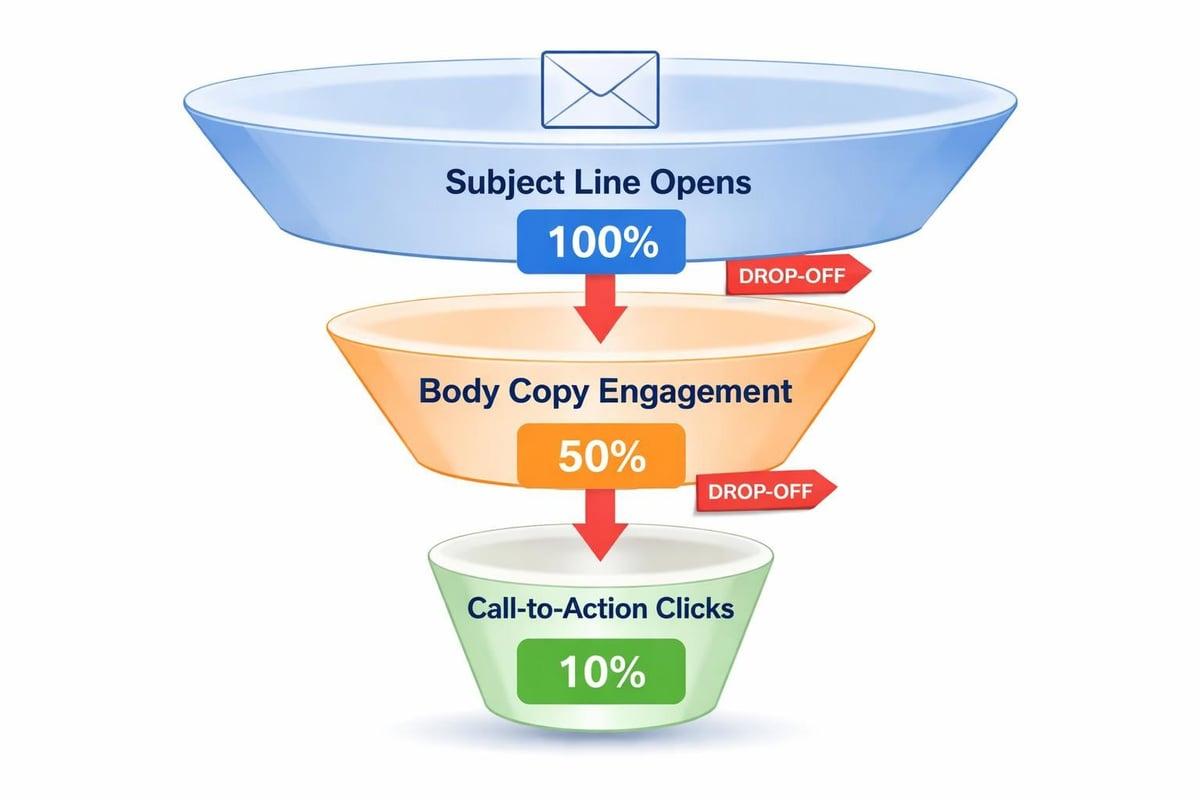
Compare that to weak email copywriting, which buries the point in paragraphs of fluff, uses vague calls to action like "Learn More," and forgets that people read emails on their phones whilst doing three other things. Tips for better email copywriting emphasize clarity and directness because those qualities respect your reader's time.

The best email copywriting doesn't feel like marketing. It feels like a helpful message from someone who understands what you're dealing with and has a solution worth considering. That's the difference between a 2% click rate and a 15% click rate on the same list.
Subject Lines That Actually Get Opened
Your subject line has one job: make someone curious or concerned enough to open the email. Not impressed. Not entertained. Just interested enough to click.
Most subject lines fail because they're either too vague ("Our latest updates") or trying too hard to be clever ("You won't BELIEVE what we just launched"). Both approaches ignore what actually makes people open emails in 2026, which is relevance and specificity.
The Subject Line Formula That Works
Start with what the reader cares about, add specificity, and keep it under 50 characters so it displays properly on mobile. Here's how that plays out in practice:
| Weak Subject Line | Strong Subject Line | Why It Works |
|---|---|---|
| "New blog post!" | "How to fix your abandoned cart problem" | Identifies a specific pain point |
| "Check out our sale" | "25% off Shopify apps ends tonight" | Creates urgency with a deadline |
| "Newsletter: March 2026" | "3 ways to speed up your site this week" | Promises tangible value and timeframe |
The strongest subject lines tell you exactly what's inside and why it matters now. They avoid spam triggers like excessive capitalization, multiple exclamation marks, and words like "free" or "guarantee" that impact email deliverability and send your message straight to the junk folder.
Test different approaches. A question can work if it's the exact question your audience is asking themselves. A number works if it promises a quick, digestible answer. Personalization works if it's genuine (using their company name when relevant), not creepy (referencing data they didn't knowingly share).
Writing Email Copy That Holds Attention and Drives Action
Once someone opens your email, you've got about three seconds before they decide whether to keep reading or close it. Your opening line determines that decision.
Start with the problem or opportunity, not with "I hope this email finds you well" or an introduction to who you are. The reader already knows who you are from the sender name. They want to know why this email matters to them.
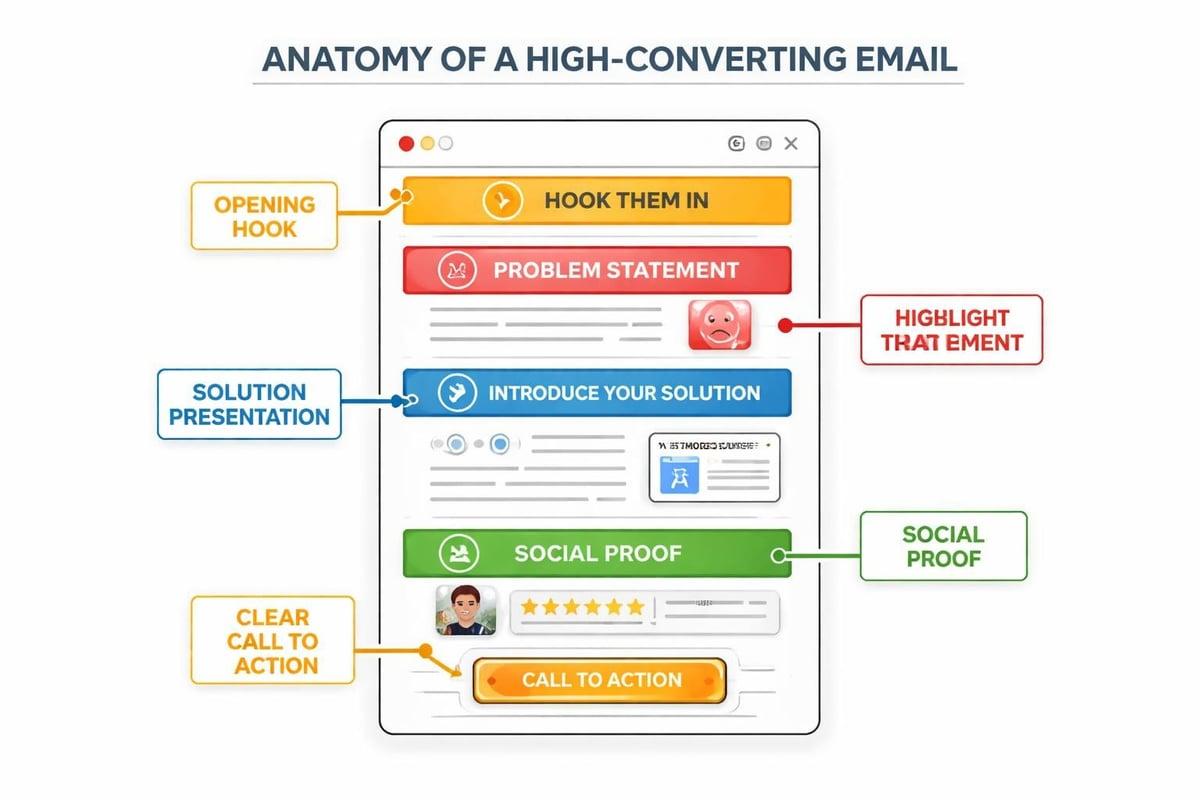
Structure your email body like this:
- Opening sentence: State the problem or opportunity directly
- Context: One or two sentences explaining why this matters now
- Solution/offer: What you're providing and the specific benefit
- Proof: A quick example, stat, or testimonial if relevant
- Call to action: One clear next step with an obvious reason to take it
Keep paragraphs short. One to three sentences maximum. Use bullet points when you're listing features, benefits, or steps. Break up text so it's scannable because most people won't read your email word-for-word, they'll skim it looking for the bit that's relevant to them.
Email copywriting works best when it's conversational but purposeful. Write like you'd explain something to a colleague over coffee, not like you're drafting a press release. Use contractions. Ask questions. Cut any sentence that doesn't move the reader closer to understanding what you want them to do.

Calls to Action That Convert
Your call to action should be the most obvious element in your email. Not buried in the final paragraph. Not hidden in a text link. A button or bold link that stands out and tells the reader exactly what happens when they click.
Replace vague CTAs with specific ones:
- Not "Click here" but "Download the conversion checklist"
- Not "Learn more" but "See how it works in 2 minutes"
- Not "Get started" but "Book your free strategy call"
The difference is clarity. "Learn more" could mean anything. "See how it works in 2 minutes" tells me I'm about to watch a short video or read a brief explanation. That's a much easier decision to make.
Segmentation and Personalization in Email Copywriting
Generic emails don't convert. You need different messages for different segments of your list because someone who bought from you last week needs different copy than someone who downloaded a free guide six months ago and hasn't engaged since.
Segment by behavior, not just demographics. What someone does (opened your last three emails, clicked but didn't buy, purchased a specific product category) tells you far more about what message will resonate than knowing their job title or location.
Your email copywriting should reflect that segmentation:
- New subscribers: Welcome sequences that explain who you are, what you do, and what they'll get from staying subscribed
- Engaged but not purchased: Case studies, product comparisons, objection-handling content
- Recent customers: Onboarding, complementary products, asking for reviews
- Lapsed customers: Re-engagement campaigns with incentives or new offers
Best practices for email copywriting in 2025 emphasize tailoring content to where the recipient sits in your funnel. Someone at the awareness stage needs educational content. Someone at the decision stage needs proof and a push.
Personalization goes beyond sticking someone's first name in the subject line. Reference their specific situation, past behavior, or previous conversations. If they abandoned a cart with specific products, mention those products. If they attended your webinar on Shopify optimization, follow up with related content on product page conversion.
Common Email Copywriting Mistakes That Kill Conversions
Even experienced marketers make these errors, and they're costing you sales.
Writing about features instead of outcomes. Nobody cares that your software has "advanced analytics dashboards." They care that they'll finally understand which marketing channels are actually bringing in revenue. Lead with the outcome, mention features as supporting evidence.
Burying the point. If someone has to scroll to understand what you want them to do, you've lost them. State your offer in the first paragraph, then provide supporting detail.
Multiple calls to action. Each email should drive one action. Not "book a call OR download this guide OR check out our blog." Pick the most important next step and focus everything on that.
Sounding like every other marketing email. Effective email copywriting techniques show that conversational tone and personality massively improve engagement. If your email could have been written by any company in your industry, it's too generic.
Forgetting mobile optimization. Over 60% of emails are opened on mobile devices in 2026. If your paragraphs are dense blocks of text, your CTA button is tiny, or your email is wider than a phone screen, you're losing conversions. Email copywriting examples from successful brands demonstrate how concise, mobile-friendly formatting drives better results.
Testing What Actually Works
Stop guessing. Test your email copywriting systematically.
| Element to Test | What to Try | How to Measure |
|---|---|---|
| Subject line | Question vs statement, short vs medium length | Open rate |
| Opening line | Problem-first vs benefit-first | Click-through rate |
| Email length | Short (under 100 words) vs medium (200-300 words) | Click-through and conversion rate |
| CTA copy | Action-focused vs benefit-focused | Click rate on CTA |
| Send time | Morning vs afternoon, weekday vs weekend | Open and engagement rate |
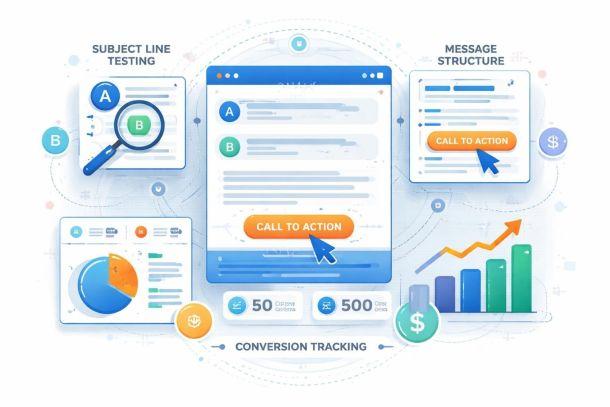
Run A/B tests on meaningful segments (at least 500 recipients per variant) and give each test enough time to gather significant data. One send isn't enough to draw conclusions. Test the same variable across three or four campaigns to see if the pattern holds.
Email Copywriting for Different Campaign Types
The structure and tone of your email copywriting should match the campaign's purpose. A promotional email needs different copy than a newsletter or abandoned cart sequence.
Welcome Emails
These perform better than almost any other email type because recipients expect them and are most engaged right after subscribing. Your welcome email copywriting should set expectations, deliver immediate value, and guide the next step.
What to include:
- Quick introduction to who you are and what you do
- Confirmation of what they'll receive and how often
- One valuable piece of content (guide, checklist, video)
- Clear next step (reply with questions, follow on social, browse your most popular products)
Keep welcome emails warm and helpful, not salesy. You're building a relationship, not closing a deal. Comprehensive email copywriting resources show how top-performing welcome sequences focus on value delivery before pitching.
Promotional Emails
These are where most email copywriting falls apart. Businesses think "promotion" means shouting about their offer, when it actually means connecting that offer to what the recipient needs.
Structure promotional emails around the benefit, not the discount. "Save 20% on Shopify apps" is weaker than "Speed up your store and increase conversions with 20% off these Shopify apps." Same offer, but the second version tells me why I should care.
Use urgency genuinely. If your sale actually ends Friday, say so. If it doesn't, don't fabricate deadlines because you'll train your audience to ignore them.
Nurture and Educational Emails
These build trust and keep your brand front-of-mind without asking for a sale. Your email copywriting here should be genuinely useful, teaching something or sharing insights your audience can apply immediately.
The mistake is making these too generic. Don't just share "5 Marketing Tips." Share "How Birmingham Retailers Increased Foot Traffic 34% Using Google Local Campaigns" with specific tactics and real examples. Specificity makes content credible and actionable.
End educational emails with a soft CTA. Not "Buy now" but "Want help implementing this? Here's how we can work together" with a link to your services page or booking calendar.
Cart Abandonment and Re-engagement

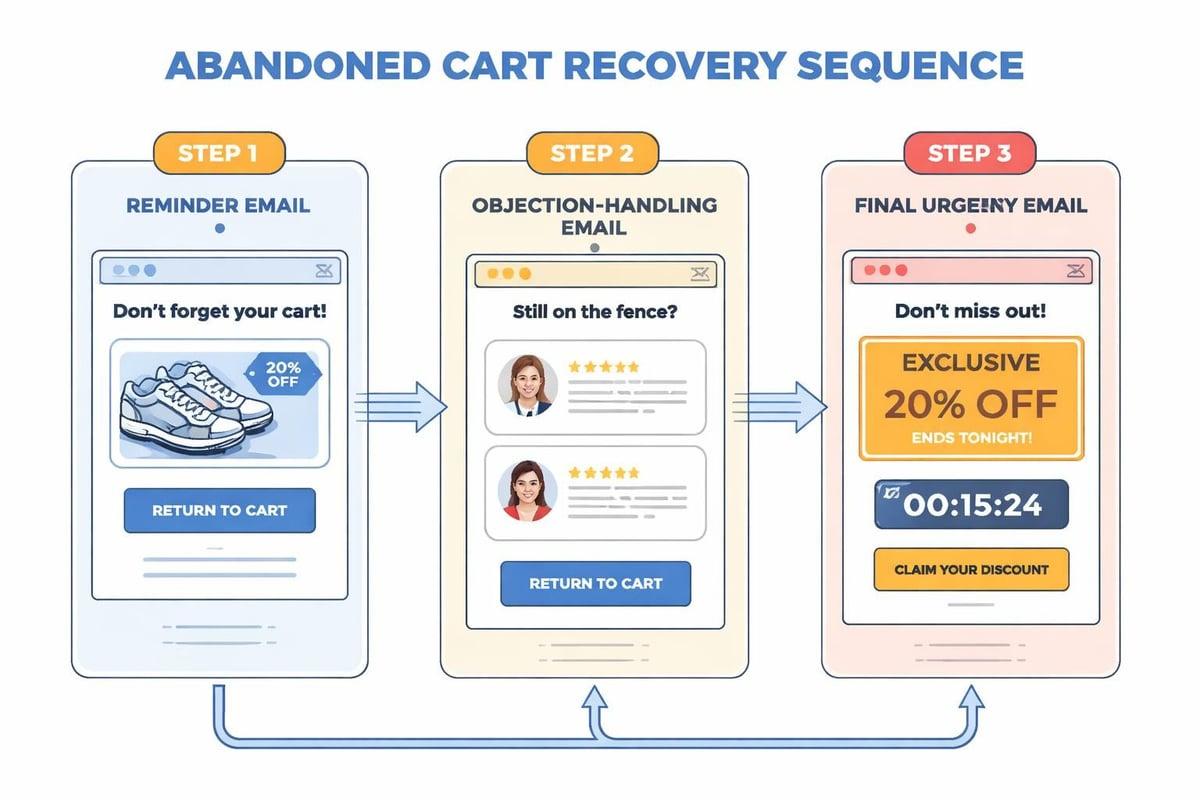
When someone abandons a cart or goes quiet, your email copywriting needs to address the likely objection without being pushy. The first abandoned cart email should be a helpful reminder with the products they left behind. The second should handle common concerns (shipping costs, return policy, product questions). The third can introduce urgency or a small discount if appropriate.
For lapsed subscribers, acknowledge the gap. "It's been a while" or "Noticed you haven't opened our emails lately" shows you're paying attention. Then give them a reason to re-engage: "Here's what's changed since you last heard from us" or "We'd love to know what you'd like to see from us."
Using AI to Speed Up Email Copywriting Without Losing Quality
AI tools can massively accelerate email copywriting, but only if you use them properly. Treating ChatGPT like a magic copywriter button produces generic rubbish. Using it as a drafting and iteration tool gets you to strong copy faster.
How to use AI effectively for email copywriting:
- Feed it context about your audience, offer, and goal before asking for copy
- Request specific formats (bullet points, short paragraphs, conversational tone)
- Use it to generate 5-10 subject line options, then pick and refine the best ones
- Ask it to rewrite sections for different segments or reading levels
- Have it identify weak points in your existing copy and suggest improvements
The final copy should always be edited by a human who understands your brand voice and audience nuances. AI gets you 70-80% of the way there. You refine it into copy that actually sounds like you and converts.
If you're running regular campaigns, build a library of prompts that work for your business. "Write a promotional email for [product] targeting [audience segment] emphasizing [key benefit] in a friendly, direct tone under 200 words" becomes a reusable template you can adapt quickly.
Measuring Email Copywriting Performance
Metrics tell you what's working. Track these for every campaign:
- Open rate: Indicates subject line effectiveness and sender reputation
- Click-through rate: Shows whether your body copy and CTA are compelling
- Conversion rate: The ultimate measure (bookings, purchases, downloads, whatever your goal is)
- Unsubscribe rate: High rates suggest you're emailing too often or your content isn't relevant
- Reply rate: For smaller, targeted campaigns, replies indicate genuine engagement
Modular email structures make testing easier because you can swap individual sections without rewriting the entire email. If your CTA section isn't performing, test a different approach while keeping the rest of the email the same.
Compare your metrics to previous campaigns and industry benchmarks, but focus more on your own improvement trends. A 15% open rate might be weak for some industries and strong for others. What matters is whether your email copywriting is improving your results month over month.
Look for patterns across campaigns. Do certain topics consistently outperform others? Do specific types of subject lines work better for your audience? Does a friendly tone convert better than a formal one? Your data tells you what your audience responds to, which informs every future email you write.
Strong email copywriting isn't complicated, but it does require focus on what actually drives results rather than what sounds impressive. When you write emails that address real problems, present clear solutions, and make the next step obvious, you turn your list into a reliable revenue channel. If you need help building email campaigns that convert or want to integrate email marketing with high-converting Shopify websites and lead generation systems, Marketing XP combines hands-on email strategy with conversion-focused web development and performance marketing to help Birmingham businesses get measurable results.
Most businesses treat email copywriting like it's some kind of mystical art. They obsess over clever wordplay, spend hours on subject lines that sound witty, and forget the only thing that matters: does it make the reader do something? If your emails aren't generating clicks, bookings, or sales, they're just noise. Email copywriting isn't about sounding smart or creative. It's about understanding what your audience wants, giving them a clear reason to act, and making that action the easiest thing they could possibly do. When you get that right, email becomes one of the highest-converting channels you've got.
Why Email Copywriting Determines Whether Your Campaign Succeeds or Fails
You can have a stunning email template, perfect send times, and a beautifully segmented list. But if your copy doesn't connect, none of that matters.
The words in your email determine whether someone opens it, reads it, and clicks through. That's three separate conversion points before they even reach your landing page. Each one depends entirely on how well your email copywriting speaks to the reader's needs and removes friction from their decision-making process.
Here's what strong email copywriting achieves:
- Gets your email opened by making the subject line relevant, not just attention-grabbing
- Keeps readers engaged by addressing their actual problems, not your product features
- Drives action by presenting one clear next step with an obvious benefit
- Builds trust over time by sounding like a real person, not a corporate robot
Compare that to weak email copywriting, which buries the point in paragraphs of fluff, uses vague calls to action like "Learn More," and forgets that people read emails on their phones whilst doing three other things. Tips for better email copywriting emphasize clarity and directness because those qualities respect your reader's time.

The best email copywriting doesn't feel like marketing. It feels like a helpful message from someone who understands what you're dealing with and has a solution worth considering. That's the difference between a 2% click rate and a 15% click rate on the same list.
Subject Lines That Actually Get Opened
Your subject line has one job: make someone curious or concerned enough to open the email. Not impressed. Not entertained. Just interested enough to click.
Most subject lines fail because they're either too vague ("Our latest updates") or trying too hard to be clever ("You won't BELIEVE what we just launched"). Both approaches ignore what actually makes people open emails in 2026, which is relevance and specificity.
The Subject Line Formula That Works
Start with what the reader cares about, add specificity, and keep it under 50 characters so it displays properly on mobile. Here's how that plays out in practice:
| Weak Subject Line | Strong Subject Line | Why It Works |
|---|---|---|
| "New blog post!" | "How to fix your abandoned cart problem" | Identifies a specific pain point |
| "Check out our sale" | "25% off Shopify apps ends tonight" | Creates urgency with a deadline |
| "Newsletter: March 2026" | "3 ways to speed up your site this week" | Promises tangible value and timeframe |
The strongest subject lines tell you exactly what's inside and why it matters now. They avoid spam triggers like excessive capitalization, multiple exclamation marks, and words like "free" or "guarantee" that impact email deliverability and send your message straight to the junk folder.
Test different approaches. A question can work if it's the exact question your audience is asking themselves. A number works if it promises a quick, digestible answer. Personalization works if it's genuine (using their company name when relevant), not creepy (referencing data they didn't knowingly share).
Writing Email Copy That Holds Attention and Drives Action
Once someone opens your email, you've got about three seconds before they decide whether to keep reading or close it. Your opening line determines that decision.
Start with the problem or opportunity, not with "I hope this email finds you well" or an introduction to who you are. The reader already knows who you are from the sender name. They want to know why this email matters to them.
Structure your email body like this:
- Opening sentence: State the problem or opportunity directly
- Context: One or two sentences explaining why this matters now
- Solution/offer: What you're providing and the specific benefit
- Proof: A quick example, stat, or testimonial if relevant
- Call to action: One clear next step with an obvious reason to take it
Keep paragraphs short. One to three sentences maximum. Use bullet points when you're listing features, benefits, or steps. Break up text so it's scannable because most people won't read your email word-for-word, they'll skim it looking for the bit that's relevant to them.
Email copywriting works best when it's conversational but purposeful. Write like you'd explain something to a colleague over coffee, not like you're drafting a press release. Use contractions. Ask questions. Cut any sentence that doesn't move the reader closer to understanding what you want them to do.

Calls to Action That Convert
Your call to action should be the most obvious element in your email. Not buried in the final paragraph. Not hidden in a text link. A button or bold link that stands out and tells the reader exactly what happens when they click.
Replace vague CTAs with specific ones:
- Not "Click here" but "Download the conversion checklist"
- Not "Learn more" but "See how it works in 2 minutes"
- Not "Get started" but "Book your free strategy call"
The difference is clarity. "Learn more" could mean anything. "See how it works in 2 minutes" tells me I'm about to watch a short video or read a brief explanation. That's a much easier decision to make.
Segmentation and Personalization in Email Copywriting
Generic emails don't convert. You need different messages for different segments of your list because someone who bought from you last week needs different copy than someone who downloaded a free guide six months ago and hasn't engaged since.
Segment by behavior, not just demographics. What someone does (opened your last three emails, clicked but didn't buy, purchased a specific product category) tells you far more about what message will resonate than knowing their job title or location.
Your email copywriting should reflect that segmentation:
- New subscribers: Welcome sequences that explain who you are, what you do, and what they'll get from staying subscribed
- Engaged but not purchased: Case studies, product comparisons, objection-handling content
- Recent customers: Onboarding, complementary products, asking for reviews
- Lapsed customers: Re-engagement campaigns with incentives or new offers
Best practices for email copywriting in 2025 emphasize tailoring content to where the recipient sits in your funnel. Someone at the awareness stage needs educational content. Someone at the decision stage needs proof and a push.
Personalization goes beyond sticking someone's first name in the subject line. Reference their specific situation, past behavior, or previous conversations. If they abandoned a cart with specific products, mention those products. If they attended your webinar on Shopify optimization, follow up with related content on product page conversion.
Common Email Copywriting Mistakes That Kill Conversions
Even experienced marketers make these errors, and they're costing you sales.
Writing about features instead of outcomes. Nobody cares that your software has "advanced analytics dashboards." They care that they'll finally understand which marketing channels are actually bringing in revenue. Lead with the outcome, mention features as supporting evidence.
Burying the point. If someone has to scroll to understand what you want them to do, you've lost them. State your offer in the first paragraph, then provide supporting detail.
Multiple calls to action. Each email should drive one action. Not "book a call OR download this guide OR check out our blog." Pick the most important next step and focus everything on that.
Sounding like every other marketing email. Effective email copywriting techniques show that conversational tone and personality massively improve engagement. If your email could have been written by any company in your industry, it's too generic.
Forgetting mobile optimization. Over 60% of emails are opened on mobile devices in 2026. If your paragraphs are dense blocks of text, your CTA button is tiny, or your email is wider than a phone screen, you're losing conversions. Email copywriting examples from successful brands demonstrate how concise, mobile-friendly formatting drives better results.
Testing What Actually Works
Stop guessing. Test your email copywriting systematically.
| Element to Test | What to Try | How to Measure |
|---|---|---|
| Subject line | Question vs statement, short vs medium length | Open rate |
| Opening line | Problem-first vs benefit-first | Click-through rate |
| Email length | Short (under 100 words) vs medium (200-300 words) | Click-through and conversion rate |
| CTA copy | Action-focused vs benefit-focused | Click rate on CTA |
| Send time | Morning vs afternoon, weekday vs weekend | Open and engagement rate |
Run A/B tests on meaningful segments (at least 500 recipients per variant) and give each test enough time to gather significant data. One send isn't enough to draw conclusions. Test the same variable across three or four campaigns to see if the pattern holds.
Email Copywriting for Different Campaign Types
The structure and tone of your email copywriting should match the campaign's purpose. A promotional email needs different copy than a newsletter or abandoned cart sequence.
Welcome Emails
These perform better than almost any other email type because recipients expect them and are most engaged right after subscribing. Your welcome email copywriting should set expectations, deliver immediate value, and guide the next step.
What to include:
- Quick introduction to who you are and what you do
- Confirmation of what they'll receive and how often
- One valuable piece of content (guide, checklist, video)
- Clear next step (reply with questions, follow on social, browse your most popular products)
Keep welcome emails warm and helpful, not salesy. You're building a relationship, not closing a deal. Comprehensive email copywriting resources show how top-performing welcome sequences focus on value delivery before pitching.
Promotional Emails
These are where most email copywriting falls apart. Businesses think "promotion" means shouting about their offer, when it actually means connecting that offer to what the recipient needs.
Structure promotional emails around the benefit, not the discount. "Save 20% on Shopify apps" is weaker than "Speed up your store and increase conversions with 20% off these Shopify apps." Same offer, but the second version tells me why I should care.
Use urgency genuinely. If your sale actually ends Friday, say so. If it doesn't, don't fabricate deadlines because you'll train your audience to ignore them.
Nurture and Educational Emails
These build trust and keep your brand front-of-mind without asking for a sale. Your email copywriting here should be genuinely useful, teaching something or sharing insights your audience can apply immediately.
The mistake is making these too generic. Don't just share "5 Marketing Tips." Share "How Birmingham Retailers Increased Foot Traffic 34% Using Google Local Campaigns" with specific tactics and real examples. Specificity makes content credible and actionable.
End educational emails with a soft CTA. Not "Buy now" but "Want help implementing this? Here's how we can work together" with a link to your services page or booking calendar.
Cart Abandonment and Re-engagement

When someone abandons a cart or goes quiet, your email copywriting needs to address the likely objection without being pushy. The first abandoned cart email should be a helpful reminder with the products they left behind. The second should handle common concerns (shipping costs, return policy, product questions). The third can introduce urgency or a small discount if appropriate.
For lapsed subscribers, acknowledge the gap. "It's been a while" or "Noticed you haven't opened our emails lately" shows you're paying attention. Then give them a reason to re-engage: "Here's what's changed since you last heard from us" or "We'd love to know what you'd like to see from us."
Using AI to Speed Up Email Copywriting Without Losing Quality
AI tools can massively accelerate email copywriting, but only if you use them properly. Treating ChatGPT like a magic copywriter button produces generic rubbish. Using it as a drafting and iteration tool gets you to strong copy faster.
How to use AI effectively for email copywriting:
- Feed it context about your audience, offer, and goal before asking for copy
- Request specific formats (bullet points, short paragraphs, conversational tone)
- Use it to generate 5-10 subject line options, then pick and refine the best ones
- Ask it to rewrite sections for different segments or reading levels
- Have it identify weak points in your existing copy and suggest improvements
The final copy should always be edited by a human who understands your brand voice and audience nuances. AI gets you 70-80% of the way there. You refine it into copy that actually sounds like you and converts.
If you're running regular campaigns, build a library of prompts that work for your business. "Write a promotional email for [product] targeting [audience segment] emphasizing [key benefit] in a friendly, direct tone under 200 words" becomes a reusable template you can adapt quickly.
Measuring Email Copywriting Performance
Metrics tell you what's working. Track these for every campaign:
- Open rate: Indicates subject line effectiveness and sender reputation
- Click-through rate: Shows whether your body copy and CTA are compelling
- Conversion rate: The ultimate measure (bookings, purchases, downloads, whatever your goal is)
- Unsubscribe rate: High rates suggest you're emailing too often or your content isn't relevant
- Reply rate: For smaller, targeted campaigns, replies indicate genuine engagement
Modular email structures make testing easier because you can swap individual sections without rewriting the entire email. If your CTA section isn't performing, test a different approach while keeping the rest of the email the same.
Compare your metrics to previous campaigns and industry benchmarks, but focus more on your own improvement trends. A 15% open rate might be weak for some industries and strong for others. What matters is whether your email copywriting is improving your results month over month.
Look for patterns across campaigns. Do certain topics consistently outperform others? Do specific types of subject lines work better for your audience? Does a friendly tone convert better than a formal one? Your data tells you what your audience responds to, which informs every future email you write.
Strong email copywriting isn't complicated, but it does require focus on what actually drives results rather than what sounds impressive. When you write emails that address real problems, present clear solutions, and make the next step obvious, you turn your list into a reliable revenue channel. If you need help building email campaigns that convert or want to integrate email marketing with high-converting Shopify websites and lead generation systems, Marketing XP combines hands-on email strategy with conversion-focused web development and performance marketing to help Birmingham businesses get measurable results.