Company Address
The Mercian
218 Broad Street
Birmingham, B15 1FF

Influencer Outreach Guide: Strategies For Success In 2026

  • Date Published
    2 February 2026
Date Published
3 February 2026
# Topics
Follow Us

In 2026, influencer outreach is not just a buzzword, it is a fiercely competitive, data-driven game. Brands that get it right will capture the hearts and loyalty of their perfect audience. This guide breaks down the latest, proven strategies for influencer outreach success, showing you how to build genuine relationships and drive real results. Whether you want to boost awareness, spark engagement, or convert fans into customers, you will find a step-by-step blueprint here. Expect clear goal setting, smart influencer identification, pitch tactics, relationship building, performance tracking, and tips to future-proof your outreach.

Step 1: Defining Influencer Outreach Goals and Strategy
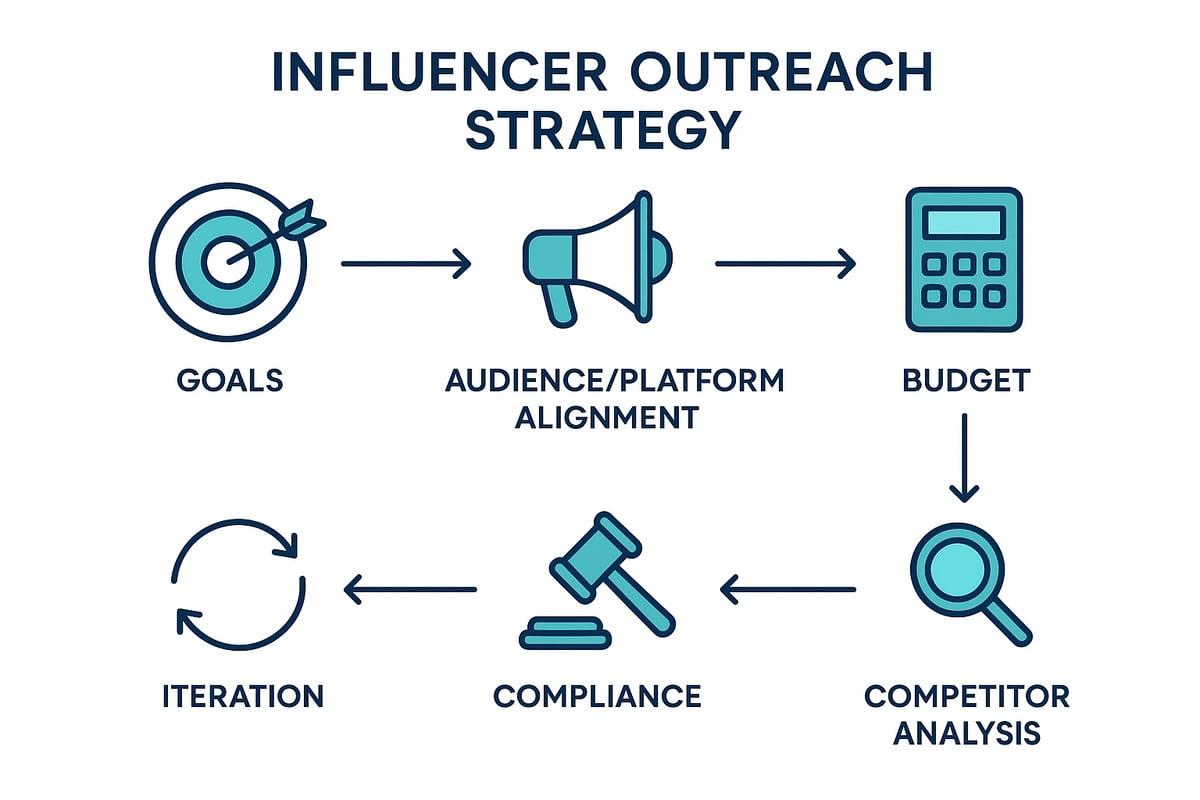
Influencer outreach in 2026 is a different beast compared to just a couple of years ago. The landscape is larger, more dynamic, and demands a sharper, more strategic approach. Before you send a single DM or email, you need a solid foundation. Let’s break down exactly how to set up your influencer outreach for long-term success.

Step 1: Defining Influencer Outreach Goals and Strategy

Understanding the Current Influencer Landscape

The influencer marketing industry is now worth over $21.1 billion, and it’s still growing. In 2026, influencer outreach is less about one-off posts and more about building genuine relationships. Audiences crave authenticity, so brands must prioritise trust and transparency. Micro- and nano-influencers are rising stars, offering niche targeting and high engagement. With so much competition, influencer outreach must be tailored and creative to stand out.

Setting SMART Objectives for Outreach

You can’t measure what you don’t define. Start by aligning influencer outreach with your business goals. Are you aiming for brand awareness, more sales, increased engagement, user-generated content, or a stronger community? Use SMART objectives:

  • Specific: Define clear outcomes (e.g., boost website traffic).
  • Measurable: Set KPIs like engagement rate, conversions, or reach.
  • Achievable: Be realistic about what influencer outreach can deliver.
  • Relevant: Tie goals to your brand’s bigger picture.
  • Time-bound: Set deadlines (e.g., 20% more traffic in Q2).

This clarity gives your influencer outreach direction and focus.

Audience and Platform Alignment

Knowing your target audience is half the battle. Analyse demographics, interests, and behaviour. Where do they spend their time online? If your brand targets Gen Z, TikTok is often the sweet spot. For professionals, LinkedIn or YouTube might work better. Match your influencer outreach to the platforms your audience loves. For example, beauty brands thrive on TikTok, while gaming brands might prefer Twitch.

Budgeting and Resource Allocation

Budgeting for influencer outreach is a balancing act. Decide how much you can invest and how you’ll compensate influencers. Options include:

  • Monetary payments for larger creators
  • Affiliate commissions for performance-based deals
  • Product gifting for nano-influencers
  • Hybrid models for flexibility

Don’t forget internal resources. Who will handle influencer outreach, negotiations, and relationship management? Micro-influencers usually offer stronger ROI for smaller budgets, while bigger names ask for more.

Competitive Benchmarking

To make your influencer outreach truly effective, analyse what your competitors are doing. Study their influencer partnerships, campaign types, and engagement levels. Spot gaps and find ways to offer something different or better. For in-depth techniques, explore competitor analysis for digital marketing to sharpen your outreach strategy and uncover unique opportunities.

Compliance and Brand Safety

Legal compliance is non-negotiable in influencer outreach. Follow ASA guidelines and ensure all collaborations have transparent disclosure. Prepare contracts covering:

  • Deliverables and timelines
  • Compensation and payment terms
  • Usage rights and content approval
  • Disclosure requirements

A clear briefing document helps everyone stay aligned and compliant.

Flexibility and Iteration

The influencer outreach world never stands still. Build flexibility into your goals and tactics. Monitor campaign performance, listen to influencer feedback, and be ready to pivot. Continuous improvement keeps your influencer outreach relevant and effective, no matter how the landscape shifts.

Step 2: Researching and Selecting the Right Influencers
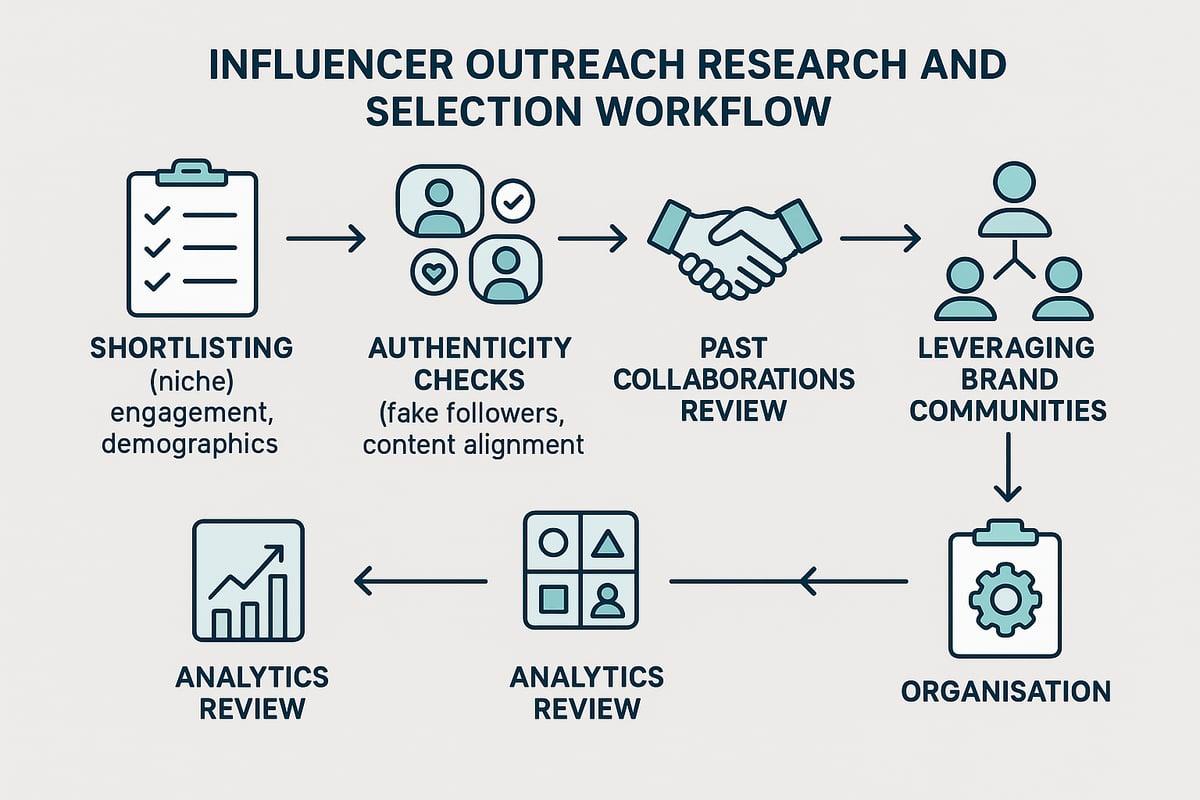
Choosing the right creators is the backbone of successful influencer outreach. In 2026, the process is more data-driven and competitive than ever. Brands that get it right build powerful partnerships and drive real results. Let’s break down how to research and select the best-fit influencers for your campaign.

Step 2: Researching and Selecting the Right Influencers

Building an Influencer Shortlist

Start your influencer outreach by defining clear criteria to build a shortlist. Focus on:

  • Niche relevance to your brand
  • Follower count and engagement rates
  • Audience demographics and location
  • Content quality and consistency

Use discovery tools like Modash to filter candidates efficiently. Here’s a quick comparison of shortlist criteria:

Criteria Why It Matters Example Tool
Niche Ensures audience fit Modash
Engagement Rate Indicates influence level Modash
Audience Location Targets relevant geographies Modash
Content Quality Aligns with brand standards Manual check

A strong shortlist is your foundation for effective influencer outreach.

Analysing Influencer Quality and Authenticity

Vet each shortlisted creator for genuine influence. Watch out for fake followers, engagement pods, and inflated numbers. Check:

  • Consistency in posting and quality
  • Audience authenticity using analytics tools
  • Alignment with your brand’s values

For example, Malou Deuber achieved a 90% response rate by pre-vetting influencers, avoiding wasted outreach. Authenticity builds trust and maximises the impact of your influencer outreach.

Evaluating Past Collaborations and Brand Fit

Review each influencer’s previous partnerships. Look for:

  • Conflicts with direct competitors
  • Evidence of synergy with similar brands
  • Consistent values and tone

Avoid creators still linked to rivals, as this can dilute your message. The right brand fit ensures your influencer outreach resonates authentically with your audience.

Leveraging Existing Communities

Your best influencers might already be fans. Scan your own audience for:

  • Current customers posting user-generated content
  • Brand advocates with micro or nano influence
  • Regular brand mentions on social platforms

Brands often discover powerful nano-influencers through organic mentions. This approach makes influencer outreach warmer and more effective.

Diversity, Inclusion, and Representation

Modern influencer outreach must reflect your audience. Prioritise:

  • Diverse backgrounds, identities, and experiences
  • Genuine representation, not token gestures

Seek creators who authentically connect with different audience segments. Representation in influencer outreach builds brand trust and widens your reach.

Data-Driven Decision Making

Rely on analytics, not gut feeling. Use influencer analytics tools to measure:

  • Engagement rates (aim for 3%+)
  • Audience overlap (target 80%+ with your demographic)
  • Growth trends and historic performance

For advanced insights, explore AI marketing analytics strategies to optimise influencer outreach and campaign measurement. Data-driven selection removes guesswork and boosts campaign ROI.

Outreach Scalability and Organisation

Efficiency is vital as you scale influencer outreach. Organise lists in spreadsheets or dedicated platforms. Segment by:

  • Priority level
  • Social platform
  • Campaign relevance

Track outreach status, responses, and follow-ups. A structured approach keeps your influencer outreach streamlined and effective.

Step 3: Crafting and Sending Personalised Outreach Pitches
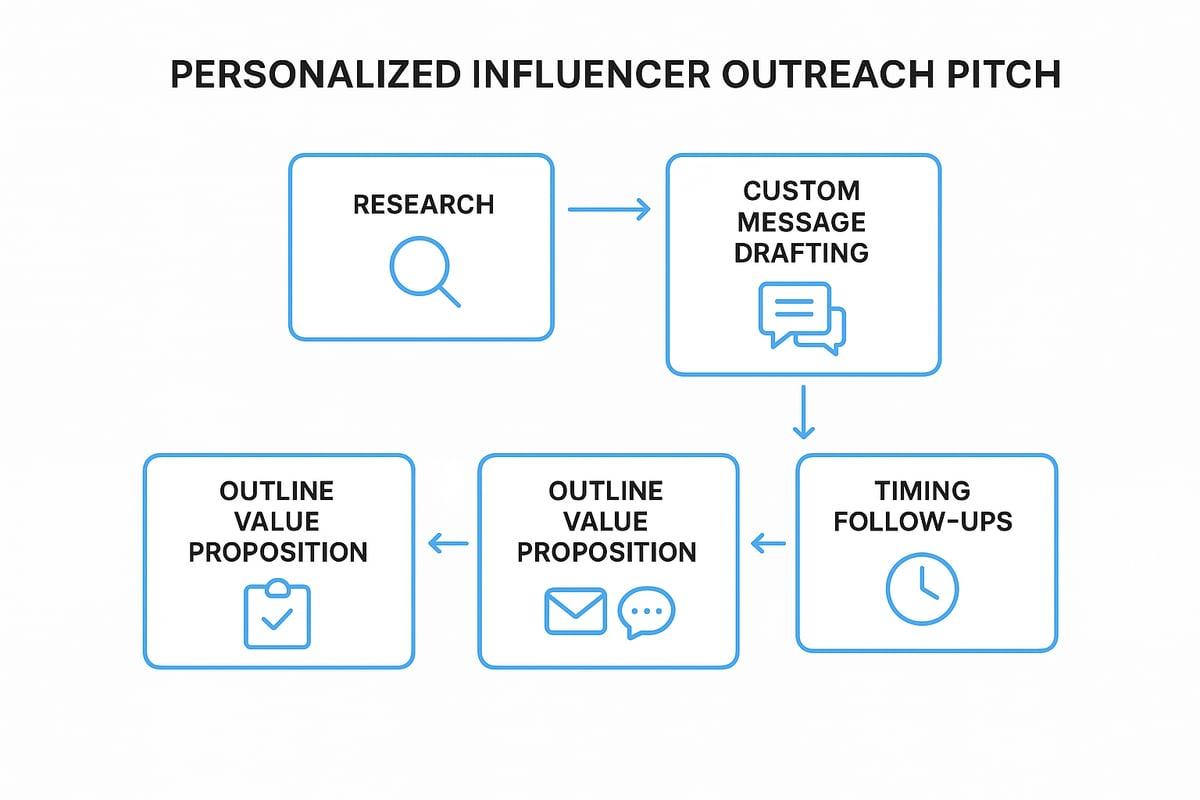
Building successful influencer outreach starts with one thing: personalisation. In a world flooded with copy-paste messages, influencers can spot a generic pitch from a mile away. If you want your influencer outreach to stand out, you need to treat every creator as a partner, not a number.

Step 3: Crafting and Sending Personalised Outreach Pitches

Personalisation Over Templates

Personalisation is the backbone of effective influencer outreach. Start by referencing a creator's recent content or achievements. This shows you’ve done your homework and genuinely value their work.

Avoid mass-sent messages. Instead, use tailored openers that speak directly to the influencer’s interests or niche. For example, mention a specific video or post that resonated with your brand. Anna-Maria Klappenbach, for instance, succeeds by sending brief, personalised messages to busy mum influencers, focusing on what makes them unique.

  • Reference a recent post or campaign.
  • Mention shared values or audience overlap.
  • Keep your tone conversational and respectful.

Remember, if your message feels like a template, it will be ignored. Make every influencer outreach touchpoint count.

Clear and Compelling Value Proposition

Every influencer outreach pitch should answer one question: “What’s in it for me?” State who you are and what your brand stands for, but do it quickly. Influencers are busy and need to see the value immediately.

Highlight why you think they are the perfect fit. Is it their engagement style, their audience demographics, or their creative approach? Outline what you’re offering, whether it is compensation, exposure, creative freedom, or exclusive perks.

  • Introduce yourself and your brand mission.
  • Specify why you chose this influencer.
  • Clearly state the benefits for them.

Bolt’s outreach strategy works because they specify campaign goals and content expectations upfront, making it easy for influencers to see the value in collaborating.

Structuring the Pitch for Response

A well-structured influencer outreach pitch increases your chances of getting a reply. Keep it concise, ideally no more than a few lines. Use a soft call-to-action, such as “Would you be open to a collab next month?” or ask for a specific deliverable.

Attach relevant information, like a brand booklet, campaign brief, or access code. This helps influencers understand your expectations and decide if they want to move forward.

Here’s a quick breakdown of an effective pitch structure:

Section Purpose
Personal intro Show you know their work
Value offer Explain why you’re reaching out
CTA Make it easy to respond
Attachments Add supporting info

Keep things simple and easy to scan. Influencer outreach works best when it respects the creator’s time.

Choosing the Right Outreach Channel

Selecting the right channel is crucial for influencer outreach success. Email is often preferred over DMs because it’s more professional and less likely to get lost. Most influencers list their contact emails in their Instagram or TikTok bios.

If you’re reaching out at scale, use tools like Modash or Hunter.io to find and verify emails. Bulk email discovery saves time and keeps your outreach organised.

  • Email: Professional, trackable, suitable for detailed pitches.
  • Direct Message: Quick, informal, but can be overlooked.
  • Outreach platforms: Ideal for managing large campaigns.

Check bios regularly, as influencers sometimes update their contact details.

Timing and Follow-Up Best Practices

Timing can make or break your influencer outreach. Space your follow-ups two to three days apart, giving influencers time to respond without feeling pressured.

Automate your follow-up sequences with cold email software, but always personalise each message. Research shows that multiple, respectful touchpoints increase response rates without annoying creators. For more on scaling this process efficiently, see these marketing automation for outreach best practices.

  • First follow-up: 2–3 days after initial pitch.
  • Second follow-up: Another 3 days later, if needed.
  • No more than 2–3 attempts per influencer.

Consistency and respect are key to building positive relationships through influencer outreach.

Building Trust and Credibility

Trust is essential for influencer outreach. Include links to your social profiles, website, and examples of past successful collaborations. This helps influencers verify your legitimacy and see you as a reliable partner.

Offer to answer any questions or set up a quick call for clarity. Transparency reduces friction and builds goodwill, making influencers more likely to say yes.

  • Share social proof and past results.
  • Be open and responsive to questions.
  • Highlight your brand’s reputation.

A credible approach turns a cold pitch into a warm conversation.

Handling Rejection and Non-Response

Not every influencer outreach effort will get a reply, and that’s okay. Respect non-responses after two or three attempts. Avoid chasing or guilt-tripping; instead, close with a polite message that leaves the door open for future opportunities.

A simple “No worries if now isn’t the right time, let’s keep in touch” shows professionalism and keeps your brand in their good graces.

Remember, influencer outreach is as much about building long-term connections as it is about landing immediate deals.

Step 4: Negotiating Collaboration Terms and Building Genuine Relationships
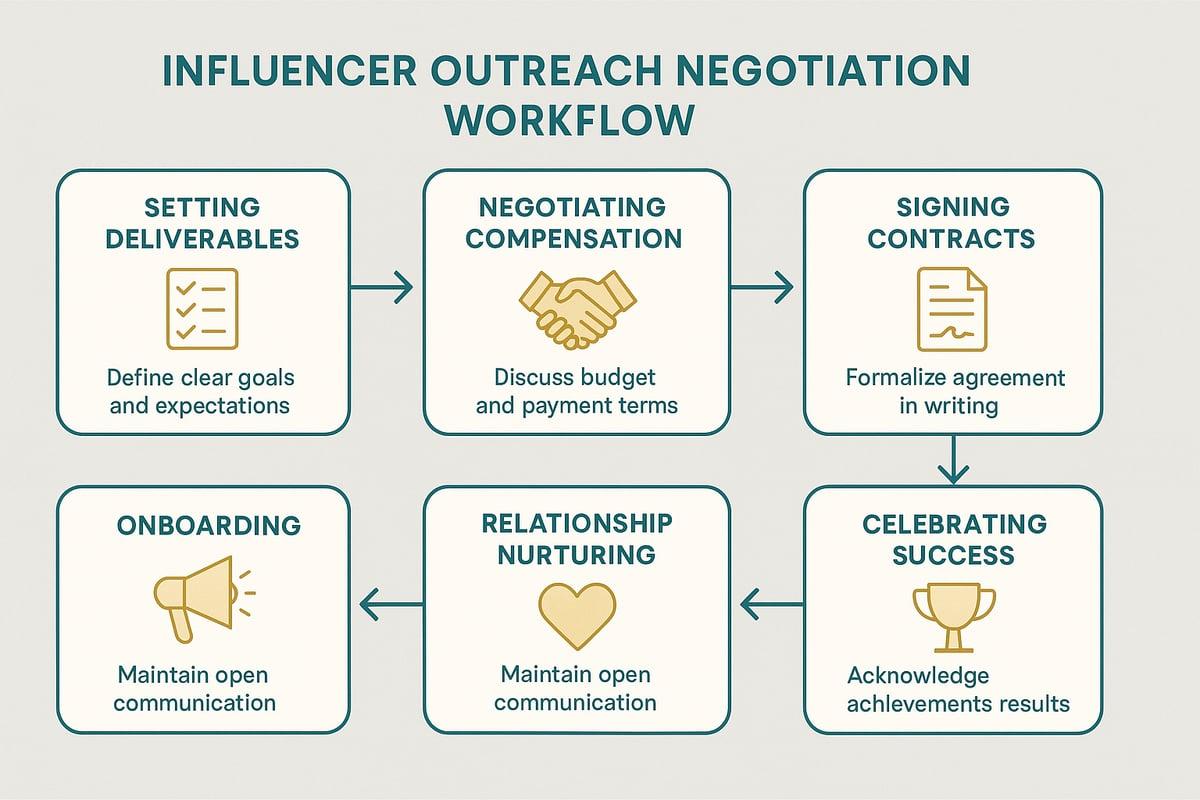
Building a successful influencer outreach campaign goes far beyond sending a contract and hoping for the best. This stage is about creating a foundation of trust, clarity, and mutual respect. Let’s break down the key steps to set your partnerships up for real impact.

Step 4: Negotiating Collaboration Terms and Building Genuine Relationships

Outlining Deliverables and Expectations

Start every influencer outreach conversation by clearly defining what you want to achieve together. Set out the content types, posting frequency, and deadlines. For example, specify if you need one Reel and two Stories per month, or a YouTube review plus Instagram shoutout.

Don’t dictate every detail. Instead, give influencers creative space. When they feel trusted, they’ll deliver more authentic content that truly resonates with their audience. Clarity upfront means fewer surprises later.

Compensation Models and Budget Transparency

When it comes to influencer outreach, honesty about money matters. Explain your compensation model—whether it’s a flat fee, affiliate commission, gifted product, or a mix. Share your budget limits early, so there’s no awkwardness later.

Different influencer tiers expect different deals. Micro-influencers may favour gifted products, while larger creators often require direct payment. Be flexible where you can, and always value the creator’s time and talent.

Legal, Compliance, and Contracts

Protect both your brand and the influencer by sorting the legal stuff early. Draft clear contracts covering deliverables, usage rights, payment timelines, and disclosure requirements. This step is crucial for compliant influencer outreach.

Familiarise yourself with ASA guidelines and platform rules. Transparency builds trust with both creators and their audiences. Always include a detailed brief and be ready to answer questions about compliance.

Onboarding and Briefing Processes

Smooth onboarding is a key part of influencer outreach that many brands overlook. Share a concise campaign brief, style guide, and a main contact for questions. Make it easy for influencers to get started.

A well-structured onboarding process saves time and prevents confusion. When influencers know exactly what’s expected, they can focus on creating standout content instead of chasing details.

Fostering Long-Term Partnerships

The best influencer outreach isn’t just transactional. Show genuine interest in the creator’s work, engage with their posts, and provide thoughtful feedback. Recognise their contribution and look for ways to collaborate again.

Brands that invest in long-term relationships see higher trust and better campaign results. For more on nurturing these connections, see these influencer marketing strategies for 2026.

Handling Creative Differences and Feedback

Creative disagreements are normal in influencer outreach. Approach feedback as a two-way street—be open to their ideas, and explain your brand’s needs clearly.

Set up a feedback loop post-campaign. Review what worked and what didn’t, and use these insights to improve future collaborations. Honest conversations lead to stronger partnerships.

Supporting Influencer Success

Empowering influencers is vital for outreach that lasts. Provide them with resources, high-quality assets, and prompt support. Celebrate wins publicly, whether that’s sharing their content or highlighting results.

When influencers feel appreciated, they become true advocates for your brand. This approach turns one-off campaigns into lasting, mutually beneficial relationships.

Step 5: Measuring, Optimising, and Scaling Outreach Success

Getting influencer outreach right is not just about sending DMs and hoping for the best. To truly win in 2026, you need a system for measuring what matters, learning fast, and scaling what works. Let’s break down exactly how to do this, without drowning in spreadsheets or guesswork.

Tracking Outreach and Campaign Metrics

Start by logging every step of your influencer outreach. You want to know how many influencers you’re contacting, how many reply, and how many turn into actual partnerships. This data is the heartbeat of your campaign.

Here’s a simple table of metrics to track:

Metric Why It Matters
Influencers Contacted Measures campaign reach
Response Rate Indicates pitch effectiveness
Positive Replies Shows genuine interest
Conversion to Partner Reveals true campaign success
Cost Per Collaboration Helps optimise budget allocation

Use outreach platforms or CRM tools to automate this tracking. The more granular your data, the easier it is to spot patterns and scale results.

Analysing Campaign Performance

Once your influencer outreach is running, shift focus to performance. Track key KPIs such as reach, engagement, website traffic, conversions, and ROI. Segment results by platform and influencer tier to spot what’s working.

Compare campaign results against your SMART goals. Did you hit your 20% website traffic increase? Are micro-influencers generating more engagement than macro ones? For a deeper dive into industry benchmarks and future projections, check out the Influencer Marketing Industry Growth Projections.

Regular analysis keeps you honest and ensures you’re investing in what actually moves the needle.

Gathering Qualitative Feedback

Numbers alone don’t tell the full story. After each campaign, ask influencers for honest feedback. Was the onboarding smooth? Did they feel valued? What would make future collaborations better?

Send a quick survey or jump on a call. Use this input to refine your influencer outreach—sometimes a small tweak in your brief or communication style can double your response rate.

Listening to creators also builds trust and sets you apart from brands who treat influencers like commodities.

Identifying Bottlenecks and Optimisation Points

If you’re seeing low response rates or few conversions, don’t just push harder—diagnose the problem. Are your emails too generic? Is your offer unclear? Are you targeting the wrong audience?

Here’s a checklist for optimisation:

  • Test different subject lines and message lengths.
  • Refine your value proposition.
  • Adjust outreach timing.
  • Segment influencers by priority.
  • Integrate content marketing best practices for stronger engagement (Content marketing best practices).

Iterate quickly and keep a log of what works. The goal is continuous improvement, not perfection from day one.

Scaling Outreach with Automation and Tools

Manual influencer outreach can only take you so far. To scale, leverage outreach and analytics tools that handle bulk messaging, tracking, and reporting.

Popular platforms like Modash and Brandbassador let you manage hundreds of relationships without losing the personal touch. Automate follow-ups, schedule reminders, and centralise communication for efficiency.

As your programme grows, automation ensures no promising creator slips through the cracks. This approach lets you focus on strategy, not admin.

Retaining Top-Performing Influencers

Don’t treat influencer outreach as one-and-done. Retain your best creators by nurturing long-term relationships. Offer exclusive deals, early access to products, or invite them into ambassador programmes.

Track performance over time and reward consistency. A stable of loyal influencers delivers compounding returns and reduces onboarding costs.

Retention is the secret weapon for sustainable outreach success.

Future-Proofing Your Influencer Outreach

The influencer landscape evolves fast. Stay ahead by keeping tabs on new platforms, algorithm changes, and content trends. Experiment with emerging formats like live streams or AI-generated content.

Invest in team training and upskilling. The brands that adapt quickly will thrive as influencer outreach grows even more sophisticated in the years ahead.

By measuring, optimising, and scaling with intent, you’ll turn influencer outreach from a guessing game into a growth engine.

Step 6: Future Trends and Innovations in Influencer Outreach for 2026

The world of influencer outreach is changing fast. As we look to 2026, the industry is more sophisticated, regulated, and tech-driven than ever. Brands that adapt to these trends will stay ahead of the curve and see the best results. According to Influencer Marketing Statistics for 2025, the industry’s growth shows no sign of slowing, making it essential to refine your influencer outreach strategy now.

AI and Automation in Influencer Marketing

AI is transforming influencer outreach by making it faster and far more precise. Automated tools now handle influencer discovery, vetting, and campaign optimisation, saving time and reducing human error. Predictive analytics can even spot high-potential creators before they go viral.

Expect platforms to keep adding smarter features, from audience authenticity scoring to automated campaign reporting. This shift means brands can focus their energy on creative strategy, not admin. For anyone serious about influencer outreach, mastering these tools is becoming non-negotiable.

Rise of Authenticity and Long-Term Partnerships

Audiences are savvier than ever. They can spot a forced promotion in seconds. In 2026, influencer outreach works best when it’s built on genuine, long-term relationships. Brands and creators are moving away from one-off posts and towards ambassador programmes, ongoing collaborations, and community-driven content.

This approach builds trust and delivers better results. It also means your influencer outreach isn’t just a transaction, it’s a partnership that grows in value over time.

Micro-Influencers and Niche Communities

Bigger isn’t always better. Brands are shifting budgets towards micro-influencers and niche communities, where engagement and trust run high. These creators often boast more dedicated followers, making influencer outreach in these circles a smart move for brands wanting to break through the noise.

Case studies show micro-influencers can generate impressive ROI, especially when campaigns are hyper-targeted. By focusing on quality over quantity, your influencer outreach can deliver stronger connections and more measurable impact.

Data Privacy, Compliance, and Platform Evolution

Stricter data privacy rules and advertising standards are reshaping influencer outreach. Brands must stay on top of disclosure guidelines, consent requirements, and platform updates. Social networks are introducing new branded content tools to help with tracking and compliance, making transparency easier but also non-negotiable.

This means every influencer outreach campaign needs airtight contracts, clear briefs, and regular compliance checks. It’s not just about playing by the rules, it’s about protecting your brand’s reputation.

Cross-Platform and Multi-Channel Campaigns

Consumers are everywhere, so influencer outreach has to be too. Integrated campaigns that span Instagram, TikTok, YouTube, and new platforms are becoming the norm. The challenge is keeping your messaging consistent and tracking results across all touchpoints.

Brands are investing in unified dashboards and multi-channel analytics to get the full picture. This approach ensures your influencer outreach remains effective, no matter where your audience hangs out.

Measuring ROI and Attribution

With bigger budgets at stake, brands are demanding clearer proof of performance. Advanced tools now track influencer impact across the customer journey, from first touch to final sale. Attribution models are evolving, making it easier to see which influencer outreach tactics drive real results.

The influencer marketing platforms market is growing rapidly, with revenues projected to soar over the next decade, according to the Influencer Marketing Platforms Market Analysis. This means brands have more sophisticated tools at their disposal for tracking and optimising ROI.

Skills and Team Structure for Modern Outreach

The influencer outreach landscape now demands hybrid skills — data analysis, creative briefing, and relationship management all rolled into one. Teams are investing in upskilling to keep up with platform changes, compliance requirements, and new campaign formats.

Continuous learning is the name of the game. Those who adapt quickly will set the standard for successful influencer outreach in 2026.

If you’re serious about making your influencer outreach actually deliver leads and sales in 2026, it’s time for a practical chat. I’ve walked you through the nitty gritty—setting clear goals, picking the right creators, and building campaigns that actually convert, not just look pretty on a pitch deck. But every business is different, and sometimes you just need a bit of expert, honest advice tailored to your brand and budget. Fancy a no-nonsense, totally free session to talk through your outreach plans? Book your Get free 45 min consultation and let’s work out how to turn those followers into paying customers.

In 2026, influencer outreach is not just a buzzword, it is a fiercely competitive, data-driven game. Brands that get it right will capture the hearts and loyalty of their perfect audience. This guide breaks down the latest, proven strategies for influencer outreach success, showing you how to build genuine relationships and drive real results. Whether you want to boost awareness, spark engagement, or convert fans into customers, you will find a step-by-step blueprint here. Expect clear goal setting, smart influencer identification, pitch tactics, relationship building, performance tracking, and tips to future-proof your outreach.

Step 1: Defining Influencer Outreach Goals and Strategy

Influencer outreach in 2026 is a different beast compared to just a couple of years ago. The landscape is larger, more dynamic, and demands a sharper, more strategic approach. Before you send a single DM or email, you need a solid foundation. Let’s break down exactly how to set up your influencer outreach for long-term success.

Step 1: Defining Influencer Outreach Goals and Strategy

Understanding the Current Influencer Landscape

The influencer marketing industry is now worth over $21.1 billion, and it’s still growing. In 2026, influencer outreach is less about one-off posts and more about building genuine relationships. Audiences crave authenticity, so brands must prioritise trust and transparency. Micro- and nano-influencers are rising stars, offering niche targeting and high engagement. With so much competition, influencer outreach must be tailored and creative to stand out.

Setting SMART Objectives for Outreach

You can’t measure what you don’t define. Start by aligning influencer outreach with your business goals. Are you aiming for brand awareness, more sales, increased engagement, user-generated content, or a stronger community? Use SMART objectives:

  • Specific: Define clear outcomes (e.g., boost website traffic).
  • Measurable: Set KPIs like engagement rate, conversions, or reach.
  • Achievable: Be realistic about what influencer outreach can deliver.
  • Relevant: Tie goals to your brand’s bigger picture.
  • Time-bound: Set deadlines (e.g., 20% more traffic in Q2).

This clarity gives your influencer outreach direction and focus.

Audience and Platform Alignment

Knowing your target audience is half the battle. Analyse demographics, interests, and behaviour. Where do they spend their time online? If your brand targets Gen Z, TikTok is often the sweet spot. For professionals, LinkedIn or YouTube might work better. Match your influencer outreach to the platforms your audience loves. For example, beauty brands thrive on TikTok, while gaming brands might prefer Twitch.

Budgeting and Resource Allocation

Budgeting for influencer outreach is a balancing act. Decide how much you can invest and how you’ll compensate influencers. Options include:

  • Monetary payments for larger creators
  • Affiliate commissions for performance-based deals
  • Product gifting for nano-influencers
  • Hybrid models for flexibility

Don’t forget internal resources. Who will handle influencer outreach, negotiations, and relationship management? Micro-influencers usually offer stronger ROI for smaller budgets, while bigger names ask for more.

Competitive Benchmarking

To make your influencer outreach truly effective, analyse what your competitors are doing. Study their influencer partnerships, campaign types, and engagement levels. Spot gaps and find ways to offer something different or better. For in-depth techniques, explore competitor analysis for digital marketing to sharpen your outreach strategy and uncover unique opportunities.

Compliance and Brand Safety

Legal compliance is non-negotiable in influencer outreach. Follow ASA guidelines and ensure all collaborations have transparent disclosure. Prepare contracts covering:

  • Deliverables and timelines
  • Compensation and payment terms
  • Usage rights and content approval
  • Disclosure requirements

A clear briefing document helps everyone stay aligned and compliant.

Flexibility and Iteration

The influencer outreach world never stands still. Build flexibility into your goals and tactics. Monitor campaign performance, listen to influencer feedback, and be ready to pivot. Continuous improvement keeps your influencer outreach relevant and effective, no matter how the landscape shifts.

Step 2: Researching and Selecting the Right Influencers

Choosing the right creators is the backbone of successful influencer outreach. In 2026, the process is more data-driven and competitive than ever. Brands that get it right build powerful partnerships and drive real results. Let’s break down how to research and select the best-fit influencers for your campaign.

Step 2: Researching and Selecting the Right Influencers

Building an Influencer Shortlist

Start your influencer outreach by defining clear criteria to build a shortlist. Focus on:

  • Niche relevance to your brand
  • Follower count and engagement rates
  • Audience demographics and location
  • Content quality and consistency

Use discovery tools like Modash to filter candidates efficiently. Here’s a quick comparison of shortlist criteria:

Criteria Why It Matters Example Tool
Niche Ensures audience fit Modash
Engagement Rate Indicates influence level Modash
Audience Location Targets relevant geographies Modash
Content Quality Aligns with brand standards Manual check

A strong shortlist is your foundation for effective influencer outreach.

Analysing Influencer Quality and Authenticity

Vet each shortlisted creator for genuine influence. Watch out for fake followers, engagement pods, and inflated numbers. Check:

  • Consistency in posting and quality
  • Audience authenticity using analytics tools
  • Alignment with your brand’s values

For example, Malou Deuber achieved a 90% response rate by pre-vetting influencers, avoiding wasted outreach. Authenticity builds trust and maximises the impact of your influencer outreach.

Evaluating Past Collaborations and Brand Fit

Review each influencer’s previous partnerships. Look for:

  • Conflicts with direct competitors
  • Evidence of synergy with similar brands
  • Consistent values and tone

Avoid creators still linked to rivals, as this can dilute your message. The right brand fit ensures your influencer outreach resonates authentically with your audience.

Leveraging Existing Communities

Your best influencers might already be fans. Scan your own audience for:

  • Current customers posting user-generated content
  • Brand advocates with micro or nano influence
  • Regular brand mentions on social platforms

Brands often discover powerful nano-influencers through organic mentions. This approach makes influencer outreach warmer and more effective.

Diversity, Inclusion, and Representation

Modern influencer outreach must reflect your audience. Prioritise:

  • Diverse backgrounds, identities, and experiences
  • Genuine representation, not token gestures

Seek creators who authentically connect with different audience segments. Representation in influencer outreach builds brand trust and widens your reach.

Data-Driven Decision Making

Rely on analytics, not gut feeling. Use influencer analytics tools to measure:

  • Engagement rates (aim for 3%+)
  • Audience overlap (target 80%+ with your demographic)
  • Growth trends and historic performance

For advanced insights, explore AI marketing analytics strategies to optimise influencer outreach and campaign measurement. Data-driven selection removes guesswork and boosts campaign ROI.

Outreach Scalability and Organisation

Efficiency is vital as you scale influencer outreach. Organise lists in spreadsheets or dedicated platforms. Segment by:

  • Priority level
  • Social platform
  • Campaign relevance

Track outreach status, responses, and follow-ups. A structured approach keeps your influencer outreach streamlined and effective.

Step 3: Crafting and Sending Personalised Outreach Pitches

Building successful influencer outreach starts with one thing: personalisation. In a world flooded with copy-paste messages, influencers can spot a generic pitch from a mile away. If you want your influencer outreach to stand out, you need to treat every creator as a partner, not a number.

Step 3: Crafting and Sending Personalised Outreach Pitches

Personalisation Over Templates

Personalisation is the backbone of effective influencer outreach. Start by referencing a creator's recent content or achievements. This shows you’ve done your homework and genuinely value their work.

Avoid mass-sent messages. Instead, use tailored openers that speak directly to the influencer’s interests or niche. For example, mention a specific video or post that resonated with your brand. Anna-Maria Klappenbach, for instance, succeeds by sending brief, personalised messages to busy mum influencers, focusing on what makes them unique.

  • Reference a recent post or campaign.
  • Mention shared values or audience overlap.
  • Keep your tone conversational and respectful.

Remember, if your message feels like a template, it will be ignored. Make every influencer outreach touchpoint count.

Clear and Compelling Value Proposition

Every influencer outreach pitch should answer one question: “What’s in it for me?” State who you are and what your brand stands for, but do it quickly. Influencers are busy and need to see the value immediately.

Highlight why you think they are the perfect fit. Is it their engagement style, their audience demographics, or their creative approach? Outline what you’re offering, whether it is compensation, exposure, creative freedom, or exclusive perks.

  • Introduce yourself and your brand mission.
  • Specify why you chose this influencer.
  • Clearly state the benefits for them.

Bolt’s outreach strategy works because they specify campaign goals and content expectations upfront, making it easy for influencers to see the value in collaborating.

Structuring the Pitch for Response

A well-structured influencer outreach pitch increases your chances of getting a reply. Keep it concise, ideally no more than a few lines. Use a soft call-to-action, such as “Would you be open to a collab next month?” or ask for a specific deliverable.

Attach relevant information, like a brand booklet, campaign brief, or access code. This helps influencers understand your expectations and decide if they want to move forward.

Here’s a quick breakdown of an effective pitch structure:

Section Purpose
Personal intro Show you know their work
Value offer Explain why you’re reaching out
CTA Make it easy to respond
Attachments Add supporting info

Keep things simple and easy to scan. Influencer outreach works best when it respects the creator’s time.

Choosing the Right Outreach Channel

Selecting the right channel is crucial for influencer outreach success. Email is often preferred over DMs because it’s more professional and less likely to get lost. Most influencers list their contact emails in their Instagram or TikTok bios.

If you’re reaching out at scale, use tools like Modash or Hunter.io to find and verify emails. Bulk email discovery saves time and keeps your outreach organised.

  • Email: Professional, trackable, suitable for detailed pitches.
  • Direct Message: Quick, informal, but can be overlooked.
  • Outreach platforms: Ideal for managing large campaigns.

Check bios regularly, as influencers sometimes update their contact details.

Timing and Follow-Up Best Practices

Timing can make or break your influencer outreach. Space your follow-ups two to three days apart, giving influencers time to respond without feeling pressured.

Automate your follow-up sequences with cold email software, but always personalise each message. Research shows that multiple, respectful touchpoints increase response rates without annoying creators. For more on scaling this process efficiently, see these marketing automation for outreach best practices.

  • First follow-up: 2–3 days after initial pitch.
  • Second follow-up: Another 3 days later, if needed.
  • No more than 2–3 attempts per influencer.

Consistency and respect are key to building positive relationships through influencer outreach.

Building Trust and Credibility

Trust is essential for influencer outreach. Include links to your social profiles, website, and examples of past successful collaborations. This helps influencers verify your legitimacy and see you as a reliable partner.

Offer to answer any questions or set up a quick call for clarity. Transparency reduces friction and builds goodwill, making influencers more likely to say yes.

  • Share social proof and past results.
  • Be open and responsive to questions.
  • Highlight your brand’s reputation.

A credible approach turns a cold pitch into a warm conversation.

Handling Rejection and Non-Response

Not every influencer outreach effort will get a reply, and that’s okay. Respect non-responses after two or three attempts. Avoid chasing or guilt-tripping; instead, close with a polite message that leaves the door open for future opportunities.

A simple “No worries if now isn’t the right time, let’s keep in touch” shows professionalism and keeps your brand in their good graces.

Remember, influencer outreach is as much about building long-term connections as it is about landing immediate deals.

Step 4: Negotiating Collaboration Terms and Building Genuine Relationships

Building a successful influencer outreach campaign goes far beyond sending a contract and hoping for the best. This stage is about creating a foundation of trust, clarity, and mutual respect. Let’s break down the key steps to set your partnerships up for real impact.

Step 4: Negotiating Collaboration Terms and Building Genuine Relationships

Outlining Deliverables and Expectations

Start every influencer outreach conversation by clearly defining what you want to achieve together. Set out the content types, posting frequency, and deadlines. For example, specify if you need one Reel and two Stories per month, or a YouTube review plus Instagram shoutout.

Don’t dictate every detail. Instead, give influencers creative space. When they feel trusted, they’ll deliver more authentic content that truly resonates with their audience. Clarity upfront means fewer surprises later.

Compensation Models and Budget Transparency

When it comes to influencer outreach, honesty about money matters. Explain your compensation model—whether it’s a flat fee, affiliate commission, gifted product, or a mix. Share your budget limits early, so there’s no awkwardness later.

Different influencer tiers expect different deals. Micro-influencers may favour gifted products, while larger creators often require direct payment. Be flexible where you can, and always value the creator’s time and talent.

Legal, Compliance, and Contracts

Protect both your brand and the influencer by sorting the legal stuff early. Draft clear contracts covering deliverables, usage rights, payment timelines, and disclosure requirements. This step is crucial for compliant influencer outreach.

Familiarise yourself with ASA guidelines and platform rules. Transparency builds trust with both creators and their audiences. Always include a detailed brief and be ready to answer questions about compliance.

Onboarding and Briefing Processes

Smooth onboarding is a key part of influencer outreach that many brands overlook. Share a concise campaign brief, style guide, and a main contact for questions. Make it easy for influencers to get started.

A well-structured onboarding process saves time and prevents confusion. When influencers know exactly what’s expected, they can focus on creating standout content instead of chasing details.

Fostering Long-Term Partnerships

The best influencer outreach isn’t just transactional. Show genuine interest in the creator’s work, engage with their posts, and provide thoughtful feedback. Recognise their contribution and look for ways to collaborate again.

Brands that invest in long-term relationships see higher trust and better campaign results. For more on nurturing these connections, see these influencer marketing strategies for 2026.

Handling Creative Differences and Feedback

Creative disagreements are normal in influencer outreach. Approach feedback as a two-way street—be open to their ideas, and explain your brand’s needs clearly.

Set up a feedback loop post-campaign. Review what worked and what didn’t, and use these insights to improve future collaborations. Honest conversations lead to stronger partnerships.

Supporting Influencer Success

Empowering influencers is vital for outreach that lasts. Provide them with resources, high-quality assets, and prompt support. Celebrate wins publicly, whether that’s sharing their content or highlighting results.

When influencers feel appreciated, they become true advocates for your brand. This approach turns one-off campaigns into lasting, mutually beneficial relationships.

Step 5: Measuring, Optimising, and Scaling Outreach Success

Getting influencer outreach right is not just about sending DMs and hoping for the best. To truly win in 2026, you need a system for measuring what matters, learning fast, and scaling what works. Let’s break down exactly how to do this, without drowning in spreadsheets or guesswork.

Tracking Outreach and Campaign Metrics

Start by logging every step of your influencer outreach. You want to know how many influencers you’re contacting, how many reply, and how many turn into actual partnerships. This data is the heartbeat of your campaign.

Here’s a simple table of metrics to track:

Metric Why It Matters
Influencers Contacted Measures campaign reach
Response Rate Indicates pitch effectiveness
Positive Replies Shows genuine interest
Conversion to Partner Reveals true campaign success
Cost Per Collaboration Helps optimise budget allocation

Use outreach platforms or CRM tools to automate this tracking. The more granular your data, the easier it is to spot patterns and scale results.

Analysing Campaign Performance

Once your influencer outreach is running, shift focus to performance. Track key KPIs such as reach, engagement, website traffic, conversions, and ROI. Segment results by platform and influencer tier to spot what’s working.

Compare campaign results against your SMART goals. Did you hit your 20% website traffic increase? Are micro-influencers generating more engagement than macro ones? For a deeper dive into industry benchmarks and future projections, check out the Influencer Marketing Industry Growth Projections.

Regular analysis keeps you honest and ensures you’re investing in what actually moves the needle.

Gathering Qualitative Feedback

Numbers alone don’t tell the full story. After each campaign, ask influencers for honest feedback. Was the onboarding smooth? Did they feel valued? What would make future collaborations better?

Send a quick survey or jump on a call. Use this input to refine your influencer outreach—sometimes a small tweak in your brief or communication style can double your response rate.

Listening to creators also builds trust and sets you apart from brands who treat influencers like commodities.

Identifying Bottlenecks and Optimisation Points

If you’re seeing low response rates or few conversions, don’t just push harder—diagnose the problem. Are your emails too generic? Is your offer unclear? Are you targeting the wrong audience?

Here’s a checklist for optimisation:

  • Test different subject lines and message lengths.
  • Refine your value proposition.
  • Adjust outreach timing.
  • Segment influencers by priority.
  • Integrate content marketing best practices for stronger engagement (Content marketing best practices).

Iterate quickly and keep a log of what works. The goal is continuous improvement, not perfection from day one.

Scaling Outreach with Automation and Tools

Manual influencer outreach can only take you so far. To scale, leverage outreach and analytics tools that handle bulk messaging, tracking, and reporting.

Popular platforms like Modash and Brandbassador let you manage hundreds of relationships without losing the personal touch. Automate follow-ups, schedule reminders, and centralise communication for efficiency.

As your programme grows, automation ensures no promising creator slips through the cracks. This approach lets you focus on strategy, not admin.

Retaining Top-Performing Influencers

Don’t treat influencer outreach as one-and-done. Retain your best creators by nurturing long-term relationships. Offer exclusive deals, early access to products, or invite them into ambassador programmes.

Track performance over time and reward consistency. A stable of loyal influencers delivers compounding returns and reduces onboarding costs.

Retention is the secret weapon for sustainable outreach success.

Future-Proofing Your Influencer Outreach

The influencer landscape evolves fast. Stay ahead by keeping tabs on new platforms, algorithm changes, and content trends. Experiment with emerging formats like live streams or AI-generated content.

Invest in team training and upskilling. The brands that adapt quickly will thrive as influencer outreach grows even more sophisticated in the years ahead.

By measuring, optimising, and scaling with intent, you’ll turn influencer outreach from a guessing game into a growth engine.

Step 6: Future Trends and Innovations in Influencer Outreach for 2026

The world of influencer outreach is changing fast. As we look to 2026, the industry is more sophisticated, regulated, and tech-driven than ever. Brands that adapt to these trends will stay ahead of the curve and see the best results. According to Influencer Marketing Statistics for 2025, the industry’s growth shows no sign of slowing, making it essential to refine your influencer outreach strategy now.

AI and Automation in Influencer Marketing

AI is transforming influencer outreach by making it faster and far more precise. Automated tools now handle influencer discovery, vetting, and campaign optimisation, saving time and reducing human error. Predictive analytics can even spot high-potential creators before they go viral.

Expect platforms to keep adding smarter features, from audience authenticity scoring to automated campaign reporting. This shift means brands can focus their energy on creative strategy, not admin. For anyone serious about influencer outreach, mastering these tools is becoming non-negotiable.

Rise of Authenticity and Long-Term Partnerships

Audiences are savvier than ever. They can spot a forced promotion in seconds. In 2026, influencer outreach works best when it’s built on genuine, long-term relationships. Brands and creators are moving away from one-off posts and towards ambassador programmes, ongoing collaborations, and community-driven content.

This approach builds trust and delivers better results. It also means your influencer outreach isn’t just a transaction, it’s a partnership that grows in value over time.

Micro-Influencers and Niche Communities

Bigger isn’t always better. Brands are shifting budgets towards micro-influencers and niche communities, where engagement and trust run high. These creators often boast more dedicated followers, making influencer outreach in these circles a smart move for brands wanting to break through the noise.

Case studies show micro-influencers can generate impressive ROI, especially when campaigns are hyper-targeted. By focusing on quality over quantity, your influencer outreach can deliver stronger connections and more measurable impact.

Data Privacy, Compliance, and Platform Evolution

Stricter data privacy rules and advertising standards are reshaping influencer outreach. Brands must stay on top of disclosure guidelines, consent requirements, and platform updates. Social networks are introducing new branded content tools to help with tracking and compliance, making transparency easier but also non-negotiable.

This means every influencer outreach campaign needs airtight contracts, clear briefs, and regular compliance checks. It’s not just about playing by the rules, it’s about protecting your brand’s reputation.

Cross-Platform and Multi-Channel Campaigns

Consumers are everywhere, so influencer outreach has to be too. Integrated campaigns that span Instagram, TikTok, YouTube, and new platforms are becoming the norm. The challenge is keeping your messaging consistent and tracking results across all touchpoints.

Brands are investing in unified dashboards and multi-channel analytics to get the full picture. This approach ensures your influencer outreach remains effective, no matter where your audience hangs out.

Measuring ROI and Attribution

With bigger budgets at stake, brands are demanding clearer proof of performance. Advanced tools now track influencer impact across the customer journey, from first touch to final sale. Attribution models are evolving, making it easier to see which influencer outreach tactics drive real results.

The influencer marketing platforms market is growing rapidly, with revenues projected to soar over the next decade, according to the Influencer Marketing Platforms Market Analysis. This means brands have more sophisticated tools at their disposal for tracking and optimising ROI.

Skills and Team Structure for Modern Outreach

The influencer outreach landscape now demands hybrid skills — data analysis, creative briefing, and relationship management all rolled into one. Teams are investing in upskilling to keep up with platform changes, compliance requirements, and new campaign formats.

Continuous learning is the name of the game. Those who adapt quickly will set the standard for successful influencer outreach in 2026.

If you’re serious about making your influencer outreach actually deliver leads and sales in 2026, it’s time for a practical chat. I’ve walked you through the nitty gritty—setting clear goals, picking the right creators, and building campaigns that actually convert, not just look pretty on a pitch deck. But every business is different, and sometimes you just need a bit of expert, honest advice tailored to your brand and budget. Fancy a no-nonsense, totally free session to talk through your outreach plans? Book your Get free 45 min consultation and let’s work out how to turn those followers into paying customers.

Need more help? Ask Your Question Below