In 2026, small businesses are battling for attention online like never before. The good news? Small business SEO remains the most affordable way to win new customers and fuel your growth.
This guide is your shortcut to mastering the essentials. You’ll discover what SEO really means for small businesses, why it matters, and how you can use it—step by step—no matter your budget or tech skills.
Did you know that for every paid search click, organic results get 8.5? With the right moves, even a small business can outrank the big players.
Imagine your website popping up first when locals search for your services. Ready to unlock a proven, actionable blueprint for small business SEO success in 2026? Let’s dive in.
Understanding Small Business SEO in 2026
Small businesses in 2026 face fierce competition online, but small business seo remains your most powerful tool for standing out. Unlike expensive paid ads, effective SEO gives you lasting visibility, helping you attract more customers without draining your budget.

What is Small Business SEO?
Small business seo is a collection of tactics designed to boost your business’s visibility in organic search results. When people search for services or products you offer, you want your website to appear as high as possible—preferably on the first page. That’s where most clicks happen.
There’s a huge difference between organic and paid search. Organic listings are the unpaid results generated by search engines based on relevance, while paid search results are adverts businesses pay for. According to Forbes, organic results get 8.5 times more clicks than paid ones, making organic an essential focus for any small business seo strategy.
Google continues to dominate the UK search market, powering over 95% of searches. However, AI-driven search engines are starting to gain ground, changing how people find local businesses. This means the fundamentals of small business seo will remain vital, but staying agile and adapting to new search technologies is increasingly important.
Small businesses face unique challenges. Budgets are typically tight, and competing with national brands can seem daunting. However, your local focus and closer relationships with customers give you a real edge. Data from StudioHawk shows SMEs investing in SEO can see up to 367% growth in first-page rankings. Picture a local tradesperson competing against a national franchise—local SEO can put both on a level playing field.
The bottom line? Small business seo isn’t just for big brands. It’s mission-critical for survival and growth in today’s digital world.
How Small Business SEO Differs from Enterprise SEO
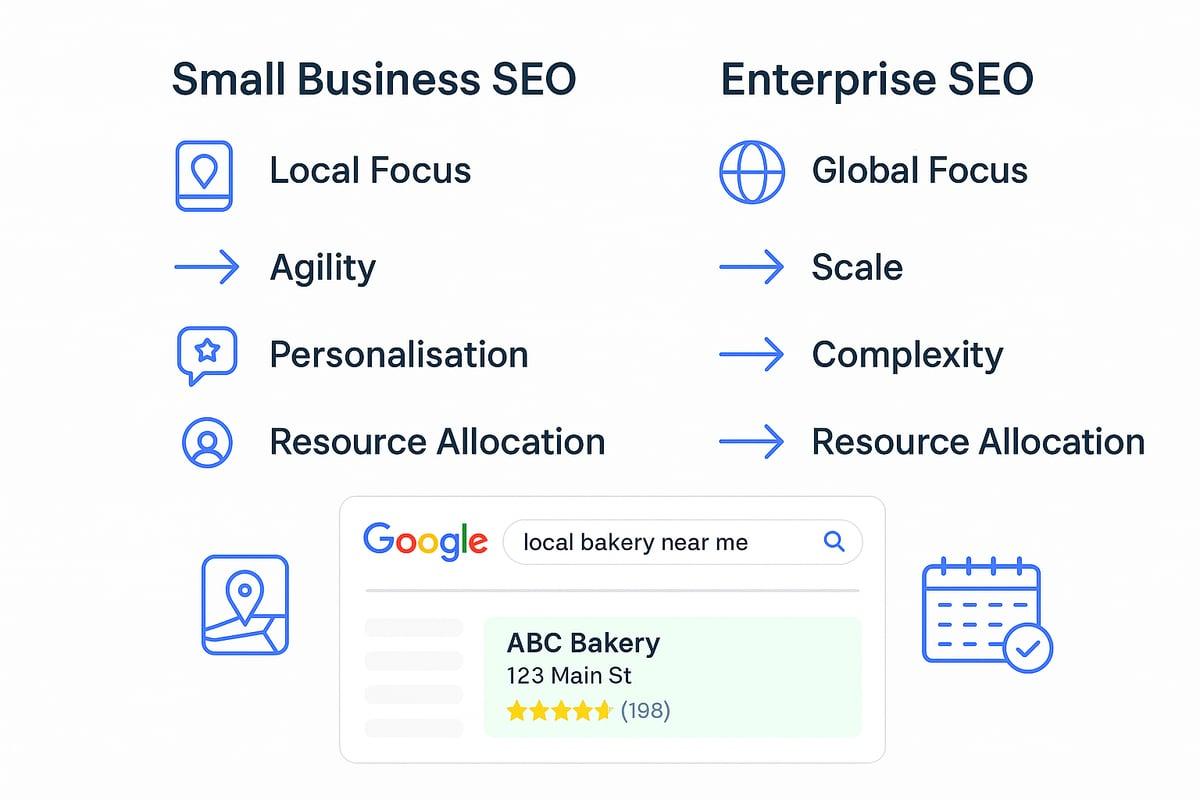
Small business seo stands out from enterprise SEO in several ways. First, localisation is key. SMEs focus on local search terms, optimising Google Business Profile listings, and engaging with their immediate community. This approach helps you appear in local packs and maps, driving relevant traffic from people nearby.
Personalisation is another advantage. Small businesses often build direct relationships with their customers, which means you can create tailored content and showcase real social proof through reviews and testimonials. This authenticity is tough for big brands to replicate.
Agility is a superpower for SMEs. Unlike large organisations, you can implement changes quickly. If you spot a new trend or keyword opportunity, you can act fast and see results sooner. Resource constraints mean you need to prioritise high-impact, low-cost tactics—think optimising your website, building local citations, and managing your reputation.
Let’s look at an example. A Birmingham café can use location-based keywords and community event pages to outrank a national coffee chain for local searches. By focusing on what matters locally, you become the go-to choice in your area.
If you want to dive deeper into local optimisation, the Local SEO strategies guide offers practical ideas tailored for small businesses.
In summary, small business seo wins when you leverage your authenticity, local relevance, and ability to adapt quickly. That’s how you compete—and thrive—even against much larger competitors.
Step-by-Step Small Business SEO Strategy for 2026
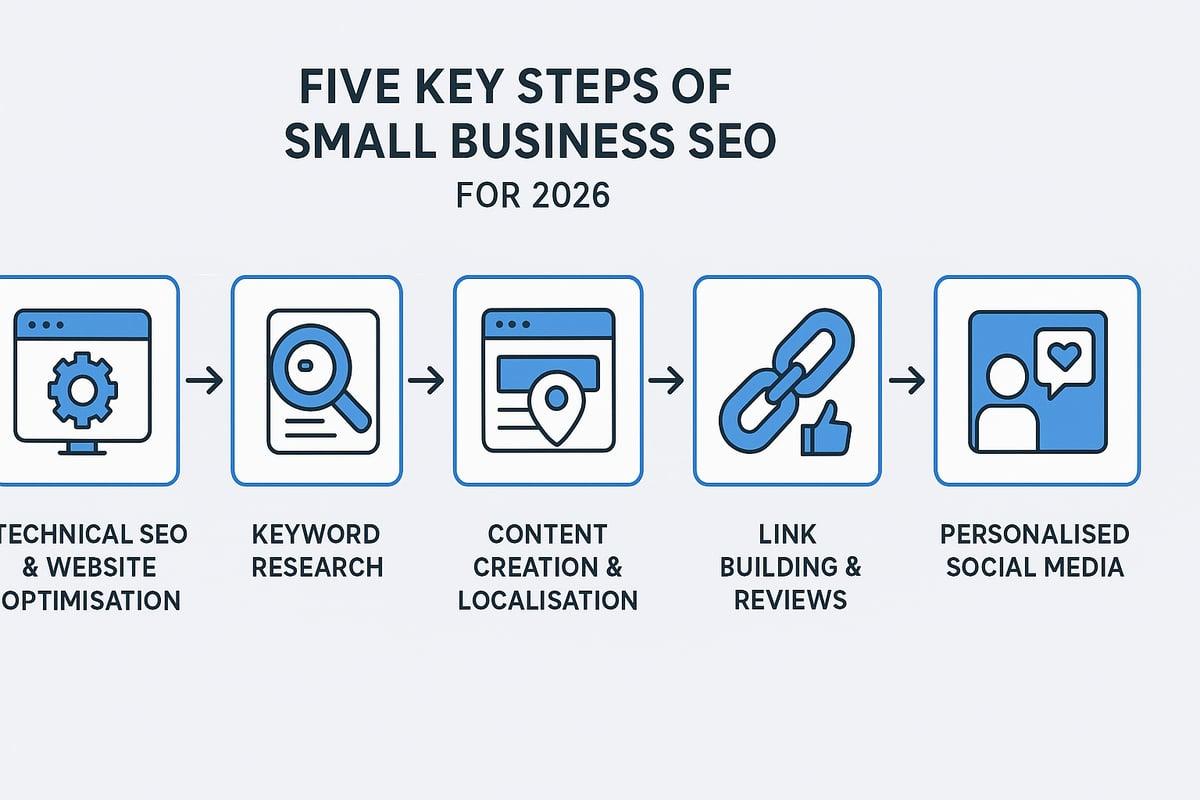
Ready to turn your website into a customer magnet? This section breaks down a modern small business seo plan into five practical steps. Follow these, and you’ll build a solid foundation that delivers real results, even on a tight budget.

Step 1: Laying the Foundations – Technical SEO & Website Optimisation
Think of your website as your digital storefront. For small business seo, technical basics are non-negotiable. A fast, mobile-friendly, and secure website keeps visitors happy and helps you climb the rankings.
Focus first on Core Web Vitals: site speed, mobile responsiveness, and stable layouts. Google now judges sites by how smooth and quick they are, especially on mobiles. Did you know 53% of mobile users leave if a site takes more than three seconds to load? That’s a lot of lost customers.
Check your site’s on-page SEO. Are your title tags, meta descriptions, headers, and image alt text clear and relevant? Is your site navigation simple? For example, a local gym with a responsive design and clear menu makes it easy for customers to find classes and book online.
Security matters too. Make sure your site uses HTTPS to protect user data. If you want more in-depth advice, check out these Technical SEO tips for SMEs.
Get these basics right before you move on. Without a solid foundation, the rest of your small business seo work won’t reach its full potential.
Step 2: Keyword Research for Small Businesses
Keyword research is the detective work behind every winning small business seo campaign. The goal? Find out what your ideal customers are already searching for—then show up right where they need you.
Focus on intent-driven, long-tail, and location-specific keywords. Instead of “cleaners”, try “emergency cleaners in Manchester”. These phrases have less competition and higher conversion rates. Tools like Google Keyword Planner, Ahrefs, and SE Ranking can reveal valuable search terms and competitor insights.
Check what your local competitors are ranking for. Are there gaps you can fill? For example, “dog-friendly café in Birmingham” targets a specific audience and intent, making it easier to rank.
Here’s a quick list to keep your research on track:
- Use location and service in your keywords
- Prioritise terms with purchase intent
- Avoid broad, generic phrases that big brands dominate
Nail your keywords, and you’ll make every other small business seo step more effective.
Step 3: Content Creation & Localisation
Great content is your shop window online. For small business seo, localising your content gives you a serious edge. Start with the basics: service pages, FAQs, and blog posts that answer the exact questions your customers ask.
Weave local keywords naturally into your writing. For example, a personal trainer in Birmingham could publish “Best Fitness Classes in Birmingham” to attract local searchers. This builds both your authority and your community presence.
On-site content includes your main pages and blog posts. Off-site content can be listings on local directories, guest blogs, and reviews. Both help you get found and trusted.
Did you know businesses with active blogs get 55% more website visitors? That’s a huge advantage, especially when you’re competing with bigger players.
Keep your content helpful, relevant, and focused on what your audience wants. This is the heart of a good small business seo strategy.
Step 4: Building Authority – Link Building & Reviews
Search engines see links and reviews as “votes” for your business’s credibility. For small business seo, building authority is all about quality over quantity.
Start by securing links from reputable local directories, industry partners, and local press. One link from a respected local news site can beat 100 spammy links from irrelevant sources. Ask happy customers to leave Google reviews—these boost both trust and local rankings.
Remember, most people check online reviews before buying. Make it easy for customers to share their experiences, and showcase testimonials on your site.
Here’s a simple comparison:
| Link Type | Impact on SEO | Trust Factor |
|---|---|---|
| Local news/press | High | High |
| Industry directories | Medium | Medium |
| Spammy link farms | Low/Negative | Low |
Focus on authentic, local signals to build the kind of authority that drives small business seo success.
Step 5: Leveraging Personalised Social Media
Social media is more than just a megaphone. For small business seo, it’s a way to build community, gather social proof, and drive valuable traffic.
Engage with your audience by sharing user-generated content, customer stories, and local events. If you run a café, repost customer photos on Instagram or Facebook. This not only boosts your reputation but can lead to more branded searches and links—both indirect SEO wins.
Integrate your social proof directly into your website. Add testimonials, reviews, and real customer photos to build trust with new visitors.
Social engagement doesn’t just look good—it helps your small business seo by increasing visibility, encouraging shares, and signalling to search engines that your business is active and relevant.
Budgeting and Resources: How Much Should Small Businesses Invest in SEO?
Setting an effective budget for small business seo is one of the most important decisions you’ll make. If you want to compete online, you need to invest—but how much is enough? For most UK small businesses, a realistic monthly budget ranges from £600 to £2,000. This covers everything from technical fixes to content, local optimisation, and ongoing management.
There’s no one-size-fits-all approach. Your budget should reflect your goals, location, and the competition. Remember, small business seo is not a one-off task. It’s an ongoing investment that delivers compounding returns over time.

Comparing SEO Investment Approaches
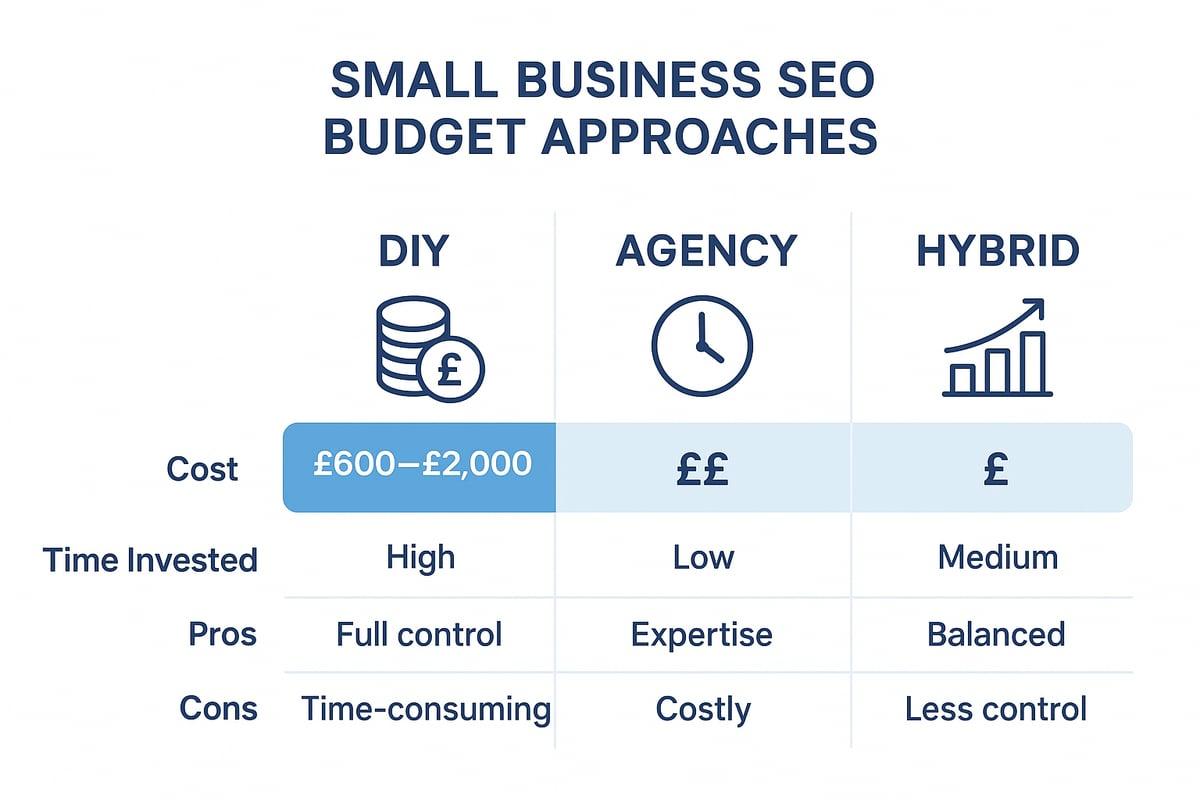
Let’s break down the main ways small businesses can approach SEO budgeting. Here’s a simple comparison:
| Approach | Typical Monthly Cost | Time Required | Pros | Cons |
|---|---|---|---|---|
| DIY | £0–£500 | High | Low cost, hands-on learning | Steep learning curve, slow results |
| Agency | £600–£2,000 | Low–Medium | Expertise, faster progress | Higher cost, less control |
| Hybrid | £300–£1,200 | Medium | Balance of control and expertise | Still requires time, variable results |
Choosing the right approach for your small business seo depends on your available time, skills, and how quickly you want to see results.
What Influences Your SEO Budget?
Several factors determine how much to invest in small business seo:
- Website size and complexity
- Local vs. national target audience
- Level of competition in your industry and location
- DIY, agency, or hybrid approach
- Existing website health and technical debt
For a detailed breakdown of pricing models and what’s included, check the SEO pricing for small businesses guide. This resource helps you set realistic expectations for your investment.
The ROI of Small Business SEO
Investing in small business seo is more cost-effective than relying solely on paid ads. Unlike PPC, SEO continues to drive organic traffic and leads long after the initial work is done. For example, StudioHawk’s stepwise approach has shown that SEO campaigns can deliver a 537% increase in organic traffic over time.
Data shows that businesses ranking on the first page of Google see significant growth in enquiries and sales. The key to unlocking this ROI is consistent investment and focusing on high-impact activities.
Avoiding Cheap SEO Traps: Tips for Smart Spending
While it’s tempting to cut corners, ultra-low-cost small business seo can do more harm than good. Cheap providers may use spammy tactics that risk Google penalties, undoing months of hard work.
Here’s how to budget smartly:
- Start with your most urgent SEO needs, then scale up as you see results.
- Prioritise quality over quantity—focus on proven tactics, not shortcuts.
- Monitor results monthly and adjust your investment as your rankings and leads grow.
- If you’re unsure, seek advice from a reputable specialist or agency.
Quality small business seo is an investment in your business’s future. Spend wisely, stay patient, and you’ll reap the rewards.
Essential SEO Tools & Skills for Small Businesses in 2026
Staying competitive with small business seo in 2026 means using the right tools and mastering a few key skills. Even if you’re not tech-savvy, the right toolkit and know-how can put your business ahead of bigger rivals.

Essential Tools for Small Business SEO
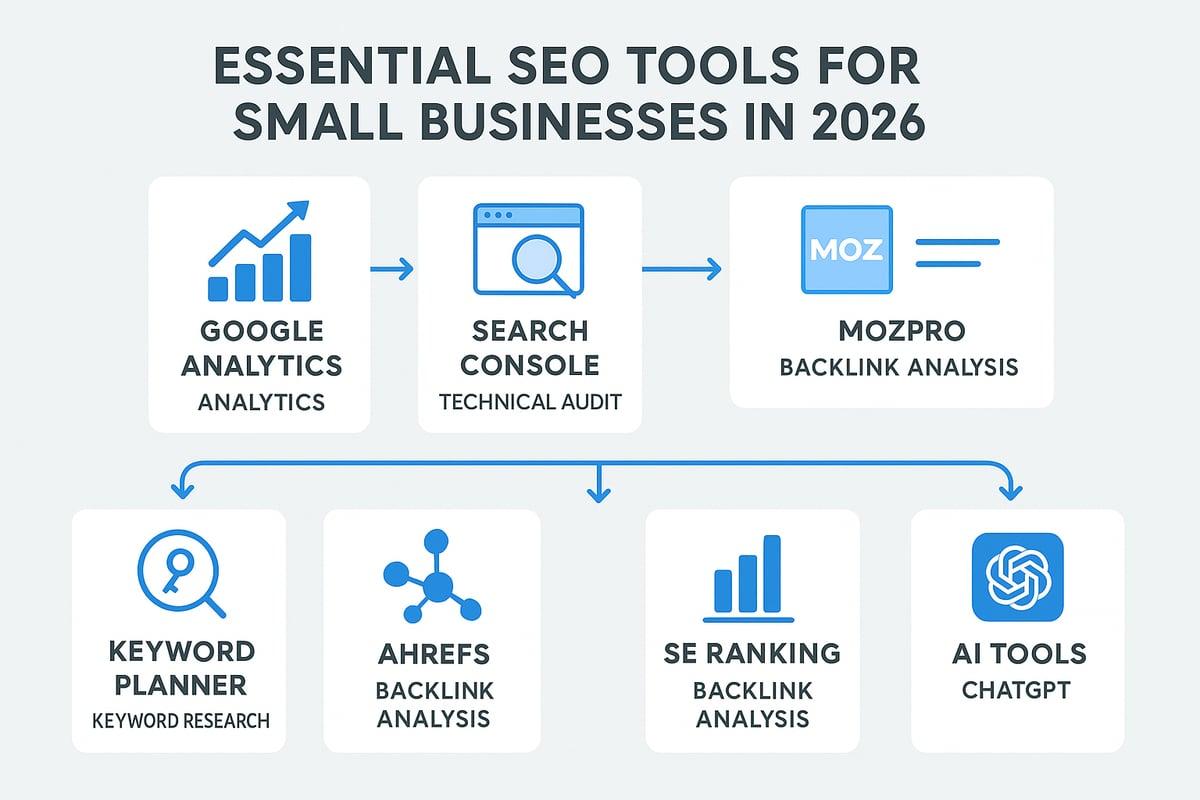
Choosing the right tools for small business seo is step one. Here’s a snapshot of the must-haves:
| Tool | Main Function |
|---|---|
| Google Analytics | Tracks website traffic |
| Search Console | Monitors search performance |
| Keyword Planner | Discovers keyword ideas |
| Ahrefs/MozPro | Analyses backlinks & keywords |
| Screaming Frog | Audits technical SEO |
| SE Ranking | Monitors rankings & competitors |
These tools help you see what’s working and where to improve. For example, Google Search Console can highlight pages with indexing problems, so you can fix them quickly.
Core Skills Every Business Owner Needs
You don’t need to be an expert, but understanding the basics of small business seo pays off. Key skills include:
- Keyword research: Find what your customers are actually searching for.
- Copywriting: Create content that both search engines and people love.
- Technical troubleshooting: Spot and fix website issues.
- Local listing management: Keep your Google Business Profile up to date.
If you’re after a deeper dive, check out these search engine optimisation insights for practical tips tailored to small business seo.
Roles and Training Options
Small business seo can be a solo, team, or agency effort. Typical roles include:
- Digital specialist: Handles technical and on-page SEO.
- Strategist: Plans campaigns and sets priorities.
- Account manager: Keeps projects on track and reports progress.
Training options range from free online courses to hiring an experienced agency. Many small business owners start with DIY, then scale up as their site grows.
AI and Automation in SEO
AI is changing the game for small business seo, making research and content creation much faster. Tools like ChatGPT can help brainstorm blog topics, rewrite product descriptions, or analyse site data in minutes instead of hours.
For the latest on optimising your site for an AI-driven world, read about AI-First Local Search Optimization. Embracing these trends lets small teams punch above their weight, saving time and boosting results.
Measuring SEO Success: Key Performance Indicators for Small Businesses
Tracking your progress is crucial if you want your small business seo efforts to actually pay off. You need to know what’s moving the needle and what’s just noise. Let’s break down the numbers that matter, so you can see what’s working and spot quick wins.
Core KPIs: The Metrics That Matter
Some metrics are just vanity, but these KPIs are the backbone of small business seo measurement:
| KPI | What It Shows | Why It Matters |
|---|---|---|
| Organic Visits | Number of users from search | Indicates reach |
| Keyword Rankings | Where you appear for target terms | Visibility |
| Leads/Enquiries | Potential customers contacting you | Business potential |
| Conversion Rate | % of visitors who take action | Effectiveness |
| Bounce Rate | % who leave without engaging | User experience |
Focus on these, and you’ll get a clear picture of how your small business seo is driving real results.
Tracking Local Visibility
For local businesses, it’s not just about traffic, it’s about the right traffic. Check Google Business Profile insights for how often you show up in local searches, your “local pack” rankings, and review volume. These numbers show if your small business seo is putting you in front of nearby customers.
Did you know that local SEO drives results? Mobile searches for “near me” are on the rise, and appearing in Google’s local pack can make or break your visibility.
Setting Goals and Using Tools
Set realistic goals for your small business seo, such as steady traffic growth, more first-page keywords, and a rise in leads. Use Google Analytics to track organic visits and conversions, and Google Search Console to monitor keyword rankings and indexing issues.
Regularly reviewing these tools helps you spot trends and fix problems before they cost you money. Even small improvements can mean more enquiries, calls, or bookings.
Continuous Improvement: It’s a Process
SEO is not a one-and-done task. Schedule monthly or quarterly reviews to check your small business seo progress. Celebrate wins like a 386% jump in organic users, but also look for areas to refine.
Keep your eyes on the metrics that matter most to your bottom line. That’s how you turn data into more sales, not just more traffic.
You’ve now got the essential steps to put your small business ahead in search, from nailing your website basics to local SEO tricks that actually work. But I know from years of seeing what converts (and what doesn’t) that sometimes you just want to talk through your ideas and get clear, honest advice. If you’re serious about growing your leads and sales in 2026, why not take the next step? Book a Get free 45 min consultation and let’s chat about where you are, where you want to go, and what you need to make your SEO work harder for you.
In 2026, small businesses are battling for attention online like never before. The good news? Small business SEO remains the most affordable way to win new customers and fuel your growth.
This guide is your shortcut to mastering the essentials. You’ll discover what SEO really means for small businesses, why it matters, and how you can use it—step by step—no matter your budget or tech skills.
Did you know that for every paid search click, organic results get 8.5? With the right moves, even a small business can outrank the big players.
Imagine your website popping up first when locals search for your services. Ready to unlock a proven, actionable blueprint for small business SEO success in 2026? Let’s dive in.
Understanding Small Business SEO in 2026
Small businesses in 2026 face fierce competition online, but small business seo remains your most powerful tool for standing out. Unlike expensive paid ads, effective SEO gives you lasting visibility, helping you attract more customers without draining your budget.

What is Small Business SEO?
Small business seo is a collection of tactics designed to boost your business’s visibility in organic search results. When people search for services or products you offer, you want your website to appear as high as possible—preferably on the first page. That’s where most clicks happen.
There’s a huge difference between organic and paid search. Organic listings are the unpaid results generated by search engines based on relevance, while paid search results are adverts businesses pay for. According to Forbes, organic results get 8.5 times more clicks than paid ones, making organic an essential focus for any small business seo strategy.
Google continues to dominate the UK search market, powering over 95% of searches. However, AI-driven search engines are starting to gain ground, changing how people find local businesses. This means the fundamentals of small business seo will remain vital, but staying agile and adapting to new search technologies is increasingly important.
Small businesses face unique challenges. Budgets are typically tight, and competing with national brands can seem daunting. However, your local focus and closer relationships with customers give you a real edge. Data from StudioHawk shows SMEs investing in SEO can see up to 367% growth in first-page rankings. Picture a local tradesperson competing against a national franchise—local SEO can put both on a level playing field.
The bottom line? Small business seo isn’t just for big brands. It’s mission-critical for survival and growth in today’s digital world.
How Small Business SEO Differs from Enterprise SEO
Small business seo stands out from enterprise SEO in several ways. First, localisation is key. SMEs focus on local search terms, optimising Google Business Profile listings, and engaging with their immediate community. This approach helps you appear in local packs and maps, driving relevant traffic from people nearby.
Personalisation is another advantage. Small businesses often build direct relationships with their customers, which means you can create tailored content and showcase real social proof through reviews and testimonials. This authenticity is tough for big brands to replicate.
Agility is a superpower for SMEs. Unlike large organisations, you can implement changes quickly. If you spot a new trend or keyword opportunity, you can act fast and see results sooner. Resource constraints mean you need to prioritise high-impact, low-cost tactics—think optimising your website, building local citations, and managing your reputation.
Let’s look at an example. A Birmingham café can use location-based keywords and community event pages to outrank a national coffee chain for local searches. By focusing on what matters locally, you become the go-to choice in your area.
If you want to dive deeper into local optimisation, the Local SEO strategies guide offers practical ideas tailored for small businesses.
In summary, small business seo wins when you leverage your authenticity, local relevance, and ability to adapt quickly. That’s how you compete—and thrive—even against much larger competitors.
Step-by-Step Small Business SEO Strategy for 2026
Ready to turn your website into a customer magnet? This section breaks down a modern small business seo plan into five practical steps. Follow these, and you’ll build a solid foundation that delivers real results, even on a tight budget.

Step 1: Laying the Foundations – Technical SEO & Website Optimisation
Think of your website as your digital storefront. For small business seo, technical basics are non-negotiable. A fast, mobile-friendly, and secure website keeps visitors happy and helps you climb the rankings.
Focus first on Core Web Vitals: site speed, mobile responsiveness, and stable layouts. Google now judges sites by how smooth and quick they are, especially on mobiles. Did you know 53% of mobile users leave if a site takes more than three seconds to load? That’s a lot of lost customers.
Check your site’s on-page SEO. Are your title tags, meta descriptions, headers, and image alt text clear and relevant? Is your site navigation simple? For example, a local gym with a responsive design and clear menu makes it easy for customers to find classes and book online.
Security matters too. Make sure your site uses HTTPS to protect user data. If you want more in-depth advice, check out these Technical SEO tips for SMEs.
Get these basics right before you move on. Without a solid foundation, the rest of your small business seo work won’t reach its full potential.
Step 2: Keyword Research for Small Businesses
Keyword research is the detective work behind every winning small business seo campaign. The goal? Find out what your ideal customers are already searching for—then show up right where they need you.
Focus on intent-driven, long-tail, and location-specific keywords. Instead of “cleaners”, try “emergency cleaners in Manchester”. These phrases have less competition and higher conversion rates. Tools like Google Keyword Planner, Ahrefs, and SE Ranking can reveal valuable search terms and competitor insights.
Check what your local competitors are ranking for. Are there gaps you can fill? For example, “dog-friendly café in Birmingham” targets a specific audience and intent, making it easier to rank.
Here’s a quick list to keep your research on track:
- Use location and service in your keywords
- Prioritise terms with purchase intent
- Avoid broad, generic phrases that big brands dominate
Nail your keywords, and you’ll make every other small business seo step more effective.
Step 3: Content Creation & Localisation
Great content is your shop window online. For small business seo, localising your content gives you a serious edge. Start with the basics: service pages, FAQs, and blog posts that answer the exact questions your customers ask.
Weave local keywords naturally into your writing. For example, a personal trainer in Birmingham could publish “Best Fitness Classes in Birmingham” to attract local searchers. This builds both your authority and your community presence.
On-site content includes your main pages and blog posts. Off-site content can be listings on local directories, guest blogs, and reviews. Both help you get found and trusted.
Did you know businesses with active blogs get 55% more website visitors? That’s a huge advantage, especially when you’re competing with bigger players.
Keep your content helpful, relevant, and focused on what your audience wants. This is the heart of a good small business seo strategy.
Step 4: Building Authority – Link Building & Reviews
Search engines see links and reviews as “votes” for your business’s credibility. For small business seo, building authority is all about quality over quantity.
Start by securing links from reputable local directories, industry partners, and local press. One link from a respected local news site can beat 100 spammy links from irrelevant sources. Ask happy customers to leave Google reviews—these boost both trust and local rankings.
Remember, most people check online reviews before buying. Make it easy for customers to share their experiences, and showcase testimonials on your site.
Here’s a simple comparison:
| Link Type | Impact on SEO | Trust Factor |
|---|---|---|
| Local news/press | High | High |
| Industry directories | Medium | Medium |
| Spammy link farms | Low/Negative | Low |
Focus on authentic, local signals to build the kind of authority that drives small business seo success.
Step 5: Leveraging Personalised Social Media
Social media is more than just a megaphone. For small business seo, it’s a way to build community, gather social proof, and drive valuable traffic.
Engage with your audience by sharing user-generated content, customer stories, and local events. If you run a café, repost customer photos on Instagram or Facebook. This not only boosts your reputation but can lead to more branded searches and links—both indirect SEO wins.
Integrate your social proof directly into your website. Add testimonials, reviews, and real customer photos to build trust with new visitors.
Social engagement doesn’t just look good—it helps your small business seo by increasing visibility, encouraging shares, and signalling to search engines that your business is active and relevant.
Budgeting and Resources: How Much Should Small Businesses Invest in SEO?
Setting an effective budget for small business seo is one of the most important decisions you’ll make. If you want to compete online, you need to invest—but how much is enough? For most UK small businesses, a realistic monthly budget ranges from £600 to £2,000. This covers everything from technical fixes to content, local optimisation, and ongoing management.
There’s no one-size-fits-all approach. Your budget should reflect your goals, location, and the competition. Remember, small business seo is not a one-off task. It’s an ongoing investment that delivers compounding returns over time.

Comparing SEO Investment Approaches
Let’s break down the main ways small businesses can approach SEO budgeting. Here’s a simple comparison:
| Approach | Typical Monthly Cost | Time Required | Pros | Cons |
|---|---|---|---|---|
| DIY | £0–£500 | High | Low cost, hands-on learning | Steep learning curve, slow results |
| Agency | £600–£2,000 | Low–Medium | Expertise, faster progress | Higher cost, less control |
| Hybrid | £300–£1,200 | Medium | Balance of control and expertise | Still requires time, variable results |
Choosing the right approach for your small business seo depends on your available time, skills, and how quickly you want to see results.
What Influences Your SEO Budget?
Several factors determine how much to invest in small business seo:
- Website size and complexity
- Local vs. national target audience
- Level of competition in your industry and location
- DIY, agency, or hybrid approach
- Existing website health and technical debt
For a detailed breakdown of pricing models and what’s included, check the SEO pricing for small businesses guide. This resource helps you set realistic expectations for your investment.
The ROI of Small Business SEO
Investing in small business seo is more cost-effective than relying solely on paid ads. Unlike PPC, SEO continues to drive organic traffic and leads long after the initial work is done. For example, StudioHawk’s stepwise approach has shown that SEO campaigns can deliver a 537% increase in organic traffic over time.
Data shows that businesses ranking on the first page of Google see significant growth in enquiries and sales. The key to unlocking this ROI is consistent investment and focusing on high-impact activities.
Avoiding Cheap SEO Traps: Tips for Smart Spending
While it’s tempting to cut corners, ultra-low-cost small business seo can do more harm than good. Cheap providers may use spammy tactics that risk Google penalties, undoing months of hard work.
Here’s how to budget smartly:
- Start with your most urgent SEO needs, then scale up as you see results.
- Prioritise quality over quantity—focus on proven tactics, not shortcuts.
- Monitor results monthly and adjust your investment as your rankings and leads grow.
- If you’re unsure, seek advice from a reputable specialist or agency.
Quality small business seo is an investment in your business’s future. Spend wisely, stay patient, and you’ll reap the rewards.
Essential SEO Tools & Skills for Small Businesses in 2026
Staying competitive with small business seo in 2026 means using the right tools and mastering a few key skills. Even if you’re not tech-savvy, the right toolkit and know-how can put your business ahead of bigger rivals.

Essential Tools for Small Business SEO
Choosing the right tools for small business seo is step one. Here’s a snapshot of the must-haves:
| Tool | Main Function |
|---|---|
| Google Analytics | Tracks website traffic |
| Search Console | Monitors search performance |
| Keyword Planner | Discovers keyword ideas |
| Ahrefs/MozPro | Analyses backlinks & keywords |
| Screaming Frog | Audits technical SEO |
| SE Ranking | Monitors rankings & competitors |
These tools help you see what’s working and where to improve. For example, Google Search Console can highlight pages with indexing problems, so you can fix them quickly.
Core Skills Every Business Owner Needs
You don’t need to be an expert, but understanding the basics of small business seo pays off. Key skills include:
- Keyword research: Find what your customers are actually searching for.
- Copywriting: Create content that both search engines and people love.
- Technical troubleshooting: Spot and fix website issues.
- Local listing management: Keep your Google Business Profile up to date.
If you’re after a deeper dive, check out these search engine optimisation insights for practical tips tailored to small business seo.
Roles and Training Options
Small business seo can be a solo, team, or agency effort. Typical roles include:
- Digital specialist: Handles technical and on-page SEO.
- Strategist: Plans campaigns and sets priorities.
- Account manager: Keeps projects on track and reports progress.
Training options range from free online courses to hiring an experienced agency. Many small business owners start with DIY, then scale up as their site grows.
AI and Automation in SEO
AI is changing the game for small business seo, making research and content creation much faster. Tools like ChatGPT can help brainstorm blog topics, rewrite product descriptions, or analyse site data in minutes instead of hours.
For the latest on optimising your site for an AI-driven world, read about AI-First Local Search Optimization. Embracing these trends lets small teams punch above their weight, saving time and boosting results.
Measuring SEO Success: Key Performance Indicators for Small Businesses
Tracking your progress is crucial if you want your small business seo efforts to actually pay off. You need to know what’s moving the needle and what’s just noise. Let’s break down the numbers that matter, so you can see what’s working and spot quick wins.
Core KPIs: The Metrics That Matter
Some metrics are just vanity, but these KPIs are the backbone of small business seo measurement:
| KPI | What It Shows | Why It Matters |
|---|---|---|
| Organic Visits | Number of users from search | Indicates reach |
| Keyword Rankings | Where you appear for target terms | Visibility |
| Leads/Enquiries | Potential customers contacting you | Business potential |
| Conversion Rate | % of visitors who take action | Effectiveness |
| Bounce Rate | % who leave without engaging | User experience |
Focus on these, and you’ll get a clear picture of how your small business seo is driving real results.
Tracking Local Visibility
For local businesses, it’s not just about traffic, it’s about the right traffic. Check Google Business Profile insights for how often you show up in local searches, your “local pack” rankings, and review volume. These numbers show if your small business seo is putting you in front of nearby customers.
Did you know that local SEO drives results? Mobile searches for “near me” are on the rise, and appearing in Google’s local pack can make or break your visibility.
Setting Goals and Using Tools
Set realistic goals for your small business seo, such as steady traffic growth, more first-page keywords, and a rise in leads. Use Google Analytics to track organic visits and conversions, and Google Search Console to monitor keyword rankings and indexing issues.
Regularly reviewing these tools helps you spot trends and fix problems before they cost you money. Even small improvements can mean more enquiries, calls, or bookings.
Continuous Improvement: It’s a Process
SEO is not a one-and-done task. Schedule monthly or quarterly reviews to check your small business seo progress. Celebrate wins like a 386% jump in organic users, but also look for areas to refine.
Keep your eyes on the metrics that matter most to your bottom line. That’s how you turn data into more sales, not just more traffic.
You’ve now got the essential steps to put your small business ahead in search, from nailing your website basics to local SEO tricks that actually work. But I know from years of seeing what converts (and what doesn’t) that sometimes you just want to talk through your ideas and get clear, honest advice. If you’re serious about growing your leads and sales in 2026, why not take the next step? Book a Get free 45 min consultation and let’s chat about where you are, where you want to go, and what you need to make your SEO work harder for you.