Company Address
The Mercian
218 Broad Street
Birmingham, B15 1FF

Top PPC Companies: Who to Trust With Your Budget in 2026

  • Date Published
    15 February 2026
Date Published
15 February 2026
# Topics
Follow Us

Choosing the right pay-per-click partner isn't about finding the biggest agency with the fanciest office. It's about finding a team (or person) who understands your business model, knows how to make every pound work harder, and won't hide behind vague "brand awareness" metrics when you're asking about actual sales. The landscape of PPC management has shifted dramatically. What worked three years ago gets your account suspended now. AI bidding strategies have changed how campaigns perform. And if you're a small business owner, you need someone who'll pick up the phone when Google inevitably rejects your ad for mysterious "policy violations" at 9pm on a Friday.

What Actually Makes a PPC Company "Top Tier"

The term "top PPC companies" gets thrown around like confetti, but most rankings focus on agency size or client spend rather than what matters to businesses like yours: results per pound invested. A top-tier PPC partner delivers three non-negotiables. First, they generate a positive return within your budget constraints, not some theoretical universe where you can spend £50k monthly. Second, they communicate in plain English about what's working and what isn't. Third, they treat your account like it matters, whether you're spending £500 or £50,000.

Results Over Revenue

Large agencies often chase big-spending clients because that's where their commission and management fees stack up. Nothing wrong with that, it's a business model. But if you're a growing ecommerce brand or service business, you might find yourself with a junior account manager learning on your budget whilst the senior team focuses on accounts spending ten times what you are.

What to look for instead:

  • Case studies showing results for businesses at your spending level
  • Direct access to the person actually managing your campaigns
  • Transparent reporting that shows cost per lead, not just impressions
  • Willingness to start small and scale based on performance
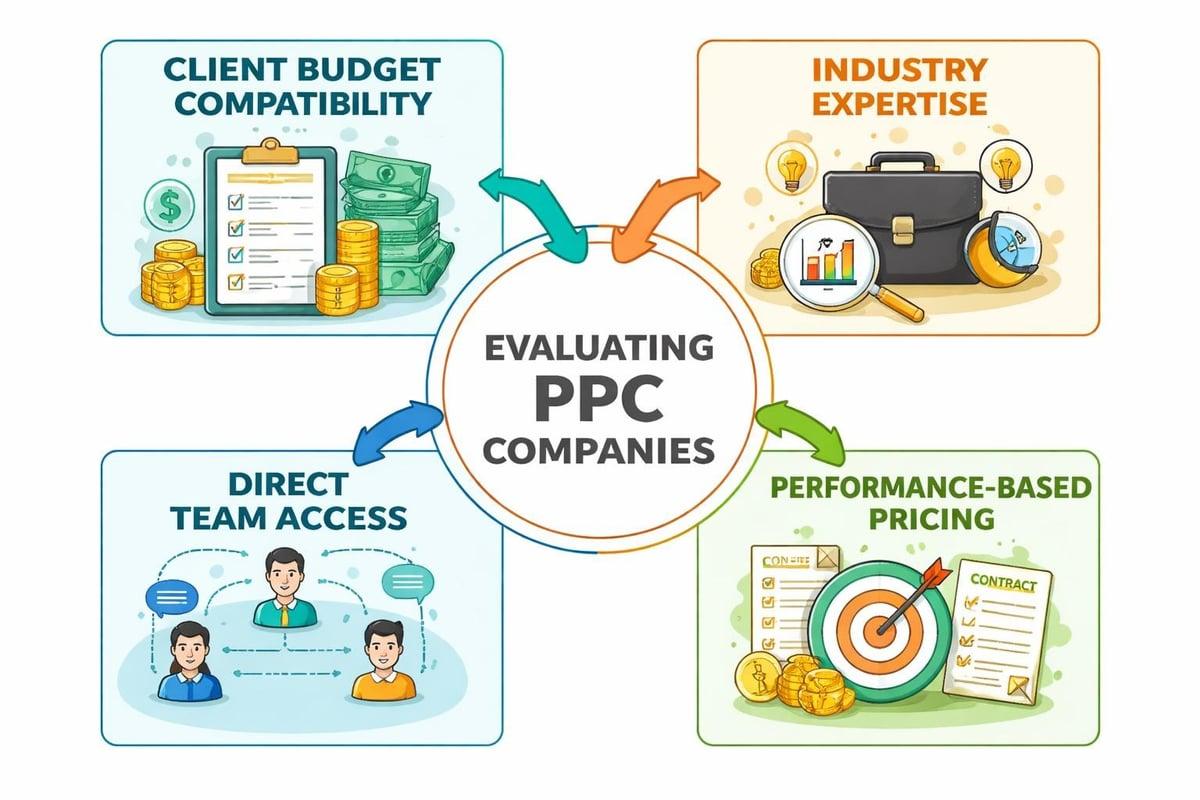
The best PPC partnerships often come from specialists who've worked in your industry or understand your specific business model. A Shopify specialist running Google Shopping campaigns knows different levers than someone managing lead generation for professional services. Both are valid, but match matters.

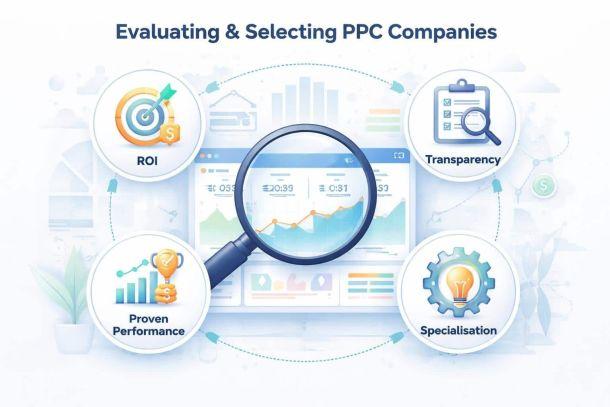
PPC agency evaluation criteria

The Agency Models You'll Encounter

Not all top PPC companies operate the same way. Understanding these models helps you spot which structure fits your business before you commit to anything.

Agency Model Best For Watch Out For
Full-service digital Businesses needing PPC + SEO + web Diluted focus, account gets passed around
PPC specialist Companies with clear paid search goals May lack wider marketing context
Freelance/consultant Smaller budgets, hands-on collaboration Capacity limits, less team backup
Performance agency eCommerce, high-volume lead gen Minimum spend requirements often high

Full-service agencies bundle PPC with web development, SEO, content, and social. This works brilliantly when all channels need attention and you want one point of contact. The risk? Your PPC specialist might actually be splitting time across five different disciplines, and expertise gets spread thin.

PPC specialists live and breathe paid search. They're often ex-Google employees or people who've managed eight-figure annual spends. Top PPC and performance marketing agencies typically fall into this category. The upside is deep platform knowledge. The downside is they might miss how PPC fits into your broader marketing ecosystem.

Freelancers and boutique consultants offer the most direct access and often the best value for smaller businesses. You're working with the actual strategist, not an account manager three levels removed. Capacity can become an issue during busy periods, but for many growing businesses, this model delivers the best pound-for-pound performance.

Platform Specialisation Matters More Than You Think

Some agencies claim they "do it all" across Google Ads, Microsoft Advertising, Meta, LinkedIn, TikTok, and Amazon. In reality, each platform has completely different auction dynamics, creative requirements, and audience behaviour. An agency crushing it on Facebook lead gen campaigns might struggle with Google Shopping optimization.

Ask specific questions:

  1. Which platform drives 60%+ of your current client results?
  2. Can I speak to a client in my industry about their experience?
  3. What certifications do the people managing my account hold?
  4. How do you stay current with platform changes?

The honest agencies will tell you where they're strongest and where they partner with specialists. The dodgy ones claim expertise in everything whilst showing you generic case studies.

How the Best PPC Companies Structure Campaigns in 2026

Campaign structures have evolved significantly since Google pushed everyone toward Performance Max and Microsoft launched its AI-heavy equivalents. The top PPC companies in 2026 aren't just setting up campaigns, they're architecting systems that feed machine learning whilst maintaining human control over what matters.

The Performance Max Reality

Performance Max campaigns now account for a huge chunk of Google Ads spend. They promise easy automation: feed in your assets, set a goal, let Google's AI find customers. Sometimes this works brilliantly. Other times it burns through budget on irrelevant placements whilst the algorithm "learns."

Smart PPC managers use Performance Max strategically:

  • Start with strong conversion data (at least 30 conversions monthly)
  • Layer in comprehensive negative keyword lists at account level
  • Use audience signals to guide rather than limit the AI
  • Monitor asset performance weekly and rotate out underperformers
  • Keep Search campaigns running for high-intent keywords
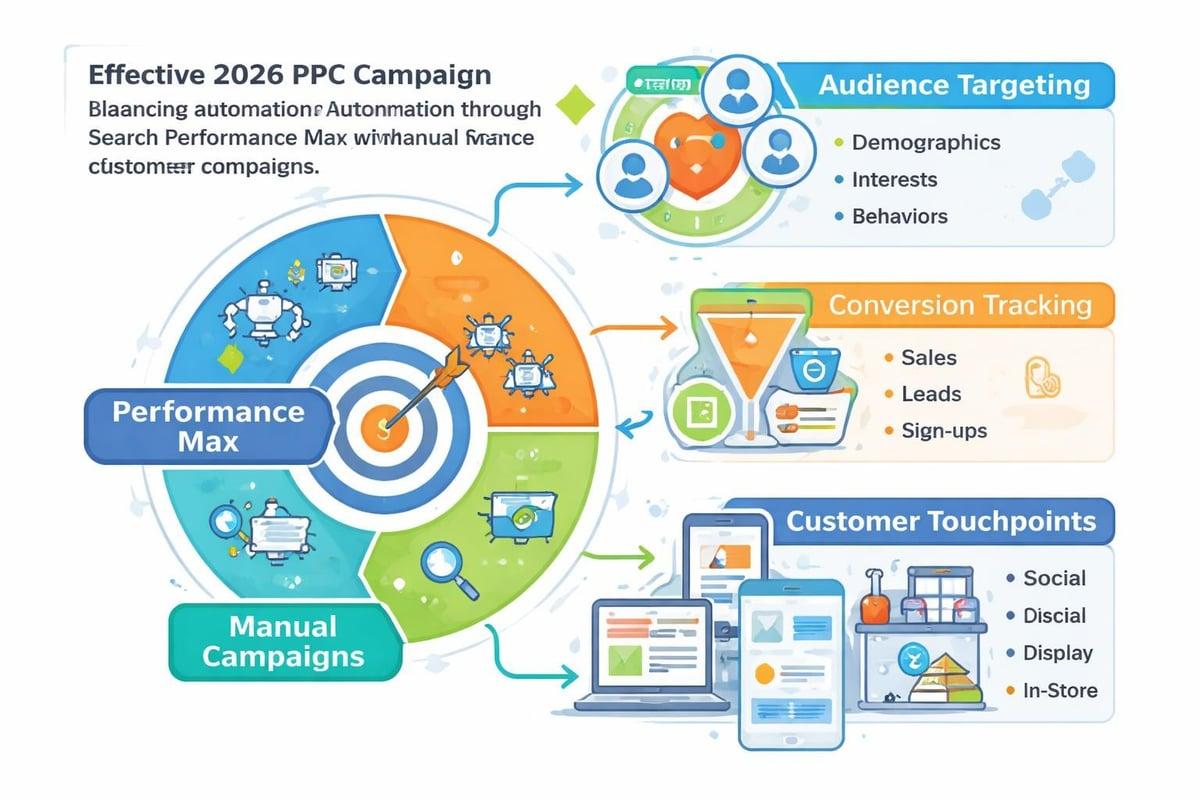
The agencies that understand this nuance get better results. The ones who dump everything into Performance Max because "Google recommends it" are usually the same ones blaming the algorithm when performance tanks.

Modern PPC campaign structure

What Small Businesses Actually Need From PPC Management

Here's the disconnect: most "top PPC companies" lists focus on agencies managing six or seven-figure monthly budgets for enterprise clients. Useful if you're Unilever. Less useful if you're a Birmingham-based business trying to generate quality leads on £2,000 monthly ad spend.

Budget Reality Check

Monthly Ad Spend What You Can Realistically Expect Required Management Time
£500-£1,000 Single platform, focused targeting 3-5 hours weekly
£1,000-£3,000 Multi-platform testing, optimization 6-10 hours weekly
£3,000-£10,000 Advanced strategies, full funnel 12-15 hours weekly
£10,000+ Enterprise features, dedicated team 20+ hours weekly

If an agency quotes you a £1,500 monthly management fee for £800 in ad spend, the maths doesn't work. You're paying nearly double in management versus media spend. Some agencies justify this with "minimum viable fee" arguments, which is fair, but it might signal you need a different solution.

For smaller budgets, a specialist consultant or boutique agency often delivers better value. They're running leaner operations and can be profitable whilst charging £400-£800 monthly management instead of £1,500+. Marketing XP, for example, operates as a one-person specialist studio, which means lower overhead and more direct attention to each account.

The AI Integration Question

Every agency now claims "AI-powered campaign management." Most of that means they use Google's automated bidding strategies, which is about as revolutionary as using email in 2026. The genuinely useful AI integration happens in three areas:

  1. Ad copy generation and testing – Using ChatGPT or Claude to create variation at scale, then testing human-refined versions
  2. Audience research – AI analysis of customer data to identify patterns humans miss
  3. Performance forecasting – Predictive models for budget allocation and seasonal planning

Ask potential agencies exactly how they use AI beyond platform defaults. If they can't give specific examples, they're probably just riding the buzzword wave.

Red Flags When Evaluating PPC Providers

Some warning signs show up repeatedly when businesses share their agency horror stories. Spot these early and save yourself months of frustration and wasted budget.

Guaranteed rankings or results – Anyone promising guaranteed first position or specific conversion numbers either doesn't understand how auctions work or is comfortable lying. Neither option works in your favour.

Contracts longer than 3-6 months – Confident agencies don't need to lock you in for a year. Performance should speak for itself within 90 days (assuming reasonable budget and conversion tracking).

Reporting full of vanity metrics – Impressions and clicks mean nothing if they don't convert. Quality agencies lead with conversion data, cost per acquisition, and return on ad spend.

Reluctance to give account access – Your Google Ads account should be under your ownership with the agency having manager access. If they insist on running campaigns through their own account, walk away.

Vague about click fraud protectionClick fraud affects major advertisers significantly, yet many agencies ignore it completely. Top providers monitor for suspicious activity and implement protection measures.

The Proposal Red Flag Bingo

Watch for these in agency proposals:

  • Generic strategy that could apply to any business
  • No mention of your specific competitors or market
  • Promises to "increase traffic" without defining what kind
  • Management fees that exceed media spend
  • Setup fees over £500 without clear deliverables
  • No clear KPIs or performance benchmarks

The best proposals are almost boring in their specificity. They outline exactly what campaigns they'll run, why those campaigns fit your business model, what metrics they'll optimize for, and what you should expect in months one, two, and three.

Industry-Specific PPC Considerations

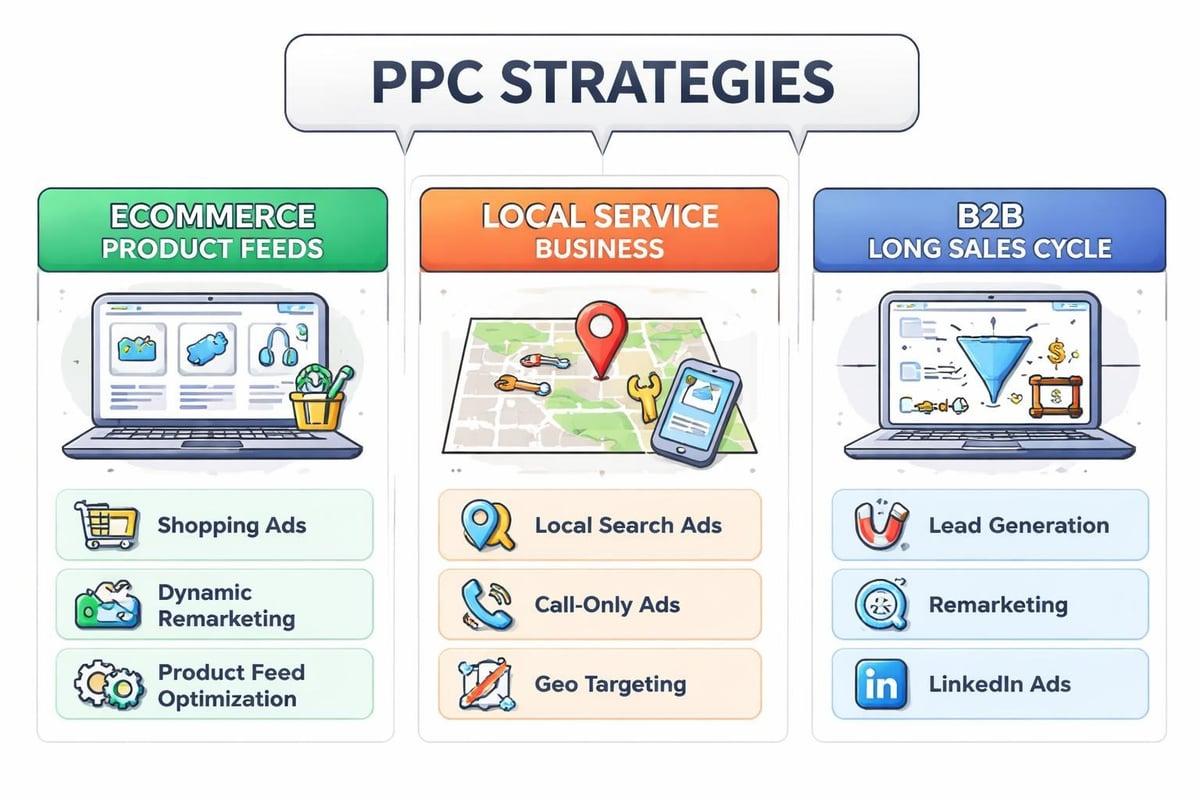
Top PPC companies often specialize by vertical because the skills and strategies vary wildly. Running campaigns for ecommerce requires completely different expertise than lead generation for professional services or local businesses.

Ecommerce and Shopify Businesses

If you're running a Shopify store, your PPC partner needs to understand product feed optimization, Shopping campaign structure, dynamic remarketing, and how to work within tight margin constraints. Many products simply can't afford high cost-per-click keywords, so the strategy involves smart Shopping campaigns, Performance Max with strong feeds, and remarketing to site visitors.

Essential ecommerce PPC capabilities:

  • Product feed optimization (titles, descriptions, custom labels)
  • Google Merchant Center compliance and troubleshooting
  • Dynamic remarketing with personalized product ads
  • Conversion value bidding for varying product margins
  • Integration with Shopify for accurate conversion tracking

The agencies claiming ecommerce expertise should talk about feed optimization within the first five minutes. If they don't mention it, they're generalists pretending to be specialists.

Service-Based and Local Businesses

Service businesses need quality over quantity. One qualified lead for a £5,000 service beats fifty tyre-kickers. This requires different campaign structures: tightly themed ad groups, extensive negative keywords, geographic targeting, and conversion tracking beyond form fills.

Local service businesses particularly benefit from:

  1. Google Local Services Ads (for eligible categories)
  2. Tightly geo-targeted Search campaigns
  3. Call-only ads during business hours
  4. Location extensions and business profile optimization

Several of the best PPC agencies focus specifically on local service businesses because the conversion path and economics differ so much from ecommerce or SaaS.

PPC specialization by business type

The Real Cost of PPC Management

Pricing models vary wildly across top PPC companies. Understanding these models helps you compare apples to apples rather than getting caught by hidden fees.

Standard Pricing Structures

Pricing Model How It Works Pros Cons
Percentage of spend 10-20% of monthly ad spend Scales with your investment Incentive to increase spend
Flat monthly fee Fixed fee regardless of spend Predictable costs May not scale with results
Performance-based Tied to conversions or revenue Aligned incentives Complex attribution issues
Hybrid Base fee + performance bonus Balance of both models Can get complicated

Percentage of spend is the most common model, typically ranging from 10% to 20% of your monthly ad budget. So if you're spending £5,000 on ads, you'd pay £500-£1,000 in management fees. This scales naturally but creates a potential conflict: the agency makes more when you spend more, whether or not increased spend is the right move.

Flat fees work better for businesses with consistent budgets. You pay £800 monthly regardless of whether you spend £3,000 or £5,000 on ads. This removes the spending incentive conflict but doesn't reward the agency for getting better results that let you scale profitably.

Performance-based pricing sounds perfect in theory. Pay only for results! The challenge comes in attribution and what counts as success. Last-click attribution dramatically undervalues upper-funnel campaigns. Multi-touch attribution is fairer but more complex to track and agree upon.

Hidden Costs and Setup Fees

Beyond management fees, watch for:

  • Platform fees (some agencies add admin fees for accessing tools)
  • Setup charges (£300-£1,500 for initial campaign builds)
  • Creative development (if the agency also builds your ad creative)
  • Landing page optimization (often separate from PPC management)
  • Reporting tools and dashboards (occasionally charged separately)

Legitimate setup fees covering campaign architecture, conversion tracking implementation, and initial research are reasonable. A £500-£800 one-time setup fee for complex ecommerce campaigns makes sense. Ongoing monthly charges for "reporting" or "dashboard access" when you're already paying management fees feels extractive.

How to Actually Evaluate PPC Companies

Researching top PPC companies gives you a starting list, but the real evaluation happens through specific questions and proof points that separate genuine expertise from marketing fluff.

The Discovery Call Questions That Matter

Most agencies will happily take your call and pitch their services. Turn the conversation into an evaluation by asking:

  1. "Walk me through how you'd structure campaigns for my business specifically" – Generic answers reveal lack of preparation. Detailed responses show they've researched your market.

  2. "What conversion tracking would you implement and why?" – Conversion tracking separates PPC managers from PPC strategists. They should discuss pixels, events, offline conversion import, and attribution models.

  3. "How do you handle underperforming campaigns?" – Everyone's campaigns underperform sometimes. The response shows problem-solving approach and honesty.

  4. "Can you share a recent case study from my industry?" – Industry-specific experience accelerates results dramatically. Case studies from different verticals are less relevant.

  5. "Who would actually manage my account day-to-day?" – If you're meeting the sales team but your account gets handed to someone you never meet, that's a structural issue.

References and Case Studies

Ask for two types of references:

  • A current client at a similar spending level in your industry
  • A client who's been with them over 12 months

The first shows relevance. The second shows staying power, which matters because PPC is a long game. Month one is testing. Month two is optimization. Month three is when you start seeing real results, assuming proper setup and reasonable budget.

When reviewing case studies, look beyond percentage improvements. "200% increase in conversions" sounds impressive until you learn they went from 5 to 15 monthly conversions. Absolute numbers and context matter more than percentages.

The Big Agency vs Specialist Debate

The largest agencies often appear on "top PPC companies" lists because they manage the most total spend or have the most employees. Clutch’s top PPC companies for 2025 and similar rankings tend to feature these larger operations. But bigger isn't always better, especially for small and medium-sized businesses.

What Big Agencies Do Well

Large agencies bring infrastructure, buying power, platform beta access, and deep teams. If you're spending £50,000+ monthly across multiple markets and platforms, that infrastructure matters. You need a team covering Search, Shopping, Display, Video, and Social, all coordinated through a senior strategist.

Big agencies also get earlier access to platform betas and dedicated Google or Meta reps. This can translate to competitive advantages, particularly in fast-moving industries where being first with new ad formats or features matters.

Where Specialists Win

For most growing businesses, a specialist or boutique agency delivers better outcomes because:

  • You work directly with experienced strategists, not junior account coordinators
  • Lower overhead means more competitive pricing
  • Faster decision-making without multiple approval layers
  • Deeper relationships and better communication
  • Greater flexibility in strategy and approach

The economic reality is simple: a large agency needs to charge more to support its infrastructure. A skilled independent consultant or small team can deliver equivalent or better results at 40-60% of the cost because the overhead structure is completely different.

Platform-Specific Expertise Worth Paying For

All top PPC companies claim multi-platform expertise. In practice, most have one or two platforms where they genuinely excel and others where they're competent but not exceptional.

Google Ads Specialists

Google Ads remains the dominant platform for most businesses, accounting for the majority of paid search traffic. True Google Ads specialists understand:

  • The interplay between Search, Shopping, Performance Max, and Display
  • How to structure campaigns that feed Google's machine learning effectively
  • Smart Bidding strategies and when to override automation
  • Quality Score optimization and its impact on cost per click
  • The nuances between search partner networks and Google search

Certification matters here. Google Partner status requires minimum spend and performance thresholds. Google Premier Partner status requires even higher standards. These aren't guarantees of quality, but they show platform commitment.

Meta (Facebook/Instagram) Advertising

Meta advertising works fundamentally differently from search. You're interrupting people rather than answering their queries, so creative quality and audience targeting matter more than keyword selection.

Top Meta advertisers focus on:

  • Creative testing frameworks (imagery, video, copy variations)
  • Audience layering and exclusion strategies
  • Conversion API implementation for iOS 14+ tracking
  • Campaign budget optimization tactics
  • Catalogue integration for dynamic product ads

If an agency shows you Meta campaigns without discussing creative testing protocols, they're probably running basic campaigns and hoping for the best.

Multi-Platform Coordination

The real skill isn't managing individual platforms. It's coordinating them so they work together rather than cannibalizing each other's performance. This means:

  1. Using search query data to inform social creative
  2. Remarketing social traffic through search campaigns
  3. Suppressing existing customers from acquisition campaigns
  4. Building consistent measurement across platforms
  5. Allocating budget based on incremental contribution, not last-click attribution

Few agencies genuinely excel at this. Most treat each platform as a silo, then wonder why overall customer acquisition costs stay high despite "improving" performance on each platform individually.

Technical Competence as a Differentiator

The gap between mediocre and excellent PPC management often comes down to technical implementation. Top PPC companies in 2026 need skills that didn't exist five years ago.

Conversion Tracking in a Privacy-First World

iOS 14+ restrictions, cookie deprecation, and privacy regulations have made conversion tracking significantly more complex. Agencies still relying solely on platform pixels are missing 20-40% of conversions, which destroys campaign optimization.

Advanced tracking implementation includes:

  • Server-side tracking through Conversion APIs
  • Enhanced conversions using first-party data
  • Offline conversion import for phone calls and in-store sales
  • Cross-domain tracking for complex customer journeys
  • Privacy-compliant data handling and consent management

Ask potential agencies how they handle iOS traffic attribution. If they shrug and say "we deal with it," they're not dealing with it properly.

Feed Management for Ecommerce

Google Shopping and Performance Max campaigns live or die by product feed quality. Many top US PPC agencies specializing in ecommerce spend as much time optimizing feeds as they do on bid strategies.

Feed optimization involves:

  • Custom labels for margin-based bidding
  • Title optimization using actual search query data
  • Category mapping to Google's taxonomy
  • Supplemental feed rules for scaling changes
  • Regular audits for disapproved products

An agency that doesn't discuss feed optimization during ecommerce campaign planning either doesn't understand Google Shopping or is planning to do the bare minimum.

The Performance Reporting Standard

How top PPC companies report results reveals their actual focus. Vanity metrics impress business owners who don't know better. Useful metrics drive decisions.

Reports That Matter vs Reports That Impress

Vanity metrics that look good but mean little:

  • Total impressions
  • Click-through rate without context
  • Individual keyword performance in isolation
  • Social media engagement on ads
  • Cost per click trends

Decision-driving metrics that actually matter:

  • Cost per conversion by campaign and product/service
  • Return on ad spend (ROAS) overall and by segment
  • Conversion rate from click to lead/sale
  • Customer acquisition cost vs lifetime value
  • Search impression share for priority keywords
  • Attribution-adjusted contribution by channel

The best agencies send you both a high-level dashboard you can check in 60 seconds and a detailed monthly report explaining what changed, why, and what they're testing next.

Transparency and Access

You should have full access to your ad accounts at all times. The agency manages them, but you own them. This isn't negotiable. Any agency that insists on running campaigns through their own account rather than manager access to yours is hiding something, usually the ability to easily move to another provider.

Your access should include:

  • Admin-level Google Ads and Analytics access
  • Editor access to Meta Business Manager
  • Shared access to any tracking or reporting tools
  • Documented campaign structures and naming conventions

Testing Frameworks That Separate Good From Great

Everyone claims to "test and optimize." The difference is in the rigour and framework. Top PPC companies use structured testing methodologies, not random changes hoping for improvement.

Systematic Creative Testing

For platforms like Meta where creative drives performance, systematic testing means:

  1. Hypothesis-driven tests – "We believe video outperforms static imagery for this audience" rather than randomly trying different ads
  2. Controlled variables – Test one element at a time (image vs video, headline variant, audience segment)
  3. Statistical significance – Wait for meaningful sample sizes before declaring winners
  4. Documentation – Track what's been tested to build institutional knowledge
  5. Winning variant rollout – Actually implement learnings rather than perpetual testing

Landing Page and Conversion Optimization

PPC performance is capped by conversion rate. An agency sending expensive traffic to a poorly optimized landing page is wasting your money regardless of how well they manage campaigns.

Conversion-focused PPC agencies either:

  • Partner with conversion optimization specialists
  • Include landing page optimization in their service
  • Require certain landing page standards before taking on campaigns
  • Provide detailed feedback on conversion blockers

The worst agencies blame your website when campaigns don't perform but won't help fix it.

When to Consider In-House vs Agency

Not every business needs to hire one of the top PPC companies. Sometimes building in-house capability makes more sense, particularly for businesses with consistent spending over £10,000 monthly where management fees add up quickly.

The In-House Case

In-house PPC makes sense when:

  • Monthly ad spend exceeds £15,000+ consistently
  • You're in a complex or highly specialized niche
  • Speed of iteration matters more than institutional knowledge
  • You have other marketing team members who can provide support
  • Management fees would exceed the cost of a full-time hire

A skilled PPC manager costs £35,000-£55,000 annually. At £15,000 monthly ad spend with 15% agency fees, you're paying £27,000 yearly in management fees. The crossover point where in-house becomes economical appears around £12,000-£15,000 monthly spend.

The Agency Case

Agencies make more sense when:

  • Monthly spend is under £10,000
  • You need multi-platform expertise without multiple hires
  • Budget fluctuates seasonally
  • You lack the infrastructure to support a marketing hire
  • You want strategic guidance plus execution

For most SMEs, agency or consultant partnerships deliver better economics and results than trying to build in-house expertise whilst running the rest of the business.

The Questions Most Business Owners Forget to Ask

Beyond the obvious questions about cost and results, these often-overlooked questions reveal agency culture and approach:

"How do you handle platform changes and updates?" – Google and Meta release changes weekly. Top agencies have processes for staying current, testing new features, and communicating impact to clients.

"What's your client retention rate and average client tenure?" – High churn suggests either poor results or poor service. Most top agencies retain 75%+ of clients year-over-year.

"How do you decide when to recommend increasing or decreasing budget?" – This reveals whether they optimize for your outcomes or their management fees.

"What tools and technology do you use beyond the platforms?" – Agencies using advanced tools for bid management, click fraud prevention, and attribution tend to get better results.

"Can you walk me through your typical first 90 days with a new client?" – Detailed onboarding processes with clear milestones indicate organizational maturity.

Making the Final Decision

After researching the best PPC management companies and having discovery calls with three to five potential partners, decision time arrives. Base your choice on these weighted factors:

Decision Factor Importance Why It Matters
Relevant industry experience High Reduces learning curve, faster results
Direct access to strategists High Better communication, faster problem-solving
Transparent pricing High No surprise fees, clear ROI calculation
Technical competence High Proper tracking, better optimization
Cultural fit Medium Long-term relationship quality
Agency size Low Results matter more than headcount
Office location Low Remote work is standard in 2026

The best partnerships come from agencies that understand your business model, communicate clearly, demonstrate technical skill, and price fairly for the value delivered. Everything else is secondary.

Trust your instinct after discovery calls. If an agency makes you feel like just another account number, you probably will be. If they ask insightful questions about your business and seem genuinely interested in solving your specific challenges, that's a promising sign.


Finding the right PPC partner comes down to alignment: your goals, their expertise, and realistic expectations about what paid advertising can achieve for your business. The top PPC companies aren't always the biggest or most expensive, they're the ones who understand your market, communicate honestly, and deliver measurable results within your budget constraints. If you're a small or medium-sized business looking for hands-on PPC management that prioritizes conversions over vanity metrics, Marketing XP offers the direct access and specialized ecommerce expertise that typically gets diluted at larger agencies.

Choosing the right pay-per-click partner isn't about finding the biggest agency with the fanciest office. It's about finding a team (or person) who understands your business model, knows how to make every pound work harder, and won't hide behind vague "brand awareness" metrics when you're asking about actual sales. The landscape of PPC management has shifted dramatically. What worked three years ago gets your account suspended now. AI bidding strategies have changed how campaigns perform. And if you're a small business owner, you need someone who'll pick up the phone when Google inevitably rejects your ad for mysterious "policy violations" at 9pm on a Friday.

What Actually Makes a PPC Company "Top Tier"

The term "top PPC companies" gets thrown around like confetti, but most rankings focus on agency size or client spend rather than what matters to businesses like yours: results per pound invested. A top-tier PPC partner delivers three non-negotiables. First, they generate a positive return within your budget constraints, not some theoretical universe where you can spend £50k monthly. Second, they communicate in plain English about what's working and what isn't. Third, they treat your account like it matters, whether you're spending £500 or £50,000.

Results Over Revenue

Large agencies often chase big-spending clients because that's where their commission and management fees stack up. Nothing wrong with that, it's a business model. But if you're a growing ecommerce brand or service business, you might find yourself with a junior account manager learning on your budget whilst the senior team focuses on accounts spending ten times what you are.

What to look for instead:

  • Case studies showing results for businesses at your spending level
  • Direct access to the person actually managing your campaigns
  • Transparent reporting that shows cost per lead, not just impressions
  • Willingness to start small and scale based on performance

The best PPC partnerships often come from specialists who've worked in your industry or understand your specific business model. A Shopify specialist running Google Shopping campaigns knows different levers than someone managing lead generation for professional services. Both are valid, but match matters.

PPC agency evaluation criteria

The Agency Models You'll Encounter

Not all top PPC companies operate the same way. Understanding these models helps you spot which structure fits your business before you commit to anything.

Agency Model Best For Watch Out For
Full-service digital Businesses needing PPC + SEO + web Diluted focus, account gets passed around
PPC specialist Companies with clear paid search goals May lack wider marketing context
Freelance/consultant Smaller budgets, hands-on collaboration Capacity limits, less team backup
Performance agency eCommerce, high-volume lead gen Minimum spend requirements often high

Full-service agencies bundle PPC with web development, SEO, content, and social. This works brilliantly when all channels need attention and you want one point of contact. The risk? Your PPC specialist might actually be splitting time across five different disciplines, and expertise gets spread thin.

PPC specialists live and breathe paid search. They're often ex-Google employees or people who've managed eight-figure annual spends. Top PPC and performance marketing agencies typically fall into this category. The upside is deep platform knowledge. The downside is they might miss how PPC fits into your broader marketing ecosystem.

Freelancers and boutique consultants offer the most direct access and often the best value for smaller businesses. You're working with the actual strategist, not an account manager three levels removed. Capacity can become an issue during busy periods, but for many growing businesses, this model delivers the best pound-for-pound performance.

Platform Specialisation Matters More Than You Think

Some agencies claim they "do it all" across Google Ads, Microsoft Advertising, Meta, LinkedIn, TikTok, and Amazon. In reality, each platform has completely different auction dynamics, creative requirements, and audience behaviour. An agency crushing it on Facebook lead gen campaigns might struggle with Google Shopping optimization.

Ask specific questions:

  1. Which platform drives 60%+ of your current client results?
  2. Can I speak to a client in my industry about their experience?
  3. What certifications do the people managing my account hold?
  4. How do you stay current with platform changes?

The honest agencies will tell you where they're strongest and where they partner with specialists. The dodgy ones claim expertise in everything whilst showing you generic case studies.

How the Best PPC Companies Structure Campaigns in 2026

Campaign structures have evolved significantly since Google pushed everyone toward Performance Max and Microsoft launched its AI-heavy equivalents. The top PPC companies in 2026 aren't just setting up campaigns, they're architecting systems that feed machine learning whilst maintaining human control over what matters.

The Performance Max Reality

Performance Max campaigns now account for a huge chunk of Google Ads spend. They promise easy automation: feed in your assets, set a goal, let Google's AI find customers. Sometimes this works brilliantly. Other times it burns through budget on irrelevant placements whilst the algorithm "learns."

Smart PPC managers use Performance Max strategically:

  • Start with strong conversion data (at least 30 conversions monthly)
  • Layer in comprehensive negative keyword lists at account level
  • Use audience signals to guide rather than limit the AI
  • Monitor asset performance weekly and rotate out underperformers
  • Keep Search campaigns running for high-intent keywords

The agencies that understand this nuance get better results. The ones who dump everything into Performance Max because "Google recommends it" are usually the same ones blaming the algorithm when performance tanks.

Modern PPC campaign structure

What Small Businesses Actually Need From PPC Management

Here's the disconnect: most "top PPC companies" lists focus on agencies managing six or seven-figure monthly budgets for enterprise clients. Useful if you're Unilever. Less useful if you're a Birmingham-based business trying to generate quality leads on £2,000 monthly ad spend.

Budget Reality Check

Monthly Ad Spend What You Can Realistically Expect Required Management Time
£500-£1,000 Single platform, focused targeting 3-5 hours weekly
£1,000-£3,000 Multi-platform testing, optimization 6-10 hours weekly
£3,000-£10,000 Advanced strategies, full funnel 12-15 hours weekly
£10,000+ Enterprise features, dedicated team 20+ hours weekly

If an agency quotes you a £1,500 monthly management fee for £800 in ad spend, the maths doesn't work. You're paying nearly double in management versus media spend. Some agencies justify this with "minimum viable fee" arguments, which is fair, but it might signal you need a different solution.

For smaller budgets, a specialist consultant or boutique agency often delivers better value. They're running leaner operations and can be profitable whilst charging £400-£800 monthly management instead of £1,500+. Marketing XP, for example, operates as a one-person specialist studio, which means lower overhead and more direct attention to each account.

The AI Integration Question

Every agency now claims "AI-powered campaign management." Most of that means they use Google's automated bidding strategies, which is about as revolutionary as using email in 2026. The genuinely useful AI integration happens in three areas:

  1. Ad copy generation and testing – Using ChatGPT or Claude to create variation at scale, then testing human-refined versions
  2. Audience research – AI analysis of customer data to identify patterns humans miss
  3. Performance forecasting – Predictive models for budget allocation and seasonal planning

Ask potential agencies exactly how they use AI beyond platform defaults. If they can't give specific examples, they're probably just riding the buzzword wave.

Red Flags When Evaluating PPC Providers

Some warning signs show up repeatedly when businesses share their agency horror stories. Spot these early and save yourself months of frustration and wasted budget.

Guaranteed rankings or results – Anyone promising guaranteed first position or specific conversion numbers either doesn't understand how auctions work or is comfortable lying. Neither option works in your favour.

Contracts longer than 3-6 months – Confident agencies don't need to lock you in for a year. Performance should speak for itself within 90 days (assuming reasonable budget and conversion tracking).

Reporting full of vanity metrics – Impressions and clicks mean nothing if they don't convert. Quality agencies lead with conversion data, cost per acquisition, and return on ad spend.

Reluctance to give account access – Your Google Ads account should be under your ownership with the agency having manager access. If they insist on running campaigns through their own account, walk away.

Vague about click fraud protectionClick fraud affects major advertisers significantly, yet many agencies ignore it completely. Top providers monitor for suspicious activity and implement protection measures.

The Proposal Red Flag Bingo

Watch for these in agency proposals:

  • Generic strategy that could apply to any business
  • No mention of your specific competitors or market
  • Promises to "increase traffic" without defining what kind
  • Management fees that exceed media spend
  • Setup fees over £500 without clear deliverables
  • No clear KPIs or performance benchmarks

The best proposals are almost boring in their specificity. They outline exactly what campaigns they'll run, why those campaigns fit your business model, what metrics they'll optimize for, and what you should expect in months one, two, and three.

Industry-Specific PPC Considerations

Top PPC companies often specialize by vertical because the skills and strategies vary wildly. Running campaigns for ecommerce requires completely different expertise than lead generation for professional services or local businesses.

Ecommerce and Shopify Businesses

If you're running a Shopify store, your PPC partner needs to understand product feed optimization, Shopping campaign structure, dynamic remarketing, and how to work within tight margin constraints. Many products simply can't afford high cost-per-click keywords, so the strategy involves smart Shopping campaigns, Performance Max with strong feeds, and remarketing to site visitors.

Essential ecommerce PPC capabilities:

  • Product feed optimization (titles, descriptions, custom labels)
  • Google Merchant Center compliance and troubleshooting
  • Dynamic remarketing with personalized product ads
  • Conversion value bidding for varying product margins
  • Integration with Shopify for accurate conversion tracking

The agencies claiming ecommerce expertise should talk about feed optimization within the first five minutes. If they don't mention it, they're generalists pretending to be specialists.

Service-Based and Local Businesses

Service businesses need quality over quantity. One qualified lead for a £5,000 service beats fifty tyre-kickers. This requires different campaign structures: tightly themed ad groups, extensive negative keywords, geographic targeting, and conversion tracking beyond form fills.

Local service businesses particularly benefit from:

  1. Google Local Services Ads (for eligible categories)
  2. Tightly geo-targeted Search campaigns
  3. Call-only ads during business hours
  4. Location extensions and business profile optimization

Several of the best PPC agencies focus specifically on local service businesses because the conversion path and economics differ so much from ecommerce or SaaS.

PPC specialization by business type

The Real Cost of PPC Management

Pricing models vary wildly across top PPC companies. Understanding these models helps you compare apples to apples rather than getting caught by hidden fees.

Standard Pricing Structures

Pricing Model How It Works Pros Cons
Percentage of spend 10-20% of monthly ad spend Scales with your investment Incentive to increase spend
Flat monthly fee Fixed fee regardless of spend Predictable costs May not scale with results
Performance-based Tied to conversions or revenue Aligned incentives Complex attribution issues
Hybrid Base fee + performance bonus Balance of both models Can get complicated

Percentage of spend is the most common model, typically ranging from 10% to 20% of your monthly ad budget. So if you're spending £5,000 on ads, you'd pay £500-£1,000 in management fees. This scales naturally but creates a potential conflict: the agency makes more when you spend more, whether or not increased spend is the right move.

Flat fees work better for businesses with consistent budgets. You pay £800 monthly regardless of whether you spend £3,000 or £5,000 on ads. This removes the spending incentive conflict but doesn't reward the agency for getting better results that let you scale profitably.

Performance-based pricing sounds perfect in theory. Pay only for results! The challenge comes in attribution and what counts as success. Last-click attribution dramatically undervalues upper-funnel campaigns. Multi-touch attribution is fairer but more complex to track and agree upon.

Hidden Costs and Setup Fees

Beyond management fees, watch for:

  • Platform fees (some agencies add admin fees for accessing tools)
  • Setup charges (£300-£1,500 for initial campaign builds)
  • Creative development (if the agency also builds your ad creative)
  • Landing page optimization (often separate from PPC management)
  • Reporting tools and dashboards (occasionally charged separately)

Legitimate setup fees covering campaign architecture, conversion tracking implementation, and initial research are reasonable. A £500-£800 one-time setup fee for complex ecommerce campaigns makes sense. Ongoing monthly charges for "reporting" or "dashboard access" when you're already paying management fees feels extractive.

How to Actually Evaluate PPC Companies

Researching top PPC companies gives you a starting list, but the real evaluation happens through specific questions and proof points that separate genuine expertise from marketing fluff.

The Discovery Call Questions That Matter

Most agencies will happily take your call and pitch their services. Turn the conversation into an evaluation by asking:

  1. "Walk me through how you'd structure campaigns for my business specifically" – Generic answers reveal lack of preparation. Detailed responses show they've researched your market.

  2. "What conversion tracking would you implement and why?" – Conversion tracking separates PPC managers from PPC strategists. They should discuss pixels, events, offline conversion import, and attribution models.

  3. "How do you handle underperforming campaigns?" – Everyone's campaigns underperform sometimes. The response shows problem-solving approach and honesty.

  4. "Can you share a recent case study from my industry?" – Industry-specific experience accelerates results dramatically. Case studies from different verticals are less relevant.

  5. "Who would actually manage my account day-to-day?" – If you're meeting the sales team but your account gets handed to someone you never meet, that's a structural issue.

References and Case Studies

Ask for two types of references:

  • A current client at a similar spending level in your industry
  • A client who's been with them over 12 months

The first shows relevance. The second shows staying power, which matters because PPC is a long game. Month one is testing. Month two is optimization. Month three is when you start seeing real results, assuming proper setup and reasonable budget.

When reviewing case studies, look beyond percentage improvements. "200% increase in conversions" sounds impressive until you learn they went from 5 to 15 monthly conversions. Absolute numbers and context matter more than percentages.

The Big Agency vs Specialist Debate

The largest agencies often appear on "top PPC companies" lists because they manage the most total spend or have the most employees. Clutch’s top PPC companies for 2025 and similar rankings tend to feature these larger operations. But bigger isn't always better, especially for small and medium-sized businesses.

What Big Agencies Do Well

Large agencies bring infrastructure, buying power, platform beta access, and deep teams. If you're spending £50,000+ monthly across multiple markets and platforms, that infrastructure matters. You need a team covering Search, Shopping, Display, Video, and Social, all coordinated through a senior strategist.

Big agencies also get earlier access to platform betas and dedicated Google or Meta reps. This can translate to competitive advantages, particularly in fast-moving industries where being first with new ad formats or features matters.

Where Specialists Win

For most growing businesses, a specialist or boutique agency delivers better outcomes because:

  • You work directly with experienced strategists, not junior account coordinators
  • Lower overhead means more competitive pricing
  • Faster decision-making without multiple approval layers
  • Deeper relationships and better communication
  • Greater flexibility in strategy and approach

The economic reality is simple: a large agency needs to charge more to support its infrastructure. A skilled independent consultant or small team can deliver equivalent or better results at 40-60% of the cost because the overhead structure is completely different.

Platform-Specific Expertise Worth Paying For

All top PPC companies claim multi-platform expertise. In practice, most have one or two platforms where they genuinely excel and others where they're competent but not exceptional.

Google Ads Specialists

Google Ads remains the dominant platform for most businesses, accounting for the majority of paid search traffic. True Google Ads specialists understand:

  • The interplay between Search, Shopping, Performance Max, and Display
  • How to structure campaigns that feed Google's machine learning effectively
  • Smart Bidding strategies and when to override automation
  • Quality Score optimization and its impact on cost per click
  • The nuances between search partner networks and Google search

Certification matters here. Google Partner status requires minimum spend and performance thresholds. Google Premier Partner status requires even higher standards. These aren't guarantees of quality, but they show platform commitment.

Meta (Facebook/Instagram) Advertising

Meta advertising works fundamentally differently from search. You're interrupting people rather than answering their queries, so creative quality and audience targeting matter more than keyword selection.

Top Meta advertisers focus on:

  • Creative testing frameworks (imagery, video, copy variations)
  • Audience layering and exclusion strategies
  • Conversion API implementation for iOS 14+ tracking
  • Campaign budget optimization tactics
  • Catalogue integration for dynamic product ads

If an agency shows you Meta campaigns without discussing creative testing protocols, they're probably running basic campaigns and hoping for the best.

Multi-Platform Coordination

The real skill isn't managing individual platforms. It's coordinating them so they work together rather than cannibalizing each other's performance. This means:

  1. Using search query data to inform social creative
  2. Remarketing social traffic through search campaigns
  3. Suppressing existing customers from acquisition campaigns
  4. Building consistent measurement across platforms
  5. Allocating budget based on incremental contribution, not last-click attribution

Few agencies genuinely excel at this. Most treat each platform as a silo, then wonder why overall customer acquisition costs stay high despite "improving" performance on each platform individually.

Technical Competence as a Differentiator

The gap between mediocre and excellent PPC management often comes down to technical implementation. Top PPC companies in 2026 need skills that didn't exist five years ago.

Conversion Tracking in a Privacy-First World

iOS 14+ restrictions, cookie deprecation, and privacy regulations have made conversion tracking significantly more complex. Agencies still relying solely on platform pixels are missing 20-40% of conversions, which destroys campaign optimization.

Advanced tracking implementation includes:

  • Server-side tracking through Conversion APIs
  • Enhanced conversions using first-party data
  • Offline conversion import for phone calls and in-store sales
  • Cross-domain tracking for complex customer journeys
  • Privacy-compliant data handling and consent management

Ask potential agencies how they handle iOS traffic attribution. If they shrug and say "we deal with it," they're not dealing with it properly.

Feed Management for Ecommerce

Google Shopping and Performance Max campaigns live or die by product feed quality. Many top US PPC agencies specializing in ecommerce spend as much time optimizing feeds as they do on bid strategies.

Feed optimization involves:

  • Custom labels for margin-based bidding
  • Title optimization using actual search query data
  • Category mapping to Google's taxonomy
  • Supplemental feed rules for scaling changes
  • Regular audits for disapproved products

An agency that doesn't discuss feed optimization during ecommerce campaign planning either doesn't understand Google Shopping or is planning to do the bare minimum.

The Performance Reporting Standard

How top PPC companies report results reveals their actual focus. Vanity metrics impress business owners who don't know better. Useful metrics drive decisions.

Reports That Matter vs Reports That Impress

Vanity metrics that look good but mean little:

  • Total impressions
  • Click-through rate without context
  • Individual keyword performance in isolation
  • Social media engagement on ads
  • Cost per click trends

Decision-driving metrics that actually matter:

  • Cost per conversion by campaign and product/service
  • Return on ad spend (ROAS) overall and by segment
  • Conversion rate from click to lead/sale
  • Customer acquisition cost vs lifetime value
  • Search impression share for priority keywords
  • Attribution-adjusted contribution by channel

The best agencies send you both a high-level dashboard you can check in 60 seconds and a detailed monthly report explaining what changed, why, and what they're testing next.

Transparency and Access

You should have full access to your ad accounts at all times. The agency manages them, but you own them. This isn't negotiable. Any agency that insists on running campaigns through their own account rather than manager access to yours is hiding something, usually the ability to easily move to another provider.

Your access should include:

  • Admin-level Google Ads and Analytics access
  • Editor access to Meta Business Manager
  • Shared access to any tracking or reporting tools
  • Documented campaign structures and naming conventions

Testing Frameworks That Separate Good From Great

Everyone claims to "test and optimize." The difference is in the rigour and framework. Top PPC companies use structured testing methodologies, not random changes hoping for improvement.

Systematic Creative Testing

For platforms like Meta where creative drives performance, systematic testing means:

  1. Hypothesis-driven tests – "We believe video outperforms static imagery for this audience" rather than randomly trying different ads
  2. Controlled variables – Test one element at a time (image vs video, headline variant, audience segment)
  3. Statistical significance – Wait for meaningful sample sizes before declaring winners
  4. Documentation – Track what's been tested to build institutional knowledge
  5. Winning variant rollout – Actually implement learnings rather than perpetual testing

Landing Page and Conversion Optimization

PPC performance is capped by conversion rate. An agency sending expensive traffic to a poorly optimized landing page is wasting your money regardless of how well they manage campaigns.

Conversion-focused PPC agencies either:

  • Partner with conversion optimization specialists
  • Include landing page optimization in their service
  • Require certain landing page standards before taking on campaigns
  • Provide detailed feedback on conversion blockers

The worst agencies blame your website when campaigns don't perform but won't help fix it.

When to Consider In-House vs Agency

Not every business needs to hire one of the top PPC companies. Sometimes building in-house capability makes more sense, particularly for businesses with consistent spending over £10,000 monthly where management fees add up quickly.

The In-House Case

In-house PPC makes sense when:

  • Monthly ad spend exceeds £15,000+ consistently
  • You're in a complex or highly specialized niche
  • Speed of iteration matters more than institutional knowledge
  • You have other marketing team members who can provide support
  • Management fees would exceed the cost of a full-time hire

A skilled PPC manager costs £35,000-£55,000 annually. At £15,000 monthly ad spend with 15% agency fees, you're paying £27,000 yearly in management fees. The crossover point where in-house becomes economical appears around £12,000-£15,000 monthly spend.

The Agency Case

Agencies make more sense when:

  • Monthly spend is under £10,000
  • You need multi-platform expertise without multiple hires
  • Budget fluctuates seasonally
  • You lack the infrastructure to support a marketing hire
  • You want strategic guidance plus execution

For most SMEs, agency or consultant partnerships deliver better economics and results than trying to build in-house expertise whilst running the rest of the business.

The Questions Most Business Owners Forget to Ask

Beyond the obvious questions about cost and results, these often-overlooked questions reveal agency culture and approach:

"How do you handle platform changes and updates?" – Google and Meta release changes weekly. Top agencies have processes for staying current, testing new features, and communicating impact to clients.

"What's your client retention rate and average client tenure?" – High churn suggests either poor results or poor service. Most top agencies retain 75%+ of clients year-over-year.

"How do you decide when to recommend increasing or decreasing budget?" – This reveals whether they optimize for your outcomes or their management fees.

"What tools and technology do you use beyond the platforms?" – Agencies using advanced tools for bid management, click fraud prevention, and attribution tend to get better results.

"Can you walk me through your typical first 90 days with a new client?" – Detailed onboarding processes with clear milestones indicate organizational maturity.

Making the Final Decision

After researching the best PPC management companies and having discovery calls with three to five potential partners, decision time arrives. Base your choice on these weighted factors:

Decision Factor Importance Why It Matters
Relevant industry experience High Reduces learning curve, faster results
Direct access to strategists High Better communication, faster problem-solving
Transparent pricing High No surprise fees, clear ROI calculation
Technical competence High Proper tracking, better optimization
Cultural fit Medium Long-term relationship quality
Agency size Low Results matter more than headcount
Office location Low Remote work is standard in 2026

The best partnerships come from agencies that understand your business model, communicate clearly, demonstrate technical skill, and price fairly for the value delivered. Everything else is secondary.

Trust your instinct after discovery calls. If an agency makes you feel like just another account number, you probably will be. If they ask insightful questions about your business and seem genuinely interested in solving your specific challenges, that's a promising sign.


Finding the right PPC partner comes down to alignment: your goals, their expertise, and realistic expectations about what paid advertising can achieve for your business. The top PPC companies aren't always the biggest or most expensive, they're the ones who understand your market, communicate honestly, and deliver measurable results within your budget constraints. If you're a small or medium-sized business looking for hands-on PPC management that prioritizes conversions over vanity metrics, Marketing XP offers the direct access and specialized ecommerce expertise that typically gets diluted at larger agencies.

Need more help? Ask Your Question Below