


2026 is a turning point for marketing designers. The industry is more tech-driven, competitive, and complex than ever. Standing out now takes more than a great eye for colour or layout.
This guide is your toolkit. You’ll get practical strategies, smart frameworks, and future-proof tactics to help you thrive.
We’ll cover the must-have skills for modern marketing designers, how AI and automation are shaping the field, tips for building your personal brand, proven ways to win clients, and the essential tools you need to stay ahead.
Ready to master the future? Let’s dive in.
The Evolving Role of Marketing Designers in 2026
The landscape for marketing designers in 2026 is unrecognisable compared to a few years ago. With technology, data, and user expectations evolving rapidly, the role now extends far beyond visuals and branding. To stay ahead, marketing designers must blend creativity with strategy, tech skills, and business acumen.
Defining the Modern Marketing Designer
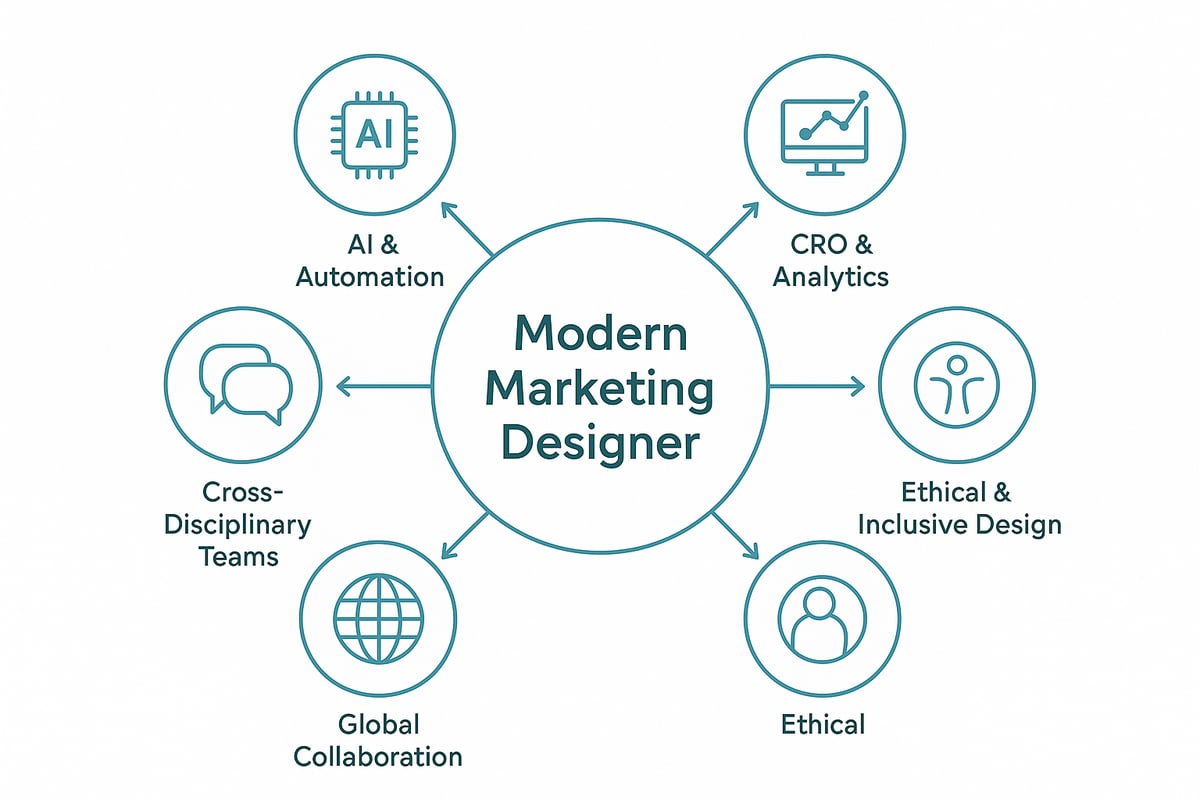
Today, marketing designers are expected to be strategists as much as creatives. Agencies have shifted from valuing pure aesthetics to demanding data-driven design decisions. This means integrating UX, UI, and conversion rate optimisation (CRO) skills into everyday work.
For example, 78% of agencies in 2026 require marketing designers to show CRO knowledge, according to a recent DesignWeek survey. Designers are now routinely analysing customer journeys and interpreting analytics to guide their creative choices. In practice, this hybrid skillset means marketing designers must be comfortable using data, testing ideas, and proving the direct impact of their work on business results.
The Impact of AI and Automation
AI and automation have transformed how marketing designers operate. Tools like Adobe Sensei and Figma AI now handle rapid prototyping, instant layout variations, and even creative ideation. Automation takes care of repetitive tasks, freeing up designers to focus on strategy and big-picture thinking.
The profession is shifting quickly, with marketing designers expected to master both prompt-driven design and creative oversight. If you want to dive deeper into how AI is reshaping the field, AI’s Impact on Marketing Design offers a detailed look at the biggest changes coming to design teams in 2026.
Cross-Disciplinary Collaboration
Marketing designers increasingly work as part of cross-functional teams, collaborating with marketers, developers, and AI specialists on a daily basis. This shift requires strong communication and project management skills, as well as the ability to translate design ideas to different audiences.
For instance, cross-disciplinary collaboration has been shown to speed up project delivery by 40%, according to HubSpot’s 2026 data. The most effective marketing designers can run workshops, manage stakeholder feedback, and ensure that design decisions align with business goals.
The Rise of Ethical and Inclusive Design
There’s a growing emphasis on ethical and inclusive design in the marketing world. Brands are prioritising accessibility and responsible marketing practices, and marketing designers play a central role in making this happen.
In 2026, 65% of brands say inclusive design is a top priority, reports Nielsen. Designers are now using accessibility overlays and bias-checking tools built into their platforms. This means every campaign must be accessible, and every visual free from hidden bias, making ethical design a non-negotiable part of the job.
Globalisation and Remote Work
Marketing designers are no longer bound by geography. Remote work is standard, and designers regularly serve clients from around the globe. Adapting to different markets and cultural nuances is now part of the daily workflow.
Collaboration tools keep international teams connected, and designers must be adept at working asynchronously, managing time zones, and delivering consistent quality across borders.
Key Arguments & Insights
The role of marketing designers in 2026 is more complex, but also more rewarding. Agility, tech-savviness, and a business mindset are essential. The designers who thrive will be those who embrace continuous learning, adapt quickly, and keep their skills at the cutting edge.
Essential Skills and Competencies for 2026
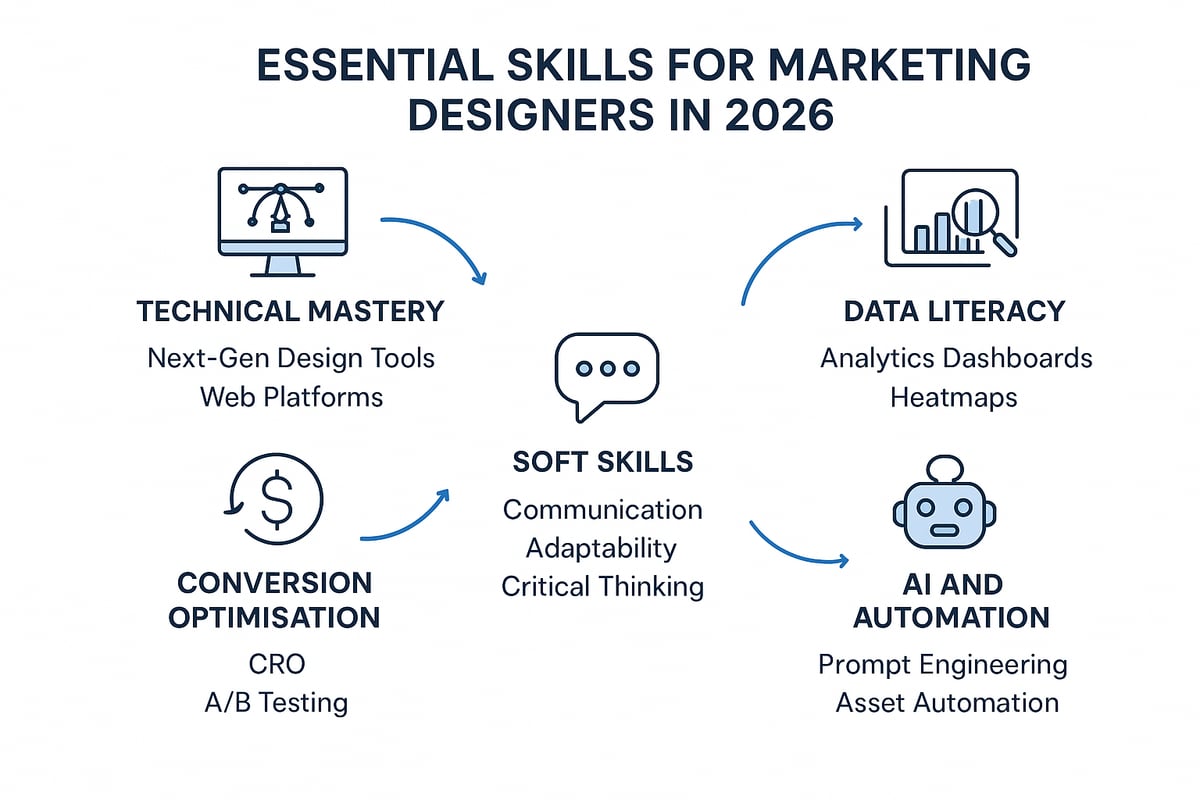
The skills expected of marketing designers in 2026 have shifted dramatically. No longer is it enough to simply create visually appealing graphics. To succeed, marketing designers must master a hybrid toolkit that blends design, technology, data, and communication.
Technical Mastery
Modern marketing designers are expected to work seamlessly across multiple platforms and tools. Proficiency in Figma, Adobe XD, and Canva AI is now just the baseline. Familiarity with web platforms like WordPress, Shopify, and Webflow is a must, as 90% of job postings in 2026 demand this multi-platform fluency (source: Indeed UK).
A typical toolkit for marketing designers includes:
- Figma for collaborative design
- Canva AI for quick asset creation
- Adobe XD for prototyping
- WordPress and Shopify for live site builds
Being comfortable switching between these tools is no longer optional. It is a fundamental expectation, and marketing designers who invest in technical mastery will always have the edge.
Data Literacy and Analytics
Data has become the secret weapon for marketing designers aiming to create high-performing campaigns. Understanding user data, interpreting analytics dashboards, and making design decisions based on real insights are now core competencies.
Key analytics tools include Google Analytics 5, Hotjar, and Heap. These platforms help marketing designers spot trends, monitor user journeys, and identify friction points. For example, using heatmaps to refine landing page layouts can quickly boost conversion rates.
A data-literate designer can answer tough questions: Where do users drop off? Which CTAs get clicked? This analytical mindset is what separates good marketing designers from great ones.
Advanced AI & Automation Integration
AI is transforming the way marketing designers work. Prompt engineering for image and copy generators like Midjourney or DALL-E speeds up creative exploration. Automation tools handle repetitive jobs such as resizing assets or generating multiple ad versions, freeing up time for strategic thinking.
Here is a sample prompt for an AI image generator:
"Create a modern ecommerce banner with bold colours, friendly faces, and a clear call to action."
By embracing AI and automation, marketing designers can deliver ideas faster and focus more on concept and strategy. Those who resist risk being left behind as the industry evolves.
Conversion Optimisation and UX
Conversion rate optimisation (CRO) is now central to the role of marketing designers. Designing with measurable KPIs and conversion goals in mind is non-negotiable. Tactics like A/B testing, microcopy tweaks, and persuasive design elements are routine.
Research shows that conversion-focused design can increase sales by up to 32% (source: Shopify 2026). For a deeper dive into practical CRO tactics, see these conversion rate optimisation strategies.
Marketing designers who prioritise CRO skills are the ones who consistently deliver tangible results for clients and employers.
Soft Skills: Communication, Adaptability, and Critical Thinking
Technical skills alone are not enough. The most successful marketing designers excel at presenting ideas to stakeholders, running client workshops, and managing feedback loops. Adaptability is crucial, as projects and technologies shift rapidly.
Critical thinking enables marketing designers to balance creative vision with business goals. Whether leading a discovery session or collaborating with a remote team, strong soft skills ensure projects run smoothly and clients feel heard.
In 2026, marketing designers who combine creative flair with empathy, flexibility, and clear communication will shape the future of the industry.
Building and Marketing Your Personal Brand as a Designer
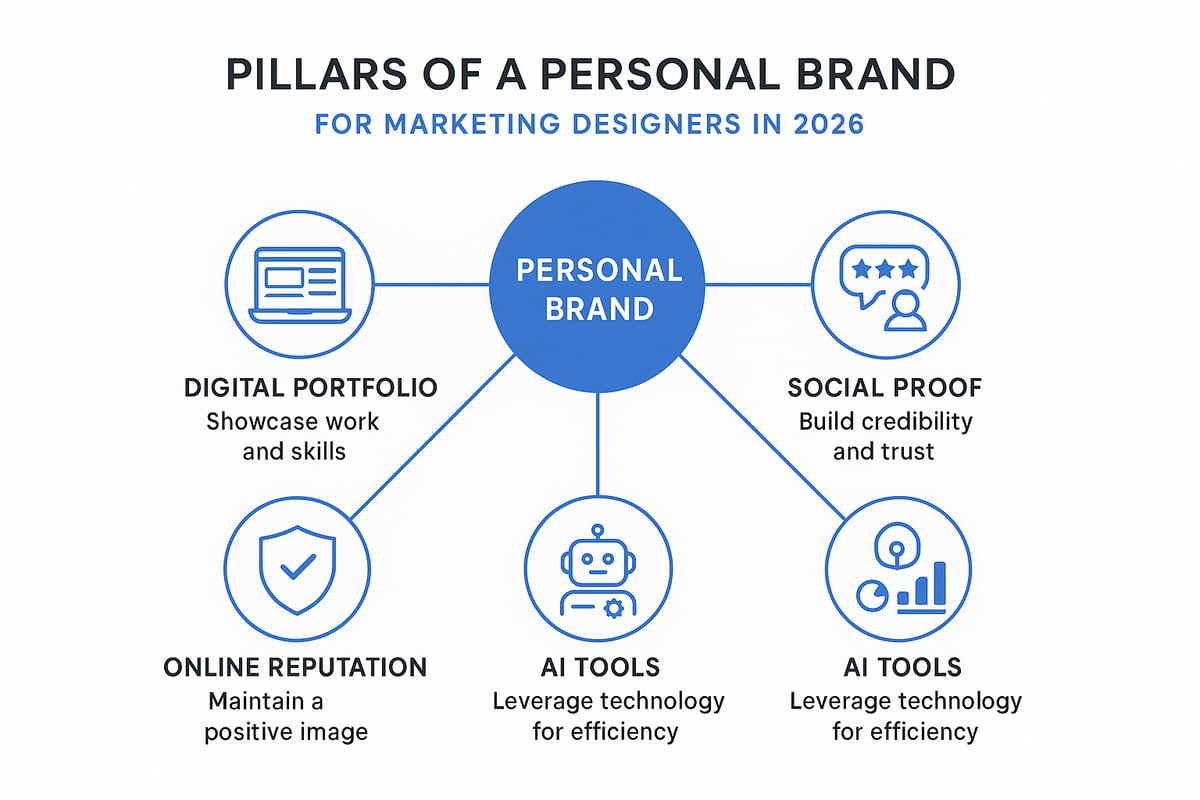
In 2026, marketing designers face a crowded digital market. Standing out means more than showing off pretty visuals. You need a personal brand that tells your story, proves your value, and attracts the right clients. Let’s break down the key moves for building a brand that works as hard as you do.
Crafting a Distinctive Digital Presence
A portfolio is your shop window. For marketing designers, it must do more than display work. It should focus on results, not just visuals. Use project summaries that highlight outcomes: did your designs boost conversions, increase engagement, or help a client break into a new market?
Include these essentials:
- Case studies with measurable impact
- Client testimonials showing trust
- Interactive elements, like real-time analytics or before-after sliders
An interactive portfolio proves you understand both design and business. It also signals that you’re not just another designer, but a problem-solver who gets results.
Social Proof and Thought Leadership
Social proof convinces potential clients you’re the real deal. Marketing designers can build this by publishing on platforms like LinkedIn, Medium, or Dribbble. Share insights, process breakdowns, or design tips that show your expertise, not just your finished products.
Ways to boost your authority:
- Host webinars or workshops
- Post regularly in design communities
- Share client success stories and testimonials
Did you know designers with active content channels get three times more client enquiries? Sharing knowledge makes you visible and trusted in the industry.
Networking in the Digital-First Era
Today, networking looks different. Marketing designers now join virtual sprints, hackathons, and online events. You might find your next client in a Slack group or while collaborating on Discord.
Effective networking strategies include:
- Participating in online design challenges
- Joining global Slack or Discord communities
- Attending virtual conferences and meetups
Remote work means you can build relationships worldwide. UK-based marketing designers are now collaborating with agencies from the US to Asia, all without leaving home.
Personal Branding with AI and Automation
AI is changing how marketing designers manage their brands. Use AI tools to analyse and optimise your LinkedIn profile or portfolio. Some even automate outreach, finding the right leads or scheduling follow-up messages.
Smart ways to leverage AI:
- Optimise your profiles for search and engagement
- Automate client outreach with tailored email sequences
- Use analytics to track portfolio visits and engagement
For a deeper dive into how AI can help you monitor and grow your reputation, see Building an effective personal brand. The right AI tools save time and help you focus on what matters: building real connections and delivering value.
Reputation Management and Authenticity
Your online reputation is your currency. Marketing designers must monitor mentions, respond to feedback, and keep their digital presence up to date. Authenticity matters: be honest about your skills and deliver on your promises.
Key steps for reputation management:
- Set up alerts for online mentions of your name
- Respond quickly to reviews or feedback
- Curate your portfolio and profiles regularly
Remember, 62 percent of clients check your reputation before hiring. A mix of transparency and genuine value wins trust and long-term relationships.
Client Acquisition and Retention Strategies for Designers
Securing and keeping clients is a real art for marketing designers in 2026. With competition fiercer than ever, it is not enough to have a strong portfolio. You need a strategy that blends specialisation, relationship-building, and a laser focus on results. Let us break down what works now and how you can future-proof your client base.
Winning Clients in a Crowded Market
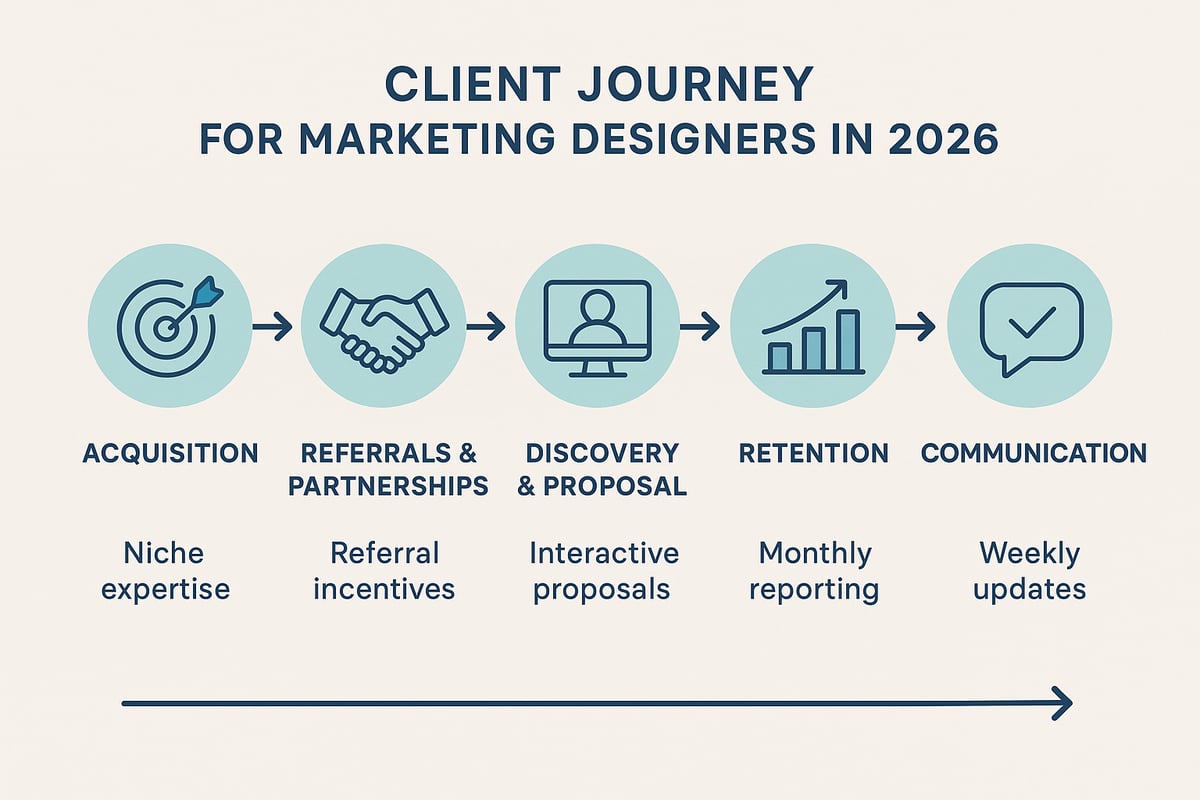
To stand out, marketing designers must specialise. Focusing on niches such as ecommerce, SaaS, or healthcare sets you apart from the sea of generalists. Clients are looking for experts who understand their industry and can deliver measurable results.
Value-based pricing is now the norm. Rather than charging by the hour, show clients the return on investment you can deliver. For example, many marketing designers now partner with Shopify store owners to provide ongoing conversion rate optimisation, directly impacting sales.
A clear, outcome-driven approach is essential. If you are not articulating how your work drives business success, someone else will. For actionable ideas on sharpening your value proposition, see these website design strategy insights.
Leveraging Referrals and Partnerships
Referrals remain a powerhouse for growth. In 2026, 46% of new design clients come from referrals, making it a channel you cannot ignore. The best marketing designers actively build alliances with marketers, developers, and agencies, creating a steady stream of introductions.
Incentivising referrals through loyalty programmes or simple thank-yous can go a long way. Your partners become your best advocates when you make it easy and rewarding for them.
Partnerships are not just about exchanging leads. Collaborate on projects, share insights, and co-create resources. This approach keeps your pipeline active and your reputation strong.
Mastering the Discovery and Proposal Process
The discovery phase is where marketing designers shine. Dig deep to uncover your client's real pain points. Ask smart questions that reveal not just what they want, but what they truly need for business growth.
Proposals should focus on outcomes, not just deliverables. Use interactive proposal tools with embedded video walkthroughs to personalise your pitch and answer questions before they are even asked. This builds trust and sets clear expectations.
A transparent, consultative approach signals that you are invested in the client's success. For more on winning proposals and strategy, check out these website design strategy insights.
Retaining Clients Through Ongoing Value
Long-term relationships are the backbone of a thriving practice for marketing designers. Offering retainer packages for continuous optimisation and support ensures your clients see steady progress and ROI.
Regular performance reports and strategic recommendations keep clients engaged and demonstrate the impact of your work. Data-driven insights give you the credibility to suggest new directions and upsell additional services.
Remember, retainer clients generate 2.5 times more revenue over twelve months compared to one-off projects. Prioritise ongoing value, and clients will stay loyal.
Streamlining Client Communication
Clear communication is where many marketing designers either win or lose clients. Using project management platforms like Asana, Trello, or Notion helps keep everyone on the same page and projects running smoothly.
Set clear expectations from the start. Define feedback cycles and make it easy for clients to share their thoughts. Many designers now send weekly video updates, reducing misunderstandings and building trust.
Proactivity is key. Regular check-ins show clients you are invested in their success, making you more than just a service provider—you become a partner in their growth.
The Future Toolbox: Essential Tools and Platforms for Marketing Designers
Staying ahead in 2026 is all about picking the right tools for the job. The toolbox for marketing designers is evolving at breakneck speed, with AI, automation, and collaboration platforms shaping how work gets done. To keep your edge, it’s crucial to know what’s available, what works, and how it all fits together.
AI-Powered Design Tools
AI isn’t just a buzzword anymore. For marketing designers, it’s a creative partner. Platforms like Adobe Sensei, Figma AI, and Canva Magic Studio now handle repetitive tasks, suggest layouts, and even generate content variations in seconds.
Imagine you need ten landing page versions for A/B testing. Instead of slogging through each by hand, AI tools deliver instant options, letting you focus on what converts. Smart content suggestions and asset generation speed up ideation, making creative blocks a thing of the past.
Want to get a deeper dive into how AI-driven systems are transforming the workflow for marketing designers? Check out AI-powered design tools explained for practical insights.
Collaborative Platforms and Workflow Automation
Remote work and cross-time-zone teams are the new normal. Marketing designers rely on Figma and Miro for real-time design collaboration, while Notion keeps projects and notes in one tidy place.
Workflow automation is another game changer. With tools like Zapier or Make, you can set up automations such as:
# Example: Auto-notify client on asset upload
if file_uploaded(client_folder):
    send_email(client, "New asset ready for review!")
This kind of hands-off efficiency frees up your time for strategy and creativity.
Automation also helps marketing designers streamline client onboarding, asset delivery, and feedback collection, ensuring nothing slips through the cracks.
Analytics and CRO Platforms
Design without data is just guesswork. Modern marketing designers use tools like Google Analytics 5, Hotjar, and Crazy Egg to see exactly how users interact with their work.
Embedded analytics within design tools provide instant feedback. For example, heatmaps show where users click and scroll, helping you tweak layouts for higher conversions. Designers using embedded analytics report iteration cycles that are 25% faster, according to Nielsen Norman Group 2026.
Regularly reviewing user data turns every campaign into a learning opportunity. This data-driven approach is now a non-negotiable skill for marketing designers aiming for measurable results.
Content and Asset Management
Juggling multiple clients and projects? Cloud-based Digital Asset Management (DAM) tools like Bynder, Brandfolder, and Dropbox Business are lifesavers. They keep everything organised, versioned, and shareable.
A well-structured DAM system lets marketing designers deliver assets seamlessly across teams and clients. No more hunting through email threads or outdated folders. You can grant access, set permissions, and ensure brand consistency—all from a single dashboard.
This streamlined approach is essential for agencies and freelancers alike, especially as project complexity grows in 2026.
| Tool | Main Use | Key Benefit |
|---|---|---|
| Bynder | Asset management | Fast sharing, control |
| Brandfolder | Brand asset libraries | Consistency |
| Dropbox Business | File storage and versioning | Collaboration |
Communication and Feedback Tools
Clear communication keeps projects moving. Marketing designers are using Loom for video walkthroughs, Slack for quick chats, and Asana for task management.
Sending a Loom video to walk a client through design changes is often faster (and clearer) than a wall of text. Slack channels keep teams connected, while Asana tracks progress and deadlines.
These tools help marketing designers maintain transparency, manage feedback loops, and keep everyone in the loop—no matter where they’re based.
Emerging Tech: AR/VR and Voice Design
Cutting-edge projects are no longer rare. In 2026, 18% of marketing designers work on AR/VR or voice interface projects, according to Design Council UK. Brands want immersive product demos and conversational experiences, especially in e-commerce and SaaS.
AR lets users "try before they buy," while voice design meets the growing demand for hands-free, accessible interfaces. Staying updated on 2026 Graphic Design Trends can help marketing designers anticipate where to upskill next.
The most successful marketing designers are those who experiment with these new formats early, building skills that future-proof their careers and impress forward-thinking clients.
So if you’re looking at your marketing design and thinking, “How do I actually stand out and win more work in 2026 ”, you’re not alone. The game’s changed—clients want results, not just pretty pictures, and you need to show you get what drives sales. Whether you’re a designer wanting sharper strategies or a business owner who wants their website to actually convert, I’ll help you cut through the noise. Let’s chat about where you are and where you want to go—book your Get free 45 min consultation and let’s make your next move your best one yet.
2026 is a turning point for marketing designers. The industry is more tech-driven, competitive, and complex than ever. Standing out now takes more than a great eye for colour or layout.
This guide is your toolkit. You’ll get practical strategies, smart frameworks, and future-proof tactics to help you thrive.
We’ll cover the must-have skills for modern marketing designers, how AI and automation are shaping the field, tips for building your personal brand, proven ways to win clients, and the essential tools you need to stay ahead.
Ready to master the future? Let’s dive in.
The Evolving Role of Marketing Designers in 2026
The landscape for marketing designers in 2026 is unrecognisable compared to a few years ago. With technology, data, and user expectations evolving rapidly, the role now extends far beyond visuals and branding. To stay ahead, marketing designers must blend creativity with strategy, tech skills, and business acumen.
Defining the Modern Marketing Designer
Today, marketing designers are expected to be strategists as much as creatives. Agencies have shifted from valuing pure aesthetics to demanding data-driven design decisions. This means integrating UX, UI, and conversion rate optimisation (CRO) skills into everyday work.
For example, 78% of agencies in 2026 require marketing designers to show CRO knowledge, according to a recent DesignWeek survey. Designers are now routinely analysing customer journeys and interpreting analytics to guide their creative choices. In practice, this hybrid skillset means marketing designers must be comfortable using data, testing ideas, and proving the direct impact of their work on business results.
The Impact of AI and Automation
AI and automation have transformed how marketing designers operate. Tools like Adobe Sensei and Figma AI now handle rapid prototyping, instant layout variations, and even creative ideation. Automation takes care of repetitive tasks, freeing up designers to focus on strategy and big-picture thinking.
The profession is shifting quickly, with marketing designers expected to master both prompt-driven design and creative oversight. If you want to dive deeper into how AI is reshaping the field, AI’s Impact on Marketing Design offers a detailed look at the biggest changes coming to design teams in 2026.
Cross-Disciplinary Collaboration
Marketing designers increasingly work as part of cross-functional teams, collaborating with marketers, developers, and AI specialists on a daily basis. This shift requires strong communication and project management skills, as well as the ability to translate design ideas to different audiences.
For instance, cross-disciplinary collaboration has been shown to speed up project delivery by 40%, according to HubSpot’s 2026 data. The most effective marketing designers can run workshops, manage stakeholder feedback, and ensure that design decisions align with business goals.
The Rise of Ethical and Inclusive Design
There’s a growing emphasis on ethical and inclusive design in the marketing world. Brands are prioritising accessibility and responsible marketing practices, and marketing designers play a central role in making this happen.
In 2026, 65% of brands say inclusive design is a top priority, reports Nielsen. Designers are now using accessibility overlays and bias-checking tools built into their platforms. This means every campaign must be accessible, and every visual free from hidden bias, making ethical design a non-negotiable part of the job.
Globalisation and Remote Work
Marketing designers are no longer bound by geography. Remote work is standard, and designers regularly serve clients from around the globe. Adapting to different markets and cultural nuances is now part of the daily workflow.
Collaboration tools keep international teams connected, and designers must be adept at working asynchronously, managing time zones, and delivering consistent quality across borders.
Key Arguments & Insights
The role of marketing designers in 2026 is more complex, but also more rewarding. Agility, tech-savviness, and a business mindset are essential. The designers who thrive will be those who embrace continuous learning, adapt quickly, and keep their skills at the cutting edge.
Essential Skills and Competencies for 2026
The skills expected of marketing designers in 2026 have shifted dramatically. No longer is it enough to simply create visually appealing graphics. To succeed, marketing designers must master a hybrid toolkit that blends design, technology, data, and communication.
Technical Mastery
Modern marketing designers are expected to work seamlessly across multiple platforms and tools. Proficiency in Figma, Adobe XD, and Canva AI is now just the baseline. Familiarity with web platforms like WordPress, Shopify, and Webflow is a must, as 90% of job postings in 2026 demand this multi-platform fluency (source: Indeed UK).
A typical toolkit for marketing designers includes:
- Figma for collaborative design
- Canva AI for quick asset creation
- Adobe XD for prototyping
- WordPress and Shopify for live site builds
Being comfortable switching between these tools is no longer optional. It is a fundamental expectation, and marketing designers who invest in technical mastery will always have the edge.
Data Literacy and Analytics
Data has become the secret weapon for marketing designers aiming to create high-performing campaigns. Understanding user data, interpreting analytics dashboards, and making design decisions based on real insights are now core competencies.
Key analytics tools include Google Analytics 5, Hotjar, and Heap. These platforms help marketing designers spot trends, monitor user journeys, and identify friction points. For example, using heatmaps to refine landing page layouts can quickly boost conversion rates.
A data-literate designer can answer tough questions: Where do users drop off? Which CTAs get clicked? This analytical mindset is what separates good marketing designers from great ones.
Advanced AI & Automation Integration
AI is transforming the way marketing designers work. Prompt engineering for image and copy generators like Midjourney or DALL-E speeds up creative exploration. Automation tools handle repetitive jobs such as resizing assets or generating multiple ad versions, freeing up time for strategic thinking.
Here is a sample prompt for an AI image generator:
"Create a modern ecommerce banner with bold colours, friendly faces, and a clear call to action."
By embracing AI and automation, marketing designers can deliver ideas faster and focus more on concept and strategy. Those who resist risk being left behind as the industry evolves.
Conversion Optimisation and UX
Conversion rate optimisation (CRO) is now central to the role of marketing designers. Designing with measurable KPIs and conversion goals in mind is non-negotiable. Tactics like A/B testing, microcopy tweaks, and persuasive design elements are routine.
Research shows that conversion-focused design can increase sales by up to 32% (source: Shopify 2026). For a deeper dive into practical CRO tactics, see these conversion rate optimisation strategies.
Marketing designers who prioritise CRO skills are the ones who consistently deliver tangible results for clients and employers.
Soft Skills: Communication, Adaptability, and Critical Thinking
Technical skills alone are not enough. The most successful marketing designers excel at presenting ideas to stakeholders, running client workshops, and managing feedback loops. Adaptability is crucial, as projects and technologies shift rapidly.
Critical thinking enables marketing designers to balance creative vision with business goals. Whether leading a discovery session or collaborating with a remote team, strong soft skills ensure projects run smoothly and clients feel heard.
In 2026, marketing designers who combine creative flair with empathy, flexibility, and clear communication will shape the future of the industry.
Building and Marketing Your Personal Brand as a Designer
In 2026, marketing designers face a crowded digital market. Standing out means more than showing off pretty visuals. You need a personal brand that tells your story, proves your value, and attracts the right clients. Let’s break down the key moves for building a brand that works as hard as you do.
Crafting a Distinctive Digital Presence
A portfolio is your shop window. For marketing designers, it must do more than display work. It should focus on results, not just visuals. Use project summaries that highlight outcomes: did your designs boost conversions, increase engagement, or help a client break into a new market?
Include these essentials:
- Case studies with measurable impact
- Client testimonials showing trust
- Interactive elements, like real-time analytics or before-after sliders
An interactive portfolio proves you understand both design and business. It also signals that you’re not just another designer, but a problem-solver who gets results.
Social Proof and Thought Leadership
Social proof convinces potential clients you’re the real deal. Marketing designers can build this by publishing on platforms like LinkedIn, Medium, or Dribbble. Share insights, process breakdowns, or design tips that show your expertise, not just your finished products.
Ways to boost your authority:
- Host webinars or workshops
- Post regularly in design communities
- Share client success stories and testimonials
Did you know designers with active content channels get three times more client enquiries? Sharing knowledge makes you visible and trusted in the industry.
Networking in the Digital-First Era
Today, networking looks different. Marketing designers now join virtual sprints, hackathons, and online events. You might find your next client in a Slack group or while collaborating on Discord.
Effective networking strategies include:
- Participating in online design challenges
- Joining global Slack or Discord communities
- Attending virtual conferences and meetups
Remote work means you can build relationships worldwide. UK-based marketing designers are now collaborating with agencies from the US to Asia, all without leaving home.
Personal Branding with AI and Automation
AI is changing how marketing designers manage their brands. Use AI tools to analyse and optimise your LinkedIn profile or portfolio. Some even automate outreach, finding the right leads or scheduling follow-up messages.
Smart ways to leverage AI:
- Optimise your profiles for search and engagement
- Automate client outreach with tailored email sequences
- Use analytics to track portfolio visits and engagement
For a deeper dive into how AI can help you monitor and grow your reputation, see Building an effective personal brand. The right AI tools save time and help you focus on what matters: building real connections and delivering value.
Reputation Management and Authenticity
Your online reputation is your currency. Marketing designers must monitor mentions, respond to feedback, and keep their digital presence up to date. Authenticity matters: be honest about your skills and deliver on your promises.
Key steps for reputation management:
- Set up alerts for online mentions of your name
- Respond quickly to reviews or feedback
- Curate your portfolio and profiles regularly
Remember, 62 percent of clients check your reputation before hiring. A mix of transparency and genuine value wins trust and long-term relationships.
Client Acquisition and Retention Strategies for Designers
Securing and keeping clients is a real art for marketing designers in 2026. With competition fiercer than ever, it is not enough to have a strong portfolio. You need a strategy that blends specialisation, relationship-building, and a laser focus on results. Let us break down what works now and how you can future-proof your client base.
Winning Clients in a Crowded Market
To stand out, marketing designers must specialise. Focusing on niches such as ecommerce, SaaS, or healthcare sets you apart from the sea of generalists. Clients are looking for experts who understand their industry and can deliver measurable results.
Value-based pricing is now the norm. Rather than charging by the hour, show clients the return on investment you can deliver. For example, many marketing designers now partner with Shopify store owners to provide ongoing conversion rate optimisation, directly impacting sales.
A clear, outcome-driven approach is essential. If you are not articulating how your work drives business success, someone else will. For actionable ideas on sharpening your value proposition, see these website design strategy insights.
Leveraging Referrals and Partnerships
Referrals remain a powerhouse for growth. In 2026, 46% of new design clients come from referrals, making it a channel you cannot ignore. The best marketing designers actively build alliances with marketers, developers, and agencies, creating a steady stream of introductions.
Incentivising referrals through loyalty programmes or simple thank-yous can go a long way. Your partners become your best advocates when you make it easy and rewarding for them.
Partnerships are not just about exchanging leads. Collaborate on projects, share insights, and co-create resources. This approach keeps your pipeline active and your reputation strong.
Mastering the Discovery and Proposal Process
The discovery phase is where marketing designers shine. Dig deep to uncover your client's real pain points. Ask smart questions that reveal not just what they want, but what they truly need for business growth.
Proposals should focus on outcomes, not just deliverables. Use interactive proposal tools with embedded video walkthroughs to personalise your pitch and answer questions before they are even asked. This builds trust and sets clear expectations.
A transparent, consultative approach signals that you are invested in the client's success. For more on winning proposals and strategy, check out these website design strategy insights.
Retaining Clients Through Ongoing Value
Long-term relationships are the backbone of a thriving practice for marketing designers. Offering retainer packages for continuous optimisation and support ensures your clients see steady progress and ROI.
Regular performance reports and strategic recommendations keep clients engaged and demonstrate the impact of your work. Data-driven insights give you the credibility to suggest new directions and upsell additional services.
Remember, retainer clients generate 2.5 times more revenue over twelve months compared to one-off projects. Prioritise ongoing value, and clients will stay loyal.
Streamlining Client Communication
Clear communication is where many marketing designers either win or lose clients. Using project management platforms like Asana, Trello, or Notion helps keep everyone on the same page and projects running smoothly.
Set clear expectations from the start. Define feedback cycles and make it easy for clients to share their thoughts. Many designers now send weekly video updates, reducing misunderstandings and building trust.
Proactivity is key. Regular check-ins show clients you are invested in their success, making you more than just a service provider—you become a partner in their growth.
The Future Toolbox: Essential Tools and Platforms for Marketing Designers
Staying ahead in 2026 is all about picking the right tools for the job. The toolbox for marketing designers is evolving at breakneck speed, with AI, automation, and collaboration platforms shaping how work gets done. To keep your edge, it’s crucial to know what’s available, what works, and how it all fits together.
AI-Powered Design Tools
AI isn’t just a buzzword anymore. For marketing designers, it’s a creative partner. Platforms like Adobe Sensei, Figma AI, and Canva Magic Studio now handle repetitive tasks, suggest layouts, and even generate content variations in seconds.
Imagine you need ten landing page versions for A/B testing. Instead of slogging through each by hand, AI tools deliver instant options, letting you focus on what converts. Smart content suggestions and asset generation speed up ideation, making creative blocks a thing of the past.
Want to get a deeper dive into how AI-driven systems are transforming the workflow for marketing designers? Check out AI-powered design tools explained for practical insights.
Collaborative Platforms and Workflow Automation
Remote work and cross-time-zone teams are the new normal. Marketing designers rely on Figma and Miro for real-time design collaboration, while Notion keeps projects and notes in one tidy place.
Workflow automation is another game changer. With tools like Zapier or Make, you can set up automations such as:
# Example: Auto-notify client on asset upload
if file_uploaded(client_folder):
    send_email(client, "New asset ready for review!")
This kind of hands-off efficiency frees up your time for strategy and creativity.
Automation also helps marketing designers streamline client onboarding, asset delivery, and feedback collection, ensuring nothing slips through the cracks.
Analytics and CRO Platforms
Design without data is just guesswork. Modern marketing designers use tools like Google Analytics 5, Hotjar, and Crazy Egg to see exactly how users interact with their work.
Embedded analytics within design tools provide instant feedback. For example, heatmaps show where users click and scroll, helping you tweak layouts for higher conversions. Designers using embedded analytics report iteration cycles that are 25% faster, according to Nielsen Norman Group 2026.
Regularly reviewing user data turns every campaign into a learning opportunity. This data-driven approach is now a non-negotiable skill for marketing designers aiming for measurable results.
Content and Asset Management
Juggling multiple clients and projects? Cloud-based Digital Asset Management (DAM) tools like Bynder, Brandfolder, and Dropbox Business are lifesavers. They keep everything organised, versioned, and shareable.
A well-structured DAM system lets marketing designers deliver assets seamlessly across teams and clients. No more hunting through email threads or outdated folders. You can grant access, set permissions, and ensure brand consistency—all from a single dashboard.
This streamlined approach is essential for agencies and freelancers alike, especially as project complexity grows in 2026.
| Tool | Main Use | Key Benefit |
|---|---|---|
| Bynder | Asset management | Fast sharing, control |
| Brandfolder | Brand asset libraries | Consistency |
| Dropbox Business | File storage and versioning | Collaboration |
Communication and Feedback Tools
Clear communication keeps projects moving. Marketing designers are using Loom for video walkthroughs, Slack for quick chats, and Asana for task management.
Sending a Loom video to walk a client through design changes is often faster (and clearer) than a wall of text. Slack channels keep teams connected, while Asana tracks progress and deadlines.
These tools help marketing designers maintain transparency, manage feedback loops, and keep everyone in the loop—no matter where they’re based.
Emerging Tech: AR/VR and Voice Design
Cutting-edge projects are no longer rare. In 2026, 18% of marketing designers work on AR/VR or voice interface projects, according to Design Council UK. Brands want immersive product demos and conversational experiences, especially in e-commerce and SaaS.
AR lets users "try before they buy," while voice design meets the growing demand for hands-free, accessible interfaces. Staying updated on 2026 Graphic Design Trends can help marketing designers anticipate where to upskill next.
The most successful marketing designers are those who experiment with these new formats early, building skills that future-proof their careers and impress forward-thinking clients.
So if you’re looking at your marketing design and thinking, “How do I actually stand out and win more work in 2026 ”, you’re not alone. The game’s changed—clients want results, not just pretty pictures, and you need to show you get what drives sales. Whether you’re a designer wanting sharper strategies or a business owner who wants their website to actually convert, I’ll help you cut through the noise. Let’s chat about where you are and where you want to go—book your Get free 45 min consultation and let’s make your next move your best one yet.


