


First impressions matter more than ever in today’s fast-changing digital world. In 2026, the expectations for design on website projects are higher, and the competition is relentless.
This expert guide gives you practical insights and step-by-step strategies to future-proof your online presence. We’ll cover the latest design trends, user experience essentials, advanced SEO, technology integration, accessibility, and ongoing optimisation.
Ready to build a website that stands out, wins trust, and drives results? Dive in and discover how to make your next design on website project a true success.
Understanding the 2026 Website Design Landscape
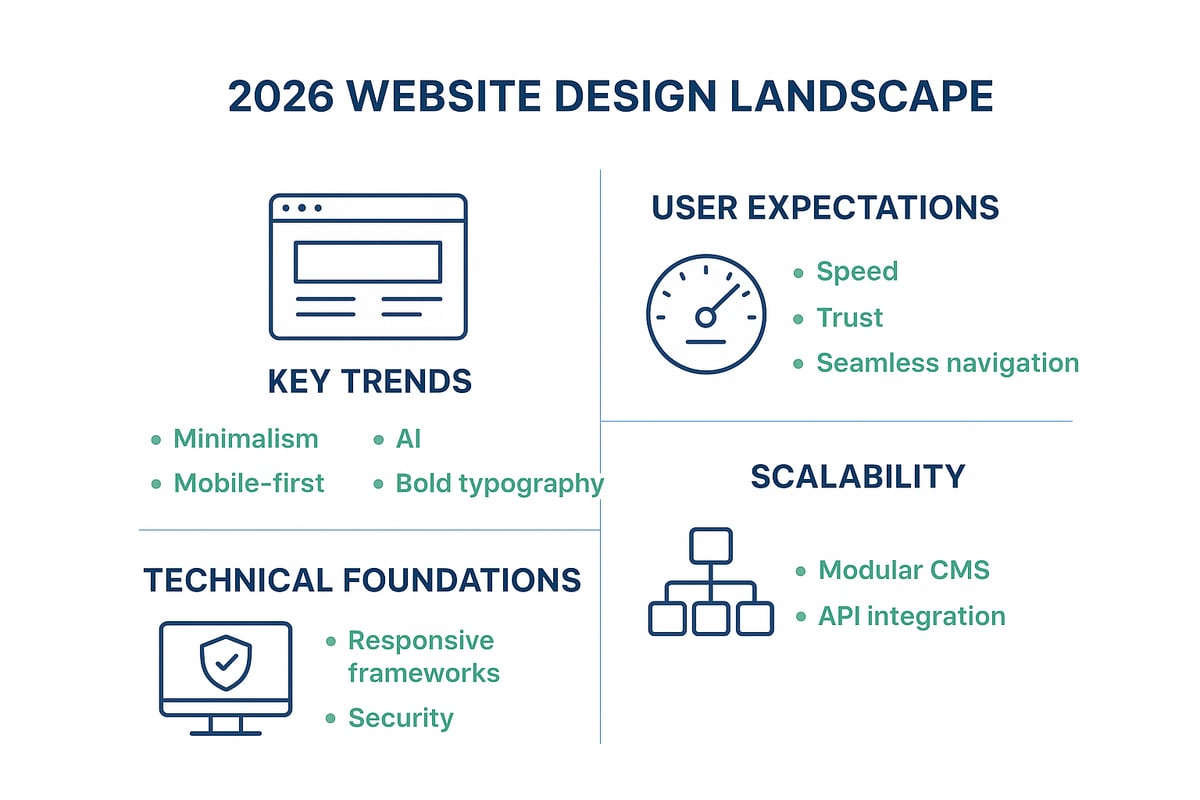
The design on website landscape is shifting faster than ever as we approach 2026. Businesses face a digital arms race, where only the most adaptable sites will thrive. To stay ahead, you need to understand the trends, user expectations, technical must-haves, and how to future-proof your site for growth.
Key Trends Shaping Website Design
The future of design on website is built around minimalism, immersive experiences, and dynamic content that adapts to user needs. Mobile-first and device-agnostic layouts are now non-negotiable, as 70% of web traffic comes from mobiles (GoDaddy). AI-driven personalisation and generative design tools are rising fast, giving users tailored experiences. Expect bold typography, micro-interactions, and smooth animations to become standard. Sustainability is also taking centre stage, with eco-friendly design practices gaining traction. For a deeper dive into how AI is influencing these trends, see AI in web design trends. These trends aren’t just buzzwords—they drive engagement and better business outcomes.
| Trend | Impact on Design on Website |
|---|---|
| Minimalism | Clearer layouts, less clutter |
| AI Personalisation | Tailored content, higher engagement |
| Mobile-First | Better usability, wider reach |
| Bold Typography | Stronger brand presence |
| Sustainable Design | Lower carbon footprint, positive brand |
The Role of User Behaviour and Expectations
User habits are evolving, and this shapes every aspect of design on website. People have shorter attention spans and want instant access to information. They expect seamless, intuitive navigation across all devices, and trust brands that offer professional, quick-loading experiences. If your site takes over 3 seconds to load, 53% of users will leave—no second chances. Gen Z and Millennials, with their eye for digital aesthetics, are setting the tone for what looks and feels modern. Meeting these expectations means higher engagement and trust in your brand.
The Competitive Advantage of Professional Design
A polished design on website can be the difference between a visitor and a customer. Data from GoDaddy shows professionally designed websites can attract up to five times more traffic. Good design builds credibility and boosts conversion rates, while a dated or clunky site turns people away. Businesses that invest in redesigns often see measurable growth, with stronger brand alignment and clearer messaging. Aligning your site’s look and feel with your business goals is crucial for standing out in a crowded marketplace.
The Importance of Technical Foundations
Strong technical foundations are essential for any successful design on website. Responsive frameworks ensure your site looks great on every device, while robust security measures like SSL, firewalls, and malware protection keep data safe. Fast, reliable hosting is key for both user experience and SEO. Structuring your site for search engines from the start pays off in visibility and rankings. Tools like WP Rocket, used by GoDaddy, help maximise site speed, giving you a competitive edge in performance.
Preparing for the Future: Scalability and Flexibility
Future-proofing your design on website means building for growth. Modular design systems and flexible CMS platforms make it easier to expand and adapt as your business evolves. Integrating with third-party tools and APIs allows for smooth upgrades and new features. Easy content management is vital for ongoing updates, letting you respond quickly to market changes. Professional consultation can help you choose scalable solutions, ensuring your site supports your ambitions for years to come.
Step-by-Step Guide to Designing a Website for 2026 Success
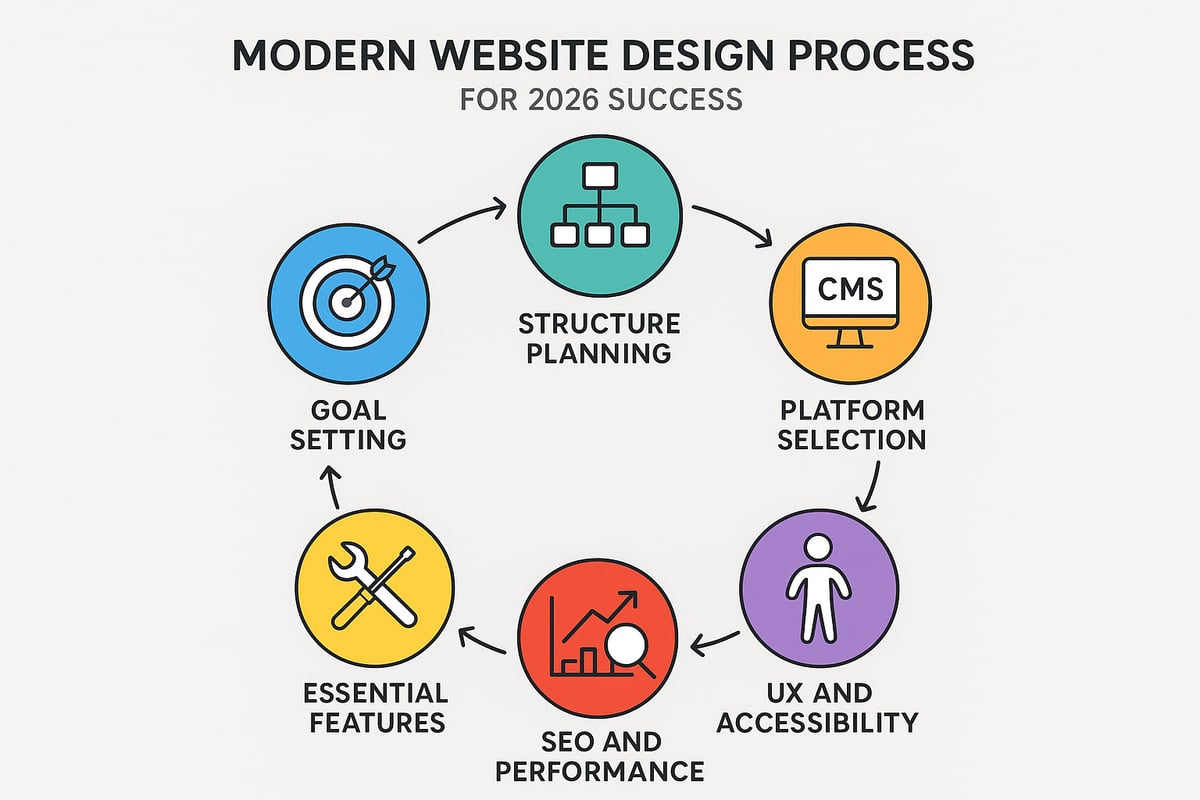
In 2026, the secret to thriving online is a strategic, user-focused approach. This step-by-step guide will help you master every stage of design on website projects, from planning and platform choice to ongoing optimisation. Follow these actionable steps to ensure your site stands out, delivers results, and adapts as technology evolves.
Step 1: Define Your Goals and Audience
Every great design on website projects begins with clarity. Start by mapping out your business objectives: do you want more leads, sales, or brand awareness? Pinpoint exactly what your website needs to achieve.
Next, define your ideal audience. Segment users by demographics, behaviours, and needs. This helps shape everything from design elements to tone of voice.
Map user journeys, identifying the actions you want visitors to take—such as contacting you or making a purchase. Use analytics to discover which pages already perform best and why.
Align your website’s goals with the bigger business picture. If your overall strategy is growth, your site should enable that, not hinder it. For a deeper dive into strategy, check out Website design strategy insights.
Clarity at this stage saves endless time and money later. Get this right, and the rest of your design on website process becomes much smoother.
Step 2: Plan Structure and Content
A logical structure is the backbone of any effective design on website. Start with a sitemap, mapping out your main pages and logical navigation. This ensures users find what they need, fast.
Wireframing helps visualise layouts before jumping into design. Prioritise core pages: home, about, services, contact, and any key landing pages.
Content is king, but only if it’s engaging and optimised. Write copy with your audience in mind, using keywords naturally and addressing their pain points. Add professional images, videos, and interactive elements to bring your content to life.
Here’s a simple sitemap example in code:
Home
│
├── About
├── Services
│   ├── Service 1
│   └── Service 2
├── Blog
└── Contact
Remember, design on website projects that prioritise clear structure and strong content convert better and keep users coming back.
Step 3: Choose the Right Platform and Technology
Choosing the right platform is a critical step in design on website success. Consider your business needs, growth plans, and technical skills.
Compare popular options:
| Platform | Pros | Cons |
|---|---|---|
| WordPress | Flexible, scalable, plugins | Needs updates, steeper learning curve |
| Shopify | E-commerce ready, secure | Less flexible for content sites |
| Squarespace | Easy for beginners, stylish | Limited customisation |
| Custom Build | Total control, unique | Costly, needs developers |
Opt for mobile-first frameworks and ensure your chosen tech is responsive and secure. If you’re handling payments or sensitive data, security must be top priority.
Remember, the right choice now will future-proof your design on website efforts and make scaling easier down the line.
Step 4: Design for User Experience (UX) and Accessibility
User experience can make or break your design on website. Intuitive navigation, clear calls to action, and a seamless flow are essential.
Design with accessibility in mind. Use high-contrast colours, descriptive alt text for images, and ensure all interactive elements are keyboard accessible. This not only supports users with disabilities but also improves SEO.
Optimise for all devices, especially mobiles and tablets. Responsive design is a must if you want to reach the widest audience.
Professional design on website projects always include these elements by default, leading to higher engagement and satisfaction.
Step 5: Implement SEO and Performance Optimisation
No matter how beautiful your design on website is, it won’t succeed if no one finds it. Technical SEO is the foundation: ensure fast load times, clean code, structured data, and a logical sitemap.
For on-page SEO, use headings, meta tags, and internal links wisely. Compress images and use caching tools to keep things speedy.
Here’s a quick checklist for SEO success:
- Fast loading times
- Mobile friendly
- Structured data
- Optimised headings and meta
- Internal links
A well-optimised design on website will climb the rankings and pull in more organic traffic.
Step 6: Integrate Essential Features and Tools
Design on website projects succeed when they include the right tools. Add contact forms, booking systems, or live chat to boost engagement.
If you’re selling online, add e-commerce features like product listings, secure checkout, and multiple payment gateways. Integrate analytics tools (Google Analytics, Tag Manager) to track performance.
Security features are non-negotiable: SSL certificates, malware scanning, and DDoS protection keep your site and users safe.
Choosing the right features ensures your design on website meets both user and business needs.
Step 7: Test, Launch, and Iterate
Before going live, test your design on website across browsers and devices. Check for speed, broken links, and display issues.
Gather feedback from real users. Use their input to make improvements. Launch confidently, but remember, iteration is key—regularly update, back up, and monitor your site.
A successful design on website is never finished. Continuous optimisation based on data and feedback keeps you ahead of the competition.
Designing for User Experience and Engagement in 2026
Creating a winning design on website in 2026 is about much more than just good looks. Today’s visitors expect a seamless, engaging journey from the first click. Let’s break down the essential ingredients for a website experience that converts, delights, and stands the test of time.
Core Principles of Modern UX Design
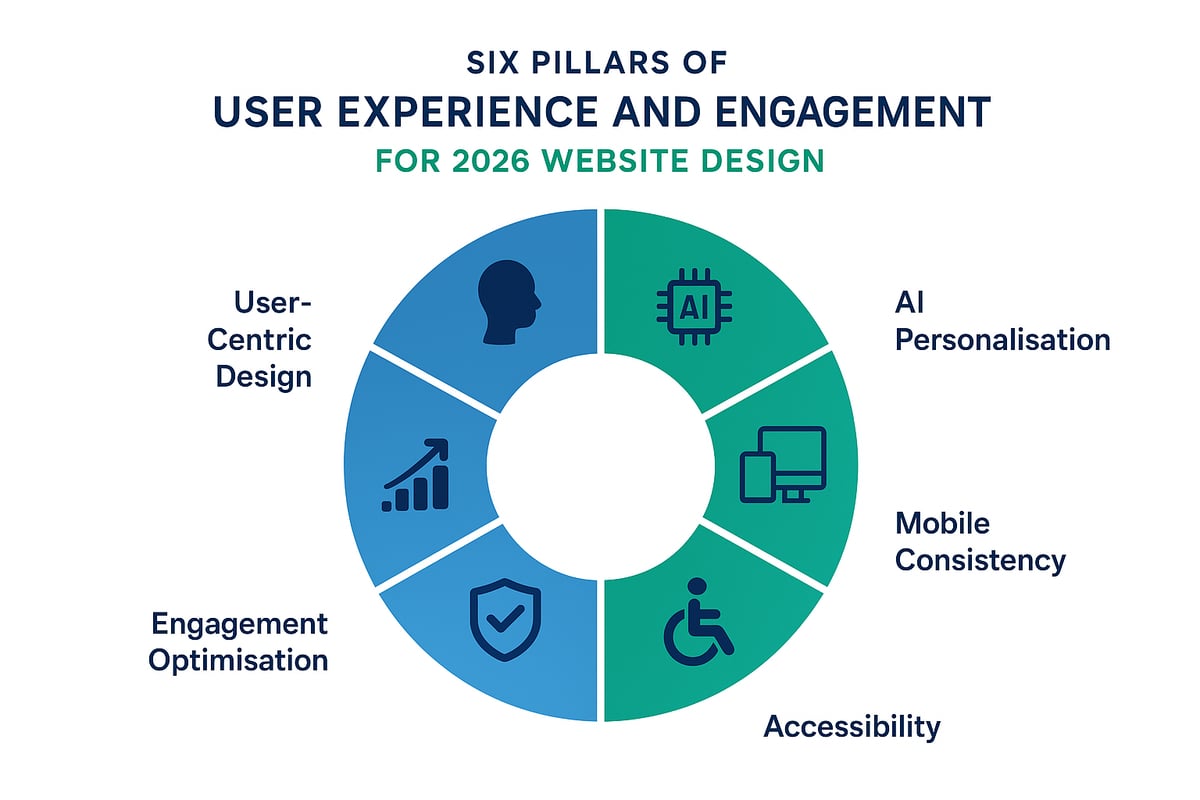
Modern design on website revolves around putting users first. Start by mapping their journeys and understanding their needs. Empathy mapping reveals pain points and motivations, ensuring every interaction feels natural.
Minimalist layouts keep things uncluttered, reducing cognitive load and helping users focus on what matters. Visual hierarchy guides attention, using size, colour, and space to highlight key actions or information.
Micro-interactions and subtle animations add life to your design on website. They provide feedback, direct users, and create moments of delight. Professional design boosts perceived trust, making visitors more likely to engage and convert.
Personalisation and AI-Driven Experiences
AI is transforming design on website by making every visit feel unique. Dynamic content adapts to user preferences, showing relevant products or information based on behaviour.
Personalised recommendations, smart chatbots, and adaptive interfaces make navigation effortless. These AI-driven features increase satisfaction and keep users engaged longer.
Remember, personalisation must respect privacy. Make sure users understand what data you collect and give them control. With AI-powered tools, your design on website can deliver tailored experiences that drive conversions.
Mobile-First and Multi-Device Consistency
Most users now browse on the go, so design on website must be mobile-first. Responsive layouts ensure your site looks and works perfectly on phones, tablets, and desktops.
Touch-friendly navigation, larger tap targets, and adaptive images are essential. Consistency across devices builds trust and encourages repeat visits.
Google’s mobile-first indexing means your design on website directly affects search rankings. With 70% of traffic coming from mobiles, optimising for every screen is a must.
Accessibility as a Competitive Advantage
Accessible design on website is not just a legal requirement, but also a business win. Following WCAG 2.2 guidelines ensures everyone can use your site, including people with disabilities.
Use semantic HTML, ARIA labels, and test forms for keyboard navigation. Colour contrast tools and screen reader checks help catch issues early.
Accessible websites reach wider audiences and rank better on search engines. Investing in accessibility means your design on website stands out and welcomes all users.
Building Trust Through Design
Trust is built in seconds. Consistent branding, high-quality visuals, and clear calls to action all signal professionalism. Social proof, like testimonials and reviews, reassures visitors they’re in the right place.
Transparent policies for privacy, shipping, and returns show you have nothing to hide. Easy-to-find contact options add another layer of credibility.
It’s no surprise that web design influences 94% of first impressions. A strong design on website creates confidence, boosting both engagement and conversion rates.
Measuring and Optimising Engagement
You can’t improve what you don’t measure. Track the performance of your design on website with key metrics like bounce rate, session duration, and conversion rate.
A/B testing and heatmaps reveal what’s working and what’s not. Set up event tracking and goals in your analytics platform to monitor user actions.
Iterate often, using real user data to guide improvements. This approach ensures your design on website evolves with changing user expectations and keeps delivering results.
Advanced SEO Strategies for 2026-Ready Websites
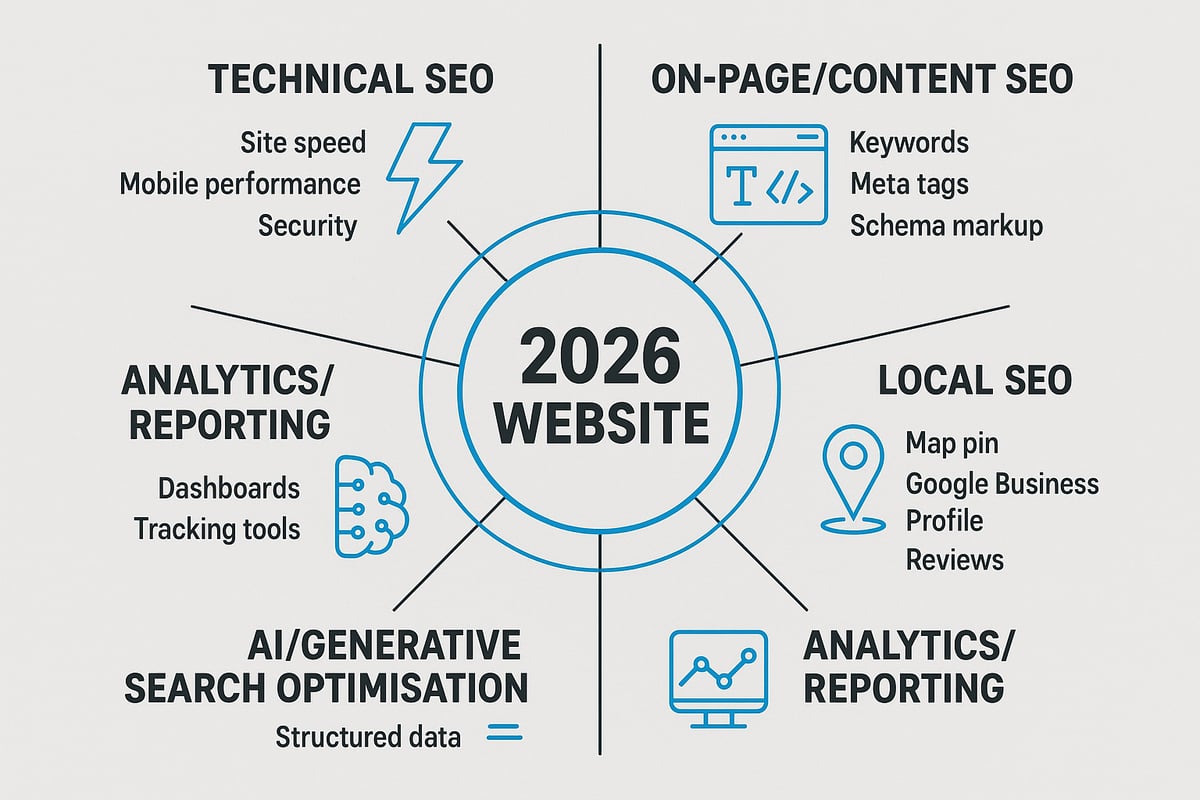
Staying ahead in search is no longer optional—it's the backbone of every successful design on website project. The rules keep changing, and what worked in 2023 is already history. If you want your website to thrive in 2026, you need a modern SEO strategy that covers technical, content, local, and AI-driven search. Let’s break down what matters most.
Core Technical SEO Essentials
Technical SEO is your website’s engine room. Without a solid foundation, even the best design on website can’t perform. For 2026, speed is everything. Optimise images, use lazy loading, and leverage caching solutions like WP Rocket. Mobile usability is critical, with Google’s Core Web Vitals setting the benchmark for user experience.
Build a clean, crawlable site structure that search engines can easily navigate. Implement structured data to help your content stand out in rich results. Secure your site with SSL and keep malware at bay. Remember, technical SEO is not a one-off job—regular audits and updates keep you ahead of the curve.
Quick Technical SEO Checklist
| Task | Tool/Example |
|---|---|
| Image Optimisation | TinyPNG, WP Rocket |
| Caching | WP Rocket |
| Mobile Testing | Google Search Console |
| Structured Data | Schema.org Markup |
| Security | SSL, Malware Scan |
On-Page and Content SEO
Your content is what draws users in, but only if it’s optimised for both search and humans. Start by researching keywords relevant to your design on website and your audience’s intent. In 2026, focus on long-tail, conversational, and voice search queries—these are increasingly important as search engines evolve.
Optimise headings, meta descriptions, and schema markup for every page. Write authoritative, engaging content that genuinely answers your users’ questions. Use internal linking to connect related pages and boost SEO value. Remember, Google rewards high-quality, relevant content that’s easy to read and navigate.
Want your content to pop? Use professional copywriting and multimedia elements to keep users engaged and reduce bounce rates.
Local SEO and Google Business Profile Optimisation
If your business serves a specific area, local SEO is vital. Make sure your design on website includes your business name, address, and phone number (NAP) consistently across all listings. Optimise your Google Business Profile with accurate information, attractive images, and regular updates.
Encourage customers to leave reviews and respond to them promptly. Integrate maps and local citations to boost your visibility in local searches. For service-based businesses, these steps can mean the difference between being found or being invisible in your community. Local SEO is not just for shops—every site can benefit.
Local SEO Must-Haves
- Consistent NAP on your site and listings
- Google Business Profile fully completed
- Customer reviews and responses
- Local backlinks and citations
Preparing for AI and Generative Search
AI is transforming how people search—and how search engines deliver results. In 2026, optimising for AI-driven and generative search engines means structuring your content for conversational queries and using FAQ sections. Implement schema markup to help AI engines understand your design on website and surface relevant content.
Embrace tools that personalise the user journey, as AI-driven personalization enhances user experience and can boost engagement metrics that search engines consider. Focus on rich, structured data and voice-friendly keywords. The future of SEO is smart, adaptable, and user-centric.
Tracking, Reporting, and Continuous Improvement
SEO isn’t set-and-forget. Set up Google Analytics 4 and Google Search Console to track your design on website performance. Build custom dashboards to monitor KPIs like bounce rate, session length, and conversions. Regularly audit your site, fix issues, and adapt your strategy based on real data.
Run A/B tests and use heatmaps to see how users interact with your site. Monthly reporting and ongoing optimisation will keep your SEO efforts sharp and ahead of competitors. In 2026, agility and data-driven improvement are your secret weapons.
Integrating Technology, Security, and Scalability
Keeping up with technology is non-negotiable for any design on website project set for 2026. The right mix of tools, security, and scalability can make or break your site’s potential. Let’s break down how to future-proof your online presence step by step.
Choosing the Right Tech Stack for 2026
Your choice of technology sets the foundation for every design on website project. In 2026, headless CMS options and API-first platforms will dominate, offering unbeatable flexibility for custom features and integrations.
No-code platforms are now robust enough for serious business use. If you want to understand how these tools can streamline your workflow, check out this No-code website development guide.
Here’s a quick comparison:
| Platform | Flexibility | Scalability | Ease of Use |
|---|---|---|---|
| WordPress | High | High | Moderate |
| Shopify | Moderate | High | Easy |
| No-code Tools | Moderate | Moderate | Very Easy |
Pick a stack that fits your current needs, but can also grow with you.
Ensuring Robust Security and Compliance
Security is essential in any design on website process. With evolving regulations like GDPR and CCPA, you must protect user data at all times. SSL certificates, firewalls, and malware scanning are now basic requirements.
Don’t overlook compliance. Secure payment processing and strong user data protection boost trust and keep you on the right side of the law. Regular security audits and updates are the best way to avoid nasty surprises down the line.
A secure site isn’t just about ticking boxes, it’s about peace of mind for you and your customers.
Performance Optimisation and Hosting
A fast site is the backbone of any design on website that converts. Opt for managed hosting with built-in performance tools like caching and CDNs. These cut load times and keep your site stable when your traffic spikes.
Simple tweaks, such as image optimisation and regular uptime monitoring, make a big difference. Don’t forget to schedule performance audits so you can spot issues early.
Managed hosting plans that support WordPress, WooCommerce, and custom integrations are a solid choice for most businesses aiming for growth.
Automation, AI, and Future-Proof Integrations
Automation and AI are transforming design on website work in 2026. Chatbots handle customer queries, AI assists with content generation, and marketing automation keeps leads engaged without manual effort.
If you want to see where the future is heading, have a look at Adaptive UI generation through reinforcement learning for a glimpse at how AI will personalise interfaces dynamically.
Prepare your site for future integrations by choosing modular platforms. This lets you add new tools as your needs evolve, whether it’s CRM systems or advanced analytics.
Planning for Growth and Scalability
A forward-thinking design on website should always account for growth. Modular design systems and scalable architecture mean you can add products, services, or locations without a redesign.
Use content management solutions that are intuitive for non-technical users. As your business expands, you’ll need to update content quickly and efficiently.
Scalability isn’t just about tech, it’s about making sure your site can keep pace with your ambitions.
Maintaining and Evolving Your Website Post-Launch
Launching your site is just the beginning. To keep your design on website sharp and competitive in 2026, you need a plan for ongoing evolution. Here's how to ensure your site grows, adapts, and delivers results long after launch.
Ongoing Maintenance and Security
Regular maintenance is the backbone of any successful design on website. Schedule monthly updates for your CMS, plugins, and themes. This reduces vulnerabilities and protects against emerging threats.
Backups should be automatic and stored offsite. Uptime monitoring tools alert you if your site goes down, so you can act fast. Security patches and malware scans are not optional, they're essential for peace of mind.
Consider a maintenance plan with a reliable provider. This ensures your site stays live, secure, and performing at its best. Remember, a neglected website quickly becomes a liability.
Content Updates and Continuous Improvement
Your design on website must evolve alongside your business. Update your content regularly to keep it relevant for both users and search engines. Add new products, services, or case studies to showcase growth.
A simple table can help prioritise updates:
| Task | Frequency |
|---|---|
| Blog posts | Weekly |
| Service pages | Monthly |
| Testimonials | Quarterly |
| Visual refreshes | Annually |
Use analytics to spot high-performing pages and areas needing improvement. A fresh, dynamic site signals trustworthiness and authority in your industry.
User Feedback and Iterative Design
Continuous improvement depends on listening. Gather feedback through surveys, contact forms, and analytics. Users often spot issues you might miss in your design on website.
Prioritise changes that remove friction or add value. Test new features with a small audience before a full rollout. Iterative tweaks, not big overhauls, usually bring the best results.
If you want to push your interface further, exploring UI design best practices can give you actionable ideas for refinement and user satisfaction.
Staying Ahead of Trends and Technology
The digital landscape never stands still. Monitor competitor sites and industry news to spot trends early. Update your design on website to reflect new technologies, accessibility standards, and evolving user habits.
Invest in training for your team or partner with a specialist. AI tools, new frameworks, and emerging SEO strategies can give you a head start. Businesses that adapt quickly maintain a clear advantage.
Stay curious, keep testing, and treat your site as a living asset. That way, your website will always be ready for what comes next.
If you’re serious about making your website work harder in 2026, it’s worth having a proper chat about your next steps. We’ve covered a lot—future-proof design, nailing user experience, and the tech that actually drives results—but every business is unique. If you want honest feedback and practical ideas tailored to your goals, let’s talk it through together. I’m all about action, not waffle, so you’ll leave our call with clear, doable steps to boost your leads and sales—no strings attached. Book your Get free 45 min consultation and let’s get your website ready for the future.
First impressions matter more than ever in today’s fast-changing digital world. In 2026, the expectations for design on website projects are higher, and the competition is relentless.
This expert guide gives you practical insights and step-by-step strategies to future-proof your online presence. We’ll cover the latest design trends, user experience essentials, advanced SEO, technology integration, accessibility, and ongoing optimisation.
Ready to build a website that stands out, wins trust, and drives results? Dive in and discover how to make your next design on website project a true success.
Understanding the 2026 Website Design Landscape
The design on website landscape is shifting faster than ever as we approach 2026. Businesses face a digital arms race, where only the most adaptable sites will thrive. To stay ahead, you need to understand the trends, user expectations, technical must-haves, and how to future-proof your site for growth.
Key Trends Shaping Website Design
The future of design on website is built around minimalism, immersive experiences, and dynamic content that adapts to user needs. Mobile-first and device-agnostic layouts are now non-negotiable, as 70% of web traffic comes from mobiles (GoDaddy). AI-driven personalisation and generative design tools are rising fast, giving users tailored experiences. Expect bold typography, micro-interactions, and smooth animations to become standard. Sustainability is also taking centre stage, with eco-friendly design practices gaining traction. For a deeper dive into how AI is influencing these trends, see AI in web design trends. These trends aren’t just buzzwords—they drive engagement and better business outcomes.
| Trend | Impact on Design on Website |
|---|---|
| Minimalism | Clearer layouts, less clutter |
| AI Personalisation | Tailored content, higher engagement |
| Mobile-First | Better usability, wider reach |
| Bold Typography | Stronger brand presence |
| Sustainable Design | Lower carbon footprint, positive brand |
The Role of User Behaviour and Expectations
User habits are evolving, and this shapes every aspect of design on website. People have shorter attention spans and want instant access to information. They expect seamless, intuitive navigation across all devices, and trust brands that offer professional, quick-loading experiences. If your site takes over 3 seconds to load, 53% of users will leave—no second chances. Gen Z and Millennials, with their eye for digital aesthetics, are setting the tone for what looks and feels modern. Meeting these expectations means higher engagement and trust in your brand.
The Competitive Advantage of Professional Design
A polished design on website can be the difference between a visitor and a customer. Data from GoDaddy shows professionally designed websites can attract up to five times more traffic. Good design builds credibility and boosts conversion rates, while a dated or clunky site turns people away. Businesses that invest in redesigns often see measurable growth, with stronger brand alignment and clearer messaging. Aligning your site’s look and feel with your business goals is crucial for standing out in a crowded marketplace.
The Importance of Technical Foundations
Strong technical foundations are essential for any successful design on website. Responsive frameworks ensure your site looks great on every device, while robust security measures like SSL, firewalls, and malware protection keep data safe. Fast, reliable hosting is key for both user experience and SEO. Structuring your site for search engines from the start pays off in visibility and rankings. Tools like WP Rocket, used by GoDaddy, help maximise site speed, giving you a competitive edge in performance.
Preparing for the Future: Scalability and Flexibility
Future-proofing your design on website means building for growth. Modular design systems and flexible CMS platforms make it easier to expand and adapt as your business evolves. Integrating with third-party tools and APIs allows for smooth upgrades and new features. Easy content management is vital for ongoing updates, letting you respond quickly to market changes. Professional consultation can help you choose scalable solutions, ensuring your site supports your ambitions for years to come.
Step-by-Step Guide to Designing a Website for 2026 Success
In 2026, the secret to thriving online is a strategic, user-focused approach. This step-by-step guide will help you master every stage of design on website projects, from planning and platform choice to ongoing optimisation. Follow these actionable steps to ensure your site stands out, delivers results, and adapts as technology evolves.
Step 1: Define Your Goals and Audience
Every great design on website projects begins with clarity. Start by mapping out your business objectives: do you want more leads, sales, or brand awareness? Pinpoint exactly what your website needs to achieve.
Next, define your ideal audience. Segment users by demographics, behaviours, and needs. This helps shape everything from design elements to tone of voice.
Map user journeys, identifying the actions you want visitors to take—such as contacting you or making a purchase. Use analytics to discover which pages already perform best and why.
Align your website’s goals with the bigger business picture. If your overall strategy is growth, your site should enable that, not hinder it. For a deeper dive into strategy, check out Website design strategy insights.
Clarity at this stage saves endless time and money later. Get this right, and the rest of your design on website process becomes much smoother.
Step 2: Plan Structure and Content
A logical structure is the backbone of any effective design on website. Start with a sitemap, mapping out your main pages and logical navigation. This ensures users find what they need, fast.
Wireframing helps visualise layouts before jumping into design. Prioritise core pages: home, about, services, contact, and any key landing pages.
Content is king, but only if it’s engaging and optimised. Write copy with your audience in mind, using keywords naturally and addressing their pain points. Add professional images, videos, and interactive elements to bring your content to life.
Here’s a simple sitemap example in code:
Home
│
├── About
├── Services
│   ├── Service 1
│   └── Service 2
├── Blog
└── Contact
Remember, design on website projects that prioritise clear structure and strong content convert better and keep users coming back.
Step 3: Choose the Right Platform and Technology
Choosing the right platform is a critical step in design on website success. Consider your business needs, growth plans, and technical skills.
Compare popular options:
| Platform | Pros | Cons |
|---|---|---|
| WordPress | Flexible, scalable, plugins | Needs updates, steeper learning curve |
| Shopify | E-commerce ready, secure | Less flexible for content sites |
| Squarespace | Easy for beginners, stylish | Limited customisation |
| Custom Build | Total control, unique | Costly, needs developers |
Opt for mobile-first frameworks and ensure your chosen tech is responsive and secure. If you’re handling payments or sensitive data, security must be top priority.
Remember, the right choice now will future-proof your design on website efforts and make scaling easier down the line.
Step 4: Design for User Experience (UX) and Accessibility
User experience can make or break your design on website. Intuitive navigation, clear calls to action, and a seamless flow are essential.
Design with accessibility in mind. Use high-contrast colours, descriptive alt text for images, and ensure all interactive elements are keyboard accessible. This not only supports users with disabilities but also improves SEO.
Optimise for all devices, especially mobiles and tablets. Responsive design is a must if you want to reach the widest audience.
Professional design on website projects always include these elements by default, leading to higher engagement and satisfaction.
Step 5: Implement SEO and Performance Optimisation
No matter how beautiful your design on website is, it won’t succeed if no one finds it. Technical SEO is the foundation: ensure fast load times, clean code, structured data, and a logical sitemap.
For on-page SEO, use headings, meta tags, and internal links wisely. Compress images and use caching tools to keep things speedy.
Here’s a quick checklist for SEO success:
- Fast loading times
- Mobile friendly
- Structured data
- Optimised headings and meta
- Internal links
A well-optimised design on website will climb the rankings and pull in more organic traffic.
Step 6: Integrate Essential Features and Tools
Design on website projects succeed when they include the right tools. Add contact forms, booking systems, or live chat to boost engagement.
If you’re selling online, add e-commerce features like product listings, secure checkout, and multiple payment gateways. Integrate analytics tools (Google Analytics, Tag Manager) to track performance.
Security features are non-negotiable: SSL certificates, malware scanning, and DDoS protection keep your site and users safe.
Choosing the right features ensures your design on website meets both user and business needs.
Step 7: Test, Launch, and Iterate
Before going live, test your design on website across browsers and devices. Check for speed, broken links, and display issues.
Gather feedback from real users. Use their input to make improvements. Launch confidently, but remember, iteration is key—regularly update, back up, and monitor your site.
A successful design on website is never finished. Continuous optimisation based on data and feedback keeps you ahead of the competition.
Designing for User Experience and Engagement in 2026
Creating a winning design on website in 2026 is about much more than just good looks. Today’s visitors expect a seamless, engaging journey from the first click. Let’s break down the essential ingredients for a website experience that converts, delights, and stands the test of time.
Core Principles of Modern UX Design
Modern design on website revolves around putting users first. Start by mapping their journeys and understanding their needs. Empathy mapping reveals pain points and motivations, ensuring every interaction feels natural.
Minimalist layouts keep things uncluttered, reducing cognitive load and helping users focus on what matters. Visual hierarchy guides attention, using size, colour, and space to highlight key actions or information.
Micro-interactions and subtle animations add life to your design on website. They provide feedback, direct users, and create moments of delight. Professional design boosts perceived trust, making visitors more likely to engage and convert.
Personalisation and AI-Driven Experiences
AI is transforming design on website by making every visit feel unique. Dynamic content adapts to user preferences, showing relevant products or information based on behaviour.
Personalised recommendations, smart chatbots, and adaptive interfaces make navigation effortless. These AI-driven features increase satisfaction and keep users engaged longer.
Remember, personalisation must respect privacy. Make sure users understand what data you collect and give them control. With AI-powered tools, your design on website can deliver tailored experiences that drive conversions.
Mobile-First and Multi-Device Consistency
Most users now browse on the go, so design on website must be mobile-first. Responsive layouts ensure your site looks and works perfectly on phones, tablets, and desktops.
Touch-friendly navigation, larger tap targets, and adaptive images are essential. Consistency across devices builds trust and encourages repeat visits.
Google’s mobile-first indexing means your design on website directly affects search rankings. With 70% of traffic coming from mobiles, optimising for every screen is a must.
Accessibility as a Competitive Advantage
Accessible design on website is not just a legal requirement, but also a business win. Following WCAG 2.2 guidelines ensures everyone can use your site, including people with disabilities.
Use semantic HTML, ARIA labels, and test forms for keyboard navigation. Colour contrast tools and screen reader checks help catch issues early.
Accessible websites reach wider audiences and rank better on search engines. Investing in accessibility means your design on website stands out and welcomes all users.
Building Trust Through Design
Trust is built in seconds. Consistent branding, high-quality visuals, and clear calls to action all signal professionalism. Social proof, like testimonials and reviews, reassures visitors they’re in the right place.
Transparent policies for privacy, shipping, and returns show you have nothing to hide. Easy-to-find contact options add another layer of credibility.
It’s no surprise that web design influences 94% of first impressions. A strong design on website creates confidence, boosting both engagement and conversion rates.
Measuring and Optimising Engagement
You can’t improve what you don’t measure. Track the performance of your design on website with key metrics like bounce rate, session duration, and conversion rate.
A/B testing and heatmaps reveal what’s working and what’s not. Set up event tracking and goals in your analytics platform to monitor user actions.
Iterate often, using real user data to guide improvements. This approach ensures your design on website evolves with changing user expectations and keeps delivering results.
Advanced SEO Strategies for 2026-Ready Websites
Staying ahead in search is no longer optional—it's the backbone of every successful design on website project. The rules keep changing, and what worked in 2023 is already history. If you want your website to thrive in 2026, you need a modern SEO strategy that covers technical, content, local, and AI-driven search. Let’s break down what matters most.
Core Technical SEO Essentials
Technical SEO is your website’s engine room. Without a solid foundation, even the best design on website can’t perform. For 2026, speed is everything. Optimise images, use lazy loading, and leverage caching solutions like WP Rocket. Mobile usability is critical, with Google’s Core Web Vitals setting the benchmark for user experience.
Build a clean, crawlable site structure that search engines can easily navigate. Implement structured data to help your content stand out in rich results. Secure your site with SSL and keep malware at bay. Remember, technical SEO is not a one-off job—regular audits and updates keep you ahead of the curve.
Quick Technical SEO Checklist
| Task | Tool/Example |
|---|---|
| Image Optimisation | TinyPNG, WP Rocket |
| Caching | WP Rocket |
| Mobile Testing | Google Search Console |
| Structured Data | Schema.org Markup |
| Security | SSL, Malware Scan |
On-Page and Content SEO
Your content is what draws users in, but only if it’s optimised for both search and humans. Start by researching keywords relevant to your design on website and your audience’s intent. In 2026, focus on long-tail, conversational, and voice search queries—these are increasingly important as search engines evolve.
Optimise headings, meta descriptions, and schema markup for every page. Write authoritative, engaging content that genuinely answers your users’ questions. Use internal linking to connect related pages and boost SEO value. Remember, Google rewards high-quality, relevant content that’s easy to read and navigate.
Want your content to pop? Use professional copywriting and multimedia elements to keep users engaged and reduce bounce rates.
Local SEO and Google Business Profile Optimisation
If your business serves a specific area, local SEO is vital. Make sure your design on website includes your business name, address, and phone number (NAP) consistently across all listings. Optimise your Google Business Profile with accurate information, attractive images, and regular updates.
Encourage customers to leave reviews and respond to them promptly. Integrate maps and local citations to boost your visibility in local searches. For service-based businesses, these steps can mean the difference between being found or being invisible in your community. Local SEO is not just for shops—every site can benefit.
Local SEO Must-Haves
- Consistent NAP on your site and listings
- Google Business Profile fully completed
- Customer reviews and responses
- Local backlinks and citations
Preparing for AI and Generative Search
AI is transforming how people search—and how search engines deliver results. In 2026, optimising for AI-driven and generative search engines means structuring your content for conversational queries and using FAQ sections. Implement schema markup to help AI engines understand your design on website and surface relevant content.
Embrace tools that personalise the user journey, as AI-driven personalization enhances user experience and can boost engagement metrics that search engines consider. Focus on rich, structured data and voice-friendly keywords. The future of SEO is smart, adaptable, and user-centric.
Tracking, Reporting, and Continuous Improvement
SEO isn’t set-and-forget. Set up Google Analytics 4 and Google Search Console to track your design on website performance. Build custom dashboards to monitor KPIs like bounce rate, session length, and conversions. Regularly audit your site, fix issues, and adapt your strategy based on real data.
Run A/B tests and use heatmaps to see how users interact with your site. Monthly reporting and ongoing optimisation will keep your SEO efforts sharp and ahead of competitors. In 2026, agility and data-driven improvement are your secret weapons.
Integrating Technology, Security, and Scalability
Keeping up with technology is non-negotiable for any design on website project set for 2026. The right mix of tools, security, and scalability can make or break your site’s potential. Let’s break down how to future-proof your online presence step by step.
Choosing the Right Tech Stack for 2026
Your choice of technology sets the foundation for every design on website project. In 2026, headless CMS options and API-first platforms will dominate, offering unbeatable flexibility for custom features and integrations.
No-code platforms are now robust enough for serious business use. If you want to understand how these tools can streamline your workflow, check out this No-code website development guide.
Here’s a quick comparison:
| Platform | Flexibility | Scalability | Ease of Use |
|---|---|---|---|
| WordPress | High | High | Moderate |
| Shopify | Moderate | High | Easy |
| No-code Tools | Moderate | Moderate | Very Easy |
Pick a stack that fits your current needs, but can also grow with you.
Ensuring Robust Security and Compliance
Security is essential in any design on website process. With evolving regulations like GDPR and CCPA, you must protect user data at all times. SSL certificates, firewalls, and malware scanning are now basic requirements.
Don’t overlook compliance. Secure payment processing and strong user data protection boost trust and keep you on the right side of the law. Regular security audits and updates are the best way to avoid nasty surprises down the line.
A secure site isn’t just about ticking boxes, it’s about peace of mind for you and your customers.
Performance Optimisation and Hosting
A fast site is the backbone of any design on website that converts. Opt for managed hosting with built-in performance tools like caching and CDNs. These cut load times and keep your site stable when your traffic spikes.
Simple tweaks, such as image optimisation and regular uptime monitoring, make a big difference. Don’t forget to schedule performance audits so you can spot issues early.
Managed hosting plans that support WordPress, WooCommerce, and custom integrations are a solid choice for most businesses aiming for growth.
Automation, AI, and Future-Proof Integrations
Automation and AI are transforming design on website work in 2026. Chatbots handle customer queries, AI assists with content generation, and marketing automation keeps leads engaged without manual effort.
If you want to see where the future is heading, have a look at Adaptive UI generation through reinforcement learning for a glimpse at how AI will personalise interfaces dynamically.
Prepare your site for future integrations by choosing modular platforms. This lets you add new tools as your needs evolve, whether it’s CRM systems or advanced analytics.
Planning for Growth and Scalability
A forward-thinking design on website should always account for growth. Modular design systems and scalable architecture mean you can add products, services, or locations without a redesign.
Use content management solutions that are intuitive for non-technical users. As your business expands, you’ll need to update content quickly and efficiently.
Scalability isn’t just about tech, it’s about making sure your site can keep pace with your ambitions.
Maintaining and Evolving Your Website Post-Launch
Launching your site is just the beginning. To keep your design on website sharp and competitive in 2026, you need a plan for ongoing evolution. Here's how to ensure your site grows, adapts, and delivers results long after launch.
Ongoing Maintenance and Security
Regular maintenance is the backbone of any successful design on website. Schedule monthly updates for your CMS, plugins, and themes. This reduces vulnerabilities and protects against emerging threats.
Backups should be automatic and stored offsite. Uptime monitoring tools alert you if your site goes down, so you can act fast. Security patches and malware scans are not optional, they're essential for peace of mind.
Consider a maintenance plan with a reliable provider. This ensures your site stays live, secure, and performing at its best. Remember, a neglected website quickly becomes a liability.
Content Updates and Continuous Improvement
Your design on website must evolve alongside your business. Update your content regularly to keep it relevant for both users and search engines. Add new products, services, or case studies to showcase growth.
A simple table can help prioritise updates:
| Task | Frequency |
|---|---|
| Blog posts | Weekly |
| Service pages | Monthly |
| Testimonials | Quarterly |
| Visual refreshes | Annually |
Use analytics to spot high-performing pages and areas needing improvement. A fresh, dynamic site signals trustworthiness and authority in your industry.
User Feedback and Iterative Design
Continuous improvement depends on listening. Gather feedback through surveys, contact forms, and analytics. Users often spot issues you might miss in your design on website.
Prioritise changes that remove friction or add value. Test new features with a small audience before a full rollout. Iterative tweaks, not big overhauls, usually bring the best results.
If you want to push your interface further, exploring UI design best practices can give you actionable ideas for refinement and user satisfaction.
Staying Ahead of Trends and Technology
The digital landscape never stands still. Monitor competitor sites and industry news to spot trends early. Update your design on website to reflect new technologies, accessibility standards, and evolving user habits.
Invest in training for your team or partner with a specialist. AI tools, new frameworks, and emerging SEO strategies can give you a head start. Businesses that adapt quickly maintain a clear advantage.
Stay curious, keep testing, and treat your site as a living asset. That way, your website will always be ready for what comes next.
If you’re serious about making your website work harder in 2026, it’s worth having a proper chat about your next steps. We’ve covered a lot—future-proof design, nailing user experience, and the tech that actually drives results—but every business is unique. If you want honest feedback and practical ideas tailored to your goals, let’s talk it through together. I’m all about action, not waffle, so you’ll leave our call with clear, doable steps to boost your leads and sales—no strings attached. Book your Get free 45 min consultation and let’s get your website ready for the future.


