
AI · 17 min read
AI Lead Capture
Imagine waking up to a steady stream of qualified leads, all thanks to ai lead capture working tirelessly while you sleep. In 2026, this is not just a dream but a must-have for any business that wants real, sustainable growth and a genuine edge over the competition.
By Matt Harrison · Published · Updated · Part of the guides behind AI Marketing & Training
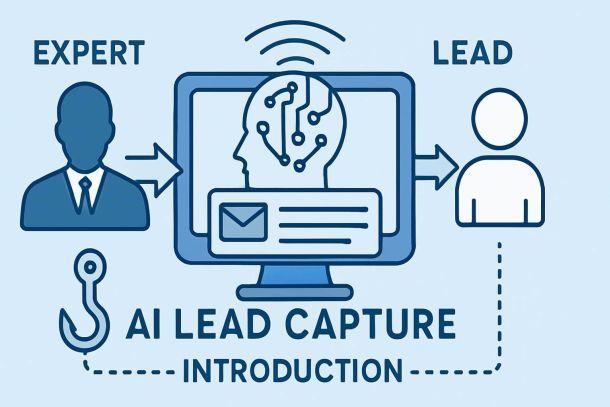
Imagine waking up to a steady stream of qualified leads, all thanks to ai lead capture working tirelessly while you sleep. In 2026, this is not just a dream but a must-have for any business that wants real, sustainable growth and a genuine edge over the competition.
This guide cuts through the hype, showing you how to master ai lead capture with up-to-date strategies, powerful tools, and proven best practices. You will discover the latest AI technologies, step-by-step setup advice, privacy essentials, integration tips, and the trends shaping the future. Ready to unlock effortless lead generation and put your pipeline on autopilot? Let’s dive in.
The Evolution of AI Lead Capture: 2020–2026
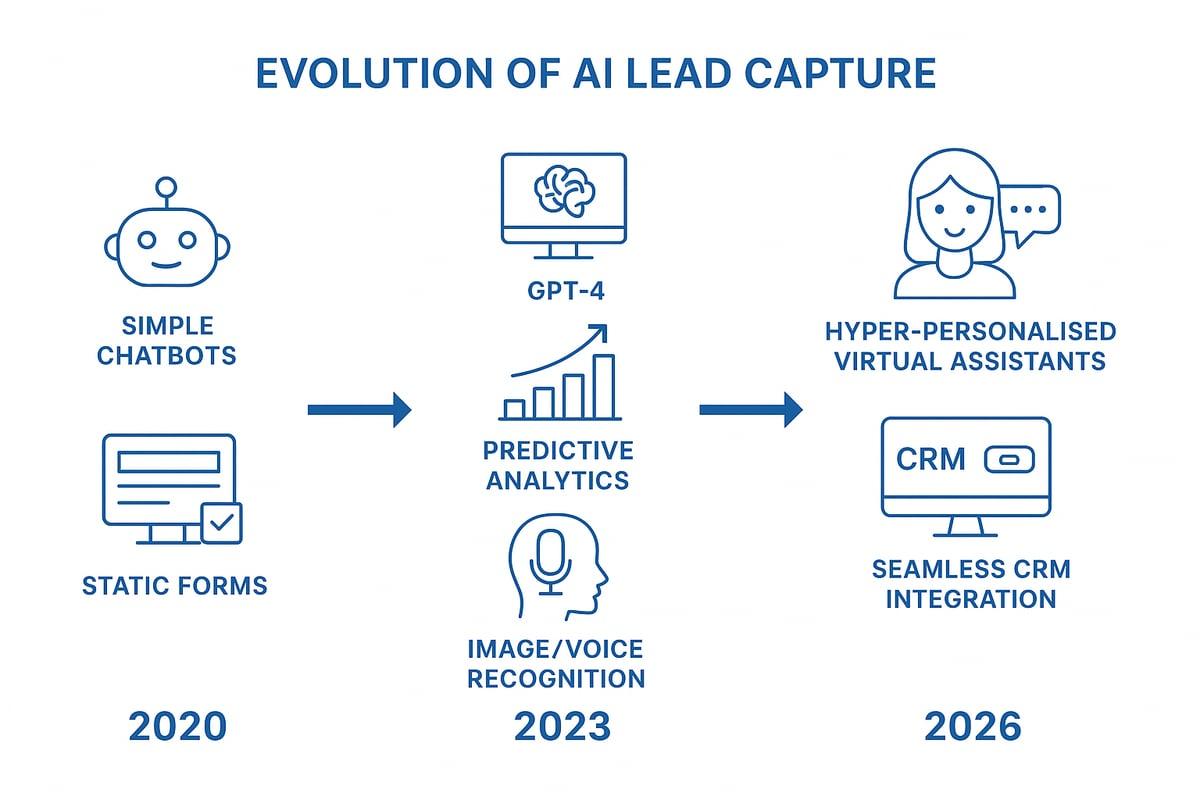
The landscape of ai lead capture has changed dramatically from 2020 to 2026. What started as a handful of basic chatbots and static web forms is now a sophisticated, always-on ecosystem powered by machine learning, natural language processing, and predictive analytics. Companies are no longer just collecting names and emails. They’re building dynamic, real-time profiles for every visitor, adapting instantly to intent and behaviour.
Defining AI Lead Capture and Its Core Components
In 2026, ai lead capture means far more than just gathering contact details. It’s about deploying advanced machine learning, NLP, and predictive analytics to engage, qualify, and nurture leads in real time.
Back in 2020, businesses relied on simple chatbots and rigid forms. Now, hyper-personalised virtual assistants can interpret context, understand sentiment, and tailor conversations for each visitor.
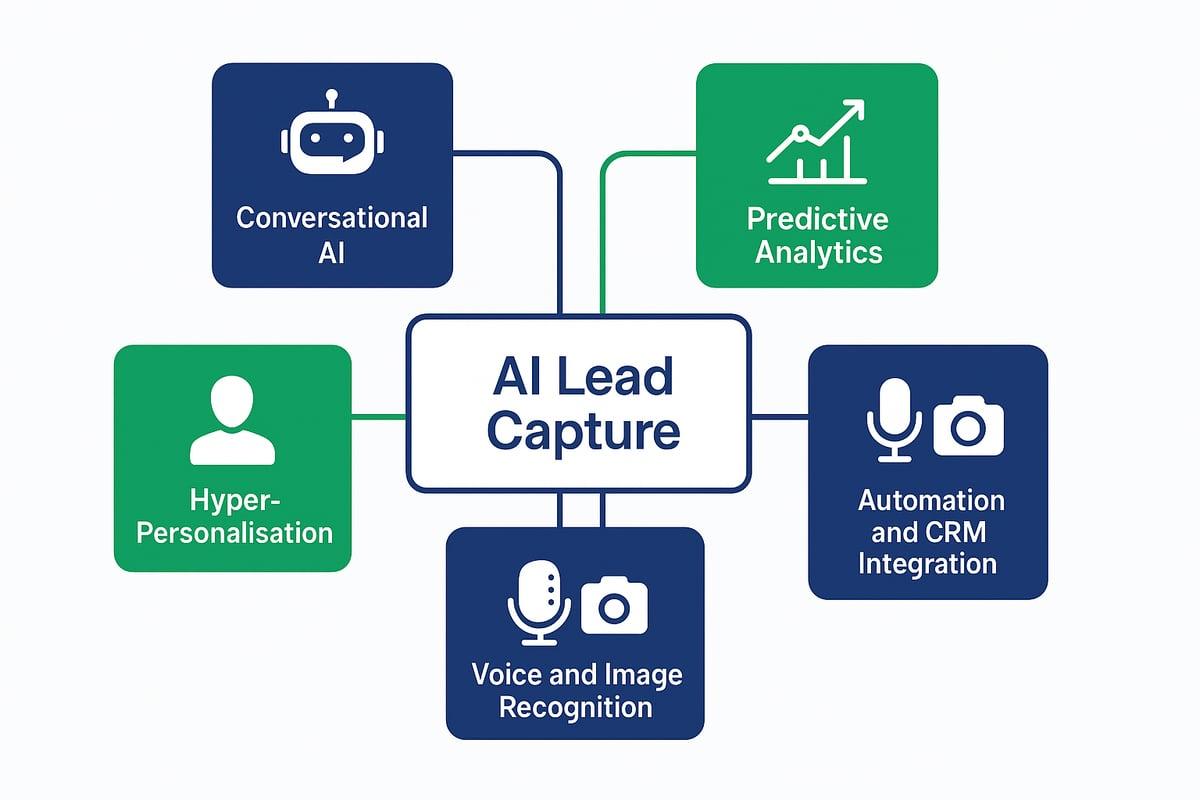
The core components of ai lead capture include:
- Conversational AI that adapts to user intent
- Predictive analytics to forecast lead quality
- Seamless integration with CRM and marketing tools
This shift has made lead capture smarter, faster, and more human-like than ever.
Milestones in AI-Driven Lead Generation
Several breakthroughs have propelled ai lead capture forward since 2020. The arrival of GPT-4 and GPT-5 models enabled chatbots to hold nuanced, human-like conversations. Image recognition and voice assistants became mainstream, letting users interact in new, frictionless ways.
By 2025, Gartner reported that 78% of high-growth companies had adopted AI-powered lead tools. One major retailer saw a 34% jump in lead conversion after integrating AI into their sales funnel.
For a deeper dive into how AI has transformed B2B growth and real-time lead generation, check out AI-powered lead generation services transforming B2B growth in 2026.
Key Drivers of Adoption in 2026
The adoption of ai lead capture in 2026 is driven by rising consumer demand for instant, relevant responses. Customers expect brands to anticipate their needs and deliver value at every touchpoint.
At the same time, customer journeys have become more complex and fragmented. Traditional tactics just can’t keep up. AI stands out for its cost efficiency and scalability, allowing businesses to automate lead capture across multiple channels without ballooning overheads.
For companies aiming to compete and grow, embracing ai lead capture is no longer a nice-to-have, but a core strategic move.
How AI Lead Capture Outperforms Traditional Methods
Ai lead capture leaves manual processes in the dust. Unlike static forms, AI-driven systems personalise interactions on the fly, qualifying and segmenting leads based on real-time data.
The benefits are clear:
- 24/7 lead engagement, even outside business hours
- Instant qualification and routing of high-value prospects
- Significant reduction in manual workload and human error
By shifting to ai lead capture, businesses unlock greater speed, accuracy, and conversion rates—all with less effort from their teams.
Challenges Overcome and Remaining Barriers
Early adoption of ai lead capture faced scepticism over data privacy, trust, and technical limitations. Many businesses worried about compliance and the “black box” nature of AI decisions.
Fast forward to 2026—transparent AI, GDPR-compliant systems, and explainable AI models have eased many concerns. AI providers now prioritise user consent and clarity around data usage.
Nonetheless, challenges remain. Integrating AI with legacy systems can still be tricky, and there’s an ongoing need for human oversight to ensure empathy and ethical decision-making. The journey of ai lead capture is ongoing, but the progress made is undeniable.
Core AI Technologies Powering Lead Capture in 2026
AI lead capture in 2026 is driven by a toolkit of advanced technologies, each playing a unique role in finding, engaging, and converting prospects. Let’s break down the core innovations powering this transformation.
Advanced Conversational AI and Chatbots
Conversational AI has moved far beyond the clunky chatbots of 2020. In 2026, these systems deliver natural, context-aware conversations that feel genuinely human. Using natural language processing and sentiment analysis, AI bots can understand nuance, intent, and emotion.
Picture a B2B website where a visitor asks about bespoke solutions. The AI lead capture assistant not only answers in detail but also asks qualifying questions, capturing lead data and moving high-intent prospects directly to a human rep if needed.
Key features include:
- Real-time, contextual responses to complex queries
- Seamless escalation to sales or support when necessary
- Continuous learning from every interaction
With these advancements, ai lead capture ensures no lead is lost due to slow or irrelevant responses.
Predictive Analytics and Lead Scoring
Predictive analytics is the engine that helps businesses focus on the right leads at the right time. AI lead capture tools now analyse user behaviour, engagement signals, and historical data to score and prioritise leads automatically.
Imagine your sales team only calling prospects who are most likely to convert. AI models use data such as page visits, content downloads, and response times to refine scoring. According to HubSpot, 62% of marketers have seen conversion rates rise thanks to predictive scoring.
Benefits:
- Prioritised outreach for sales teams
- Reduced time chasing low-quality leads
- Continual improvement as AI models learn
With predictive analytics, ai lead capture becomes a targeted, data-driven process rather than a numbers game.
Hyper-Personalisation Engines
Personalisation in 2026 means more than using a lead’s name in an email. AI lead capture systems now tailor every website element—from forms to offers—in real time, based on each visitor’s behaviour, preferences, and journey stage.
For example, an ecommerce site can instantly show unique product bundles or discounts to different visitors, boosting form submissions by 28%. This level of hyper-personalisation ensures each prospect feels understood and valued.
Highlights:
- Dynamic website content and pop-ups
- Personalised forms and CTAs
- Real-time offer adjustments
Hyper-personalisation engines make ai lead capture more effective by increasing relevance and engagement at every touchpoint.
Voice and Image Recognition in Lead Capture
Voice and image recognition tools have opened new avenues for ai lead capture. Voice-enabled forms allow users to speak their details, making the process frictionless. Meanwhile, image recognition lets visitors upload photos or screenshots to find products or get support instantly.
A leading financial services firm, for instance, uses voice AI to pre-qualify loan applicants in seconds, saving both the business and the customer valuable time.
Capabilities include:
- Voice-to-text data entry for fast lead capture
- Visual product search and instant image-based support
- Accessibility for users with different needs
These innovations make ai lead capture more inclusive and accessible than ever before.
AI-Powered Automation and Integration
Finally, AI-powered automation ties it all together. These systems sync seamlessly with CRMs, email marketing, and sales pipelines, ensuring no lead slips through the cracks. Automated nurturing sequences are triggered when AI identifies high-potential leads, delivering the right content at the perfect moment.
For businesses looking to streamline their workflows and maximise efficiency, AI CRM tools for lead management show how integration can supercharge ai lead capture and nurturing efforts.
Key integration benefits:
- Centralised lead data and tracking
- Automated follow-ups and reminders
- Real-time alerts for sales teams
AI-powered automation ensures that ai lead capture is not just about collecting leads, but also about moving them swiftly and smoothly through the pipeline.
Step-by-Step Guide: Implementing AI Lead Capture in Your Business
Rolling out ai lead capture in your business isn't just a tech upgrade—it’s a transformation. Follow these seven practical steps to set up, optimise, and future-proof your pipeline.
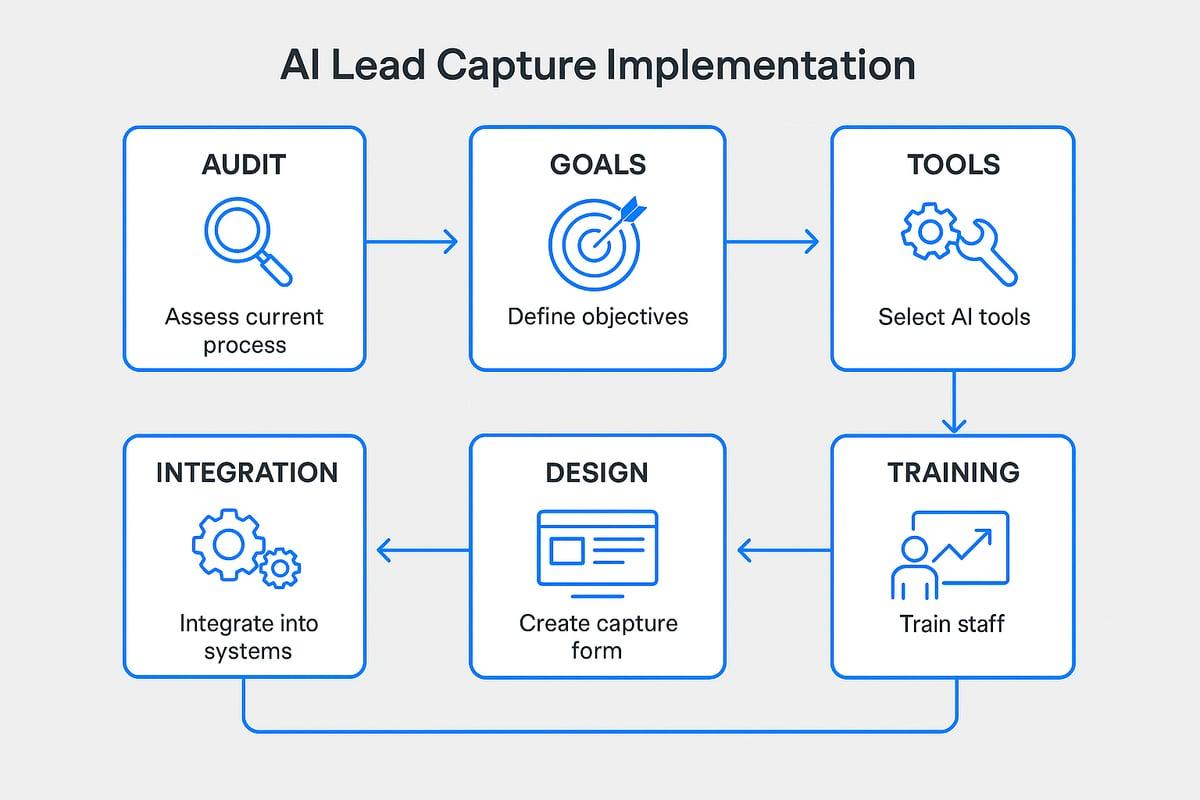
Step 1: Audit Current Lead Capture Processes
Start by mapping out every point where leads interact with your brand. This means reviewing your website forms, chatbots, landing pages, and any offline touchpoints you have.
Identify where you’re losing potential leads or duplicating manual tasks. Gather your current conversion rates, response times, and drop-off data. This groundwork helps you see exactly where ai lead capture can make the biggest difference.
Use a simple table to track each touchpoint and its performance:
| Touchpoint | Conversion Rate | Manual Tasks | Automation Potential |
|---|---|---|---|
| Website Form | 2% | High | Yes |
| Live Chat | 4% | Medium | Yes |
| Phone Enquiry | 1% | Very High | Yes |
This step gives you a clear before-and-after picture once ai lead capture is in place.
Step 2: Define Objectives and Success Metrics
Set clear, measurable goals for your ai lead capture project. Do you want more leads, higher quality leads, or simply faster follow-up?
List your top objectives, such as doubling lead volume or cutting cost per lead by 30%. Pair each with a key performance indicator (KPI) to track progress.
Typical ai lead capture KPIs include:
- Lead conversion rate
- Cost per lead
- Lead-to-sale ratio
- Average response time
By defining these up front, you’ll know if your ai lead capture is moving the needle or just adding noise.
Step 3: Select the Right AI Tools and Platforms
Choosing the right toolkit is crucial for effective ai lead capture. Compare leading solutions in your industry—look for platforms that integrate seamlessly, scale with your business, and comply with privacy laws.
Key factors to consider:
- Integration with existing CRM and marketing stack
- Scalability and support
- Data security and compliance features
For a deeper dive into how automation boosts results, see this guide on marketing automation with AI. The right tools should fit your goals, not force you to change your process.
Step 4: Integrate AI with Existing Tech Stack
Once you’ve chosen your tools, it’s time to connect everything. Sync your ai lead capture solution with CRM, email marketing, and analytics platforms.
Break down data silos by ensuring information flows smoothly between systems. Test each integration thoroughly—nothing kills momentum like a broken link between your chatbot and your sales team.
If your tech stack is complex, consider using middleware or APIs to bridge gaps. Good integration means your ai lead capture works quietly in the background and delivers qualified leads to the right place, every time.
Step 5: Design and Optimise AI-Powered Touchpoints
Now, create engaging touchpoints powered by ai lead capture. Think chatbots that remember past conversations, dynamic forms that adapt in real time, or voice-enabled widgets for hands-free interaction.
A/B test different messaging, triggers, and user flows to see what resonates. Even small tweaks—like changing a call-to-action or form field—can lift conversion rates.
List of optimisation ideas:
- Personalised chatbot scripts
- Dynamic content blocks on landing pages
- Voice search widgets for mobile users
Optimising every touchpoint ensures your ai lead capture doesn't just collect data, but converts visitors into real opportunities.
Step 6: Train Teams and Monitor Performance
Your team needs to understand and trust the ai lead capture process. Run training sessions to upskill staff on the new tools and workflows.
Set up regular feedback loops—weekly reports, dashboards, or even quick team huddles. Encourage your team to share insights and flag issues early.
Monitor performance using the KPIs you set in Step 2. Adjust strategies based on what the data tells you. Continuous learning keeps your ai lead capture sharp and effective.
Step 7: Ensure Compliance and Ethical Use
Finally, make sure your ai lead capture is above board. Implement GDPR and other data privacy safeguards from day one.
Be transparent with visitors—clearly disclose how AI is involved and offer opt-in choices. Regularly review your compliance processes, especially as regulations evolve.
Ethical ai lead capture builds trust and protects your reputation. When in doubt, err on the side of transparency and always keep the human touch in your automated journeys.
Data Privacy, Trust, and Compliance in AI Lead Capture
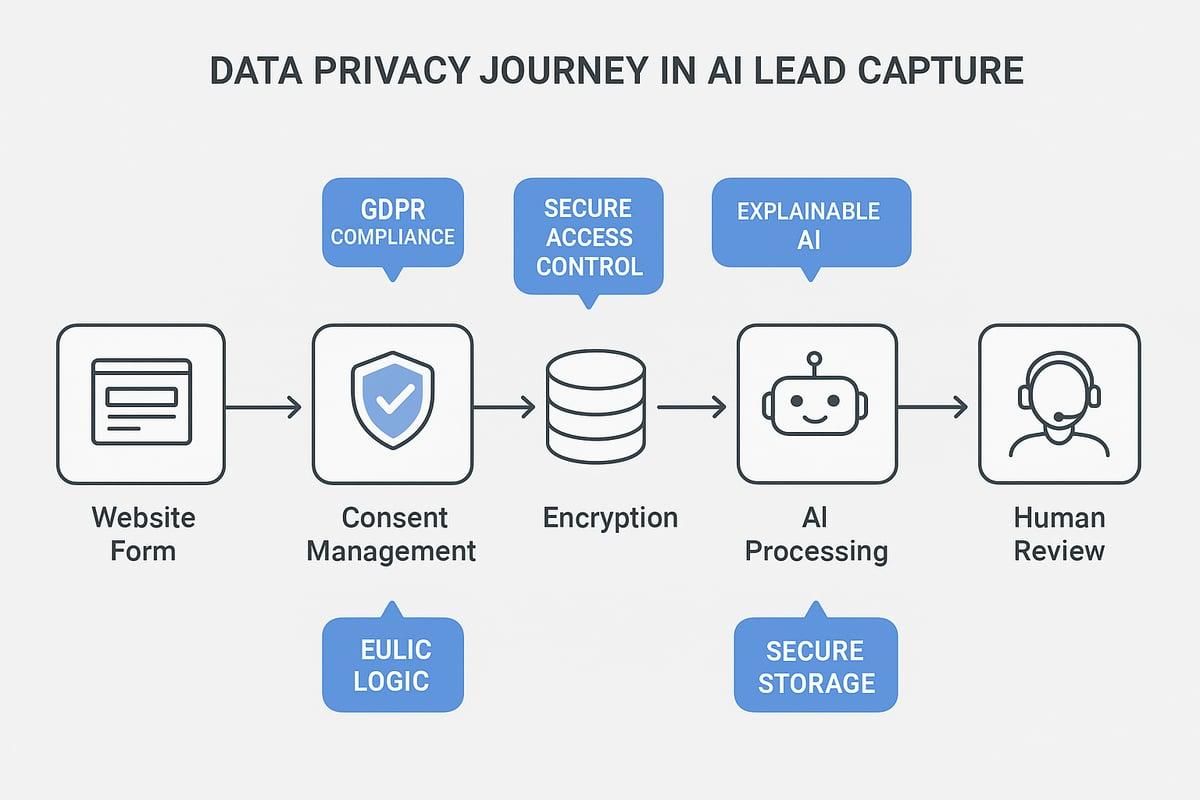
Today, data privacy and trust are the backbone of any successful ai lead capture strategy. As businesses race to adopt cutting-edge tools, your approach to compliance can make or break conversions. Let’s break down how to keep your ai lead capture not just smart, but also secure and trustworthy.
Navigating GDPR and Global Privacy Regulations
Regulatory compliance is non-negotiable for ai lead capture in 2026. GDPR, CCPA, and new global standards now demand explicit consent, granular data controls, and real-time auditability. Leading businesses automate consent management with AI-driven banners and dynamic opt-in flows.
Want a deep dive into how these rules shape your strategy? This guide on data privacy in AI marketing unpacks the latest analytics and compliance essentials for ai lead capture. Remember, regulatory fines and reputational damage are only a misstep away if you fail to get it right.
Building Trust with Transparent AI
Transparency is key if you want users to engage with ai lead capture. Explainable AI models help you show prospects exactly how their data is used, boosting trust. Displaying clear data usage policies and AI involvement banners on your site reassures visitors that their information is handled responsibly.
By being upfront about your AI processes, you lower barriers to form completion and make your ai lead capture feel safe, not sneaky. Simple language and visible privacy options go a long way.
Securing Lead Data End-to-End
Security must cover every stage of ai lead capture. Encrypt lead data in transit and at rest, use secure cloud storage, and implement strict access controls. For example, one SaaS company saw a 70 percent drop in data breaches after deploying AI-driven monitoring and anomaly detection.
A quick checklist for robust ai lead capture security:
- End-to-end encryption for all lead data
- Automated threat detection and alerts
- Regular security audits and updates
Locking down your data pipeline protects both your business and your leads’ trust.
Balancing Automation with Human Oversight
Even the smartest ai lead capture systems need a human touch. There will be moments when AI should pass leads to a real agent, especially for complex queries or sensitive cases. This hand-off ensures empathy and personalisation are never lost.
Set clear rules for when automation stops and humans step in. Your team should review AI decisions regularly to maintain quality and compliance. In 2026, blending AI efficiency with human judgement will set your ai lead capture apart from the competition.
Integrating AI Lead Capture Across the Customer Journey
Successfully embedding ai lead capture across your customer journey is the secret sauce for turning browsers into loyal buyers. Let’s break down how modern businesses are using AI to guide leads from the first touch right through to conversion.
Mapping AI Touchpoints from Awareness to Conversion
The modern customer journey is fragmented, so mapping where ai lead capture can step in is crucial. AI can engage leads the moment they land on your website, click an ad, or interact with your social channels.
For example, AI triggers can display personalised pop-ups based on real-time user behaviour, ensuring no opportunity slips through the cracks. AI-powered landing pages are also a game-changer, adapting content and forms to each visitor to boost conversions. Learn more about how AI-powered landing pages are transforming lead capture and conversion rates.
By embedding these smart touchpoints, you ensure prospects are nurtured from first click to final sale, all powered by ai lead capture.
Omnichannel AI for Seamless Experiences
Customers don’t stick to one channel, so your ai lead capture strategy shouldn’t either. Omnichannel AI ensures every interaction feels unified, whether it’s on your site, via email, chat, or social media.
With ai lead capture, you can track a lead’s journey across platforms and serve consistent, relevant messaging wherever they are. According to Salesforce, 59% of consumers now expect brands to deliver seamless experiences across all touchpoints. Meeting this expectation sets you apart and keeps leads moving smoothly through the funnel.
A unified AI approach means less friction and more engaged prospects, ready to convert.
Aligning AI with Sales and Marketing Teams
To truly unlock the power of ai lead capture, your sales and marketing teams must work in sync with your AI systems. Shared dashboards and real-time lead alerts keep everyone on the same page, reducing the chance of leads slipping through the net.
Collaboration between humans and AI is proven to drive results. Research shows that collaborating with AI agents increases productivity by 60%, streamlining processes and boosting performance across the board.
When teams trust and understand AI-driven insights, they can respond faster, personalise follow-ups, and close more deals.
Measuring Impact and Continuous Optimisation
The real value of ai lead capture comes from constant measurement and refinement. Key metrics to track include lead quality, speed to contact, and conversion rates.
AI tools offer granular insights, flagging which touchpoints work best and where leads drop off. Use these findings to tweak your approach, run regular A/B tests, and iterate for better results.
Continuous optimisation ensures your ai lead capture strategy keeps pace with changing buyer behaviour, helping you stay ahead of the competition.
Future Trends and Innovations in AI Lead Capture
The future of ai lead capture is anything but static. As technology races ahead, new trends are reshaping how businesses attract, qualify, and convert leads. Let’s break down the most game-changing innovations set to define 2026.
Generative AI and Content-Driven Lead Capture
In 2026, generative AI is turbocharging ai lead capture by creating content that adapts to every visitor. Imagine landing pages, emails, and offers that rewrite themselves in real time, all tailored perfectly to each user’s data and behaviour.
This isn’t science fiction. Businesses now use tools that generate bespoke lead magnets or dynamic forms within seconds. These tools analyse user intent, then serve up irresistible incentives that dramatically increase conversion rates.
You can now A/B test hundreds of variations simultaneously, letting the AI learn what works best for your audience. For marketers, this means less guesswork and more leads—on autopilot.
AI for Voice, Video, and Multimodal Lead Engagement
The next frontier for ai lead capture is engaging leads on their terms—voice, video, and even augmented reality. Interactive video bots qualify prospects during live streams, while voice assistants capture leads directly from smart speakers or mobile devices.
Multimodal AI can recognise faces, analyse tone, and interpret gestures, making interactions feel more human. Picture a prospect asking a question via video, then receiving a personalised response and instant qualification, all without human intervention.
Emerging platforms like WhatsApp, TikTok, and AR/VR environments are now fair game for lead generation. AI ensures your brand is present wherever your audience wants to connect.
The Rise of Generative Engine Optimisation (GEO)
As search engines become more AI-driven, ai lead capture strategies must evolve. Generative engine optimisation (GEO) is the new SEO, focusing on making your content visible to AI-powered search and answer engines.
With 41% of web leads now originating from AI-generated summaries, optimising for these engines is non-negotiable. Marketers are learning generative engine optimization strategies for AI-driven search to ensure their offers appear in voice assistants, chatbots, and smart devices.
This shift means your content needs to be structured, concise, and ready for AI summarisation. GEO is quickly becoming an essential skill for anyone serious about lead capture in 2026.
Preparing for the Next Wave of AI Regulations and Ethics
The rapid growth of ai lead capture brings new regulatory and ethical challenges. Upcoming rules will demand even more transparency, clear consent, and explainable AI.
Forward-thinking businesses are building future-proof systems now. This means regular audits, transparent data usage policies, and ethical guidelines baked into every AI process.
Balancing automation with human oversight remains crucial. While AI does the heavy lifting, real people are still needed to handle sensitive queries and ensure a personal touch. Staying ahead on compliance will be a competitive advantage as regulations tighten.
So if you’re serious about making AI work for you (not just as a buzzword, but as a genuine lead magnet), it’s time to get practical. Whether you want to capture more leads while you sleep, sort out your website’s conversion flow or just get your hands around the latest AI tools, let’s have a proper chat. I’ll cut through the noise and show you exactly where your business can get the biggest wins in 2026—no fluff, just honest advice. Fancy a tailored action plan for your business Book a Get free 45 min consultation and let’s make your next move count.
Keep reading
More on ai

AI Marketing Software
AI marketing software is evolving at breakneck speed, reshaping how businesses connect with customers. By 2026, staying ahead will mean embracing the right tools or risking falling behind the competition.
AI Marketing Services
In 2026, AI marketing services are not just a buzzword, they are the driving force behind digital business success. Brands of all sizes are harnessing AI marketing services to attract, engage, and convert customers more efficiently than ever.
AI Marketing Agency
AI is reshaping marketing at breakneck speed, and in 2026, brands face tougher competition than ever before. The race to stand out is relentless.
Want this done rather than read?
Tell me what you sell and what isn't working. The audit that starts every engagement is free, and you keep the roadmap either way.