
AI · 14 min read
AI Marketing Services
In 2026, AI marketing services are not just a buzzword, they are the driving force behind digital business success. Brands of all sizes are harnessing AI marketing services to attract, engage, and convert customers more efficiently than ever.
By Matt Harrison · Published · Updated · Part of the guides behind AI Marketing & Training
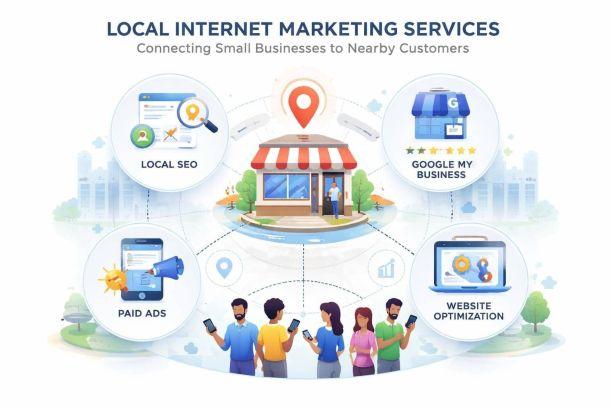
In 2026, AI marketing services are not just a buzzword, they are the driving force behind digital business success. Brands of all sizes are harnessing AI marketing services to attract, engage, and convert customers more efficiently than ever.
This essential guide breaks down everything you need to know about AI marketing services. Whether you are a business owner, marketer, or decision-maker, you will find a clear roadmap for understanding and using these powerful tools to stay ahead.
We will explore how AI has evolved in marketing, the core services available today, and the practical steps to implement them. You will also discover the real benefits, common mistakes to avoid, and expert insights to help your business stand out in the AI era.
Ready to future-proof your marketing? Let’s dive in.
The Evolution of AI Marketing: Where We Are in 2026
The journey of ai marketing services has seen more progress in the last five years than in the previous two decades. Businesses have moved from simple automation tools that handled repetitive email sends or social posts to genuinely intelligent systems that understand context, predict behaviour, and personalise every interaction.
The Journey from Automation to Intelligence
In the early 2020s, ai marketing services were mostly about automating repetitive tasks. Marketers relied on rule-based systems to schedule emails or trigger ads. But as machine learning advanced, brands started to see the potential for deeper personalisation and smarter decision-making.
The launch of generative AI and large language models (LLMs) like ChatGPT-4, Gemini, and Claude marked a turning point. Suddenly, it became possible to generate natural, engaging content at scale. These tools didn’t just follow rules—they learned from data, adapted to customer behaviour, and responded in real time.
A key milestone was when mainstream marketers began integrating conversational AI, making every customer touchpoint more interactive and dynamic. By 2025, 78% of UK businesses were using some form of ai marketing services, according to Media Village. This rapid adoption hasn’t just changed the tools marketers use; it has transformed how teams blend creativity with data-driven insights. The result is a new era where human ideas and AI intelligence work together to drive growth.
The Current AI Marketing Landscape
Today, ai marketing services cover a wide range of technologies. Generative AI creates blog posts, product descriptions, and even ad copy. Predictive analytics forecasts customer behaviour, while natural language processing (NLP) powers chatbots and sentiment analysis. Computer vision is used for visual search and creative asset generation.
The gap between enterprise and SME adoption is closing fast. Smaller businesses now have access to affordable, user-friendly AI platforms. Agencies like Media Village and Impression Digital have helped clients transform results, with 65% of SMEs reporting improved ROI after adopting ai marketing services. Regulatory and ethical issues are more important than ever, with GDPR compliance, data privacy, and transparency at the forefront.
If you want to dig deeper into the numbers and trends behind this transformation, the AI Marketing Adoption Statistics 2025 report offers a comprehensive look at how businesses are leveraging AI for measurable gains. The landscape is shifting rapidly, but those who embrace the change are seeing real business impact.
Future Trends to Watch
Looking ahead, ai marketing services are set to become even more influential. One major trend is the rise of AI-powered search, where content is optimised for LLM-driven engines like ChatGPT and Perplexity. This shift is changing the way brands approach SEO and content creation.
Integration is another big theme. AI tools now work seamlessly with websites, email platforms, and paid advertising channels. Marketers can map user journeys and optimise conversion rates using real-time data and AI-driven insights. Human-AI collaboration is also evolving, with marketers and machines working side by side to strategise, create, and execute campaigns.
Expect to see continued growth in personalised experiences, smarter automation, and cross-channel consistency. Businesses that invest in ai marketing services today will be best positioned to thrive as these trends accelerate. The future is about agility, creativity, and making the most of what AI can offer.
Core AI Marketing Services Explained
AI marketing services have completely transformed the digital landscape for businesses of all sizes. From content creation to ad management, these tools are rewriting the rules of engagement, speed, and scale in 2026.
Content Creation & Generative AI
AI marketing services are now at the heart of content production. With generative AI, you can create everything from blog posts and product descriptions to graphics and videos in a fraction of the time.
Training AI on your brand voice is crucial. Agencies now use upload-ready tone documents and prompt kits to keep messaging consistent. For example, Media Village reports that agencies using prompt engineering see content production speeds increase by 80%.
While AI can handle the bulk of creation, human oversight is essential. Editors ensure quality, accuracy, and that your brand’s personality shines through.
SEO & Generative Engine Optimisation (GEO)
SEO is evolving fast, and ai marketing services are leading the way. AI tools now handle keyword research, technical audits, and even optimise content for large language models (LLMs) like ChatGPT and Perplexity.
Optimising for AI-driven search (GEO) means your content can be found by both search engines and conversational AI platforms. Agencies are building LLM-readable content guides, and 60% of new organic traffic in 2026 comes from AI search. For a deeper dive into these strategies, check out Generative AI for SEO.
AI-driven SEO is not just for big brands. SMEs are using these same tools to punch above their weight and claim more organic traffic.
Paid Media & AI-Powered Ad Management
Paid advertising has been supercharged by ai marketing services. AI can now automate bid adjustments, test creative variations, and allocate budgets with precision.
Predictive analytics help you target the right audience at the right time. AI-driven reporting and attribution models give you clear insights into which campaigns are working. For example, SMEs running Google Ads and Meta Ads with AI see better ROI and lower costs.
This level of automation frees up your team to focus on strategy rather than manual tweaks.
Conversion Rate Optimisation (CRO) & User Experience
CRO is another area where ai marketing services shine. AI tools run A/B tests, analyse heatmaps, and map user journeys to spot conversion bottlenecks.
Personalisation is now possible at scale. AI can deliver tailored website experiences for every visitor. Shopify stores, for instance, often report a 25-40% boost in conversion rates after implementing AI-driven CRO.
The end result? More sales, more leads, and a smoother customer journey from start to finish.
AI-Enhanced Email Marketing & Automation
Email is far from dead, thanks to ai marketing services. AI can craft hyper-personalised campaigns, predict the best send times, and recommend content based on past customer behaviour.
Integration with CRM and e-commerce platforms enables automated workflows that nurture leads and drive repeat sales. AI-powered segmentation means every customer receives relevant, timely messaging.
Small businesses can now compete with enterprise-level personalisation, all while saving hours each week.
AI Training, Enablement & Team Workshops
None of these ai marketing services deliver full value without skilled people behind them. That’s why training and enablement are essential.
Live workshops, prompt sheets, and ongoing support help teams build confidence and capability. Agencies like Media Village offer hands-on training so marketers can use AI tools effectively.
Companies investing in structured AI training see adoption rates double, turning technology investments into real business gains.
Step-by-Step: How to Implement AI Marketing Services in Your Business
Implementing ai marketing services can feel daunting, but breaking the process into clear, practical steps makes it manageable. Here’s your roadmap for rolling out ai marketing services in a way that drives results while building team confidence.
Step 1: Assessing Your Needs and Readiness
Start with a discovery audit. Review your current marketing tools, workflows, and your team’s skillset. This step is crucial for understanding where ai marketing services can have the biggest impact.
Identify pain points and untapped opportunities. Is content creation slow Are you missing out on SEO gains Is reporting a manual slog Pinpointing your top priorities helps you focus your ai marketing services investment.
Many agencies offer free discovery calls or audits to help you spot these gaps. These conversations can spark ideas and give you a sense of what’s possible for your business.
Step 2: Selecting the Right Tools and Partners
With your needs mapped out, it’s time to choose your tools and collaborators. Look for ai marketing services that are scalable, work well with your existing tech stack, and offer robust support.
Compare leading platforms like ChatGPT, Gemini, Claude, and Jasper. For sector-specific needs, consider tools built for your industry. Deciding between working with an agency or building in-house capability is a big step. Agencies often bring experience, speed, and a proven process. If you want a deeper dive on how agencies operate, check out these AI marketing agency insights.
Evaluate each option carefully. Think about long-term fit, data privacy, and how easily your team can adopt new solutions.
Step 3: Strategy and Prompt Engineering
This is where ai marketing services start to take shape for your business. Build tailored prompt systems that align with your brand’s tone and objectives.
Create upload-ready documentation, including tone-of-voice guides and strategic prompt packs. These resources help you generate content, SEO assets, or ad copy that feels on-brand and effective.
Prompt engineering isn’t a one-off task. Refine your prompts over time based on results and feedback. This iterative approach keeps your ai marketing services sharp and relevant.
Step 4: Team Training and Change Management
Upskilling your team is essential for successful ai marketing services adoption. Arrange live workshops, share real-world examples, and provide prompt sheets for hands-on learning.
Address resistance head-on. Some team members may worry about job security or feel overwhelmed by new tech. Regular training builds confidence and shows the value of human-AI collaboration.
Statistically, teams with structured AI training adopt ai marketing services twice as fast. Make learning ongoing, not a one-off event.
Step 5: Embedding, Testing, and Optimising
Now it’s time to put ai marketing services into your daily workflows. Start small, test in real situations, and gather feedback from your team.
Monitor performance using clear KPIs and reporting tools. Set up feedback loops to capture what’s working and what needs tweaking. Continuous optimisation is key: adjust prompts, refine workflows, and update documentation as your needs evolve.
This phase is about learning and improving, not seeking instant perfection.
Step 6: Scaling and Expanding AI Usage
Once you’ve got the basics running smoothly, look for ways to scale your ai marketing services. Add new tools, automate more processes, and expand usage across departments.
Consider integrating AI into sales, customer service, and product development. Plan for ongoing support and regular reviews, so your AI investment continues to deliver value as your business grows.
Scaling isn’t just about doing more. It’s about getting smarter, staying agile, and keeping your business ahead of the curve with ai marketing services.
The Real-World Benefits of AI Marketing Services
AI marketing services have moved beyond buzzwords. They now deliver practical, measurable value for businesses of all sizes. Let’s break down the most important real-world benefits you can expect from adopting these solutions.
Measurable ROI and Performance Improvements
One of the strongest cases for ai marketing services is their proven impact on business performance. With AI, content production speeds up, quality improves, and campaigns become more data-driven. For example, AI-powered website and conversion optimisation can lead to a 25-40% uplift in conversion rates. Agencies using AI-based conversion optimisation report faster wins and smarter testing cycles.
Businesses see improved SEO rankings, more organic traffic, and lower ad costs thanks to predictive analytics. The result? Marketing budgets stretch further, and every pound spent returns more value. That’s a bottom-line benefit no business can ignore.
Enhanced Personalisation and Customer Experience
Ai marketing services excel at understanding and segmenting customer data. This means more relevant messages, tailored offers, and dynamic website experiences for every visitor. Instead of generic email blasts, AI can personalise subject lines, content, and send times, making each contact feel genuinely one-to-one.
Ecommerce brands and SMEs can now compete with bigger players, delivering bespoke journeys at scale. The result is higher engagement, better retention, and customers who feel truly understood. In a world where attention is scarce, this level of personalisation is a game changer.
Operational Efficiency and Time Savings
If your team spends hours on repetitive tasks, ai marketing services can be a real lifesaver. AI automates reporting, analyses data in seconds, and manages workflows that used to eat up valuable time. Teams adopting AI report saving between 10 and 20 hours a month, freeing up space for creative or strategic work.
Small teams especially benefit, as these tools level the playing field. Now, you can do the work of a larger department without the overhead. That’s efficiency at its best, and it means faster results for your business.
Human-AI Collaboration: The Best of Both Worlds
Ai marketing services aren’t here to replace your team, but to enhance what they do best. By working alongside AI, marketers can focus on strategy, creativity, and decision-making, while AI handles the heavy lifting of data and automation.
Research like the Collaborating with AI Agents Study shows that human-AI teams outperform either working alone. The secret lies in combining expert intuition with machine precision. The result? Smarter campaigns and a happier, more productive team.
Competitive Advantage in 2026
Early adopters of ai marketing services gain a serious edge. With faster execution, richer insights, and future-proofed SEO, businesses can leap ahead of slow-moving rivals. AI-driven content and GEO strategies mean you’re visible where your audience is searching—now and in the future.
Staying agile and open to new AI tools ensures your marketing remains effective in a changing landscape. In 2026, those who embrace AI will set the pace, while others play catch-up.
Common Pitfalls and How to Avoid Them
Even the best ai marketing services can stumble if you fall into common traps. To get real results, you need to steer clear of these pitfalls and take a practical approach.
Over-Reliance on Generic AI Outputs
Relying solely on out-of-the-box ai marketing services can dilute your brand’s unique voice and message. When everyone uses the same tools without customisation, you risk blending into the background.
- Brand voice gets lost in generic messaging
- Quality drops, leading to disengaged customers
- Your unique selling points may disappear
The fix? Custom prompt engineering and documentation tailored to your business. This ensures your ai marketing services reflect your values and connect with your audience.
Insufficient Human Oversight and Quality Control
AI can speed things up, but without expert review, mistakes slip through the cracks. Automated content and campaigns need human eyes for strategy, grammar, and accuracy.
- Always include a human review stage
- Use AI for drafts, but refine with expertise
- Regularly update guidelines to match your evolving brand
According to the CMO Survey Highlights 2025, brands that combine ai marketing services with human oversight report higher campaign effectiveness and fewer costly errors.
Failing to Train and Upskill Teams
Handing new tech to untrained teams leads to underuse or misuse. Without practical training, staff may avoid using ai marketing services or apply them incorrectly.
- Schedule regular workshops and hands-on sessions
- Provide clear use-case examples and prompt sheets
- Encourage a culture of experimentation and learning
Teams that invest in upskilling adopt ai marketing services faster and see better results.
Data Privacy and Ethical Considerations
With ai marketing services, data privacy is non-negotiable. Mishandling customer data can damage trust and breach regulations.
- Stay up to date with GDPR and data security laws
- Be transparent about AI use with your audience
- Implement ethical AI guidelines company-wide
A clear privacy policy and ethical framework are must-haves for 2026.
Poor Tool Selection and Integration
Choosing the wrong tools can lead to wasted budgets and workflow chaos. Not every solution fits every business.
- Evaluate tools for compatibility and scalability
- Prioritise seamless integration with existing systems
- Test before rolling out company-wide
Start small and scale up once your ai marketing services prove their value.
Lack of Ongoing Optimisation
Set-and-forget AI is a myth. If you don’t revisit your prompts and workflows, performance will stagnate.
- Schedule regular performance reviews
- Update prompts and processes as your business evolves
- Use feedback loops to drive continuous improvement
Optimisation keeps your ai marketing services sharp and effective.
Unrealistic Expectations and Hype
AI is powerful, but it’s not magic. Expecting instant, game-changing results often leads to disappointment.
- Set realistic targets and track incremental progress
- Focus on measurable wins, not hype
- Remember: AI is a tool, not a silver bullet
Stay grounded, and let your results speak for themselves.
If you’re serious about making AI work for your marketing in 2026 you don’t want to waste time on generic advice or tools that don’t fit your business. We’ve talked about real results personalisation and staying ahead of the competition—now let’s get practical. If you want honest straightforward insight into how AI marketing can actually boost your leads and sales for your business not just in theory let’s have a chat. Book your Get free 45 min consultation and I’ll help you cut through the noise figure out what matters for your business and build a plan that delivers real results.
Keep reading
More on ai

AI SEO Writer
AI is reshaping how we create content, and in 2026, the competition to rank in search is fiercer than ever. Brands and bloggers face a flood of generic articles, making it tough to stand out.

Blog Writing AI
Imagine cutting your blog writing time from hours to minutes, while never sacrificing quality or SEO. In 2026, blog writing ai has become a game-changer for businesses and creators alike.

Marketing Automation AI
AI is shaking up the marketing world, and 2025 is set to be the year marketing automation ai becomes the secret weapon for business growth. If you want to beat the competition, work smarter, and get more out of every marketing pound, you’re in the right place.
Want this done rather than read?
Tell me what you sell and what isn't working. The audit that starts every engagement is free, and you keep the roadmap either way.