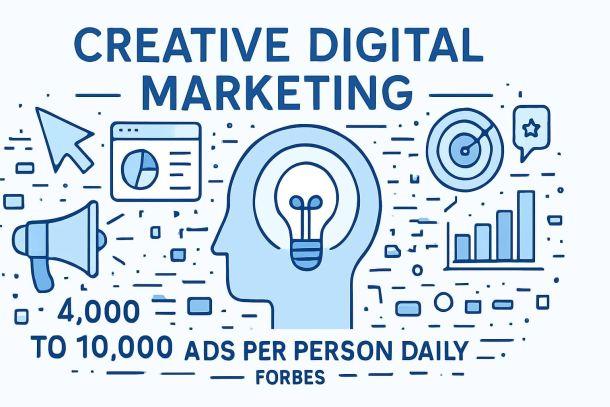
Every day, you’re hit with between 4,000 and 10,000 ads, according to Forbes. No wonder it feels like brands are shouting over one another just to be seen. The truth? Throwing more money at ads won’t cut through this noise.
Brands that blend creative digital marketing with smart strategy are 12 times more effective, says LinkedIn. If you’re tired of blending in, you’re in the right place. This guide hands you actionable strategies designed for 2026’s fast-changing digital world.
We’ll cover rising trends, creative frameworks, the role of AI, how to measure what matters, and real examples. Let’s make your marketing stand out.
The Evolution of Creative Digital Marketing
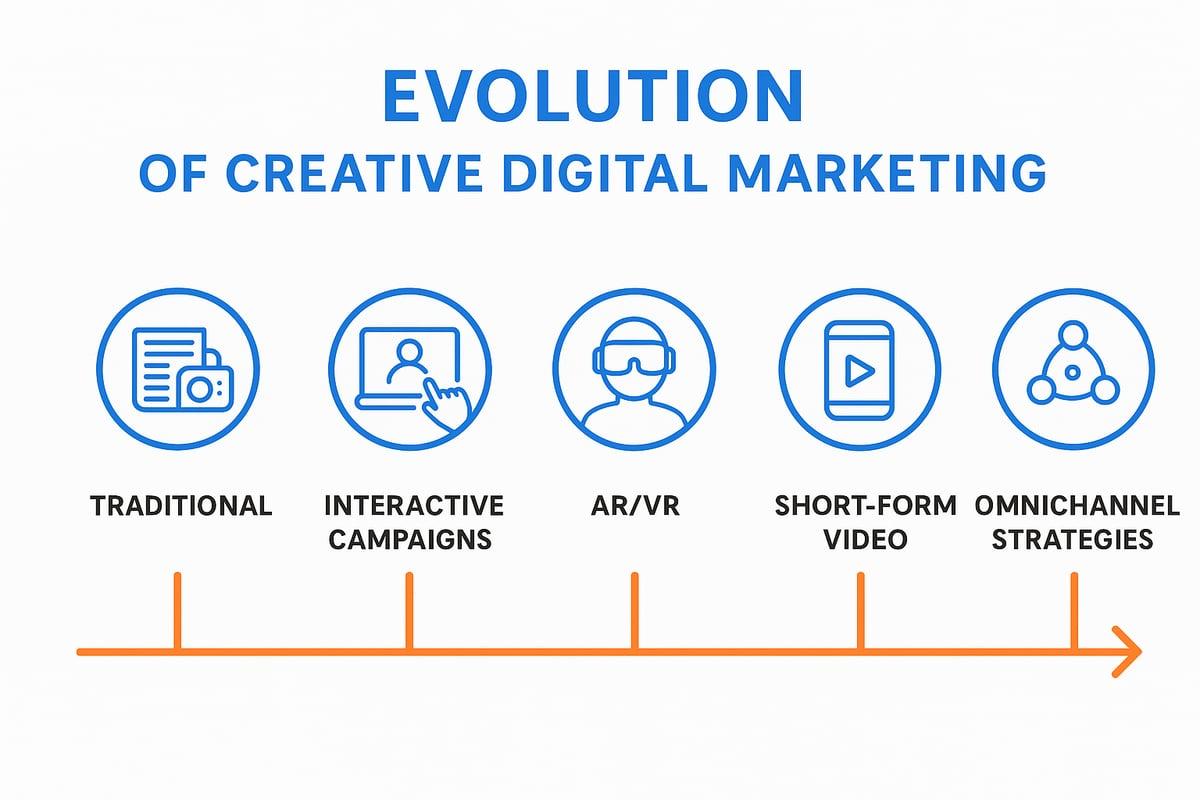
The world of creative digital marketing never stands still. Brands can no longer rely on old playbooks. The journey from traditional to digital creativity has transformed how we connect, inspire, and convert audiences.

From Traditional to Digital Creativity
Traditional marketing focused on mass messages and clever slogans. It was about being loud or different, but often not relevant. Creative digital marketing flips the script. Now, standing out means hitting the right note at the right time.
Today, relevance and resonance matter more than novelty. Interactive, immersive, and experiential campaigns are now the backbone of creative digital marketing. For example, Kai Urban Retreat’s digital experience used emotional storytelling, outperforming generic ads by sparking real audience connection.
It’s not just about looks or flashy gimmicks. According to the ARF, creative quality drives 47% of sales contribution. That’s huge. Brands are blending data-driven insights with creative digital marketing to find the sweet spot between numbers and ideas.
We’re seeing a big shift towards micro-moments and personalised content. Audiences want brands to understand their needs, moods, and contexts. If you want to dive deeper into how interactive and immersive formats are reshaping campaigns, check out these interactive marketing agency insights.
Personalisation is now expected, not optional. The best creative digital marketing uses data to fuel creativity, building campaigns that feel personal and meaningful.
Key Trends Shaping 2026
Looking ahead to 2026, creative digital marketing is evolving at lightning speed. AI is getting smarter, but the brands winning hearts are those blending technology with human authenticity. Just look at Mulberry, who combine sophisticated AI with genuine storytelling.
Omnichannel strategies are the new norm. Brands must integrate social, search, and owned channels for a seamless experience. Short-form video and carousel content dominate feeds, offering quick, impactful stories that stick.
User-generated content and influencer collaborations remain powerful. People trust people, not faceless brands. Success comes from tapping into real voices and communities.
Cultural adaptation is also essential. The most effective creative digital marketing campaigns balance global ideas with local nuance. The International Jewellery Fair’s virtual showroom is a great example, reaching 46,060 people and generating 77,433 impressions with a cost per click of just $0.21.
To keep up, brands need to experiment, test, and adapt. Creative digital marketing in 2026 is about agility, relevance, and a willingness to break the mould.
Building a Creative Digital Marketing Strategy for 2026
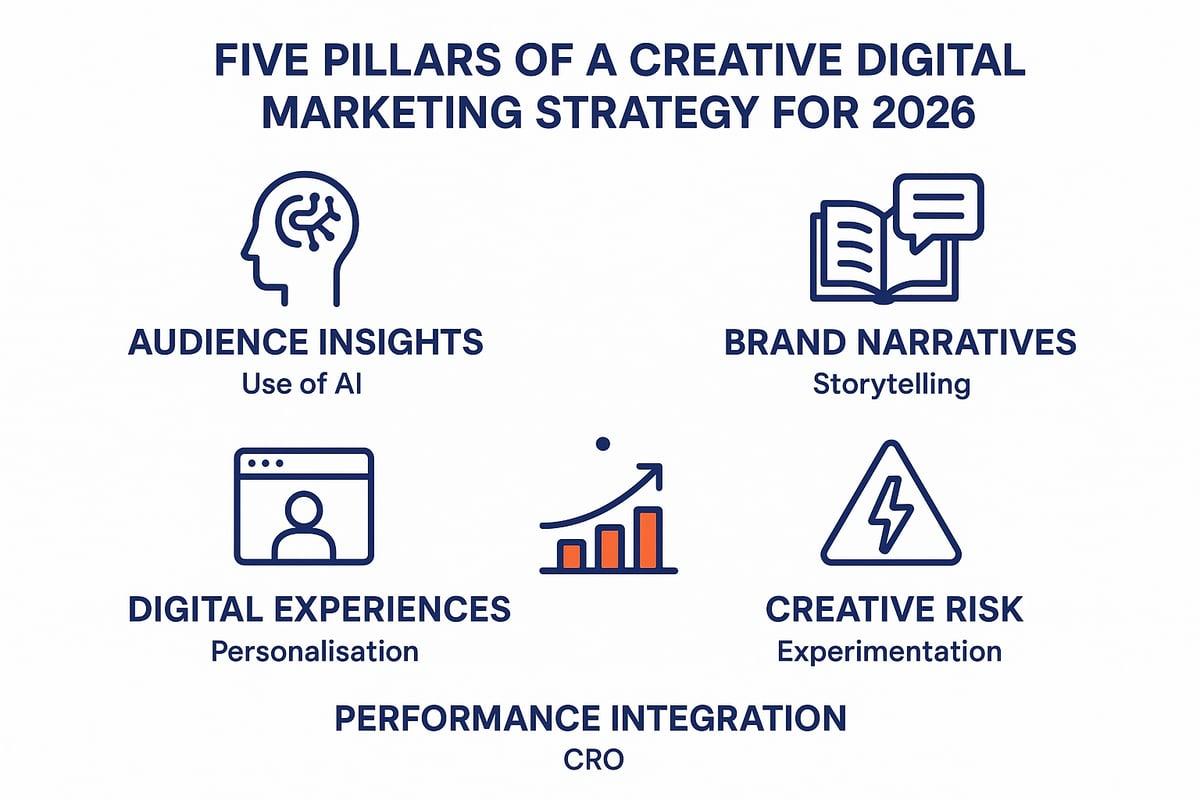
Navigating the world of creative digital marketing in 2026 means more than just flashy visuals or catchy slogans. Success comes from blending insight, empathy, and bold strategy. Let's break down how to build a creative digital marketing plan that actually delivers results in a fast-changing landscape.

Understanding Your Audience in Depth
Great creative digital marketing starts with understanding what really drives your audience. Go past basic demographics and dig into their emotional triggers, motivations, and cultural context. Use empathy mapping and customer journey analysis to uncover what matters most at each stage.
Today’s AI and analytics tools let you unlock deep insights, identifying micro-segments and predicting what will resonate. For example, Flowers Vasette’s campaigns on Little Red Book succeeded by combining local relevance with cross-cultural influencer partnerships. Want to see how AI can supercharge your audience research and creative strategy? Explore AI-powered marketing strategies for practical ways to combine data and creativity for better results.
- Move beyond age and gender to motivations and values
- Map emotional journeys, not just buying cycles
- Use AI to spot patterns invisible to the naked eye
The more you know your audience, the more your creative digital marketing hits home.
Crafting Compelling Brand Narratives
To stand out, your creative digital marketing needs a story that sticks. Use storytelling frameworks like the story spine or hero’s journey to structure your campaigns. Emotional branding is powerful, with neuroscience showing that stories trigger memory and influence decisions much more than facts alone.
Align your narrative with your brand’s values and your audience’s aspirations. The best campaigns inspire action, not just attention. For example, brands that focus on a purpose-driven message often spark deeper engagement than those chasing trends.
| Narrative Element | Impact on Audience |
|---|---|
| Emotional hook | Stronger recall |
| Clear values | Builds trust |
| Aspirational end | Drives action and loyalty |
A compelling story is the heart of every successful creative digital marketing campaign.
Designing Memorable Digital Experiences
Memorable moments are what set creative digital marketing apart. Think about the architecture of your brand touchpoints—what will people remember and share? Use immersive formats like AR, 360° video, and interactive quizzes to create experiences that stick.
Personalisation is key, but it needs to feel authentic. Balancing automation with a human touch ensures your campaigns don’t come off as robotic. Virtual showrooms and interactive product demos are excellent examples, offering both engagement and useful information.
- AR and 360° video bring products to life
- Interactive quizzes drive participation and gather insights
- Personalised experiences boost satisfaction and conversions
Make every interaction count in your creative digital marketing journey.
Taking Calculated Creative Risks
Playing it safe rarely leads to breakthroughs in creative digital marketing. Encourage experimentation within your team. Test bold ideas, even if they seem risky. When competitors stick to the same old tactics, daring creative choices can help you leap ahead.
Learn from both wins and failures. Track what worked, what didn’t, and why. Campaigns that take creative risks often see higher brand lift and deeper audience connection.
- Run small experiments to test big ideas
- Analyse and learn from every campaign outcome
- Foster a culture that rewards smart risk-taking
Remember, creative digital marketing is about progress, not perfection.
Integrating Creative with Performance Marketing
The most effective creative digital marketing blends imagination with measurable results. Bring together creative assets and conversion-focused strategies using proven CRO (conversion rate optimisation) techniques. High-converting Shopify pages, for example, combine engaging visuals with persuasive copy.
Every creative idea should connect to a clear business goal. Use data to refine your approach, ensuring creativity drives real revenue and not just likes. Test and tweak your creative assets regularly, using analytics to guide improvements.
- Align creative with sales or lead targets
- Use A/B testing for continuous improvement
- Balance brand building with direct response
When creativity and performance work together, creative digital marketing becomes a true growth engine.
Emerging Creative Formats & Channels for 2026
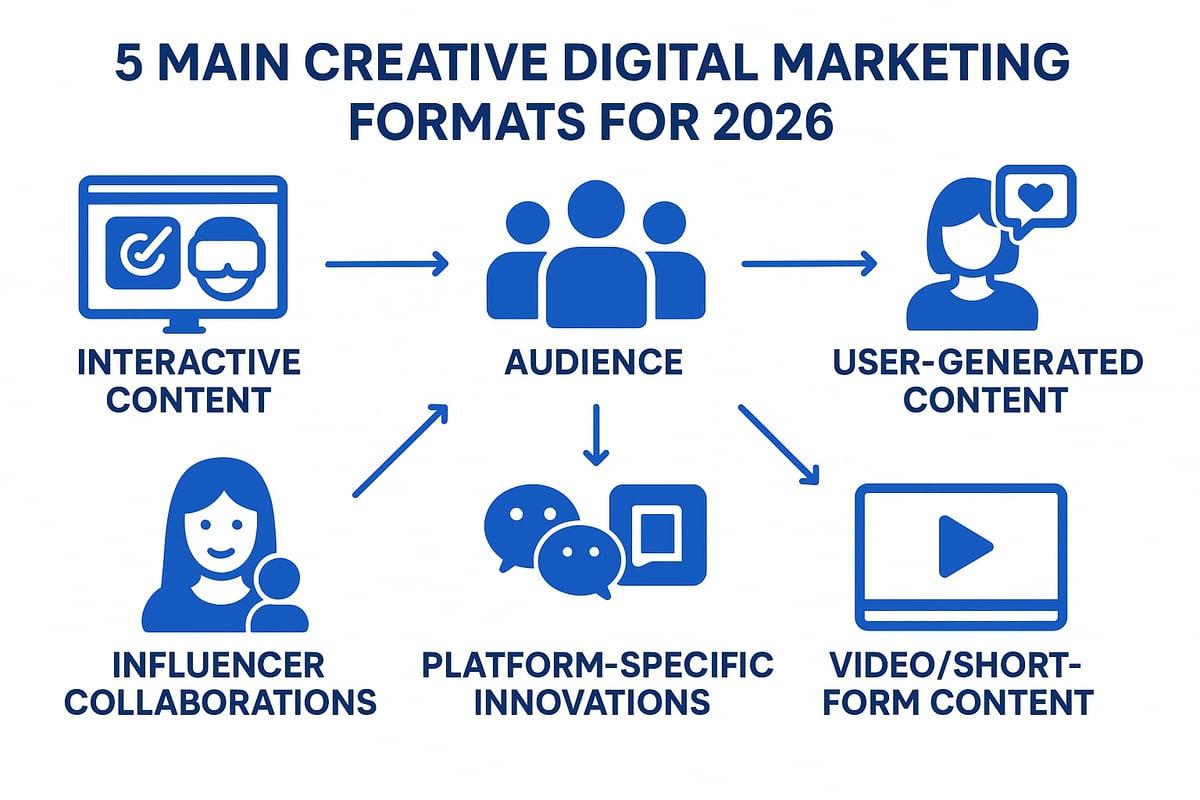
Brands need to keep pace with the rapid changes in creative digital marketing, as audiences crave new and engaging experiences. In 2026, standing out means experimenting with formats and channels that invite participation, spark emotion, and adapt to cultural shifts.

Interactive & Immersive Content
Interactive content is reshaping creative digital marketing by turning passive viewers into active participants. Quizzes, assessments, and gamified experiences invite users to engage, collect valuable insights, and make the brand memorable.
AR and VR are now more accessible, allowing brands to build immersive product demos and virtual showrooms. 360° storytelling draws audiences into a brand’s world, building emotional connections. Micro-moments content—short, purposeful pieces delivered at critical journey points—ensures relevance, capturing attention just when it matters.
- Quizzes and polls for engagement and lead generation
- AR/VR try-ons or walkthroughs for deeper immersion
- Interactive demos for complex products
Experimenting with these formats is key to delivering creative digital marketing that resonates and converts.
User-Generated Content & Community
Trust is everything in creative digital marketing, and nothing builds it like authentic user voices. Brands are harnessing user-generated content (UGC) through reviews, testimonials, and customer stories, transforming real experiences into powerful marketing assets.
Running UGC-driven campaigns on Instagram and TikTok motivates audiences to share their own stories, creating a sense of community. This not only boosts reach but also delivers social proof that paid ads can’t buy.
- Feature customer reviews on product pages
- Launch hashtag challenges to encourage participation
- Share user stories in branded content
The result? Creative digital marketing that feels genuine, relatable, and community-driven.
Influencer & KOL Collaborations
Influencer partnerships remain a cornerstone of creative digital marketing. Strategic collaborations with micro and macro influencers, as well as KOLs on platforms like Little Red Book, provide brands with instant credibility and access to highly targeted audiences.
The most effective partnerships go beyond reach—they ensure influencers’ values align with the brand and audience. This means carefully vetting partners and co-creating content that fits both parties’ styles.
- Partner with micro-influencers for niche authenticity
- Work with KOLs to break into new markets
- Involve influencers in product launches and reviews
Smart influencer marketing in creative digital marketing builds trust, drives engagement, and sparks cultural relevance.
Platform-Specific Innovations
Success in creative digital marketing often depends on understanding the nuances of each platform. In 2026, WeChat’s Mini Programs, Moment Ads, and Official Accounts are essential for reaching over 1.2 billion Chinese users. Little Red Book excels at community building and visual storytelling for e-commerce.
Australian brands have found success adapting campaigns for Chinese digital platforms, using local insights to enhance global creativity. Knowing how to tailor content by platform unlocks new audiences and boosts impact.
- Use WeChat Mini Programs for interactive shopping
- Build brand communities on Little Red Book
- Localise content for cultural resonance
Platform-specific creative digital marketing ensures messages land with the right people, in the right way.
Video and Short-Form Content
Video content is dominating creative digital marketing, especially on social and paid channels. Short-form videos and carousel posts grab attention quickly and foster higher engagement than static images. Stories formats on Instagram, TikTok, and Facebook offer brands a way to share authentic, timely updates.
Data shows that short-form video continues to outperform static content in brand recall and conversion. For the latest statistics and trends in this space, see Digital Marketing Statistics 2026: Key Data, Trends & Growth Insights.
- Create punchy videos to showcase products in action
- Use carousel posts for storytelling or product features
- Tap Stories for behind-the-scenes content
For creative digital marketing in 2026, video and short-form content are the gold standard for grabbing—and holding—audience attention.
Leveraging AI and Technology for Creative Advantage
Artificial intelligence has become the engine room of creative digital marketing. It is not just about working faster. Today, brands use AI to unlock deeper insights, create more engaging content, and deliver truly personalised experiences. If you want to stay ahead in 2026, you need to blend creativity with technology, not just rely on gut instinct or guesswork.
AI-Powered Audience Insights and Personalisation
Understanding your audience is the backbone of creative digital marketing. AI tools now sift through millions of data points to reveal what motivates your customers, from buying triggers to emotional cues. This means you can craft campaigns that feel personal, not generic.
You can use AI to segment your audience, predict future behaviour, and even recommend content in real time. The days of relying on basic demographics are over. Instead, you can build empathy maps and customer journeys that reflect real human needs.
Want to see how this works in practice? Check out AI marketing analytics explained for a deep dive into using AI for insights and creative measurement.
Generative Engine Optimisation (GEO)
Search is evolving. Generative Engine Optimisation, or GEO, is about making your content visible to AI-driven search tools, not just traditional search engines. This is a new frontier for creative digital marketing.
To get started, structure your data clearly, add FAQs, and write in a natural, conversational tone. AI-powered engines like ChatGPT and Google AI Overviews reward content that answers questions directly and feels human.
The key is to blend creative storytelling with technical SEO. By doing this, you ensure your brand stands out in both search and conversational discovery.
Automation in Creative Production
AI is changing how we produce creative digital marketing assets. You can now generate copy, video, and images in minutes, not weeks. Automated workflows mean faster turnarounds and more room for experimentation.
For example, automated email campaigns can now include dynamic creative elements tailored to each user. This boosts engagement and frees up your team to focus on strategy and big ideas.
The smart move is to use automation for repetitive tasks, while keeping creative direction firmly in human hands.
Ethical and Responsible Use of AI
Ethics matter more than ever in creative digital marketing. Customers can spot inauthentic content a mile off. Responsible AI use means being transparent about automation and never sacrificing brand trust for efficiency.
You should always balance AI’s efficiency with authenticity. Make sure your data practices are ethical and compliant with privacy regulations. Avoid using AI just for the sake of it. The real goal is to enhance creativity, not replace it.
Being open about your use of AI helps build trust with your audience and sets you apart from competitors who cut corners.
Training and Upskilling Teams
To truly succeed with creative digital marketing, invest in your people as well as your tech. AI is evolving fast, so regular training is essential. Upskill your team in both creative thinking and AI tools to future-proof your marketing.
Many businesses now offer AI and ChatGPT workshops for their staff. This ensures everyone can use the latest tools confidently and creatively. When your team is empowered, your campaigns become more innovative and effective.
Make training a core part of your creative digital marketing strategy and you will always stay ahead of the curve.
Measuring Creative Digital Marketing Success
Measuring the real impact of creative digital marketing goes far beyond counting clicks or likes. To truly understand what works, you need to track the right metrics, use smart tools, and act on what you learn. Let’s dig into how you can prove and improve the value of your creative digital marketing efforts.
Beyond Vanity Metrics: What to Measure
Not all metrics are created equal. In creative digital marketing, you want to look past surface numbers and focus on what actually tells you if your campaigns resonate.
Some key metrics include:
- Engagement: Shares, saves, comments, and how long people interact with your content
- Brand lift: Changes in brand perception, recall, and intent to purchase
- Sentiment analysis: Tracking positive or negative reactions to your campaigns
- Conversion attribution: Connecting creative elements directly to sales or leads
A simple table helps clarify which metrics matter most:
| Metric | What It Tells You | Why It Matters |
|---|---|---|
| Engagement | Audience interaction | Indicates resonance |
| Brand Lift | Brand perception shift | Measures creative impact |
| Sentiment | Emotional response | Informs future storytelling |
| Attribution | Source of conversions | Links creativity to revenue |
Focusing on these metrics means you’ll see the real business impact of your creative digital marketing, not just vanity numbers.
Tools and Techniques for Creative Measurement
Getting the right data means using the right tools. Advanced analytics platforms give you real-time insights into what’s working and what needs tweaking. A/B testing of creative assets lets you compare versions and refine your approach over time.
Multi-touch attribution models are essential for tracking complex customer journeys, especially when creative digital marketing spans multiple channels. For example, the International Jewellery Fair campaign tracked impressions, clicks, and cost per conversion to optimise spend and creative messaging.
If you want to push results even further, check out proven conversion rate optimisation techniques that blend creativity with data-driven decision making. This ensures your creative assets not only look great but also deliver measurable business results.
Iterative Improvement Based on Data
Creative digital marketing thrives on a test-and-learn mindset. Use insights from your metrics to refine your creative strategy and execution. Don’t just measure once and move on. Instead, build a culture of continuous improvement within your team.
Here’s how to make it work:
- Regularly review analytics for patterns and surprises
- Share learnings across channels and campaigns
- Encourage small experiments to see what resonates
- Refine creative assets based on real feedback
By iterating based on real-world data, you’ll keep your creative digital marketing sharp, relevant, and high-converting. The brands that win in 2026 will be those that measure, learn, and adapt with agility.
Why Work with a Specialist Creative Digital Marketing Studio?
Standing out in creative digital marketing is tough. The market is saturated, and generic agency solutions often miss the mark for smaller brands. That’s where a specialist creative digital marketing studio comes in, offering a tailored, hands-on approach that delivers real business results, not just pretty campaigns.

Unlike big agencies, specialist studios blend strategic thinking, creative execution, and technical know-how. You get direct access to experts who actually work on your campaigns, not layers of account managers. This means your creative digital marketing strategy is built for your business, not recycled from a template.
Here’s how a specialist studio like Marketing XP stacks up:
| Feature | Specialist Studio | Large Agency |
|---|---|---|
| Strategic focus | High | Variable |
| Creative innovation | Hands-on | Often generic |
| Technical expertise | Direct access | Layered |
| CRO and AI-driven campaigns | Included | Rarely tailored |
| Transparent pricing | Yes | Often hidden fees |
| SME results | Proven | Inconsistent |
Specialist studios excel at practical delivery. Whether it’s CRO-focused Shopify builds, immersive brand storytelling, or AI Marketing: Automating Creativity for Digital Campaigns, you get campaigns that engage and convert. The creative digital marketing process is collaborative—clients are empowered with training and tools so they can run smarter campaigns long after launch.
Clients see measurable growth: more leads, higher conversion rates, and greater local visibility. Real businesses have achieved results like 20 percent increases in bookings and double-digit improvements in revenue by working with a focused team that prioritises creative digital marketing impact.
When should you consider a specialist studio? If you’re an SME aiming for standout results, want transparent pricing, crave hands-on support, or need to integrate AI and creative digital marketing for 2026, a specialist offers the agility and expertise you won’t get from a big agency. It’s about making your marketing budget work harder, smarter, and more creatively.
If you’re serious about making your marketing actually work in 2026, you already know it’s not just about throwing more money at ads or copying what everyone else is doing. Getting creative, understanding your audience on a deeper level, and using the right mix of AI and hands-on strategy is what gets real results. If you’d like an honest, no-nonsense look at your current digital marketing—and some clear steps to boost your leads or sales—why not book a Get free 45 min consultation with me? Let’s see where you can make your marketing work harder.
Every day, you’re hit with between 4,000 and 10,000 ads, according to Forbes. No wonder it feels like brands are shouting over one another just to be seen. The truth? Throwing more money at ads won’t cut through this noise.
Brands that blend creative digital marketing with smart strategy are 12 times more effective, says LinkedIn. If you’re tired of blending in, you’re in the right place. This guide hands you actionable strategies designed for 2026’s fast-changing digital world.
We’ll cover rising trends, creative frameworks, the role of AI, how to measure what matters, and real examples. Let’s make your marketing stand out.
The Evolution of Creative Digital Marketing
The world of creative digital marketing never stands still. Brands can no longer rely on old playbooks. The journey from traditional to digital creativity has transformed how we connect, inspire, and convert audiences.

From Traditional to Digital Creativity
Traditional marketing focused on mass messages and clever slogans. It was about being loud or different, but often not relevant. Creative digital marketing flips the script. Now, standing out means hitting the right note at the right time.
Today, relevance and resonance matter more than novelty. Interactive, immersive, and experiential campaigns are now the backbone of creative digital marketing. For example, Kai Urban Retreat’s digital experience used emotional storytelling, outperforming generic ads by sparking real audience connection.
It’s not just about looks or flashy gimmicks. According to the ARF, creative quality drives 47% of sales contribution. That’s huge. Brands are blending data-driven insights with creative digital marketing to find the sweet spot between numbers and ideas.
We’re seeing a big shift towards micro-moments and personalised content. Audiences want brands to understand their needs, moods, and contexts. If you want to dive deeper into how interactive and immersive formats are reshaping campaigns, check out these interactive marketing agency insights.
Personalisation is now expected, not optional. The best creative digital marketing uses data to fuel creativity, building campaigns that feel personal and meaningful.
Key Trends Shaping 2026
Looking ahead to 2026, creative digital marketing is evolving at lightning speed. AI is getting smarter, but the brands winning hearts are those blending technology with human authenticity. Just look at Mulberry, who combine sophisticated AI with genuine storytelling.
Omnichannel strategies are the new norm. Brands must integrate social, search, and owned channels for a seamless experience. Short-form video and carousel content dominate feeds, offering quick, impactful stories that stick.
User-generated content and influencer collaborations remain powerful. People trust people, not faceless brands. Success comes from tapping into real voices and communities.
Cultural adaptation is also essential. The most effective creative digital marketing campaigns balance global ideas with local nuance. The International Jewellery Fair’s virtual showroom is a great example, reaching 46,060 people and generating 77,433 impressions with a cost per click of just $0.21.
To keep up, brands need to experiment, test, and adapt. Creative digital marketing in 2026 is about agility, relevance, and a willingness to break the mould.
Building a Creative Digital Marketing Strategy for 2026
Navigating the world of creative digital marketing in 2026 means more than just flashy visuals or catchy slogans. Success comes from blending insight, empathy, and bold strategy. Let's break down how to build a creative digital marketing plan that actually delivers results in a fast-changing landscape.

Understanding Your Audience in Depth
Great creative digital marketing starts with understanding what really drives your audience. Go past basic demographics and dig into their emotional triggers, motivations, and cultural context. Use empathy mapping and customer journey analysis to uncover what matters most at each stage.
Today’s AI and analytics tools let you unlock deep insights, identifying micro-segments and predicting what will resonate. For example, Flowers Vasette’s campaigns on Little Red Book succeeded by combining local relevance with cross-cultural influencer partnerships. Want to see how AI can supercharge your audience research and creative strategy? Explore AI-powered marketing strategies for practical ways to combine data and creativity for better results.
- Move beyond age and gender to motivations and values
- Map emotional journeys, not just buying cycles
- Use AI to spot patterns invisible to the naked eye
The more you know your audience, the more your creative digital marketing hits home.
Crafting Compelling Brand Narratives
To stand out, your creative digital marketing needs a story that sticks. Use storytelling frameworks like the story spine or hero’s journey to structure your campaigns. Emotional branding is powerful, with neuroscience showing that stories trigger memory and influence decisions much more than facts alone.
Align your narrative with your brand’s values and your audience’s aspirations. The best campaigns inspire action, not just attention. For example, brands that focus on a purpose-driven message often spark deeper engagement than those chasing trends.
| Narrative Element | Impact on Audience |
|---|---|
| Emotional hook | Stronger recall |
| Clear values | Builds trust |
| Aspirational end | Drives action and loyalty |
A compelling story is the heart of every successful creative digital marketing campaign.
Designing Memorable Digital Experiences
Memorable moments are what set creative digital marketing apart. Think about the architecture of your brand touchpoints—what will people remember and share? Use immersive formats like AR, 360° video, and interactive quizzes to create experiences that stick.
Personalisation is key, but it needs to feel authentic. Balancing automation with a human touch ensures your campaigns don’t come off as robotic. Virtual showrooms and interactive product demos are excellent examples, offering both engagement and useful information.
- AR and 360° video bring products to life
- Interactive quizzes drive participation and gather insights
- Personalised experiences boost satisfaction and conversions
Make every interaction count in your creative digital marketing journey.
Taking Calculated Creative Risks
Playing it safe rarely leads to breakthroughs in creative digital marketing. Encourage experimentation within your team. Test bold ideas, even if they seem risky. When competitors stick to the same old tactics, daring creative choices can help you leap ahead.
Learn from both wins and failures. Track what worked, what didn’t, and why. Campaigns that take creative risks often see higher brand lift and deeper audience connection.
- Run small experiments to test big ideas
- Analyse and learn from every campaign outcome
- Foster a culture that rewards smart risk-taking
Remember, creative digital marketing is about progress, not perfection.
Integrating Creative with Performance Marketing
The most effective creative digital marketing blends imagination with measurable results. Bring together creative assets and conversion-focused strategies using proven CRO (conversion rate optimisation) techniques. High-converting Shopify pages, for example, combine engaging visuals with persuasive copy.
Every creative idea should connect to a clear business goal. Use data to refine your approach, ensuring creativity drives real revenue and not just likes. Test and tweak your creative assets regularly, using analytics to guide improvements.
- Align creative with sales or lead targets
- Use A/B testing for continuous improvement
- Balance brand building with direct response
When creativity and performance work together, creative digital marketing becomes a true growth engine.
Emerging Creative Formats & Channels for 2026
Brands need to keep pace with the rapid changes in creative digital marketing, as audiences crave new and engaging experiences. In 2026, standing out means experimenting with formats and channels that invite participation, spark emotion, and adapt to cultural shifts.

Interactive & Immersive Content
Interactive content is reshaping creative digital marketing by turning passive viewers into active participants. Quizzes, assessments, and gamified experiences invite users to engage, collect valuable insights, and make the brand memorable.
AR and VR are now more accessible, allowing brands to build immersive product demos and virtual showrooms. 360° storytelling draws audiences into a brand’s world, building emotional connections. Micro-moments content—short, purposeful pieces delivered at critical journey points—ensures relevance, capturing attention just when it matters.
- Quizzes and polls for engagement and lead generation
- AR/VR try-ons or walkthroughs for deeper immersion
- Interactive demos for complex products
Experimenting with these formats is key to delivering creative digital marketing that resonates and converts.
User-Generated Content & Community
Trust is everything in creative digital marketing, and nothing builds it like authentic user voices. Brands are harnessing user-generated content (UGC) through reviews, testimonials, and customer stories, transforming real experiences into powerful marketing assets.
Running UGC-driven campaigns on Instagram and TikTok motivates audiences to share their own stories, creating a sense of community. This not only boosts reach but also delivers social proof that paid ads can’t buy.
- Feature customer reviews on product pages
- Launch hashtag challenges to encourage participation
- Share user stories in branded content
The result? Creative digital marketing that feels genuine, relatable, and community-driven.
Influencer & KOL Collaborations
Influencer partnerships remain a cornerstone of creative digital marketing. Strategic collaborations with micro and macro influencers, as well as KOLs on platforms like Little Red Book, provide brands with instant credibility and access to highly targeted audiences.
The most effective partnerships go beyond reach—they ensure influencers’ values align with the brand and audience. This means carefully vetting partners and co-creating content that fits both parties’ styles.
- Partner with micro-influencers for niche authenticity
- Work with KOLs to break into new markets
- Involve influencers in product launches and reviews
Smart influencer marketing in creative digital marketing builds trust, drives engagement, and sparks cultural relevance.
Platform-Specific Innovations
Success in creative digital marketing often depends on understanding the nuances of each platform. In 2026, WeChat’s Mini Programs, Moment Ads, and Official Accounts are essential for reaching over 1.2 billion Chinese users. Little Red Book excels at community building and visual storytelling for e-commerce.
Australian brands have found success adapting campaigns for Chinese digital platforms, using local insights to enhance global creativity. Knowing how to tailor content by platform unlocks new audiences and boosts impact.
- Use WeChat Mini Programs for interactive shopping
- Build brand communities on Little Red Book
- Localise content for cultural resonance
Platform-specific creative digital marketing ensures messages land with the right people, in the right way.
Video and Short-Form Content
Video content is dominating creative digital marketing, especially on social and paid channels. Short-form videos and carousel posts grab attention quickly and foster higher engagement than static images. Stories formats on Instagram, TikTok, and Facebook offer brands a way to share authentic, timely updates.
Data shows that short-form video continues to outperform static content in brand recall and conversion. For the latest statistics and trends in this space, see Digital Marketing Statistics 2026: Key Data, Trends & Growth Insights.
- Create punchy videos to showcase products in action
- Use carousel posts for storytelling or product features
- Tap Stories for behind-the-scenes content
For creative digital marketing in 2026, video and short-form content are the gold standard for grabbing—and holding—audience attention.
Leveraging AI and Technology for Creative Advantage
Artificial intelligence has become the engine room of creative digital marketing. It is not just about working faster. Today, brands use AI to unlock deeper insights, create more engaging content, and deliver truly personalised experiences. If you want to stay ahead in 2026, you need to blend creativity with technology, not just rely on gut instinct or guesswork.
AI-Powered Audience Insights and Personalisation
Understanding your audience is the backbone of creative digital marketing. AI tools now sift through millions of data points to reveal what motivates your customers, from buying triggers to emotional cues. This means you can craft campaigns that feel personal, not generic.
You can use AI to segment your audience, predict future behaviour, and even recommend content in real time. The days of relying on basic demographics are over. Instead, you can build empathy maps and customer journeys that reflect real human needs.
Want to see how this works in practice? Check out AI marketing analytics explained for a deep dive into using AI for insights and creative measurement.
Generative Engine Optimisation (GEO)
Search is evolving. Generative Engine Optimisation, or GEO, is about making your content visible to AI-driven search tools, not just traditional search engines. This is a new frontier for creative digital marketing.
To get started, structure your data clearly, add FAQs, and write in a natural, conversational tone. AI-powered engines like ChatGPT and Google AI Overviews reward content that answers questions directly and feels human.
The key is to blend creative storytelling with technical SEO. By doing this, you ensure your brand stands out in both search and conversational discovery.
Automation in Creative Production
AI is changing how we produce creative digital marketing assets. You can now generate copy, video, and images in minutes, not weeks. Automated workflows mean faster turnarounds and more room for experimentation.
For example, automated email campaigns can now include dynamic creative elements tailored to each user. This boosts engagement and frees up your team to focus on strategy and big ideas.
The smart move is to use automation for repetitive tasks, while keeping creative direction firmly in human hands.
Ethical and Responsible Use of AI
Ethics matter more than ever in creative digital marketing. Customers can spot inauthentic content a mile off. Responsible AI use means being transparent about automation and never sacrificing brand trust for efficiency.
You should always balance AI’s efficiency with authenticity. Make sure your data practices are ethical and compliant with privacy regulations. Avoid using AI just for the sake of it. The real goal is to enhance creativity, not replace it.
Being open about your use of AI helps build trust with your audience and sets you apart from competitors who cut corners.
Training and Upskilling Teams
To truly succeed with creative digital marketing, invest in your people as well as your tech. AI is evolving fast, so regular training is essential. Upskill your team in both creative thinking and AI tools to future-proof your marketing.
Many businesses now offer AI and ChatGPT workshops for their staff. This ensures everyone can use the latest tools confidently and creatively. When your team is empowered, your campaigns become more innovative and effective.
Make training a core part of your creative digital marketing strategy and you will always stay ahead of the curve.
Measuring Creative Digital Marketing Success
Measuring the real impact of creative digital marketing goes far beyond counting clicks or likes. To truly understand what works, you need to track the right metrics, use smart tools, and act on what you learn. Let’s dig into how you can prove and improve the value of your creative digital marketing efforts.
Beyond Vanity Metrics: What to Measure
Not all metrics are created equal. In creative digital marketing, you want to look past surface numbers and focus on what actually tells you if your campaigns resonate.
Some key metrics include:
- Engagement: Shares, saves, comments, and how long people interact with your content
- Brand lift: Changes in brand perception, recall, and intent to purchase
- Sentiment analysis: Tracking positive or negative reactions to your campaigns
- Conversion attribution: Connecting creative elements directly to sales or leads
A simple table helps clarify which metrics matter most:
| Metric | What It Tells You | Why It Matters |
|---|---|---|
| Engagement | Audience interaction | Indicates resonance |
| Brand Lift | Brand perception shift | Measures creative impact |
| Sentiment | Emotional response | Informs future storytelling |
| Attribution | Source of conversions | Links creativity to revenue |
Focusing on these metrics means you’ll see the real business impact of your creative digital marketing, not just vanity numbers.
Tools and Techniques for Creative Measurement
Getting the right data means using the right tools. Advanced analytics platforms give you real-time insights into what’s working and what needs tweaking. A/B testing of creative assets lets you compare versions and refine your approach over time.
Multi-touch attribution models are essential for tracking complex customer journeys, especially when creative digital marketing spans multiple channels. For example, the International Jewellery Fair campaign tracked impressions, clicks, and cost per conversion to optimise spend and creative messaging.
If you want to push results even further, check out proven conversion rate optimisation techniques that blend creativity with data-driven decision making. This ensures your creative assets not only look great but also deliver measurable business results.
Iterative Improvement Based on Data
Creative digital marketing thrives on a test-and-learn mindset. Use insights from your metrics to refine your creative strategy and execution. Don’t just measure once and move on. Instead, build a culture of continuous improvement within your team.
Here’s how to make it work:
- Regularly review analytics for patterns and surprises
- Share learnings across channels and campaigns
- Encourage small experiments to see what resonates
- Refine creative assets based on real feedback
By iterating based on real-world data, you’ll keep your creative digital marketing sharp, relevant, and high-converting. The brands that win in 2026 will be those that measure, learn, and adapt with agility.
Why Work with a Specialist Creative Digital Marketing Studio?
Standing out in creative digital marketing is tough. The market is saturated, and generic agency solutions often miss the mark for smaller brands. That’s where a specialist creative digital marketing studio comes in, offering a tailored, hands-on approach that delivers real business results, not just pretty campaigns.

Unlike big agencies, specialist studios blend strategic thinking, creative execution, and technical know-how. You get direct access to experts who actually work on your campaigns, not layers of account managers. This means your creative digital marketing strategy is built for your business, not recycled from a template.
Here’s how a specialist studio like Marketing XP stacks up:
| Feature | Specialist Studio | Large Agency |
|---|---|---|
| Strategic focus | High | Variable |
| Creative innovation | Hands-on | Often generic |
| Technical expertise | Direct access | Layered |
| CRO and AI-driven campaigns | Included | Rarely tailored |
| Transparent pricing | Yes | Often hidden fees |
| SME results | Proven | Inconsistent |
Specialist studios excel at practical delivery. Whether it’s CRO-focused Shopify builds, immersive brand storytelling, or AI Marketing: Automating Creativity for Digital Campaigns, you get campaigns that engage and convert. The creative digital marketing process is collaborative—clients are empowered with training and tools so they can run smarter campaigns long after launch.
Clients see measurable growth: more leads, higher conversion rates, and greater local visibility. Real businesses have achieved results like 20 percent increases in bookings and double-digit improvements in revenue by working with a focused team that prioritises creative digital marketing impact.
When should you consider a specialist studio? If you’re an SME aiming for standout results, want transparent pricing, crave hands-on support, or need to integrate AI and creative digital marketing for 2026, a specialist offers the agility and expertise you won’t get from a big agency. It’s about making your marketing budget work harder, smarter, and more creatively.
If you’re serious about making your marketing actually work in 2026, you already know it’s not just about throwing more money at ads or copying what everyone else is doing. Getting creative, understanding your audience on a deeper level, and using the right mix of AI and hands-on strategy is what gets real results. If you’d like an honest, no-nonsense look at your current digital marketing—and some clear steps to boost your leads or sales—why not book a Get free 45 min consultation with me? Let’s see where you can make your marketing work harder.