
Web design · 14 min read
Website Redesign
Did you know that 75% of users judge a company’s credibility based on its website design? First impressions count, and in today’s digital world, expectations shift rapidly. If your site looks dated or feels clunky, you could be losing valuable leads and sales to your competitors.
By Matt Harrison · Published · Updated · Part of the guides behind Web Design & Build

Did you know that 75% of users judge a company’s credibility based on its website design? First impressions count, and in today’s digital world, expectations shift rapidly. If your site looks dated or feels clunky, you could be losing valuable leads and sales to your competitors.
A smart website redesign can give you the edge, boosting user experience, search engine rankings, and conversion rates. This guide is your expert roadmap for a successful website redesign in 2026.
We’ll cover how to spot when it’s time to refresh, strategic planning, design and development best practices, launch steps, and how to keep improving after going live.
Understanding Website Redesign: Definitions, Trends, and Triggers
A website redesign is far more than a fresh coat of paint for your digital presence. It’s a strategic overhaul that touches everything from structure and user experience to the technology under the bonnet. If you think a website redesign is just about changing a few colours, think again.
What is a Website Redesign?
Let’s clear up a common confusion: a website redesign is not the same as a website refresh. Here’s a quick comparison:
| Aspect | Website Refresh | Website Redesign |
|---|---|---|
| Scope | Minor visual updates | Structural, UX, and tech overhaul |
| Impact | Quick, surface-level improvements | Deep, strategic transformation |
| Examples | New colours, updated images | New navigation, rebuilt layouts |
A website redesign typically involves a content overhaul, a fresh navigation structure, updated visual identity, and technical upgrades. In 2026, trends like AI-driven personalisation, baked-in accessibility, and mobile-first design are leading the charge. If you want more detail on what’s coming up, check out these web design insights and trends.
It’s easy to assume a website redesign is just about making things look modern. In reality, it’s about solving user pain points, improving business performance, and supporting long-term growth. For example, Figma’s recent redesign wasn’t just about style. They used user behaviour data to inform every decision, aligning their site with evolving brand values.
Don’t forget, 38% of visitors will stop engaging if your site is unattractive (HubSpot). A website redesign is your chance to address this and set a new standard for your business online.
Signs It’s Time for a Website Redesign
How do you know if your business needs a website redesign? Here are some clear signals:
- Your design or branding looks dated compared to competitors.
- The site struggles on mobile, or loads slowly. Remember, 53% of mobile users leave if a site takes more than three seconds to load.
- SEO rankings are slipping, or traffic is flatlining.
- Conversion rates are low, and bounce rates are sky-high.
- Updating content is a pain, or technical issues keep cropping up.
- User feedback points to confusing navigation or poor usability.
- You need to meet new legal or accessibility standards, like WCAG 2.2.
Imagine a B2B company with a complex site. Leads are dropping off because navigation is confusing and mobile users can’t find what they need. A website redesign can tackle these pain points, making it easier for visitors to convert.
Listening to users, analysing your data, and benchmarking against industry trends will reveal if a redesign is overdue. If your website is holding you back, it’s time to act.
Strategic Planning for a Successful Redesign
Strategic planning is the backbone of any successful website redesign. Get it right, and you’ll set your business up for more leads, better SEO, and a site that works overtime for you. Let’s break down exactly how to plan your redesign for maximum impact.
Setting Clear Objectives and KPIs
Start your website redesign by defining what success looks like. Don’t just say, “We want a better site.” Instead, set clear business objectives and tie them to measurable outcomes. Are you aiming to generate more leads, boost online sales, or reposition your brand?
Use KPIs to track progress. Common examples include:
| Objective | KPI Example |
|---|---|
| Lead Generation | Form submissions |
| Sales | Online transactions |
| Brand Awareness | Time on site, page views |
| User Experience | Bounce rate, session length |
Dive into your analytics and heatmaps to spot where users drop off or get confused. Maybe your bounce rate is too high or conversion rates are lagging. Set targets, like reducing bounce rate by 20 percent post-launch.
Bring stakeholders together for interviews. Collaborate across departments to make sure you’re solving real business problems, not just chasing trends. Remember, a website redesign isn’t about making things look pretty. It’s about driving results that matter.
Conducting Audits and Research
A thorough audit is your foundation for a data-driven website redesign. Review your site’s technical SEO, user experience, content quality, and overall performance. Benchmark your website against competitors to spot gaps and opportunities for improvement.
User research is essential. Run surveys, conduct user testing, and map out key user journeys. Accessibility and compliance checks are also non-negotiable, especially with new standards like WCAG 2.2.
Use tools like Google Analytics, Search Console, and session recordings to see how visitors interact with your site. For a deeper dive into holistic performance, explore website optimisation strategies to ensure your redesign addresses both speed and usability.
Imagine discovering that 60 percent of your traffic is mobile, but mobile conversions lag behind desktop. That’s a clear signal to prioritise mobile UX in your website redesign.
Building the Project Team and Timeline
Your website redesign will only be as good as the team behind it. Assemble a group with the right mix of skills:
- Project manager
- UX/UI designer
- Developer
- SEO specialist
- Content creator
Decide if you’ll go in-house, hire an agency, or mix the two. Each approach has its pros and cons—agencies bring expertise, but in-house teams know your brand inside out.
Plan your project in realistic phases: discovery, design, development, testing, and launch. Build in time for risk management and have a back-up plan if things go off course. Communicate regularly with stakeholders, using clear updates to keep everyone aligned.
Take inspiration from Figma’s phased approach—each stage has defined deliverables and milestones. This method reduces stress and ensures your website redesign stays on track.
Working with a Specialist Studio: Marketing XP
For many SMEs, partnering with a specialist studio like Marketing XP can transform your website redesign from overwhelming to organised. Marketing XP’s team brings expertise in conversion-focused design, AI-driven marketing, and hands-on project management.
Their experience covers major platforms like Shopify, WordPress, and Squarespace. One local retailer saw a 40 percent increase in online sales after a strategic redesign led by a small, agile team.
Benefits of working with a studio include:
- Direct communication with experts
- Transparent pricing and project scopes
- Ongoing support after launch
- Training for your in-house team
A specialist studio ensures your website redesign aligns with your growth goals and gives you the support to keep improving long after launch.
The Step-by-Step Website Redesign Process for 2026
A successful website redesign is never just a visual makeover. It’s a strategic transformation that can boost conversions, improve SEO, and future-proof your business. But where do you start? Here’s a clear, step-by-step process for a website redesign in 2026—so you avoid costly mistakes and see real ROI.
1. Discovery and Research
Every effective website redesign begins with a deep dive into your current site’s strengths and weaknesses. Start by running a comprehensive audit. Review your content, technical SEO, and user experience. Use tools like Google Analytics and Search Console to spot where visitors drop off.
Next, benchmark against competitors. Explore their designs, features, and messaging for inspiration and industry standards. Interview real users, run surveys, and conduct user journey mapping to uncover pain points and opportunities.
Don’t forget to gather feedback from stakeholders across your business. This phase is crucial: data-driven insights help you avoid the common traps that cause 80% of website redesigns to fail. For more on this, see Common Website Redesign Mistakes.
Key actions:
- Audit content, SEO, technical performance, and UX
- Compare competitor websites for trends and gaps
- Map user journeys and personas
- Collect internal and external feedback
This sets a rock-solid foundation for your website redesign, ensuring you solve the right problems from day one.
2. Strategy and Planning
With research in hand, it’s time to set clear objectives for your website redesign. Align goals to business outcomes, whether that’s more leads, higher sales, or stronger brand positioning. Define measurable KPIs like traffic, bounce rate, conversions, and page speed.
Create a detailed project plan with timelines, milestones, and deliverables. Develop a content strategy: decide what to keep, update, or remove. Plan your SEO migration carefully—redirects, URL structures, and metadata matter for rankings.
Accessibility and compliance should be baked in from the outset. Use phased planning to minimise downtime and risk. Stakeholder alignment at this stage ensures buy-in and smooth execution.
Checklist:
- Set specific, measurable KPIs
- Build a clear project timeline
- Map out your content overhaul
- Plan technical SEO migration
- Integrate accessibility and compliance
Strategic planning transforms your website redesign from a guessing game into a roadmap for success.
3. Design and Prototyping
Now comes the creative part of the website redesign—but it must be purposeful, not just pretty. Structure content for clarity and conversion. Prioritise intuitive navigation, persuasive calls-to-action, and smart forms.
Focus on visual design that reflects your brand and resonates with users. Use interactive prototypes to test layouts and flows. Mobile-first and responsive design are essential, as over 60% of traffic now comes from mobile devices.
Run A/B tests on key pages, such as your homepage or checkout, to see what really works. Gather feedback on your prototypes and iterate quickly.
Best practices:
- Create clear information architecture
- Use branded imagery and colours
- Test prototypes with real users
- Prioritise mobile responsiveness
- Refine layouts through A/B testing
This approach ensures your website redesign delivers a seamless, engaging experience that drives results.
4. Development and Testing
Transitioning from design to development is where your website redesign takes shape. Hand off design assets to developers using clean, organised workflows. Build with modern frameworks like React or a headless CMS for scalability.
Implement technical SEO from day one: use schema markup, XML sitemaps, and optimise for speed. Rigorously test usability and accessibility, including screen readers and keyboard navigation. Test your site across browsers and devices to catch bugs early.
Iterative QA is key. Fix issues as you find them, and keep stakeholders updated throughout.
Development checklist:
- Use scalable, modern frameworks
- Apply technical SEO best practices
- Conduct thorough accessibility testing
- Test on all major browsers and devices
- Run iterative QA and bug fixes
By focusing on robust development and testing, your website redesign will launch smoothly and work as intended for every user.
5. Launch and Post-Launch Optimisation
The launch of your website redesign isn’t the finish line—it’s the start of ongoing improvement. Prepare thoroughly: back up your old site, set up 301 redirects, and update DNS settings.
Monitor performance in real time using Google Analytics and Search Console. Run post-launch QA to catch any missed issues. Collect user feedback and watch your KPIs closely.
Continuous optimisation keeps your website redesign fresh and effective. Update content, refine conversion flows, and resolve technical issues quickly. Schedule regular reviews to future-proof your investment.
Post-launch essentials:
- Monitor site health and analytics
- Fix immediate technical issues
- Gather and act on user feedback
- Optimise for conversions and SEO
- Plan for regular updates
A successful website redesign is an ongoing process, not a one-off project. Stay proactive, and your site will keep delivering value in 2026 and beyond.
Design and User Experience: 2026 Best Practices
Staying ahead in website redesign means more than just a new look. It’s about blending the latest design trends with a laser focus on user experience. In 2026, expectations are sky-high, so let’s break down what actually works—and what you should demand from your next project.
Embracing Modern Design Trends
A successful website redesign in 2026 starts with embracing trends that prioritise clarity and usability. Minimalism is still king—think clutter-free layouts, generous whitespace, and only the essentials on display. Micro-interactions, like subtle button animations or hover effects, help guide users without distracting them.
AI-driven personalisation is no longer optional. Dynamic content adapts to each visitor, offering recommendations or tailored messaging. This keeps users engaged and encourages them to explore further. Accessibility is now a baseline, not a bonus. Strong colour contrast, descriptive alt text, and full keyboard navigation should be built in from day one.
Mobile-first design is critical, as over 60 percent of web traffic comes from smartphones. Responsive layouts ensure your website redesign looks sharp and works flawlessly across all devices. Fast load times are vital—users expect images to be optimised, lazy loading for media, and code that doesn’t slow them down.
Figma’s own redesign put clarity and ease of use at the forefront, showing how modern design trends can boost engagement. Visual hierarchy, with clear call-to-action buttons and structured content, helps users find what they need quickly.
Stay up to date with the latest Web Design Trends 2026 to make sure your website redesign delivers a competitive edge.
Enhancing User Journeys for Conversion
A website redesign should make every step of the user journey effortless. Start with navigation—menus should be intuitive, with clear paths to key pages. Don’t bury your value proposition. Keep it above the fold, where visitors see it immediately.
Trust signals matter. Feature testimonials, security badges, and recognisable payment icons to reassure users. Smart forms are a must—limit fields to the essentials and use progressive disclosure to keep the process simple.
Personalisation pays off. Use data to show relevant content or products, making the journey feel bespoke. Regular user testing, surveys, and feedback loops ensure ongoing improvement and prevent costly mistakes.
Shopify stores have shown how refining checkout flows can dramatically reduce abandonment rates. Test, tweak, and optimise each stage of your conversion funnel. For practical advice, see these conversion rate optimisation tips to turn visitors into customers.
The best website redesign projects never stop improving. Use analytics and real user feedback to find bottlenecks and keep refining the experience.
SEO, Analytics, and Performance Optimisation in Redesign
A successful website redesign is about more than just a fresh look. If you want your investment to deliver real results, you need a solid strategy for SEO, analytics, and ongoing performance optimisation.
Let’s break down exactly what you need to do to protect your rankings and drive measurable growth.
SEO Best Practices for Redesign
SEO is the backbone of any website redesign. If you miss a step, you risk losing hard-earned traffic overnight. Start with a robust SEO migration plan. Map all existing URLs and set up 301 redirects to preserve authority. Update metadata, headings, and images to match your new content strategy.
Don't forget structured data. Adding schema markup helps search engines understand your pages and can boost visibility in search results. Site speed matters too. Google’s Core Web Vitals are now a ranking factor, so compress images, use lazy loading, and streamline code.
Mobile SEO is non-negotiable. Over half of all searches now come from mobile devices. Make sure your website redesign delivers fast, responsive experiences on every screen size. After launch, run regular audits in Google Search Console. Watch for crawl errors, broken links, and indexation issues.
To gauge the real value of your efforts, check out Website Redesign ROI Statistics for industry benchmarks and performance data. This helps you measure if your new site truly outperforms the old one.
Leveraging Analytics and Continuous Improvement
Your website redesign should be a launchpad, not a finish line. Set up goals and event tracking in Google Analytics or your preferred platform. This lets you monitor the actions that matter most, such as form submissions, purchases, or downloads.
Use heatmaps and session recordings to see exactly where users click, scroll, or get stuck. These tools are invaluable for uncovering hidden UX issues. Review your KPIs regularly. Are you hitting your targets for traffic, conversions, and engagement?
A/B testing is your secret weapon. Try different layouts, headlines, or call-to-actions to see what converts best. Keep a feedback loop alive with users—surveys and direct feedback often reveal insights that analytics alone can’t.
Content is just as important as design or code. For tips on crafting compelling, search-friendly copy, see this guide to effective website copywriting. Fresh, optimised content keeps both users and search engines happy.
Finally, commit to regular updates. Technical improvements and content refreshes are essential to maintain strong SEO and keep your website redesign working hard for your business.
If you’ve made it this far, you’re clearly serious about getting your website working harder for your business. We’ve covered why a smart redesign matters, how user journeys and conversions are everything, and why you can’t afford to ignore modern SEO. But every business is different, and sometimes you just need to talk it through with someone who gets it. If you’d like honest advice—no jargon, no sales pitch—grab your Get free 45 min consultation and let’s see how your website can actually start bringing in more leads and sales.
Keep reading
More on web design
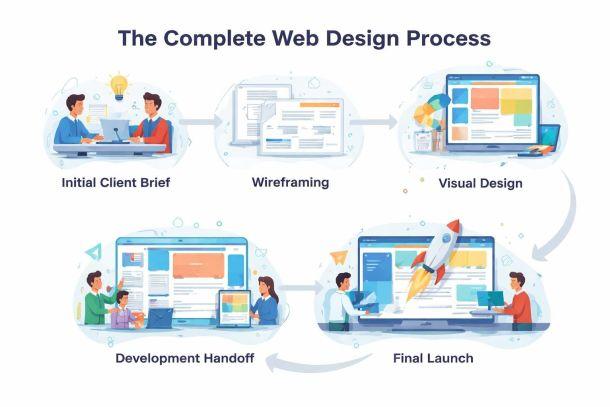
Work of a Web Designer
The work of a web designer isn't just about making things look pretty. It's about solving business problems through visual design, user experience, and strategic thinking. When done properly, web design drives conversions, builds trust, and turns casual browsers into paying customers. Too many business owners think they can slap together a website on a free template and call it done. Then they wonder why their bounce rate is 85% and nobody fills in their contact form. Good web design is the difference between a site that makes you money and one that costs you opportunities every single day.
UI Design
In 2026, the pace of digital change is relentless. What was once considered good ui design is now just the starting point. Today, creating digital products means delivering seamless, accessible, and genuinely delightful experiences for every user.
Design on Website
First impressions matter more than ever in today's fast-changing digital world. In 2026, the expectations for design on website projects are higher, and the competition is relentless.
Want this done rather than read?
Tell me what you sell and what isn't working. The audit that starts every engagement is free, and you keep the roadmap either way.