


Imagine visiting a website in 2026 where every detail feels tailor-made for you and everything just works, thanks to ai web design. The rapid rise of artificial intelligence is rewriting the rules for digital experiences, making innovation and efficiency the new normal.
Businesses, designers, and developers now have the chance to unlock creativity, speed up processes, and deliver outstanding results. This guide gives you a clear, step-by-step path to tapping into AI for web design success in 2026.
We will cover the fundamentals, latest trends, essential tools, how to get started, common challenges, and what the future holds for AI-driven web design.
The Fundamentals of AI in Web Design
In 2026, understanding the fundamentals of ai web design is essential for anyone aiming to stay ahead in the digital landscape. AI is no longer a distant concept. It sits at the core of modern web design, transforming how sites are crafted, tested, and optimised.
What is AI-Powered Web Design?
Ai web design refers to the use of artificial intelligence to automate, enhance, and personalise the creation and management of websites. Unlike traditional web design, which relies heavily on manual input and static templates, AI-driven design leverages machine learning, natural language processing, and generative AI.
These technologies interpret vast amounts of user data, learning preferences and behaviours. For example, AI can generate custom layouts or adapt content based on real-time insights. Typical applications include automated layout generation, dynamic image selection, and content personalisation for each visitor.
Key Benefits of AI for Web Designers and Businesses
Adopting ai web design brings a host of benefits to both designers and businesses. First, AI speeds up workflows, allowing teams to produce quality sites faster than ever before.
- Increased efficiency and reduced manual tasks
- Enhanced personalisation for users
- Informed, data-driven design decisions
- Cost savings through automation
- Scalability for projects of all sizes
With these advantages, businesses can focus on strategy and creativity, while AI handles routine tasks and optimisation.
The Evolution of AI in Web Design (2020-2026)
The journey of ai web design has accelerated rapidly since 2020. Early milestones included the launch of AI website builders and smarter analytics tools. By 2026, adoption rates have soared, with industry statistics showing a majority of new sites now use AI-driven features.
Notable platforms, such as Wix ADI and Figma AI, have set the pace for innovation. Case studies reveal that early adopters gained a competitive edge, reducing development time and boosting user engagement. For a deeper dive into these shifts, check out the AI-Powered Web Design Trends 2026 guide.
Core Components of AI Web Design Systems
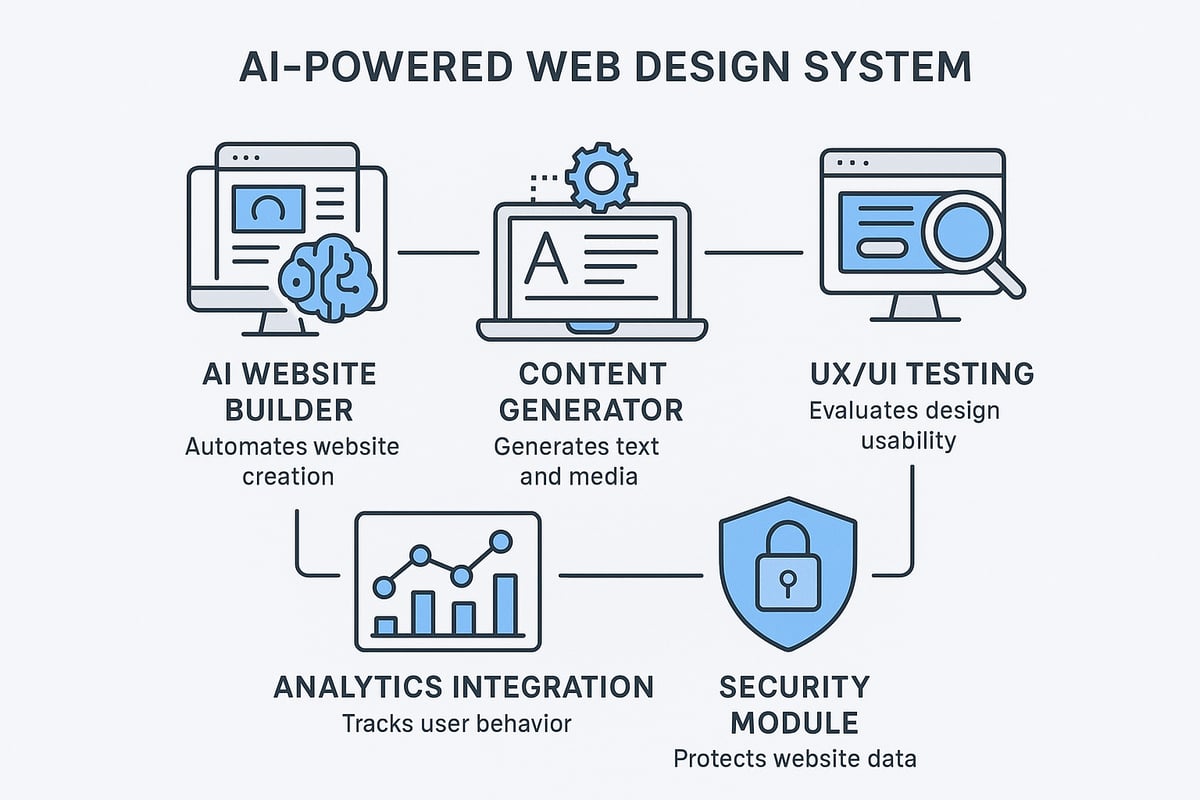
A modern ai web design system consists of several key building blocks:
| Component | Role in AI Web Design |
|---|---|
| AI Website Builders | Auto-generate templates and layouts |
| Content Generation | Optimise and personalise copy and visuals |
| Automated UX/UI Testing | Identify issues and suggest improvements |
| Analytics Integration | Track user behaviour and site performance |
| Security & Accessibility | Ensure compliance and user safety |
Each part works together to streamline design and deliver tailored experiences, while maintaining robust security and accessibility standards.
Common Misconceptions About AI in Web Design
Many believe that ai web design will replace human designers. In reality, AI acts as a powerful assistant, not a replacement. Creativity and originality remain firmly in human hands, with AI providing support and inspiration.
Concerns about data privacy and ethical use are valid, but strict regulations and best practices are evolving to address them. AI technology still has its limitations, making human oversight and collaboration essential for successful projects.
Emerging AI Web Design Trends for 2026
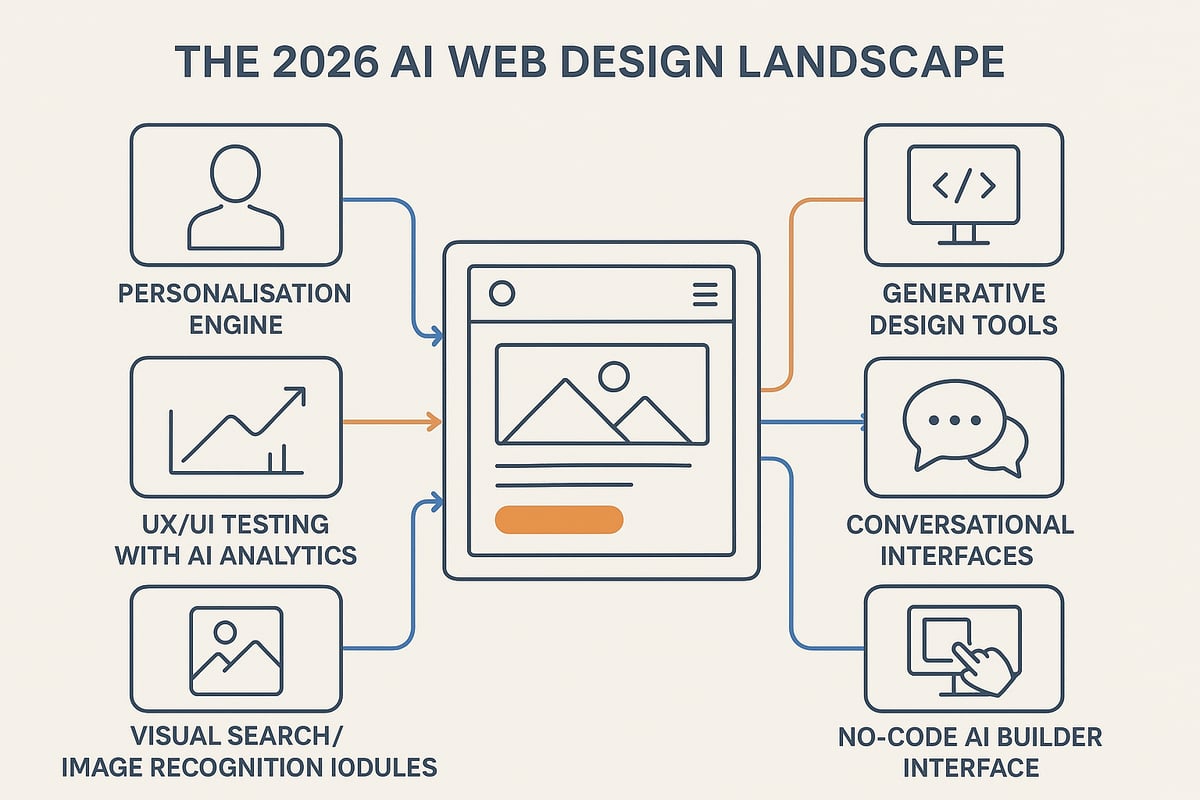
The world of ai web design is evolving at breakneck speed. By 2026, we’ll see a wave of trends transforming how users interact with digital experiences. Let’s unpack the key movements shaping the future of design.
Hyper-Personalised User Experiences
Personalisation is moving beyond first names in emails. In ai web design, advanced algorithms analyse browsing habits, location, preferences, and even mood to serve dynamic content and layouts in real time.
Imagine landing on a website that instantly adapts its imagery, product recommendations, and calls to action based on your past behaviour. Retailers can boost conversion rates with tailored offers, while service sites deliver content that resonates on an individual level.
Recent studies show personalisation adoption rates climbing rapidly, with businesses reporting higher engagement and loyalty. In 2026, expect hyper-personalised journeys to be the norm, not the exception.
Generative Design and Automated Creativity
Generative AI is redefining creativity in ai web design. Designers can now harness algorithms to instantly produce unique layouts, striking graphics, and brand assets at the click of a button.
Automated A B testing lets teams trial countless design variations, quickly identifying top performers. Need a new logo or colour palette? AI-powered branding tools generate options that fit your style guide and audience.
Leading platforms like Figma and Adobe are integrating these features, making rapid prototyping and iteration a breeze. The result is more time for strategic thinking, with AI handling the heavy lifting of creative production.
Conversational and Voice-Activated Interfaces
Conversational design is taking centre stage in ai web design. Chatbots and voice assistants are now standard on many websites, offering instant support and guiding users through complex journeys.
Natural language processing lets visitors interact using everyday speech, making sites more accessible for everyone. Voice navigation opens digital doors for those with disabilities or users on the go.
Case studies reveal higher satisfaction and retention rates when conversational UIs are used. By 2026, expect voice-driven experiences to be a key differentiator for forward-thinking brands.
AI in UX/UI Testing and Continuous Optimisation
Continuous improvement is the heartbeat of modern ai web design. AI-powered tools automatically test usability, spot pain points, and suggest instant fixes based on real user data.
Predictive analytics anticipate what users want before they even ask, helping sites stay ahead of trends. Automated feedback loops mean designers can iterate faster, improving engagement and conversions.
For practical strategies, explore AI website optimisation strategies to see how brands are already harnessing these tools for measurable results.
Visual Search and Image Recognition
Visual search is becoming a must-have in ai web design, especially for ecommerce and content-rich sites. Users can snap a photo or upload an image to find matching products or content instantly.
AI-driven image recognition improves accessibility by generating accurate alt text and tagging, making the web more inclusive. Retailers benefit from increased discoverability and higher SEO rankings.
Recent stats show a surge in visual search usage, with user preference shifting towards image-based navigation. This trend is set to reshape how customers find and engage with online brands.
No-Code/Low-Code AI Web Design Platforms
The rise of no-code and low-code platforms is democratising ai web design. Entrepreneurs and SMEs can now build sophisticated, AI-powered sites without writing a single line of code.
Drag-and-drop interfaces, enhanced by AI suggestions, lower the barrier to entry. This means more people can bring their ideas to life quickly and affordably.
Comparisons of top builders highlight reduced learning curves and rapid deployment. As these platforms mature, expect an even greater explosion of unique, user-centric websites in the coming years.
Essential AI Tools and Platforms for Web Design in 2026
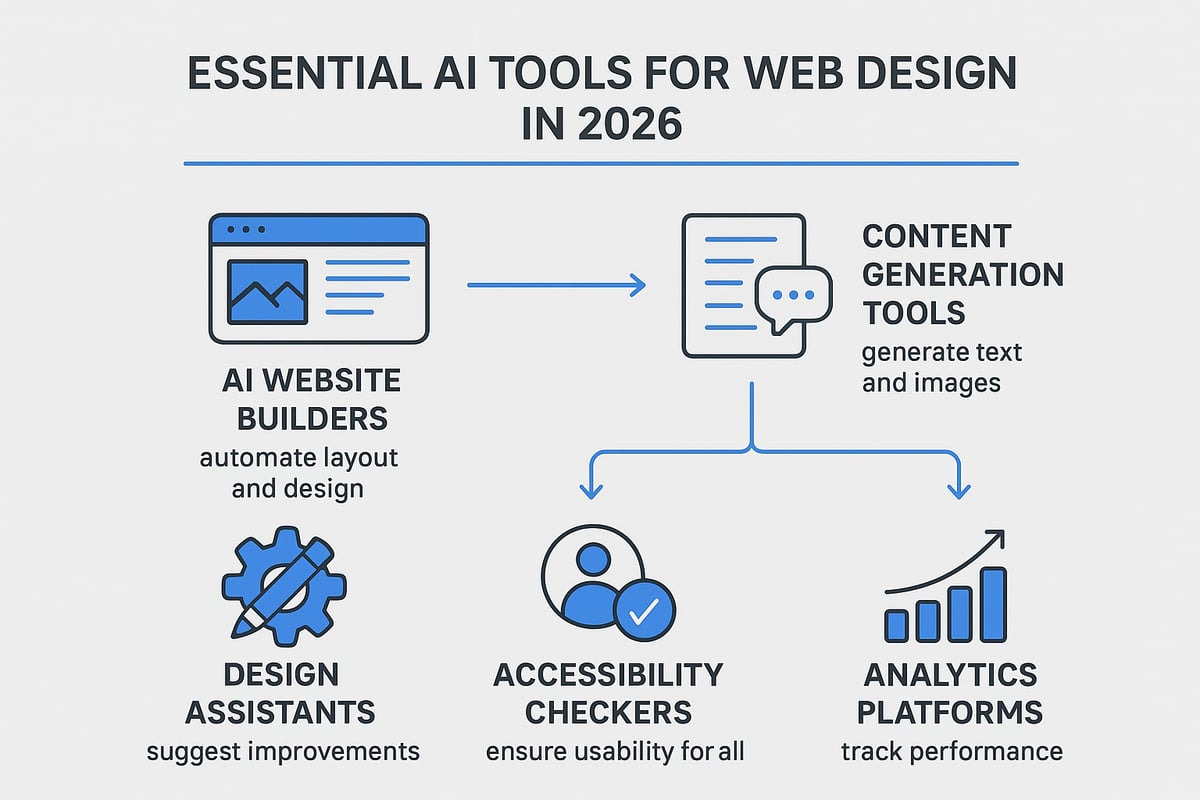
Navigating the ai web design landscape in 2026 means embracing a toolkit that is more powerful, intuitive, and accessible than ever before. Whether you are a designer, developer, or business owner, the right AI platforms will transform how you work, create, and deliver digital experiences.
Leading AI Website Builders
AI website builders have become central to ai web design, enabling users to create stunning sites with minimal effort. Platforms like Wix ADI, Bookmark, and Design.com offer instant site generation, intelligent customisation, and mobile optimisation.
Here is a quick comparison:
| Platform | Key Feature | Scalability | Price Model |
|---|---|---|---|
| Wix ADI | Instant layouts | High | Subscription |
| Bookmark | AI content blocks | Medium | Freemium |
| Design.com | Brand integration | High | Tiered pricing |
These tools are ideal for businesses seeking speed and flexibility. For those interested in automated landing pages, No-code AI landing pages is a great resource to explore how AI is shaping this space.
AI-Powered Content and Copywriting Tools
Content creation is at the heart of effective ai web design. Tools such as Jasper and Copy.ai generate high-quality, SEO-optimised copy, saving time and boosting engagement.
With multilingual support and real-time keyword integration, these AI platforms help websites reach broader audiences. They also offer data-driven insights to refine messaging. Remember, while AI content can increase conversions, it is vital to review outputs and keep your brand voice consistent.
AI Design Assistants and Prototyping Tools
Modern ai web design thrives on rapid prototyping and creative iteration. AI-powered design assistants like Adobe Sensei and Figma AI provide instant suggestions for layouts, colour schemes, and typography.
Teams can collaborate in real time, using AI-generated components for quick mock-ups. These tools dramatically reduce design cycles, enabling experimentation without sacrificing quality. The result is a more efficient, inspired workflow.
AI for Accessibility and Compliance
Accessibility is no longer an afterthought in ai web design. AI tools now automate checks for WCAG and ADA compliance, ensuring sites are usable for everyone.
Features include real-time alt text suggestions, colour contrast analysis, and navigation validation. Automated accessibility reports help designers catch issues early. Prioritising inclusivity not only fulfils legal requirements but also broadens your audience reach.
AI Analytics and User Behaviour Insights
Understanding user behaviour is crucial for successful ai web design. AI-driven analytics platforms provide predictive insights, heatmaps, and session replays.
These tools identify pain points, highlight conversion opportunities, and offer actionable recommendations. Seamless integration with marketing and CRM systems ensures every decision is data-backed. Continuous monitoring enables ongoing site optimisation and stronger results.
Step-by-Step: Implementing AI in Your Web Design Workflow
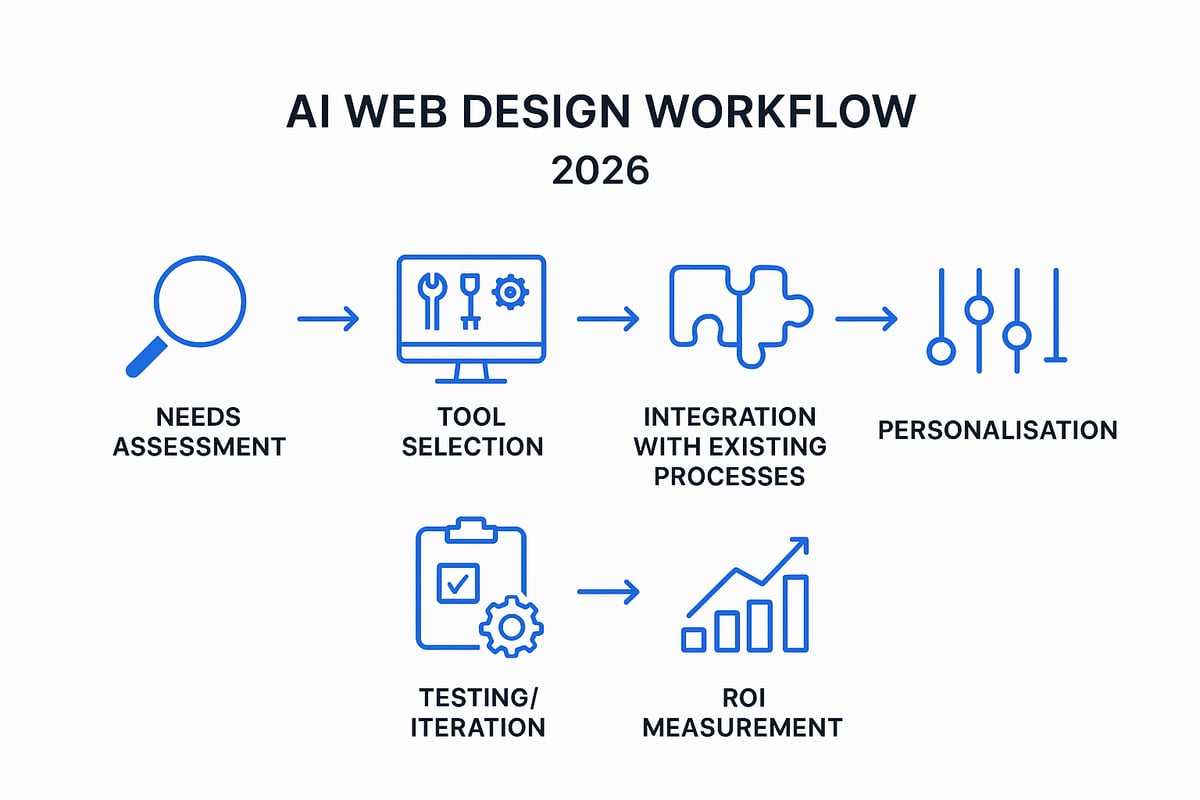
Ready to make ai web design part of your daily workflow? Here’s a practical guide to help you move from planning to measurable results. Each step is designed for clarity, so you can take action, track progress, and see real business impact.
Step 1: Assessing Your Needs and Setting Objectives
Start by defining what you want to achieve with ai web design. Identify your core business goals, such as increasing conversions, improving user experience, or reducing manual tasks.
- Review your current website’s performance using analytics.
- Gather feedback from users and stakeholders.
- Pinpoint pain points in your existing workflow.
Set clear, measurable objectives. For example, aim to cut design time by 30% or boost engagement by 20%. Establish KPIs early, so you’ll know if your ai web design efforts are delivering results.
Step 2: Selecting the Right AI Tools and Platforms
Choosing the right ai web design tools is crucial. Begin by listing your must-have features—do you need instant site generation, advanced personalisation, or AI-driven analytics?
- Evaluate tools for scalability and integration.
- Check support options and community resources.
- Consider your budget and potential ROI.
Test shortlisted platforms with pilot projects. Match tool capabilities to your specific project needs. Remember, the best ai web design solution fits your workflow and grows with your business.
Step 3: Integrating AI with Existing Design Processes
Smooth integration is essential for successful ai web design adoption. Map your current workflows and spot where AI can automate or enhance tasks. Train your team to use new AI tools confidently.
- Ensure data compatibility and robust security.
- Blend AI automation with human creativity.
- Foster collaboration between designers and AI systems.
For more on optimising user interface design in this context, see these UI design insights. A hybrid approach often delivers the most engaging results.
Step 4: Customising and Personalising with AI
AI web design excels at personalisation. Use AI to segment your audience, tailoring layouts and content to different user groups.
- Set up rules and triggers for real-time adaptation.
- Leverage user data for dynamic experiences.
- Continuously test and tweak personalisation strategies.
Monitor engagement levels and refine your approach. Done right, AI personalisation turns visitors into loyal customers and boosts your bottom line.
Step 5: Testing, Launching, and Iterating
Before going live, combine AI-driven and manual UX/UI testing. Collect user feedback and behavioural data to spot issues early.
- Launch your AI-enhanced site in stages, if possible.
- Use analytics to track initial results.
- Iterate quickly based on what you learn.
Continuous improvement is key in ai web design. Set up an ongoing feedback loop so your site evolves alongside user needs and market trends.
Step 6: Measuring Success and ROI
The final step is to measure how ai web design impacts your business. Define metrics like engagement, conversion, and retention rates.
- Use AI analytics to track and visualise progress.
- Compare outcomes to your pre-AI benchmarks.
- Report findings to stakeholders with clear, actionable data.
Scale up your successful initiatives and repeat the process. A data-driven approach ensures your investment in ai web design pays off, now and in the future.
Overcoming Challenges and Ethical Considerations in AI Web Design
AI web design brings vast potential, but also presents a new set of challenges and ethical dilemmas. To unlock innovation responsibly, businesses and designers must tackle privacy, creativity, bias, and future skills head-on.
Data Privacy and User Consent
Trust is the backbone of ai web design. With AI-driven personalisation, websites collect and process more user data than ever. To stay compliant with GDPR and global data laws, always use transparent consent banners and clear privacy policies.
Automate privacy checks using specialised tools that scan for vulnerabilities and flag non-compliant elements. Secure all data storage, and anonymise user information where possible. Remember, balancing personalisation with privacy is not just a legal requirement, but a competitive advantage for your brand.
Maintaining Creativity and Human Touch
Some fear ai web design will make creativity obsolete, but the reality is different. AI can automate repetitive tasks, freeing designers to focus on strategy, storytelling, and unique brand experiences.
Human designers guide AI outputs, ensuring originality and emotional impact. Platforms like Figma are enhancing AI editing tools to support creative workflows, as seen in Figma Enhances AI Editing Tools. When used wisely, AI becomes a creative partner, not a replacement.
Addressing Bias and Inclusivity
Bias in ai web design can creep in through unrepresentative data or flawed algorithms. Regularly audit AI tools for fairness and inclusivity. Use diverse datasets when training models, and test outputs for unintended consequences.
Design for accessibility from the start, using automated checks for alt text, colour contrast, and navigation. Exploring standards like webMCP: AI-Native Web Interaction can help embed inclusivity into AI-powered web experiences, ensuring you reach every user.
Future-Proofing Skills and Teams
The ai web design landscape is evolving rapidly, so continuous learning is essential. Upskill your team in AI tools, data literacy, and UX strategy. Build multidisciplinary teams that combine technical, creative, and ethical expertise.
Encourage experimentation and professional development by providing access to online courses, workshops, and industry events. This approach ensures your business stays ahead, ready for the next wave of AI innovation in web design.
The Future of AI-Driven Web Design: What to Expect Beyond 2026
The future of ai web design is set to be even more dynamic and unpredictable than the rapid changes we have already seen. By looking beyond 2026, we can start to anticipate not just the next big thing, but the entire wave of innovation that will shape how digital experiences are created, delivered, and optimised. Let’s break down the key trends and strategies you need to prepare for.
Predicting the Next Wave of Innovation
The next era of ai web design will be defined by technologies that are only just beginning to surface. Generative multimodal AI, for instance, will allow websites to blend text, visuals, and interactive elements in real-time, creating richer user experiences. Real-time personalisation will become the baseline, as AI systems instantly adapt content, layout, and features for each visitor.
Quantum computing is on the horizon and could supercharge AI, enabling design automation at a scale we can barely imagine. New business models will emerge, with websites acting as intelligent digital agents, not just static brochures. For a sneak peek at the creative shifts expected, check out Adobe’s 2026 Creative Trends Forecast.
The Role of Human Expertise in an AI-First World
Even as ai web design becomes more advanced, human expertise will remain essential. Strategic decision-making will always need a human touch, especially when it comes to brand consistency, ethics, and creative direction. AI can generate options, but only people can bring empathy, storytelling, and cultural nuance to a project.
Collaboration between multidisciplinary teams and AI systems will be the norm. Designers, developers, and strategists will work alongside AI to shape digital experiences that resonate with real users. The most successful projects will combine machine efficiency with human insight.
Preparing Your Business for Continuous Change
To thrive in the evolving ai web design landscape, businesses must build adaptability into every process. This means investing in ongoing research, experimentation, and professional development. Teams should stay alert to regulatory shifts and emerging technologies, ensuring compliance and future-readiness.
Fostering a culture of innovation is vital. Encourage your team to learn, test, and iterate. By doing so, your business will be ready to embrace whatever the future brings—and stay ahead of the competition in the world of AI-powered web experiences.
Now you’ve seen how AI is shaking up web design in 2026 and what’s actually possible for small businesses, let’s make it real for your business. Whether you’re weighing up which tools to use, want to boost your Shopify conversions, or just need a clear plan for integrating AI without the tech headaches, I can help you cut through the noise. If you fancy a friendly chat about next steps or want honest advice tailored to your goals, you can Get free 45 min consultation—no pressure, just straight answers and practical ideas.
Imagine visiting a website in 2026 where every detail feels tailor-made for you and everything just works, thanks to ai web design. The rapid rise of artificial intelligence is rewriting the rules for digital experiences, making innovation and efficiency the new normal.
Businesses, designers, and developers now have the chance to unlock creativity, speed up processes, and deliver outstanding results. This guide gives you a clear, step-by-step path to tapping into AI for web design success in 2026.
We will cover the fundamentals, latest trends, essential tools, how to get started, common challenges, and what the future holds for AI-driven web design.
The Fundamentals of AI in Web Design
In 2026, understanding the fundamentals of ai web design is essential for anyone aiming to stay ahead in the digital landscape. AI is no longer a distant concept. It sits at the core of modern web design, transforming how sites are crafted, tested, and optimised.
What is AI-Powered Web Design?
Ai web design refers to the use of artificial intelligence to automate, enhance, and personalise the creation and management of websites. Unlike traditional web design, which relies heavily on manual input and static templates, AI-driven design leverages machine learning, natural language processing, and generative AI.
These technologies interpret vast amounts of user data, learning preferences and behaviours. For example, AI can generate custom layouts or adapt content based on real-time insights. Typical applications include automated layout generation, dynamic image selection, and content personalisation for each visitor.
Key Benefits of AI for Web Designers and Businesses
Adopting ai web design brings a host of benefits to both designers and businesses. First, AI speeds up workflows, allowing teams to produce quality sites faster than ever before.
- Increased efficiency and reduced manual tasks
- Enhanced personalisation for users
- Informed, data-driven design decisions
- Cost savings through automation
- Scalability for projects of all sizes
With these advantages, businesses can focus on strategy and creativity, while AI handles routine tasks and optimisation.
The Evolution of AI in Web Design (2020-2026)
The journey of ai web design has accelerated rapidly since 2020. Early milestones included the launch of AI website builders and smarter analytics tools. By 2026, adoption rates have soared, with industry statistics showing a majority of new sites now use AI-driven features.
Notable platforms, such as Wix ADI and Figma AI, have set the pace for innovation. Case studies reveal that early adopters gained a competitive edge, reducing development time and boosting user engagement. For a deeper dive into these shifts, check out the AI-Powered Web Design Trends 2026 guide.
Core Components of AI Web Design Systems
A modern ai web design system consists of several key building blocks:
| Component | Role in AI Web Design |
|---|---|
| AI Website Builders | Auto-generate templates and layouts |
| Content Generation | Optimise and personalise copy and visuals |
| Automated UX/UI Testing | Identify issues and suggest improvements |
| Analytics Integration | Track user behaviour and site performance |
| Security & Accessibility | Ensure compliance and user safety |
Each part works together to streamline design and deliver tailored experiences, while maintaining robust security and accessibility standards.
Common Misconceptions About AI in Web Design
Many believe that ai web design will replace human designers. In reality, AI acts as a powerful assistant, not a replacement. Creativity and originality remain firmly in human hands, with AI providing support and inspiration.
Concerns about data privacy and ethical use are valid, but strict regulations and best practices are evolving to address them. AI technology still has its limitations, making human oversight and collaboration essential for successful projects.
Emerging AI Web Design Trends for 2026
The world of ai web design is evolving at breakneck speed. By 2026, we’ll see a wave of trends transforming how users interact with digital experiences. Let’s unpack the key movements shaping the future of design.
Hyper-Personalised User Experiences
Personalisation is moving beyond first names in emails. In ai web design, advanced algorithms analyse browsing habits, location, preferences, and even mood to serve dynamic content and layouts in real time.
Imagine landing on a website that instantly adapts its imagery, product recommendations, and calls to action based on your past behaviour. Retailers can boost conversion rates with tailored offers, while service sites deliver content that resonates on an individual level.
Recent studies show personalisation adoption rates climbing rapidly, with businesses reporting higher engagement and loyalty. In 2026, expect hyper-personalised journeys to be the norm, not the exception.
Generative Design and Automated Creativity
Generative AI is redefining creativity in ai web design. Designers can now harness algorithms to instantly produce unique layouts, striking graphics, and brand assets at the click of a button.
Automated A B testing lets teams trial countless design variations, quickly identifying top performers. Need a new logo or colour palette? AI-powered branding tools generate options that fit your style guide and audience.
Leading platforms like Figma and Adobe are integrating these features, making rapid prototyping and iteration a breeze. The result is more time for strategic thinking, with AI handling the heavy lifting of creative production.
Conversational and Voice-Activated Interfaces
Conversational design is taking centre stage in ai web design. Chatbots and voice assistants are now standard on many websites, offering instant support and guiding users through complex journeys.
Natural language processing lets visitors interact using everyday speech, making sites more accessible for everyone. Voice navigation opens digital doors for those with disabilities or users on the go.
Case studies reveal higher satisfaction and retention rates when conversational UIs are used. By 2026, expect voice-driven experiences to be a key differentiator for forward-thinking brands.
AI in UX/UI Testing and Continuous Optimisation
Continuous improvement is the heartbeat of modern ai web design. AI-powered tools automatically test usability, spot pain points, and suggest instant fixes based on real user data.
Predictive analytics anticipate what users want before they even ask, helping sites stay ahead of trends. Automated feedback loops mean designers can iterate faster, improving engagement and conversions.
For practical strategies, explore AI website optimisation strategies to see how brands are already harnessing these tools for measurable results.
Visual Search and Image Recognition
Visual search is becoming a must-have in ai web design, especially for ecommerce and content-rich sites. Users can snap a photo or upload an image to find matching products or content instantly.
AI-driven image recognition improves accessibility by generating accurate alt text and tagging, making the web more inclusive. Retailers benefit from increased discoverability and higher SEO rankings.
Recent stats show a surge in visual search usage, with user preference shifting towards image-based navigation. This trend is set to reshape how customers find and engage with online brands.
No-Code/Low-Code AI Web Design Platforms
The rise of no-code and low-code platforms is democratising ai web design. Entrepreneurs and SMEs can now build sophisticated, AI-powered sites without writing a single line of code.
Drag-and-drop interfaces, enhanced by AI suggestions, lower the barrier to entry. This means more people can bring their ideas to life quickly and affordably.
Comparisons of top builders highlight reduced learning curves and rapid deployment. As these platforms mature, expect an even greater explosion of unique, user-centric websites in the coming years.
Essential AI Tools and Platforms for Web Design in 2026
Navigating the ai web design landscape in 2026 means embracing a toolkit that is more powerful, intuitive, and accessible than ever before. Whether you are a designer, developer, or business owner, the right AI platforms will transform how you work, create, and deliver digital experiences.
Leading AI Website Builders
AI website builders have become central to ai web design, enabling users to create stunning sites with minimal effort. Platforms like Wix ADI, Bookmark, and Design.com offer instant site generation, intelligent customisation, and mobile optimisation.
Here is a quick comparison:
| Platform | Key Feature | Scalability | Price Model |
|---|---|---|---|
| Wix ADI | Instant layouts | High | Subscription |
| Bookmark | AI content blocks | Medium | Freemium |
| Design.com | Brand integration | High | Tiered pricing |
These tools are ideal for businesses seeking speed and flexibility. For those interested in automated landing pages, No-code AI landing pages is a great resource to explore how AI is shaping this space.
AI-Powered Content and Copywriting Tools
Content creation is at the heart of effective ai web design. Tools such as Jasper and Copy.ai generate high-quality, SEO-optimised copy, saving time and boosting engagement.
With multilingual support and real-time keyword integration, these AI platforms help websites reach broader audiences. They also offer data-driven insights to refine messaging. Remember, while AI content can increase conversions, it is vital to review outputs and keep your brand voice consistent.
AI Design Assistants and Prototyping Tools
Modern ai web design thrives on rapid prototyping and creative iteration. AI-powered design assistants like Adobe Sensei and Figma AI provide instant suggestions for layouts, colour schemes, and typography.
Teams can collaborate in real time, using AI-generated components for quick mock-ups. These tools dramatically reduce design cycles, enabling experimentation without sacrificing quality. The result is a more efficient, inspired workflow.
AI for Accessibility and Compliance
Accessibility is no longer an afterthought in ai web design. AI tools now automate checks for WCAG and ADA compliance, ensuring sites are usable for everyone.
Features include real-time alt text suggestions, colour contrast analysis, and navigation validation. Automated accessibility reports help designers catch issues early. Prioritising inclusivity not only fulfils legal requirements but also broadens your audience reach.
AI Analytics and User Behaviour Insights
Understanding user behaviour is crucial for successful ai web design. AI-driven analytics platforms provide predictive insights, heatmaps, and session replays.
These tools identify pain points, highlight conversion opportunities, and offer actionable recommendations. Seamless integration with marketing and CRM systems ensures every decision is data-backed. Continuous monitoring enables ongoing site optimisation and stronger results.
Step-by-Step: Implementing AI in Your Web Design Workflow
Ready to make ai web design part of your daily workflow? Here’s a practical guide to help you move from planning to measurable results. Each step is designed for clarity, so you can take action, track progress, and see real business impact.
Step 1: Assessing Your Needs and Setting Objectives
Start by defining what you want to achieve with ai web design. Identify your core business goals, such as increasing conversions, improving user experience, or reducing manual tasks.
- Review your current website’s performance using analytics.
- Gather feedback from users and stakeholders.
- Pinpoint pain points in your existing workflow.
Set clear, measurable objectives. For example, aim to cut design time by 30% or boost engagement by 20%. Establish KPIs early, so you’ll know if your ai web design efforts are delivering results.
Step 2: Selecting the Right AI Tools and Platforms
Choosing the right ai web design tools is crucial. Begin by listing your must-have features—do you need instant site generation, advanced personalisation, or AI-driven analytics?
- Evaluate tools for scalability and integration.
- Check support options and community resources.
- Consider your budget and potential ROI.
Test shortlisted platforms with pilot projects. Match tool capabilities to your specific project needs. Remember, the best ai web design solution fits your workflow and grows with your business.
Step 3: Integrating AI with Existing Design Processes
Smooth integration is essential for successful ai web design adoption. Map your current workflows and spot where AI can automate or enhance tasks. Train your team to use new AI tools confidently.
- Ensure data compatibility and robust security.
- Blend AI automation with human creativity.
- Foster collaboration between designers and AI systems.
For more on optimising user interface design in this context, see these UI design insights. A hybrid approach often delivers the most engaging results.
Step 4: Customising and Personalising with AI
AI web design excels at personalisation. Use AI to segment your audience, tailoring layouts and content to different user groups.
- Set up rules and triggers for real-time adaptation.
- Leverage user data for dynamic experiences.
- Continuously test and tweak personalisation strategies.
Monitor engagement levels and refine your approach. Done right, AI personalisation turns visitors into loyal customers and boosts your bottom line.
Step 5: Testing, Launching, and Iterating
Before going live, combine AI-driven and manual UX/UI testing. Collect user feedback and behavioural data to spot issues early.
- Launch your AI-enhanced site in stages, if possible.
- Use analytics to track initial results.
- Iterate quickly based on what you learn.
Continuous improvement is key in ai web design. Set up an ongoing feedback loop so your site evolves alongside user needs and market trends.
Step 6: Measuring Success and ROI
The final step is to measure how ai web design impacts your business. Define metrics like engagement, conversion, and retention rates.
- Use AI analytics to track and visualise progress.
- Compare outcomes to your pre-AI benchmarks.
- Report findings to stakeholders with clear, actionable data.
Scale up your successful initiatives and repeat the process. A data-driven approach ensures your investment in ai web design pays off, now and in the future.
Overcoming Challenges and Ethical Considerations in AI Web Design
AI web design brings vast potential, but also presents a new set of challenges and ethical dilemmas. To unlock innovation responsibly, businesses and designers must tackle privacy, creativity, bias, and future skills head-on.
Data Privacy and User Consent
Trust is the backbone of ai web design. With AI-driven personalisation, websites collect and process more user data than ever. To stay compliant with GDPR and global data laws, always use transparent consent banners and clear privacy policies.
Automate privacy checks using specialised tools that scan for vulnerabilities and flag non-compliant elements. Secure all data storage, and anonymise user information where possible. Remember, balancing personalisation with privacy is not just a legal requirement, but a competitive advantage for your brand.
Maintaining Creativity and Human Touch
Some fear ai web design will make creativity obsolete, but the reality is different. AI can automate repetitive tasks, freeing designers to focus on strategy, storytelling, and unique brand experiences.
Human designers guide AI outputs, ensuring originality and emotional impact. Platforms like Figma are enhancing AI editing tools to support creative workflows, as seen in Figma Enhances AI Editing Tools. When used wisely, AI becomes a creative partner, not a replacement.
Addressing Bias and Inclusivity
Bias in ai web design can creep in through unrepresentative data or flawed algorithms. Regularly audit AI tools for fairness and inclusivity. Use diverse datasets when training models, and test outputs for unintended consequences.
Design for accessibility from the start, using automated checks for alt text, colour contrast, and navigation. Exploring standards like webMCP: AI-Native Web Interaction can help embed inclusivity into AI-powered web experiences, ensuring you reach every user.
Future-Proofing Skills and Teams
The ai web design landscape is evolving rapidly, so continuous learning is essential. Upskill your team in AI tools, data literacy, and UX strategy. Build multidisciplinary teams that combine technical, creative, and ethical expertise.
Encourage experimentation and professional development by providing access to online courses, workshops, and industry events. This approach ensures your business stays ahead, ready for the next wave of AI innovation in web design.
The Future of AI-Driven Web Design: What to Expect Beyond 2026
The future of ai web design is set to be even more dynamic and unpredictable than the rapid changes we have already seen. By looking beyond 2026, we can start to anticipate not just the next big thing, but the entire wave of innovation that will shape how digital experiences are created, delivered, and optimised. Let’s break down the key trends and strategies you need to prepare for.
Predicting the Next Wave of Innovation
The next era of ai web design will be defined by technologies that are only just beginning to surface. Generative multimodal AI, for instance, will allow websites to blend text, visuals, and interactive elements in real-time, creating richer user experiences. Real-time personalisation will become the baseline, as AI systems instantly adapt content, layout, and features for each visitor.
Quantum computing is on the horizon and could supercharge AI, enabling design automation at a scale we can barely imagine. New business models will emerge, with websites acting as intelligent digital agents, not just static brochures. For a sneak peek at the creative shifts expected, check out Adobe’s 2026 Creative Trends Forecast.
The Role of Human Expertise in an AI-First World
Even as ai web design becomes more advanced, human expertise will remain essential. Strategic decision-making will always need a human touch, especially when it comes to brand consistency, ethics, and creative direction. AI can generate options, but only people can bring empathy, storytelling, and cultural nuance to a project.
Collaboration between multidisciplinary teams and AI systems will be the norm. Designers, developers, and strategists will work alongside AI to shape digital experiences that resonate with real users. The most successful projects will combine machine efficiency with human insight.
Preparing Your Business for Continuous Change
To thrive in the evolving ai web design landscape, businesses must build adaptability into every process. This means investing in ongoing research, experimentation, and professional development. Teams should stay alert to regulatory shifts and emerging technologies, ensuring compliance and future-readiness.
Fostering a culture of innovation is vital. Encourage your team to learn, test, and iterate. By doing so, your business will be ready to embrace whatever the future brings—and stay ahead of the competition in the world of AI-powered web experiences.
Now you’ve seen how AI is shaking up web design in 2026 and what’s actually possible for small businesses, let’s make it real for your business. Whether you’re weighing up which tools to use, want to boost your Shopify conversions, or just need a clear plan for integrating AI without the tech headaches, I can help you cut through the noise. If you fancy a friendly chat about next steps or want honest advice tailored to your goals, you can Get free 45 min consultation—no pressure, just straight answers and practical ideas.


